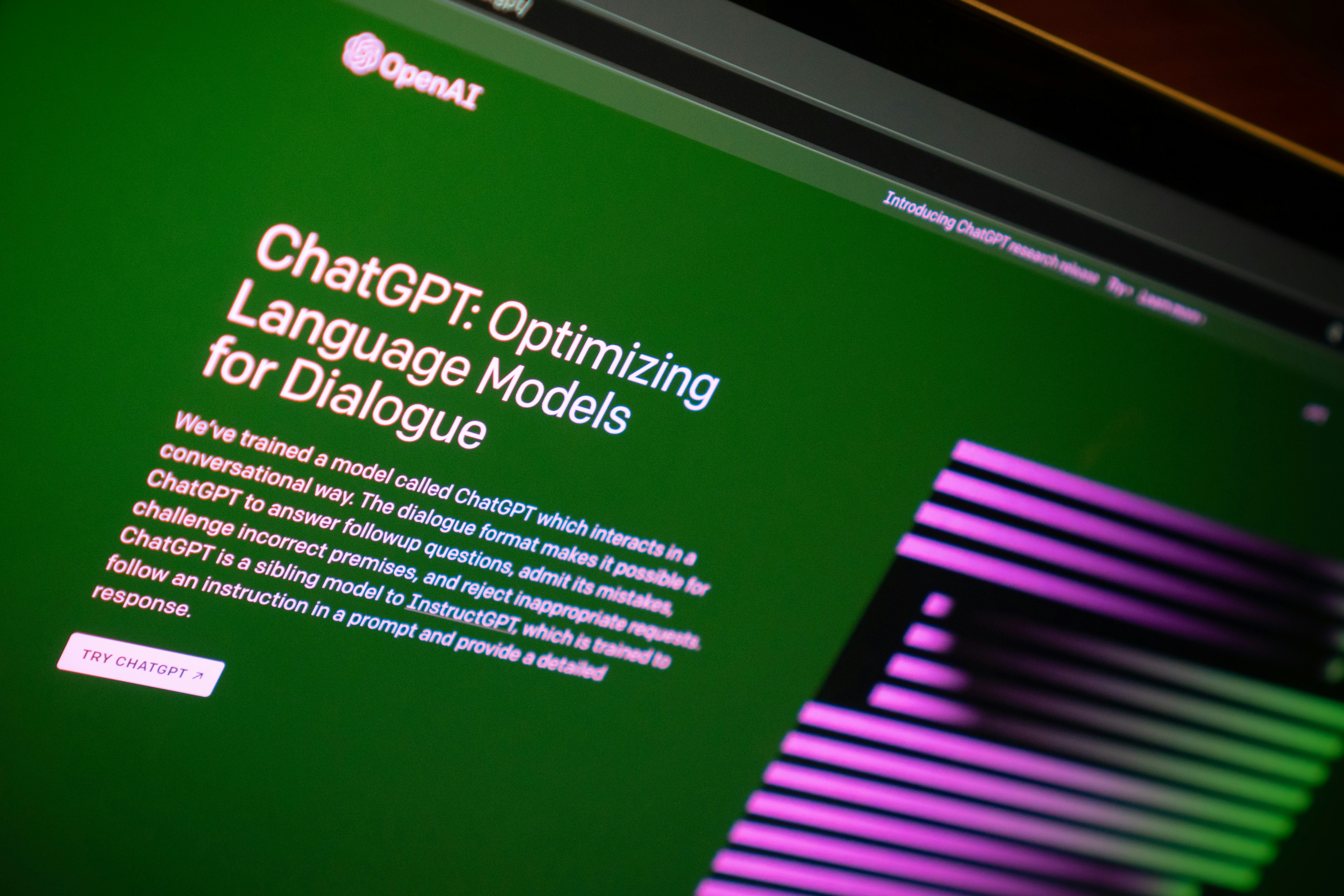
Introduction to ChatGPT
ChatGPT is a state-of-the-art conversational artificial intelligence model developed by OpenAI. It serves as a significant advancement in the field of natural language processing (NLP), allowing machines to engage in meaningful dialogues with humans. The primary purpose of ChatGPT is to understand and generate human-like text based on the input it receives, making it an invaluable tool for various applications such as customer service, content creation, and personal assistance.
The architecture of ChatGPT is grounded in the transformer model, which has revolutionized how models process language data. By leveraging large datasets and sophisticated machine learning algorithms, ChatGPT has been trained to comprehend context and respond appropriately. This capability enables it to perform tasks ranging from casual conversation to more complex problem-solving scenarios, marking a significant leap forward in AI technology.
One of the most significant aspects of ChatGPT is its ability to learn from diverse sources, which contributes to its depth of knowledge and versatility. Its development represents a transforming phase in human-computer interaction, allowing for more intuitive and engaging exchanges. Furthermore, as a product of ongoing advancements in AI, ChatGPT exemplifies how conversational agents can bridge the gap between technology and day-to-day communication.
As we explore the functionality and implications of ChatGPT, it is crucial to recognize the importance of ethical considerations in its use. The development of AI conversational models entails responsibilities regarding data usage, user privacy, and the potential for misinformation. Nevertheless, ChatGPT stands out as a benchmark in the ongoing evolution of artificial intelligence and machine learning, paving the way for future innovations in the conversational AI space.
The Architecture of ChatGPT
At the core of ChatGPT lies the Transformer architecture, a breakthrough in the field of natural language processing. Developed by Vaswani et al. in 2017, the Transformer model introduces a mechanism that significantly enhances the ability of systems to understand context and generate coherent text. Unlike traditional recurrent neural networks, which process sequences of words in order, the Transformer utilizes a parallelized structure that allows for better handling of long-range dependencies between words.
The key feature of the Transformer architecture is the self-attention mechanism. This mechanism enables the model to weigh the importance of different words in a sentence relative to each other. For instance, in the phrase “the cat sat on the mat,” the self-attention mechanism allows the model to recognize that “cat” is an important word that relates closely to the word “sat,” while “on” and “the” are less important in this context. This capability is what makes Transformers especially powerful for generating responses that are contextually relevant.
Additionally, the Transformer is composed of multiple layers, each containing its own set of attention heads. These heads allow the model to focus on different parts of the input simultaneously, providing a richer representation of the context. Each layer refines the output of the previous layer, progressively enhancing the model’s understanding of the input text. This stacked architecture, combined with the self-attention mechanism, results in a robust model that excels at language generation tasks.
Overall, the architecture of ChatGPT underpinned by the Transformer model allows it to generate high-quality, context-aware responses in a conversational manner. The combination of self-attention and multilayered structure is what makes this model particularly effective in understanding and replying to user queries.
Training Process of ChatGPT
The training process for ChatGPT is a multi-phase approach that involves extensive use of large datasets and a variety of learning techniques. Initially, the model undergoes unsupervised learning, where it is exposed to vast amounts of text data from diverse sources, such as books, articles, and websites. During this phase, the model learns to predict the next word in a sentence based on the context provided by the preceding words. This helps the model to develop a nuanced understanding of language structure, grammar, and semantics.
Following the unsupervised learning phase, ChatGPT experiences supervised fine-tuning. In this crucial stage, the model is trained on a more curated dataset that includes pairs of prompts and responses. The primary goal here is to enhance the quality of the responses by incorporating human-generated examples. This supervised learning phase allows the model to understand acceptable and meaningful responses, thereby improving its conversational capabilities.
Another key component of ChatGPT’s training process is reinforcement learning from human feedback (RLHF). In this approach, human trainers evaluate the model’s outputs and provide feedback on their appropriateness and quality. The feedback is then used to fine-tune the model further, adjusting its behavior to produce more relevant and accurate responses during conversations. This iterative loop of feedback and adjustment is essential for enhancing the model’s performance.
Through this comprehensive training methodology, ChatGPT is equipped to respond to user queries with a higher degree of accuracy and relevance. The combination of unsupervised learning, supervised fine-tuning, and reinforcement learning ensures that the model evolves continuously, learning to engage in more meaningful interactions over time. This structured training process highlights the importance of multi-faceted learning approaches in developing effective conversational AI systems.
How ChatGPT Understands Context
The ability of ChatGPT to maintain context through a conversation is crucial for generating coherent and relevant responses. This is achieved primarily through sophisticated techniques such as tokenization and carefully managing sequence length. When a user inputs text, ChatGPT breaks it down into smaller units known as tokens. Tokenization allows the model to effectively understand and process the meaning of each segment of text, even when dealing with complex sentences or terminologies.
Each token is then transformed into numerical representations that the model can analyze. These representations encapsulate the contextual meaning of the tokens in relation to one another. This process is foundational to how the model tracks the shift in context across user inputs. As conversations evolve, it is essential for ChatGPT to remember previous tokens to generate a relevant and timely response, which is where the concept of sequence length comes into play.
ChatGPT is structured to handle a specific maximum sequence length, which determines how much previous interaction it can recall when formulating responses. If the dialogue exceeds this limit, the oldest inputs may be discarded to prioritize current context. This balancing act of retaining context while maximizing the understanding from recent inputs ensures fluidity in interaction. Moreover, the model is designed to recognize conversational cues, enabling it to maintain a coherent thread, even in extended conversations.
Ultimately, ChatGPT’s ability to maintain context is a remarkable achievement in natural language processing. By combining tokenization with sequence management, the model empowers users to engage in fulfilling and meaningful conversations, enhancing the overall conversational experience.
Generating Responses with ChatGPT
ChatGPT, developed by OpenAI, utilizes sophisticated algorithms to generate responses in a conversational format. At the core of its functioning lies the concept of probability distributions, which dictate the likelihood of various possible responses based on the input provided by the user. Each time a user inputs a prompt, the model assesses its vast training data to determine which words and phrases are most likely to follow, creating contextually relevant replies.
To effectively generate these responses, ChatGPT employs sampling techniques, notably top-k and top-p sampling. Top-k sampling limits the model’s choice to the top ‘k’ probable next words, allowing it to draw from a smaller, more relevant pool while generating responses. This ensures that only the most probable words are considered, thereby increasing the coherence and relevance of the generated text. By contrast, top-p sampling, also known as nucleus sampling, focuses on a cumulative probability threshold, selecting from the smallest set of words, those which together account for a specified probability ‘p’. This technique allows for a more flexible generation, as it can dynamically adjust based on the context of the conversation.
The effectiveness of these techniques is determined not just by their individual mechanics, but also by the overall criteria set for selecting the best outputs. These criteria may include factors like fluency, relevance, and contextual adherence. By employing a combination of probability assessments and refined sampling methods, ChatGPT consistently yields outputs that aim to engage users in meaningful dialogue. Thus, the intricate interplay between algorithms, sampling, and selection criteria enables ChatGPT to generate human-like responses that cater to a wide range of conversational topics.
Applications of ChatGPT
ChatGPT, a sophisticated conversational AI developed by OpenAI, has found numerous applications across various industries, significantly enhancing operations and productivity. One prominent realm of use is customer service, where businesses implement ChatGPT to provide instant and accurate responses to customer inquiries. By deploying this technology, companies can reduce wait times, improve user satisfaction, and enable human agents to focus on more complex issues, thus optimizing overall service efficiency.
In addition to customer service, ChatGPT serves as a valuable tool for content creation. Writers, marketers, and businesses harness the capabilities of ChatGPT to generate ideas, draft articles, or even compose social media posts. This application of AI not only streamlines the content creation process but also helps individuals meet tight deadlines while maintaining creative quality. For instance, a marketing team can use ChatGPT to create engaging advertisements or blog entries, leveraging the model’s ability to generate compelling narratives and diverse writing styles.
Language translation is another critical area where ChatGPT showcases its effectiveness. By translating text between different languages, ChatGPT assists businesses and individuals in communicating more effectively in a globalized environment. This capability facilitates seamless interactions across cultures, contributing to better customer engagement and broader market reach. Furthermore, as language barriers diminish, businesses can forge international partnerships and expand their services to new demographics.
Moreover, the flexibility of ChatGPT allows it to be integrated into various applications, such as gaming, education, and mental health support, providing tailored experiences. For example, educational institutions utilize ChatGPT to create interactive learning environments where students can ask questions and receive instant feedback. This adaptability demonstrates the versatility of ChatGPT as a technology that not only augments traditional methods but also offers innovative solutions to emerging challenges.
Limitations and Challenges of ChatGPT
Despite the advancements in Artificial Intelligence (AI), ChatGPT, as a conversational model developed by OpenAI, is not devoid of limitations and challenges. One significant issue is its difficulty in understanding ambiguous queries. When users pose questions that lack clarity or have multiple interpretations, ChatGPT may struggle to provide accurate or relevant responses. This limitation stems from its reliance on patterns found in training data, which does not always encompass the wide range of potential meanings.
Another notable challenge is the potential for generating biased content. This stems from the datasets used for training, which may inadvertently contain biases present in human language. Consequently, ChatGPT might produce responses that reflect these biases, which can perpetuate stereotypes or misinformation. OpenAI acknowledges this concern and is actively working on strategies to mitigate bias in AI-generated content.
Additionally, handling sensitive or inappropriate topics poses a significant hurdle for ChatGPT. The model’s ability to navigate discussions that involve sensitive subjects, such as mental health or political issues, remains complex. Users may pose questions that require nuanced responses, but the AI’s approach can sometimes lead to misunderstandings or insensitive remarks. To address this, ongoing efforts aim to improve the model’s training and fine-tuning processes, ensuring it can better recognize and respond appropriately to delicate topics.
In the pursuit of making ChatGPT a more reliable conversational partner, these challenges require continuous research and development. Engaging with feedback and incorporating various safeguards will be vital in enhancing the model’s performance while maintaining ethical standards in AI communication.
Ethical Considerations in Using ChatGPT
The advent of AI technologies like ChatGPT brings with it a plethora of ethical considerations that warrant careful examination. One pressing concern is the potential for misinformation. Given that AI models are trained on vast datasets sourced from the internet, they can inadvertently generate responses that reflect inaccuracies, biases, or outdated information. This raises the question of accountability: who is responsible when AI systems disseminate false information? Developers must address how to minimize the risk of spreading misinformation, especially in applications that influence public opinion or decision-making.
User privacy is another critical ethical concern in the use of conversational AI. As individuals engage with AI models like ChatGPT, they may unwittingly share personal or sensitive information. Developers have an ethical obligation to implement robust data protection measures to safeguard user privacy. Moreover, users should be educated about the data collection practices associated with AI interactions, empowering them to make informed choices regarding their engagement with such technologies.
Additionally, the deployment of AI models raises questions about the moral responsibilities of developers. As creators of these systems, developers must actively consider the societal impacts of their technologies. This includes understanding the potential for discrimination that can arise from biased training data, which may propagate societal inequalities further. Establishing guidelines for ethical AI practices and promoting transparency in AI deployment is crucial for fostering public trust and ensuring that technology serves the common good.
Ultimately, while ChatGPT and similar models offer remarkable capabilities, it is imperative to navigate the ethical landscape with diligence. Engaging stakeholders, including ethicists, users, and policymakers, in discussions about these challenges can facilitate the responsible integration of AI technologies into society.
The Future of ChatGPT and Conversational AI
The landscape of conversational AI is poised for significant transformation in the coming years, driven largely by advancements in technology and evolving user expectations. ChatGPT, as one of the most prominent conversational models developed by OpenAI, stands at the forefront of these innovations. Future developments are likely to enhance its capabilities, allowing for more natural and intuitive interactions between humans and machines.
One of the key areas of progress will be in the realm of contextual understanding. Future iterations of ChatGPT are expected to exhibit better retention of context over longer conversations, making user interactions more fluid and meaningful. This improvement will enable ChatGPT to provide more relevant responses based on previous exchanges, significantly enhancing the user experience. As models become enhanced through reinforcement learning and greater exposure to diverse conversational scenarios, they will develop a more nuanced understanding of human communication.
Moreover, user interaction is likely to evolve with the integration of multimodal capabilities, where ChatGPT could process not only text but also images, audio, and video. This would enable users to engage with the AI in varied formats, tapping into the richness of human expression. OpenAI envisions a future where conversational AI systems are seamlessly integrated into daily life, providing support in fields such as education, healthcare, and customer service.
However, as we embrace these advancements, it is imperative to address ethical considerations. OpenAI remains committed to responsible AI development, focusing on transparency, bias mitigation, and the overall well-being of users. By fostering a collaborative approach towards AI, we can ensure that future developments prioritize human interests and promote a beneficial relationship between technology and society.