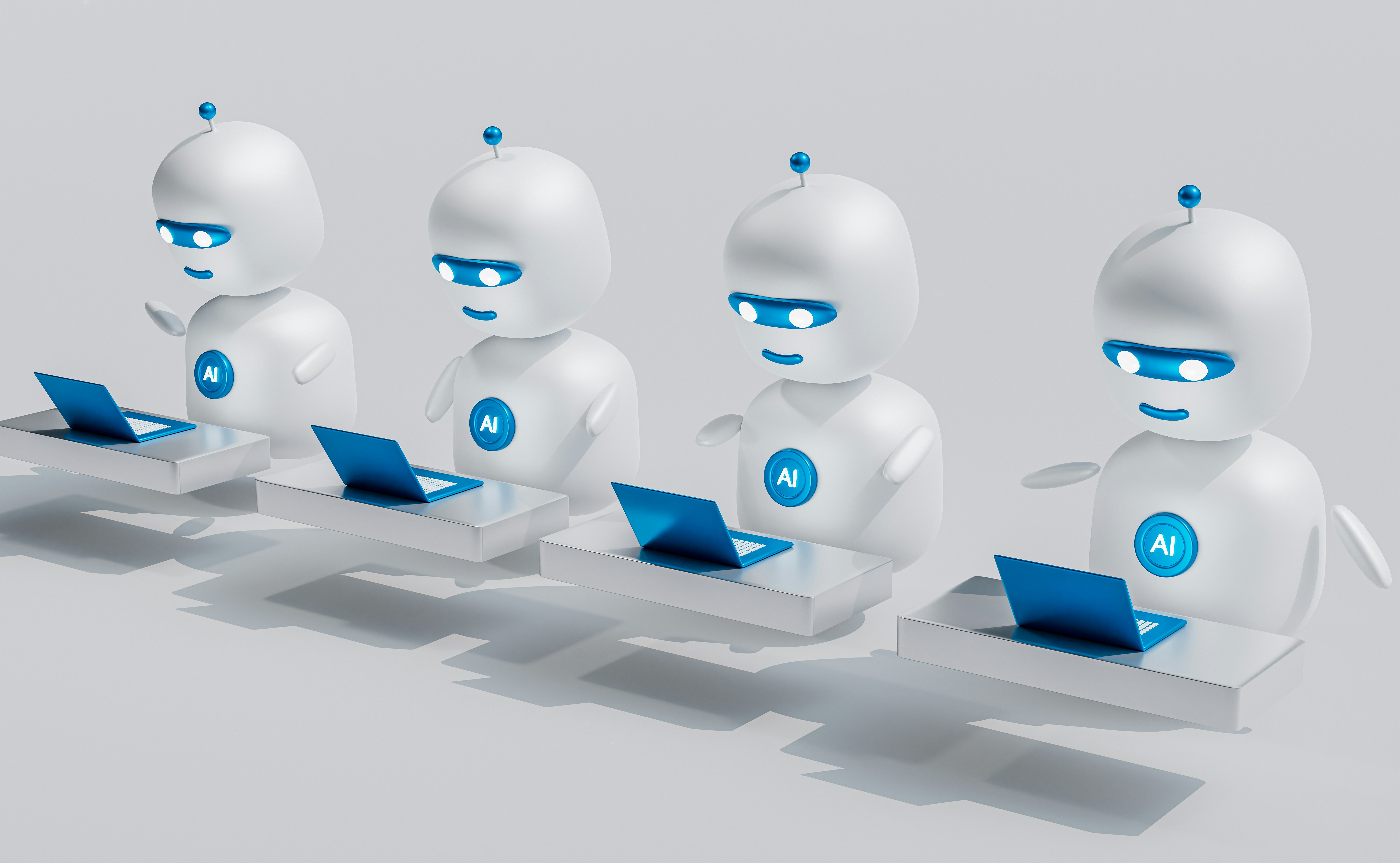
Introduction to AI in the Workplace
Artificial Intelligence (AI) refers to the simulation of human intelligence in machines that are programmed to think and learn like humans. Over recent years, AI has gained significant traction across various industries, reflecting its transformative potential in the workplace. Today’s businesses are increasingly adopting AI technologies to enhance productivity, streamline processes, and facilitate decision-making. This growing presence of AI highlights its capability not only as a tool for improving efficiency but also as a means of reshaping traditional job roles.
Many organizations implement AI applications to optimize operations, reduce human error, and provide insights that may not be easily discernible through manual analysis. The use of AI in data processing, customer service, and even creative roles illustrates its versatility. For instance, customer service chatbots utilize natural language processing to handle inquiries, allowing human employees to focus on more complex tasks that require emotional intelligence or critical thinking. This exemplifies how AI can serve as a supportive tool, enhancing productivity rather than merely replacing human effort.
In exploring AI’s role in the workplace, one must consider the balance between efficiency and job security. While some see AI as a means of relieving workers from monotonous tasks, others express concern regarding displacement of jobs. As technological advancements evolve, businesses face the challenge of integrating AI solutions that not only augment human capabilities but also prepare their workforce for a future where roles may significantly differ. Understanding this dynamic landscape is crucial in recognizing the potential of AI beyond just mechanized tasks, leading to discussions that encompass both the benefits and concerns associated with its integration in contemporary work environments.
The Benefits of AI in Enhancing Workplace Efficiency
Artificial Intelligence (AI) has emerged as a powerful catalyst for enhancing workplace efficiency across various industries. By automating repetitive tasks, AI allows employees to focus on more complex and value-adding activities. For instance, AI-powered tools can handle data entry, scheduling, and inventory management without human intervention. This automation not only speeds up processes but also reduces the likelihood of human error, leading to more accurate results.
Additionally, AI contributes to improved decision-making through advanced data analysis. It processes vast amounts of data far more quickly than humans can, extracting valuable insights that inform business strategies. For example, AI algorithms can analyze sales data to identify trends, enabling organizations to make proactive adjustments to their marketing efforts. This data-driven decision-making enhances the agility and responsiveness of businesses in a competitive landscape.
Streamlining communication is another area where AI proves beneficial. Natural Language Processing (NLP) tools, such as chatbots and virtual assistants, facilitate real-time communication among teams and with customers. These tools can manage routine inquiries, freeing up human resources for more intricate customer interactions. A report noted that companies employing AI chatbots experienced a 30% reduction in response time, significantly enhancing customer satisfaction.
Moreover, organizations leveraging AI technologies often witness an increase in overall productivity. Research indicates that companies using AI for operational tasks can achieve a productivity boost of up to 40%. Such improvements not only impact individual performance but also contribute to the organization’s bottom line by enhancing efficiency and reducing operational costs. The case for incorporating AI solutions is further supported by its ability to evolve through machine learning, continually improving its effectiveness within the workplace.
Case Studies of AI Implementation
The integration of artificial intelligence (AI) in various organizations has led to significant enhancements in operational efficiency and productivity. One noteworthy case is that of Amazon, which has employed AI technologies in their logistics and supply chain management. Utilizing machine learning algorithms, Amazon optimizes inventory management and demand forecasting. This implementation has resulted in reduced delivery times and increased customer satisfaction, showcasing how AI can transform traditional business processes.
Another compelling example is the financial sector, specifically with the use of AI at JPMorgan Chase. The company has successfully implemented AI-driven chatbots to assist with customer inquiries and to automate routine tasks such as compliance checks and risk assessments. These AI solutions have not only accelerated customer service responses but also decreased human error, illustrating the efficiency enhancements possible through AI technologies in high-stakes environments.
In the manufacturing arena, Siemens has integrated AI into its production lines through predictive maintenance systems. By analyzing data from sensors placed on machinery, the AI can predict failures before they occur. This proactive approach has led to decreased downtime and significant cost savings, demonstrating the financial viability of AI applications in industrial settings.
Healthcare providers have also ventured into AI territory, with companies like IBM utilizing AI in patient diagnostics. IBM Watson has been employed to analyze vast amounts of medical data to assist healthcare professionals in diagnosing illnesses more accurately and efficiently. The implementation of such technology has improved patient outcomes by enabling timely and personalized treatment approaches, exemplifying the innovation AI brings to critical sectors.
These case studies clearly indicate that the thoughtful implementation of AI technologies not only streamlines operations but also fosters a more responsive and agile organizational environment, ultimately driving performance improvements across diverse industries.
Automation: AI’s Role in Job Transformation
Automation, driven by advancements in artificial intelligence, has fundamentally transformed the landscape of job roles across various sectors. As businesses increasingly adopt AI technologies, the role of human workers evolves significantly. One of the primary benefits of automation is that it allows employees to focus on more complex and creative tasks. By taking over repetitive and mundane activities, AI can enhance productivity and enable workers to engage in higher-value functions that demand critical thinking and problem-solving skills. This shift in job focus can lead to improvements in job satisfaction and employee engagement, as workers are relieved from tedious tasks.
However, the transformation brought about by AI and automation is not without its challenges. While these technologies can augment human capabilities, they also pose a risk of job displacement in certain categories. Positions that involve routine and predictable tasks, such as data entry or simple manufacturing processes, are particularly vulnerable to being automated. This creates a paradox where industries benefit from cost reduction and efficiency, while employees face uncertainty regarding their job security.
To navigate this complex landscape, organizations must prioritize reskilling and upskilling their workforce. Investing in training initiatives can help prepare existing employees for emerging roles that leverage AI, ensuring that they remain relevant in the new job ecosystem. Additionally, fostering a culture of continuous learning will empower workers to adapt to changes driven by automation and AI technologies.
In summary, while AI automation presents opportunities for enhanced efficiency and job evolution, it simultaneously raises significant challenges in terms of job displacement. Embracing a proactive approach to training and development will be crucial in mitigating these challenges, allowing both workers and organizations to thrive in an increasingly automated world.
As we delve into the implications of artificial intelligence (AI) in the workplace, a prominent concern emerges: the fear of job replacement. The integration of AI technologies has given rise to anxiety among employees regarding the potential loss of their positions. However, a deeper examination into this issue unveils a more nuanced reality.
Historically, technological advancements have consistently led to the evolution of the job market rather than outright job extinction. While it’s true that certain roles may become obsolete due to automation, they are often replaced by new opportunities that emerge as technology evolves. A report from the World Economic Forum projects that while 85 million jobs may be displaced by a change in the division of labor between humans and machines by 2025, another 97 million new roles could emerge, emphasizing the transformative potential of AI.
Experts in the field, such as Brynjolfsson and McAfee, contend that AI should be viewed as a tool that augments human capabilities rather than a replacement for them. They argue that machines excel at repetitive and predictable tasks, while humans possess uniquely human skills, including creativity, emotional intelligence, and critical thinking. As routine jobs become automated, the workforce may shift towards roles that demand higher-level skills and attributes that machines cannot replicate.
Moreover, organizations can leverage AI to enhance productivity and efficiency, which ultimately can lead to job creation in new sectors. The focus should be on reskilling and upskilling the existing workforce to adapt to this changing landscape. To promote a smooth transition, governments and organizations must collaborate to provide training programs that enable employees to thrive in an AI-driven job market.
In conclusion, while concerns about job replacement due to AI are valid, the historical context and expert insights suggest that the narrative is far more complex. Embracing AI as a partner could lead to an expansion of the job market, emphasizing the need for adaptability in this transformative age.
Skills and Adaptations Required in the AI-Driven Workplace
The integration of artificial intelligence (AI) in the workplace presents both opportunities and challenges, necessitating a significant shift in the skills required by employees. As companies adopt AI technologies to enhance productivity, the demand for a workforce adept in both basic and advanced digital competencies is rising. Upskilling and reskilling initiatives are becoming critical as traditional job functions evolve alongside these technologies.
One of the most crucial skill sets needed in an AI-driven environment includes proficiency in data analysis. Understanding how to interpret and leverage data is essential for making informed decisions that can improve operational efficiency. Employees must familiarize themselves with tools and software that harness AI capabilities, enabling them to devise innovative solutions and strategies that align with the organization’s objectives.
Moreover, collaboration between human intelligence and artificial intelligence requires strong interpersonal and communication skills. As automation takes over repetitive tasks, employees will find themselves focusing on more complex issues that need human insight and creativity. Therefore, fostering teamwork and collaboration skills becomes vital, as AI often operates in synergy with human roles.
To facilitate this transition, organizations should invest in training programs tailored to equip their staff with the necessary competencies. Workshops, online courses, and mentorship initiatives can empower employees to adapt to the emerging landscape. Additionally, fostering a culture of continuous learning will encourage employees to embrace change and proactively develop their skill sets.
Ultimately, as AI reshapes the work environment, organizations that prioritize upskilling and reskilling initiatives will better position their workforce to harness the potential of AI technologies while mitigating the risks of job displacement.
Ethical Considerations of AI in the Workplace
The deployment of artificial intelligence (AI) in the workplace introduces a myriad of ethical considerations that warrant careful examination. One significant concern is the potential for bias in AI algorithms. AI systems are often trained on historical data, which can inadvertently incorporate societal biases. If these biases remain unchecked, the result could be discriminatory practices in hiring, promotion, or task allocation. Employers must ensure that the data used to train AI is representative and free from prejudice to mitigate these risks.
Additionally, data privacy concerns present a critical ethical issue in the implementation of AI technologies. AI systems require vast amounts of data to operate effectively, often involving sensitive personal information. Companies must navigate the delicate balance of utilizing this data to improve operational efficiency while safeguarding employee privacy. Developing transparent data handling practices and ensuring compliance with data protection regulations is essential. Failure to prioritize data privacy can lead to significant trust issues among employees, which can ultimately hinder productivity.
Furthermore, with the increased reliance on AI tools, companies bear a heightened responsibility to deploy these technologies thoughtfully. This encompasses not only the initial implementation of AI systems but also ongoing monitoring and evaluation. Organizations should establish ethical guidelines and frameworks to guide the use of AI, ensuring that it serves to augment, rather than replace, human labor. Stakeholder engagement, including input from employees impacted by AI, is crucial in fostering an ethically sound workplace environment that prioritizes human welfare alongside technological advancement.
Looking Ahead: The Future of Work with AI
The integration of artificial intelligence (AI) into the workplace is set to fundamentally change job structures and market dynamics in the coming years. As organizations increasingly adopt AI technologies, a trend towards greater efficiency, productivity, and workplace flexibility is expected. These shifts may redefine traditional roles, creating new occupations while rendering others obsolete.
One prominent trend is the rise of collaborative AI tools designed to assist employees in their daily tasks. Such tools will allow workers to focus on higher-level responsibilities, thereby enhancing job satisfaction and innovation. This interaction between human workers and AI is likely to foster a culture of collaboration, rather than competition, which could mitigate fears of job displacement. Additionally, with AI taking over repetitive and mundane tasks, employees can devote more time to creative and complex problem-solving functions.
Moreover, as AI continues to evolve, new sectors may emerge that focus on AI governance, ethics, and implementation strategies. Individuals with skills in these areas are anticipated to be in high demand, emphasizing the importance of continuous learning and upskilling within the workforce. Organizations will need to prioritize employee training programs to ensure that staff members remain competitive in a job market increasingly influenced by technological advancements.
Furthermore, the future work culture will likely see an emphasis on remote and hybrid models, supported by AI-driven tools that facilitate communication and collaboration regardless of geographical challenges. This change could lead to a more diverse workforce by allowing organizations to tap into global talent pools, consequently democratizing employment opportunities.
In conclusion, as AI technologies reshape the workplace, the emphasis will undoubtedly be on adapting and evolving to harness the potential benefits while managing the risks associated with these advancements. Monitoring these trends will be essential for both employees and employers to navigate the changing landscape of work effectively.
Conclusion: Finding the Balance Between Efficiency and Employment
The rapid integration of artificial intelligence in the workplace has sparked significant discussions regarding its dual role as both an efficiency enhancer and a potential job displacer. On one hand, AI offers substantial improvements in productivity, enabling organizations to streamline operations, reduce costs, and optimize processes. This technological advancement can lead to higher output and a competitive edge in various industries. However, alongside these benefits lies a pressing concern regarding employment, as automation threatens to displace workers, particularly in low-skill positions.
As we consider the implications of AI in the workplace, it is imperative to find a delicate balance between embracing innovation and safeguarding the workforce. One approach to achieving this equilibrium is through reskilling and upskilling employees, helping them transition into roles that require management of AI technologies instead of being replaced by them. Providing training programs and educational resources can empower the workforce to adapt to changing job landscapes, ensuring long-term employability.
Another essential aspect is fostering an open dialogue among stakeholders, including employers, employees, policymakers, and technology developers. This conversation should address both the potential benefits and the risks associated with AI implementation. By collaboratively establishing guidelines for ethical AI deployment, society can mitigate the adverse effects of job displacement while still capitalizing on the efficiency gains that AI offers.
In summary, the integration of AI in the workplace presents a complex challenge that necessitates careful consideration. By striving for a balance that favors both efficiency and employment protection, we can harness the advantages of AI while reinforcing the importance of human contributions in the workforce. Future discussions and initiatives will be vital in shaping a work environment where innovation and employment coexist harmoniously.