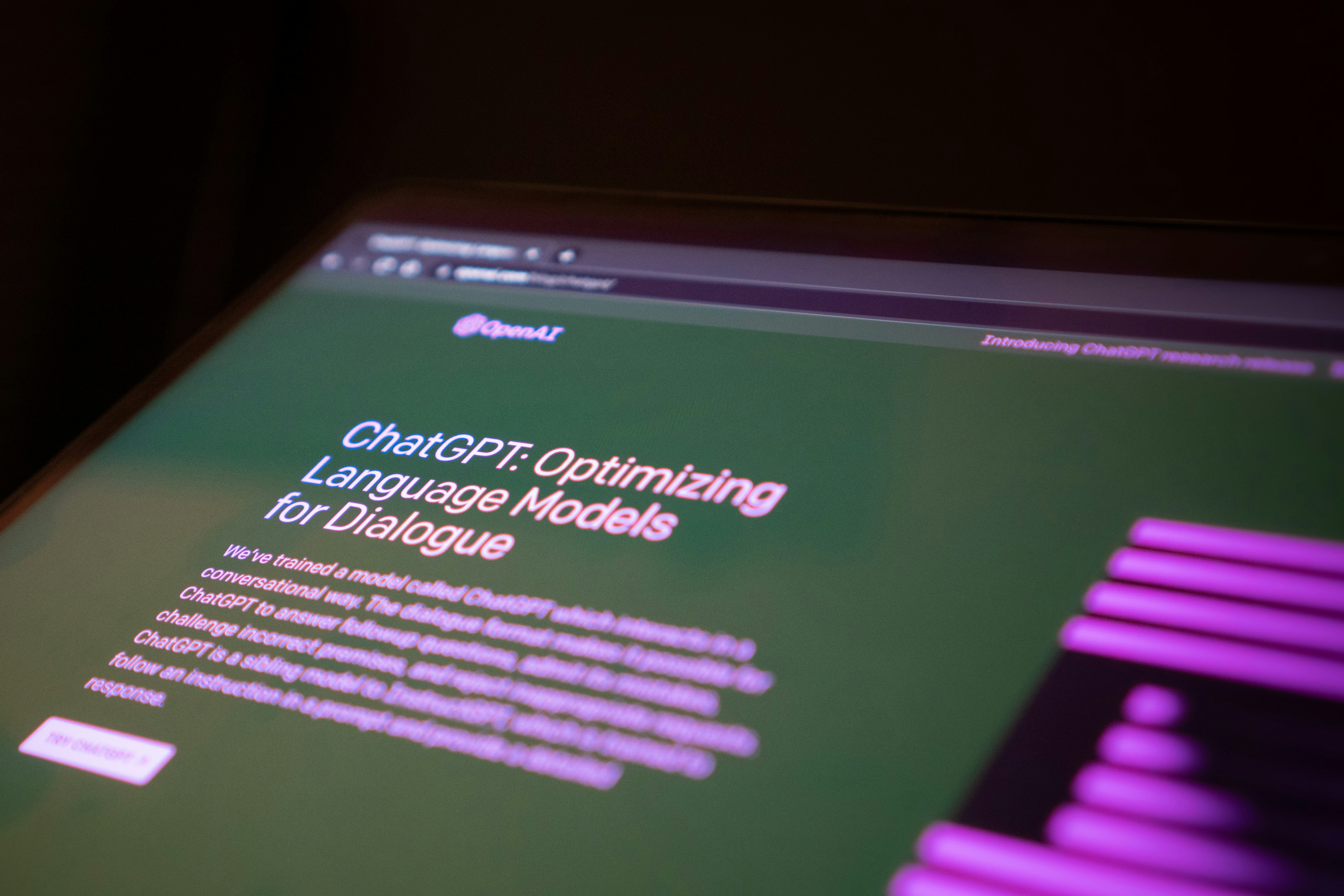
Introduction to Natural Language Processing (NLP)
Natural Language Processing, commonly referred to as NLP, is a subfield of artificial intelligence that focuses on the interaction between computers and humans through natural language. This discipline is essential for enabling machines to understand, interpret, and respond to human language in a meaningful way. As technology continues to advance, the significance of NLP has grown substantially, particularly in the realm of human-computer interaction.
NLP encompasses a variety of processes that convert human language into a form that computers can process. This includes tasks such as speech recognition, language generation, sentiment analysis, and machine translation. Each of these tasks plays a pivotal role in the development of applications that can engage with users in a more intuitive and human-like manner. The ability of a machine to comprehend and generate human language is fundamental to enhancing user experiences across numerous applications.
The rise of the internet and digital communication has further underscored the importance of Natural Language Processing. As vast amounts of unstructured textual data are generated daily, the ability to distill meaningful information from this data is crucial. Advanced NLP techniques allow businesses and individuals to harness insights from social media, customer reviews, and other text-based sources, thereby driving better decision-making and fostering more personalized interactions.
As we delve deeper into the role of NLP in artificial intelligence, it becomes evident that its impact extends well beyond mere language processing. By facilitating seamless communication between humans and machines, NLP is transforming a wide array of industries—from healthcare to finance, enhancing efficiency and fostering innovation. Understanding NLP is imperative for anyone looking to navigate today’s technology-driven world, as it continuously shapes how we interact with digital systems.
The Evolution of NLP
The evolution of Natural Language Processing (NLP) can be traced back to the 1950s, a period characterized by nascent computer technology and theoretical linguistics. Early attempts at NLP were rudimentary and focused primarily on basic tasks like machine translation. One of the seminal milestones was Alan Turing’s famous paper in 1950, which introduced the Turing Test, conceptualizing the ability of a machine to exhibit intelligent behavior indistinguishable from that of a human.
During the 1960s and 1970s, NLP made significant strides with the introduction of rule-based systems. These systems relied on handcrafted rules and grammars to parse and interpret language. The renowned SHRDLU program, developed by Terry Winograd, exemplified this approach by manipulating objects in a virtual blocks world using commands expressed in natural language. Although promising, these systems were limited by their inability to understand context and nuance, often faltering when faced with language complexity.
The 1980s marked a paradigm shift towards statistical methods, propelled by advancements in computational power and the availability of large corpus data. Researchers began to employ probabilistic models to predict and analyze language patterns, highlighting the effectiveness of data-driven approaches. The advent of machine learning in the 1990s further revolutionized NLP, as algorithms were trained on vast amounts of text data, allowing for more sophisticated language understanding and generation.
The turn of the millennium sparked an escalation in NLP capabilities, largely due to the rise of the Internet and the vast data it generated. Techniques such as vector space models and support vector machines became prominent, which facilitated more advanced applications such as sentiment analysis and entity recognition. By the 2010s, deep learning frameworks like Recurrent Neural Networks (RNN) and Transformer models emerged, significantly enhancing the accuracy and functionality of NLP systems.
Today, the field continues to evolve rapidly, integrating neural networks and contextual embeddings to achieve impressive outcomes in tasks ranging from language translation to conversational agents. As we advance into the future, the trajectory of NLP serves as a testament to the fusion of linguistics, computer science, and cognitive psychology, laying the foundation for ever more nuanced interactions between humans and machines.
How NLP Works: Key Techniques and Algorithms
Natural Language Processing (NLP) encompasses a variety of techniques and algorithms designed to facilitate the interaction between humans and machines through the use of natural language. One of the fundamental techniques in NLP is tokenization, which involves breaking down text into individual elements such as words or sentences. This segmentation forms the basis for more complex analyses and allows systems to understand the structure of the text.
Another essential process is stemming, which reduces words to their root forms. By doing so, NLP systems can associate different grammatical variations of a word with its base form, allowing for a more unified interpretation of textual data. Similarly, lemmatization moves beyond stemming by considering the context in which a word is used to derive its base form accurately, enhancing the understanding of meaning in sentences.
Furthermore, part-of-speech (POS) tagging plays a crucial role in NLP by identifying the grammatical categories (nouns, verbs, adjectives, etc.) of words in a sentence. This classification helps in extracting meaningful information and constructing a coherent representation of the text.
Moving to more advanced techniques, Named Entity Recognition (NER) focuses on identifying and classifying key entities such as names of people, organizations, and locations in text. This ability to discern relationships between various entities is vital for many applications ranging from information retrieval to automated customer service systems.
In addition, NLP utilizes sentiment analysis to determine the emotional tone behind words. This is increasingly valuable in fields like marketing and social media monitoring, allowing organizations to gauge public opinion. Finally, machine translation leverages NLP techniques to convert text from one language to another, facilitating global communication and information exchange.
Applications of NLP in Everyday Life
Natural Language Processing (NLP) plays a pivotal role in enhancing our day-to-day experiences through various applications that facilitate communication between humans and machines. One of the most prevalent uses of NLP is found in virtual assistants, such as Siri and Alexa. These intelligent systems utilize NLP algorithms to understand voice commands and respond through natural dialogue, making it easier for users to interact with technology. By decoding spoken language and converting it into actionable tasks, these virtual assistants simplify the management of daily tasks.
Another common application is the use of chatbots in customer service environments. Businesses utilize these automated systems to communicate with customers, providing support and answering queries in real-time. Chatbots leverage NLP to understand user intent and context, thereby offering relevant information without the need for human intervention. This not only improves efficiency but also ensures customer satisfaction by providing prompt responses.
Moreover, NLP offers tools for text analysis that are frequently used in various sectors, including marketing and social media. Organizations can analyze large volumes of text, such as reviews or user feedback, to extract valuable insights about customer sentiment and trends. This analytical capability aids businesses in making informed decisions and tailoring their strategies to meet consumer demands.
Lastly, language translation services powered by NLP technologies have transformed global communication. Tools like Google Translate make it possible to break down language barriers, allowing users to communicate across different cultures effectively. By employing sophisticated algorithms to translate text and speech in real-time, these services enhance accessibility and foster cross-cultural interactions on a broader scale.
Challenges in Natural Language Processing
Natural Language Processing (NLP) has made significant strides in recent years, yet it still grapples with numerous challenges that impede its effectiveness. One of the foremost issues is ambiguity in language. Words can have multiple meanings, and sentences can be interpreted differently based on context. For instance, consider the phrase “bank”; without additional context, it could refer to a financial institution or the side of a river. This ambiguity complicates the ability of NLP systems to accurately interpret user intentions, leading to potential misunderstandings in applications ranging from chatbots to voice-activated assistants.
Another critical challenge lies in context understanding. Humans rely heavily on contextual cues, such as previous discussion topics or situational factors, to comprehend language fully. However, NLP systems often struggle with maintaining context over extended interactions. This limitation can result in responses that seem disconnected or irrelevant, diminishing user satisfaction and trust in the technology. Ongoing research aims to enhance contextual awareness in NLP systems, helping them to better mimic human-like understanding.
Language diversity also presents substantial hurdles for NLP. With over 7,000 languages worldwide, each with its grammatical structures, idioms, and cultural contexts, it becomes increasingly difficult to develop universal NLP models that can cater to a global audience. Many NLP systems are predominantly trained on data from English, thereby exacerbating the challenges faced by speakers of less-represented languages. This disparity calls for new methodologies that focus on multilingual capabilities and ensure inclusiveness in NLP applications.
These challenges, while significant, are the driving force behind ongoing research in the field. Researchers are continuously exploring advanced techniques to improve ambiguity resolution, context retention, and language diversity, which are vital for the evolution of NLP and its effectiveness in human-machine interaction. Addressing these obstacles remains central to realizing the full potential of Natural Language Processing.
The Role of Machine Learning in NLP
Machine learning plays an indispensable role in the evolution of Natural Language Processing (NLP), transforming the way machines understand and engage with human language. By employing algorithms trained on vast datasets, machine learning enables NLP systems to discern patterns and relationships within textual data, enhancing their ability to generate accurate and context-aware responses.
Deep learning, a subset of machine learning, further amplifies these capabilities through complex architectures known as neural networks. Among these, recurrent neural networks (RNNs) have proven particularly effective for tasks involving sequential data, such as language. RNNs possess the unique ability to maintain a memory of prior inputs, allowing them to process sentences in a holistic manner, accounting for context and nuance that are often critical in human communication.
Another revolutionary architecture in the realm of NLP is the transformer model. Unlike traditional models that process language in a linear fashion, transformers utilize a mechanism called attention, which enables them to focus selectively on various words within a sentence. This not only enhances understanding and context recognition but also significantly increases processing efficiency. The introduction of transformers has allowed for remarkable advancements in tasks such as translation, summarization, and sentiment analysis.
The interplay between machine learning, particularly deep learning, and NLP has facilitated the development of sophisticated applications. From voice-activated assistants to sophisticated chatbots, these technologies are becoming increasingly embedded in everyday life. Consequently, as machine learning techniques continue to evolve, they promise to further revolutionize the capabilities of NLP systems, thereby improving human-machine interaction.
Future Trends in NLP
The landscape of Natural Language Processing (NLP) is continuously evolving, driven by advancements in technology and increasing demand for sophisticated human-machine interaction. One of the most notable future trends is the focus on multilingual processing. As businesses expand globally, the necessity for systems capable of understanding and generating text in multiple languages becomes paramount. Technologies that can seamlessly translate and analyze text across diverse languages will enhance accessibility and usability, allowing for a more inclusive interaction with NLP systems.
Another significant trend is the integration of ethical considerations into the development of NLP technologies. As the use of AI and machine learning grows, so too does the importance of ensuring that these systems are developed responsibly. This includes addressing biases in training data, improving transparency in decision-making processes, and implementing measures to protect user privacy. The creation of guidelines and best practices will be crucial as organizations strive to create NLP solutions that are equitable and just.
Furthermore, we can expect to see enhanced integration of NLP technologies with other cutting-edge fields, such as augmented reality (AR) and robotics. The combination of NLP with AR can lead to extraordinary user experiences, where information is not only processed through text but also visually presented in interactive formats. For instance, users could interact with virtual assistants or digital interfaces that respond contextually based on natural language input. Similarly, the infusion of NLP into robotics will empower machines to better understand human commands and engage with users more naturally, making technology feel more intuitive.
As these trends unfold, they will undoubtedly shape the future of Natural Language Processing, setting the stage for new possibilities in how humans communicate with machines.
Ethical Considerations in NLP Deployment
Natural Language Processing (NLP) technology has transformed human-machine interactions, but its deployment raises significant ethical considerations. One major concern is the potential for bias in language models. Since these models are trained on vast datasets sourced from the internet, they can inadvertently learn and perpetuate societal biases present in that data. Consequently, this may lead to unequal treatment of various demographic groups, reinforcing stereotypes and discrimination.
Another critical ethical aspect pertains to data privacy. NLP systems often require extensive amounts of personal information to function effectively. The handling of sensitive data must comply with regulations like the General Data Protection Regulation (GDPR) to ensure that user privacy is maintained. Developers must implement robust measures to anonymize and protect personal information, preventing misuse and instilling trust in users regarding how their data is handled.
The impact of automation on employment represents another ethical challenge in the field of NLP. As machines become increasingly capable of performing tasks that were once the domain of humans, there is a legitimate concern about job displacement. While NLP can drive efficiency and innovation, it is crucial to consider the socioeconomic implications, including workforce retraining and support for those affected by automation.
To address these ethical challenges, developers must be proactive in creating fair and responsible NLP systems. This involves conducting thorough bias audits, ensuring diverse and representative training datasets, and implementing ethics guidelines throughout the development lifecycle. Transparency in model decision-making processes can also help users understand how and why certain outcomes are produced, fostering a more ethical adoption of NLP technologies. By emphasizing ethical practices, the development community can strive to harness the benefits of NLP responsibly while mitigating adverse effects on society.
Conclusion: The Impact of NLP on Communication and Technology
Natural Language Processing (NLP) has fundamentally redefined the way humans interact with machines, marking a significant shift in communication dynamics. Through its ability to interpret, analyze, and generate human language, NLP facilitates seamless interactions between users and technology in countless applications.
The transformational impact of NLP can be observed across various sectors, including customer service, healthcare, education, and entertainment. By enabling machines to understand and respond to human language, NLP enhances user experiences by making interactions more intuitive and efficient. For instance, virtual assistants powered by NLP comprehend users’ requests and provide relevant answers, significantly improving task management and information retrieval.
Moreover, NLP’s capabilities extend beyond mere conversation; it encompasses sentiment analysis, language translation, and text summarization. These features empower organizations to analyze vast amounts of data quickly, derive insights, and engage with customers more effectively. With the rapid advancement of machine learning algorithms and data processing technologies, the scope of NLP applications continues to expand, allowing for increased automation and improved decision-making processes.
As NLP continues to evolve, it raises critical considerations regarding privacy, ethical implications, and the importance of maintaining human oversight in technology. The relationship between humans and machines is being reimagined, spurred on by NLP advancements that demand responsible and ethical integration into everyday life.
In conclusion, the profound influence of Natural Language Processing on communication and technology is undeniable. As it bridges the gap between human language and machine understanding, NLP not only enhances user interactions but also shapes the future of how we engage with technology and information in our increasingly digital world.