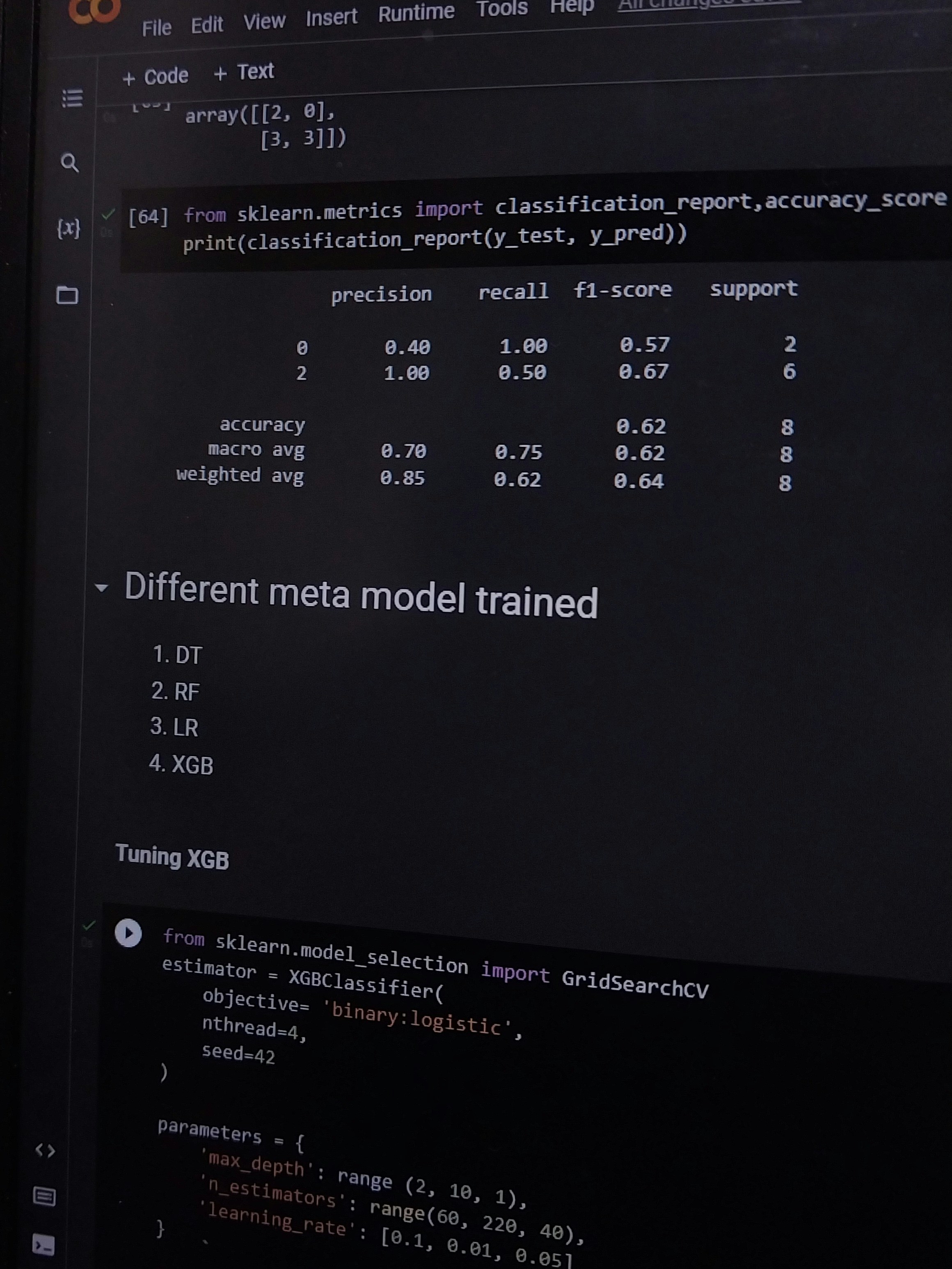
Introduction to Fine-Tuning
Fine-tuning is an essential concept within the realm of machine learning and natural language processing (NLP), acting as a pivotal step in improving the performance of pre-trained models. At its core, fine-tuning involves taking a model that has already been trained on a large dataset and then refining it on a smaller, more specific dataset relevant to a particular task. This approach leverages the generalization capabilities of the pre-trained model while allowing it to adapt to more specific nuances within the target data.
The process typically starts with a model that has learned a broad understanding of language or features, such as a language model trained on diverse textual data. Fine-tuning then adjusts the weights of this model based on targeted datasets, making it suitable for tasks such as sentiment analysis, translation, or question-answering. The advantage of fine-tuning lies in its efficiency; leveraging an existing model significantly reduces the time and resources required for training from scratch, thus enabling practitioners to achieve high performance even with limited data.
The relevance of fine-tuning cannot be overstated, especially given the increasing complexity of machine learning tasks. As researchers and developers strive for more precise and tailored applications, fine-tuning allows for customization and deployment that aligns closely with user needs. It bridges the gap between generalist models and specialized applications, resulting in more effective and efficient systems. In an era where technology evolves rapidly, mastering fine-tuning techniques is indispensable for anyone involved in the development of advanced machine learning systems.
The Importance of Fine-Tuning
Fine-tuning plays a critical role in the development of artificial intelligence (AI) models, significantly enhancing their accuracy and efficiency. As machine learning practitioners strive to create models that perform reliably across various tasks, fine-tuning becomes a valuable technique. This process involves taking a pre-trained model and further adjusting it on a narrower dataset. By leveraging transfer learning, practitioners can refine models that have already been exposed to vast amounts of data, rather than building models from scratch.
Transfer learning is pivotal in the fine-tuning process, as it allows models to retain and utilize knowledge gained from previous learning tasks. For instance, a model trained to recognize objects in images can be fine-tuned to excel in a related task, such as identifying specific types of objects within a different context. This approach saves time and resources while improving the model’s predictive capabilities. Consequently, fine-tuned models often outperform their counterparts that have not undergone this step, demonstrating the method’s efficacy.
The use of pre-trained models is another significant aspect of fine-tuning. These models are typically trained on extensive datasets and encompass a wide range of features that may be applicable across various domains. By starting with a robust pre-trained model, AI practitioners can focus on tailoring the model to their specific requirements. This not only speeds up the development process but also increases the likelihood of achieving higher accuracy in the final model.
In summary, fine-tuning serves as an essential strategy for enhancing the performance of AI models. Through the integration of transfer learning and the utilization of pre-trained models, practitioners can effectively improve accuracy and efficiency, making fine-tuning a preferred choice in the field of machine learning.
How Fine-Tuning Works
Fine-tuning is a pivotal process in the realm of machine learning, particularly when it comes to optimizing pre-trained models for specific tasks. The initial step in fine-tuning involves selecting a pre-trained model, which serves as the backbone for further adjustments. Models such as BERT, GPT, and ResNet, which have been trained on vast datasets, already embed rich feature representations. This foundational knowledge significantly reduces the amount of data and time required for training on a new task.
Once a suitable pre-trained model is selected, adapting the model architecture is the next critical step. Depending on the specific application, alterations may involve modifying the output layer to align with the desired number of classes or embedding dimensions suitable for the task at hand. This customization ensures that the model’s predictions directly correspond to the outputs required for the new dataset.
Retraining the modified model on a specific dataset is where the core of fine-tuning occurs. During this phase, principles of gradient descent and optimization algorithms come into play. Gradient descent is employed to adjust the model parameters iteratively, minimizing the loss function that quantifies the difference between the predicted and actual outputs. Variants of gradient descent, such as Adam or RMSprop, can enhance convergence speed and stability, facilitating faster training on the new dataset.
The training process often involves employing a smaller learning rate compared to what is typically used in initial training. This approach allows the model to make refined updates without drastically altering the learned weights, preserving the valuable features acquired from the pre-training stage. Over several epochs, fine-tuning allows the model to adapt effectively to the nuances of the specific task, ensuring a more accurate and efficient machine learning application.
Types of Fine-Tuning Techniques
Fine-tuning is an essential process in machine learning, particularly when adapting pre-trained models to specific tasks. There are several established techniques to facilitate this, each suitable for different situations and objectives. Here, we will delve into three prominent fine-tuning strategies: feature extraction, layer freezing, and varying learning rates.
Feature extraction involves using a pre-trained model’s learned features as fixed representations for new data. In this method, one typically extracts the output of the model’s layers and uses them as inputs for a new, simpler model applicable to the target task. Feature extraction is particularly effective when the dataset is limited, as it leverages the robustness of pre-trained models to enhance performance without extensive retraining. This technique is beneficial in domain-specific tasks such as medical image classification, where labeled data is scarce.
Layer freezing is another widely used method, where certain layers of a pre-trained model are held constant (i.e., not updated) during training. This technique generally involves freezing the lower layers, which capture more generic features, while allowing the upper layers to adapt to the task at hand. This approach can reduce the risk of overfitting and speed up the training process because it minimizes the number of parameters that need adjustment. Layer freezing is particularly advantageous when the new task is somewhat similar to the original task on which the model was trained.
Varying learning rates is a technique that targets optimizing the training process. By assigning different learning rates to different layers or parts of the model, fine-tuning can be customized. For instance, it is common to use a lower learning rate for the pre-trained layers, optimizing them more conservatively while applying a higher learning rate to the newly added layers. This strategy can help ensure that the model converges efficiently, allowing it to adapt effectively to the nuances of the new dataset.
Common Applications of Fine-Tuning
Fine-tuning has emerged as a pivotal technique in various domains, leveraging pre-trained models to enhance performance on specific tasks. One of the most notable applications of fine-tuning is in image classification. Organizations in the healthcare sector have utilized fine-tuning to improve diagnostic accuracy. For instance, a study demonstrated that a convolutional neural network pre-trained on ImageNet could identify tumors in medical imagery with significantly higher precision when fine-tuned with a smaller, domain-specific dataset.
Another prominent application is in the field of sentiment analysis. Companies like Twitter and Facebook have adopted fine-tuned natural language processing (NLP) models to analyze user-generated content. By utilizing fine-tuned models, these platforms can better gauge public sentiment regarding products, policies, and trends. For instance, a fine-tuned BERT model can discern nuances in user expressions, leading to improved understanding and interaction within social media environments.
Fine-tuning also plays a crucial role in language translation. Google Translate and similar applications have employed fine-tuned transformer models that enhance translation accuracy across multiple languages. By fine-tuning models on specific language pairs or regional dialects, organizations have been able to reduce errors and produce more contextually relevant translations.
Additionally, fine-tuning shows promise in other areas, such as:
- Recommendation Systems: Platforms like Netflix fine-tune algorithms to deliver personalized content recommendations based on user behavior.
- Chatbots: Businesses fine-tune conversational AI to handle customer service inquiries effectively, leading to higher satisfaction rates.
The versatility of fine-tuning across various sectors underlines its significance in enhancing model effectiveness, addressing the specific needs of industries while capitalizing on existing pre-trained models.
Tools and Frameworks for Fine-Tuning
Fine-tuning in machine learning has become a pivotal process, driven largely by advancements in various frameworks and libraries. One of the most widely utilized tools is TensorFlow, an open-source framework developed by Google. TensorFlow offers extensive support for fine-tuning pre-trained models, especially in the domains of computer vision and natural language processing. Its capabilities are further enhanced by the Keras API, which simplifies the model-building process and allows for quick adjustments to hyperparameters, making fine-tuning more accessible for practitioners.
PyTorch is another prominent framework that has gained traction for its dynamic computation graph, allowing developers to modify models on-the-fly. This feature proves particularly useful during the fine-tuning process, as it enables experimentation with model architectures and training strategies without the need for lengthy adjustments. PyTorch also supports transfer learning, facilitating the use of models pre-trained on large datasets, which can be fine-tuned to meet specific task needs efficiently.
Additionally, Hugging Face’s Transformers library stands out in the realm of natural language processing, providing a user-friendly interface for integrating various transformer models. This library specializes in fine-tuning state-of-the-art models such as BERT, GPT-2, and T5, with built-in functionalities that streamline the process, including tokenization and model evaluation. Hugging Face has democratized access to fine-tuning techniques, allowing both novices and experts to harness the power of advanced NLP without extensive technical background.
In summary, the choice of tools significantly impacts the efficiency of the fine-tuning process. Whether opting for TensorFlow, PyTorch, or Hugging Face’s Transformers, each framework offers unique features and strengths that cater to specific project requirements, ultimately enhancing the model’s performance and adaptability to new tasks.
Challenges Faced in Fine-Tuning
Fine-tuning machine learning models presents several challenges that practitioners must be aware of to achieve optimal results. One of the primary issues encountered is overfitting, which occurs when a model learns not just the underlying patterns but also the noise present in the training data. This can lead to a model that performs well on the training set but poorly on new, unseen data. To counteract overfitting, practitioners can employ techniques such as early stopping, regularization methods, and data augmentation, which can introduce variability in the training data and help improve generalization.
Conversely, underfitting is another challenging situation in the fine-tuning process. Underfitting arises when a model is too simple to capture the underlying trends in the data, often due to inadequate training or insufficient model complexity. This can be mitigated by using more complex models or by ensuring that the training process is thorough and captures various facets of the input data.
The availability of ample labeled data is also a crucial factor in fine-tuning. Insufficient data can limit a model’s ability to learn effectively, leading to poor performance. Consequently, gathering robust labeled datasets or employing transfer learning from pre-trained models can alleviate these issues, as pre-trained models often require less data to fine-tune successfully. Additionally, practitioners should consider the quality of the labeled data, as inconsistencies and inaccuracies can adversely affect model performance.
Overall, recognizing these challenges—overfitting, underfitting, and the necessity for sufficient and high-quality labeled data—is essential for anyone looking to navigate the complexities of fine-tuning effectively. By leveraging solid strategies to tackle these issues, practitioners can enhance their models’ predictive power and ensure better deployment outcomes.
Best Practices for Effective Fine-Tuning
Fine-tuning machine learning models is a nuanced process that can significantly influence their performance. Employing best practices is essential for achieving optimal results. One of the foundational aspects of effective fine-tuning is the selection of an appropriate learning rate. The learning rate determines how quickly or slowly a model learns; too high of a rate may lead to destabilization while too low may result in unnecessarily lengthy training times. It is advisable to experiment with a range of learning rates, potentially utilizing learning rate schedules or adaptive learning rate optimizers.
Monitoring performance during the fine-tuning phase is crucial. Implementing metrics to evaluate the model’s outputs helps in making informed adjustments. Techniques such as cross-validation can ensure that the model is not only performing well on training data but is also able to generalize effectively. Monitoring the loss function throughout the fine-tuning process will provide insights into whether the model is still benefiting from additional training or if it has become overfit.
Experimentation is another key practice when fine-tuning models. Trying different configurations—including variations in hyperparameters, data augmentation techniques, and model architectures—allows practitioners to discover the most effective setup for their specific problem. It is often beneficial to establish a systematic approach to testing these configurations to draw accurate comparisons. Additionally, leveraging transfer learning by starting with a pre-trained model can save time and resources, enhancing the chances of improved outcomes.
Finally, consider the usefulness of ensembling techniques where multiple models are combined to produce a single favorable output. This approach can often yield better results than any single model can achieve on its own. By diligently applying these best practices, practitioners can enhance the effectiveness of their fine-tuning efforts, leading to superior model performance across various tasks.
Conclusion and Future of Fine-Tuning
Throughout this comprehensive guide, we have explored the concept of fine-tuning within the field of machine learning. It is a crucial aspect that allows pre-trained models to adapt to specific tasks with improved accuracy and efficiency. By adjusting parameters and training on a limited dataset, fine-tuning not only saves time but also leverages existing knowledge, reducing the need for extensive computational resources.
Moving forward, the future of fine-tuning appears promising, primarily driven by the rapid advancements in technology and computational capabilities. As models grow in complexity and scale, we anticipate enhanced methods for fine-tuning that go beyond conventional techniques. This evolution may include the integration of more sophisticated optimization algorithms, allowing for smarter adjustments that yield even greater performance improvements.
Furthermore, developments in transfer learning and few-shot learning are likely to influence fine-tuning practices significantly. These methodologies could enable models to generalize better across varied datasets and tasks, making fine-tuning a more streamlined process. With increased emphasis on ethical AI and responsible computing, future fine-tuning will also need to incorporate considerations around bias and fairness, ensuring that models are not just finely tuned but also equitable in their performance.
As artificial intelligence continues to mature, the options for customizing models through fine-tuning are set to expand. Applications in fields such as healthcare, finance, and autonomous systems will attract more attention, showcasing the versatility and potential of fine-tuning approaches. As we look to the future, it is clear that fine-tuning will remain an integral component in the machine learning landscape, driving innovation and enhancing the applicability of AI technologies.