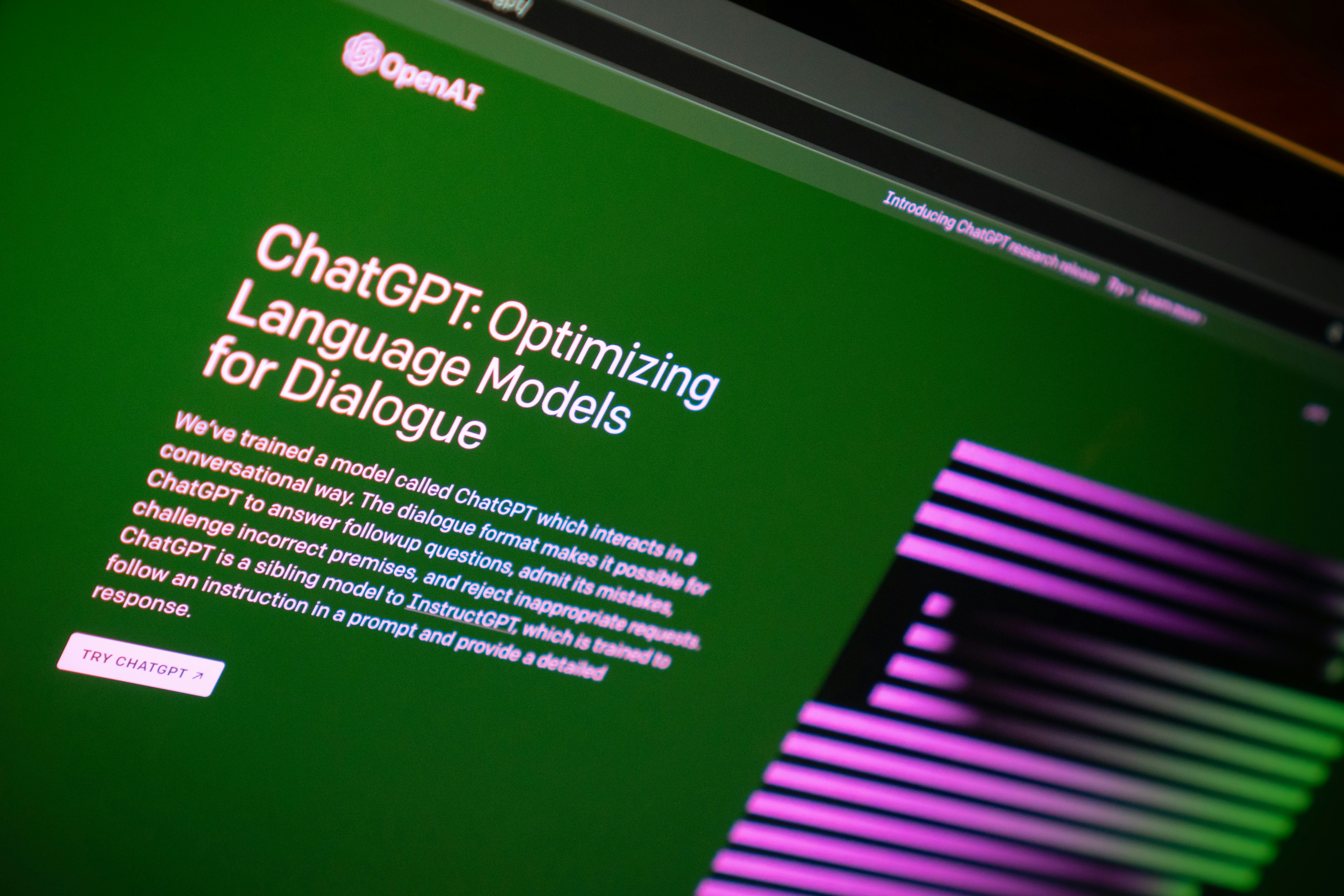
Introduction to GPT
The abbreviation “GPT” stands for Generative Pre-trained Transformer, a term that has become increasingly prevalent in the field of artificial intelligence, particularly in relation to natural language processing. Introduced by OpenAI, the GPT architecture signifies a significant progression in how machines understand and generate human language. The development of GPT is grounded in the pursuit of creating more sophisticated AI systems capable of interpreting and producing text that mimics human-like responses.
GPT’s origins can be traced back to advancements in machine learning and neural networks, which paved the way for the creation of transformer models. The initial version, GPT, was released in 2018 and marked a departure from previous AI models by utilizing unsupervised learning techniques to pre-train on vast amounts of text data. This pre-training process enables the model to learn patterns, structures, and nuances of language, thus enhancing its ability to generate coherent text.
Over the years, several iterations of GPT have been developed, including GPT-2 and GPT-3, each iteration boasting improvements in capabilities, size, and underlying architecture. The naming conventions used, such as the term “transformer,” reflects the model’s architectural innovation, which processes sequences of data with greater efficiency compared to its predecessors. This evolution is pivotal in expanding the potential applications of AI, from virtual assistants to content generation.
The significance of the GPT naming convention extends beyond mere terminology; it encapsulates the foundational principles behind its functionality. As AI applications continue to evolve, understanding these concepts becomes crucial for harnessing their full potential, making it essential for both practitioners and enthusiasts in the AI field to familiarize themselves with the structure and implications of GPT models.
Breaking Down GPT
The acronym GPT stands for Generative Pre-trained Transformer, which encapsulates the core functionalities of this advanced artificial intelligence model. Each component of the acronym plays a significant role in the performance and capabilities of GPT systems, influencing how they generate text and understand context.
The term Generative refers to the model’s ability to produce content. In the context of GPT, this means that it can generate coherent and contextually relevant text based on the input it receives. The generative nature of these models is what allows them to create text across a variety of domains, from casual conversation to academic writing, seamlessly mimicking human-like responses.
Pre-trained indicates that the model undergoes extensive training on a diverse dataset before being fine-tuned or used in specific applications. This pre-training phase ensures that the model is not only equipped with language patterns but also understands a wide range of topics. As a result, it can exhibit versatility in conversation and maintain a coherent narrative, rendering it effective for various tasks without needing extensive retraining for each new application.
Lastly, the term Transformer refers to the architecture that underlies the GPT model. Introduced in the seminal paper “Attention is All You Need,” the transformer architecture utilizes mechanisms known as attention to weigh the relevance of different words in a sentence. This structure enables the model to grasp context and relationships within text more effectively than traditional models, leading to improved performance in tasks like translation and dialogue.
In summary, the acronym GPT succinctly represents a powerful AI framework that leverages generative capabilities, extensive pre-training, and an advanced transformer architecture to deliver high-quality language processing and generation capabilities.
The Role of Generative Models
Generative models play a pivotal role in the field of artificial intelligence, particularly in applications requiring the creation of coherent and contextually relevant outputs. These models are designed to learn from vast collections of training data, identifying patterns and structures that inform the generation of new content. The ability of generative models to create text or other outputs is crucial for platforms such as ChatGPT, where natural language processing is essential.
The underlying mechanism of generative models involves a statistical approach where they analyze sequences of words, grammar, and contextual nuances found in the training material. By leveraging this information, generative models can produce responses that are not only grammatically correct but also semantically appropriate to the given input. As a result, users experience a seamless interaction that mimics human-like conversation.
Moreover, the significance of generative models extends beyond simple text generation. They are employed in various applications, including creative writing, customer service automation, and even in educational tools that facilitate learning through dialogue. The versatility of these models is attributed to their ability to adapt and refine their outputs based on user interactions and feedback, ensuring that the generated content remains relevant and user-centered.
As the capabilities of generative models continue to evolve, their importance in AI applications like ChatGPT becomes increasingly evident. The successful implementation of these models hinges on their proficiency in understanding context, maintaining coherence, and providing meaningful information. This development not only enhances user experience but also broadens the scope of AI technology across diverse sectors.
Understanding Pre-training
The pre-training process plays a pivotal role in the development and efficacy of Generative Pre-trained Transformer (GPT) models. During this initial phase, these models are exposed to vast amounts of text data, which serve as the foundation for their language understanding capabilities. By leveraging diverse datasets sourced from books, articles, websites, and other textual media, GPT models are trained to predict the next word in a sentence, enabling them to grasp context, semantics, and structure within a language.
This extensive pre-training phase is essential as it allows the model to develop a nuanced understanding of language patterns, idiomatic expressions, and general knowledge present in the training data. It is important to note that the focus is not solely on memorizing text but rather on learning the underlying structure and relationships between words and phrases. This process results in models that can generate coherent and contextually relevant responses when later fine-tuned for specific applications.
Transformers: The Backbone of GPT Architecture
The Transformer architecture is a significant innovation in the field of artificial intelligence, particularly in natural language processing (NLP). Its introduction marked a turning point in the development of models such as GPT (Generative Pre-trained Transformer). The Transformer operates on the principle of self-attention, allowing the model to weigh the importance of different words in a sentence relative to one another. This capability plays a crucial role in understanding context, which is essential for generating coherent and contextually relevant responses.
At the core of the Transformer structure are key components such as multi-head attention mechanisms and feed-forward networks. The multi-head attention mechanism allows the model to simultaneously process various segments of the input data, enabling it to capture diverse relationships between words. This parallel processing contributes to the efficiency of GPT models, making them faster and more capable of managing large datasets compared to previous sequential architectures like RNNs (Recurrent Neural Networks).
Additionally, the Transformer’s use of positional encodings allows it to retain information about the order of words. In NLP tasks, the arrangement of words significantly influences their meaning. Positional encodings add a layer of understanding by providing the model with contextual clues about each word’s placement within a sentence, increasing the effectiveness of the model in generating human-like text.
The integration of these mechanisms into the GPT design results in models that are not only efficient but also highly adaptable to various language-related tasks. The architecture’s ability to learn patterns and nuances of language from vast corpora of text is a testament to the robustness of the Transformer model. This foundational structure empowers GPT and similar models to excel in tasks ranging from translation to conversational agents.
Applications of GPT Models
Generative Pre-trained Transformer (GPT) models have emerged as a powerful tool in various domains, boasting applications that range from conversational interfaces to creative endeavors. One of the most recognized implementations of these models is the conversational agent, ChatGPT. This platform has redefined how humans interact with machines, providing an intuitive medium for users to seek information, engage in discussions, and receive assistance across a multitude of topics.
In addition to conversational agents, GPT models are increasingly utilized in the realm of creative writing. Their ability to generate coherent and contextually relevant text has made them instrumental in aiding content creators, authors, and marketers. By leveraging the capabilities of these models, writers can generate ideas, draft narratives, and even refine their work through iterative feedback generated by AI, thus increasing productivity and enhancing creativity.
Furthermore, GPT models play a crucial role in coding assistance. Platforms such as GitHub Copilot utilize these models to aid programmers in writing code by providing autocomplete suggestions, generating code snippets based on comments, or even creating entire functions. This not only streamlines the software development process but also helps developers learn and adapt more efficiently.
In addition, GPT models are making strides in fields such as education, where they can provide personalized learning experiences and tutoring. They can assist students in understanding complex topics by generating tailored explanations and examples based on individual needs. This versatility highlights the expansive potential of GPT technology, proving to be a transformative force across various industries and applications.
The Evolution of GPT: From GPT-1 to GPT-4
The Generative Pre-trained Transformer (GPT) models have undergone significant evolution since their inception, transforming the landscape of natural language processing (NLP). The journey commenced with GPT-1, introduced in 2018 by OpenAI. This initial model was groundbreaking, leveraging unsupervised learning from vast amounts of text data to generate coherent and contextually relevant text. At its core, GPT-1 was a proof of concept, showcasing the potential of transformer architecture for various linguistic tasks.
The following iteration, GPT-2, was released in 2019 and marked a pivotal shift in capabilities. Boosted in scale, GPT-2 featured 1.5 billion parameters, enhancing its performance across domains. Its ability to generate human-like text raised concerns regarding misuse, leading OpenAI to initially withhold the complete model. Subsequently released in stages, GPT-2 showcased advancements in text generation quality, fluency, and coherence, thus setting the groundwork for its successor.
In 2020, the emergence of GPT-3 represented a monumental leap forward. With a staggering 175 billion parameters, GPT-3 enabled unprecedented levels of understanding and contextuality. Its performance across diverse applications – from creative writing to coding assistance – solidified its status as a versatile AI tool. The extensive dataset and hyper-parameter tuning facilitated a high degree of adaptability, allowing GPT-3 to engage with prompts meaningfully.
The most recent advancement, GPT-4, launched in 2023, introduced even greater contextual understanding and sensitivity to user intent. This version incorporates refined algorithms and improves upon ethical considerations, addressing challenges related to bias and misinformation. As GPT models progress, each version builds on the lessons learned from its predecessors, resulting in increasingly sophisticated and capable AI systems. The evolution from GPT-1 through GPT-4 illustrates a commitment to enhancing model performance and safety in the AI domain.
Challenges and Limitations of GPT Technology
The development of Generative Pre-trained Transformer (GPT) models has ushered in significant advancements in artificial intelligence, particularly in natural language processing. However, as with any technology, GPT models face various challenges and limitations that warrant attention. One primary concern is the inherent bias present within training data. GPT models learn from vast datasets which can, unfortunately, encapsulate societal biases. Such biases may lead to the models generating content that reflects or even amplifies these prejudices, posing ethical challenges in applications where neutrality is paramount.
Another significant limitation of GPT technology is its susceptibility to generating misinformation. While these models are capable of producing coherent and contextually relevant text, they often lack a robust mechanism for fact-checking. Consequently, there is a risk of spreading false information, especially in critical domains such as healthcare, education, and news dissemination. This issue underscores the necessity for human oversight when deploying GPT systems, as users may be misled by confidently presented but inaccurate information.
Furthermore, there are ethical concerns related to the use of GPT technology across various fields. These concerns include the potential for misuse in generating malicious content, such as phishing attacks or deepfake texts, which can harm individuals and society at large. The question of accountability arises, especially when AI generates content that leads to negative consequences. As such, developers and organizations are prompted to establish guidelines and frameworks for the ethical deployment of GPT models. Addressing these challenges remains critical for ensuring that GPT technology is used responsibly and beneficially, thereby maximizing its potential while minimizing risks.
The Future of GPT and AI Language Models
The development of GPT (Generative Pre-trained Transformer) models has laid a strong foundation for the future of artificial intelligence and natural language processing. As advancements in technology continue, AI language models are poised to undergo significant enhancements that could redefine human-computer interactions. Innovations in the algorithms and training data used for these models are expected to make them even more powerful and accurate in understanding and generating human-like text.
One of the key areas of focus for future developments is the incorporation of multimodal capabilities in AI language models. This means that upcoming iterations of GPT technology may not only handle text but also interpret and generate content from different data types, such as images and audio. Such capabilities will facilitate richer and more engaging interactions, allowing users to communicate with AI in a variety of formats. Consequently, this advancement is likely to enhance user experience across multiple platforms, from customer service to educational applications.
Moreover, the ethical implications and biases present in AI language models remain critical considerations. The future of GPT technology must prioritize the enhancement of fairness and accountability in its outputs. Researchers and developers are increasingly aware of these challenges and are working diligently to create models that are unbiased and represent diverse perspectives accurately. As these issues are addressed, the models will become more reliable and trustworthy, encouraging broader adoption in commercial and personal applications.
In conclusion, the future of GPT and AI language models appears promising, filled with potential for groundbreaking innovations and improvements. As these technologies evolve, they are set to significantly influence how we communicate, access information, and interact with machines on a daily basis.