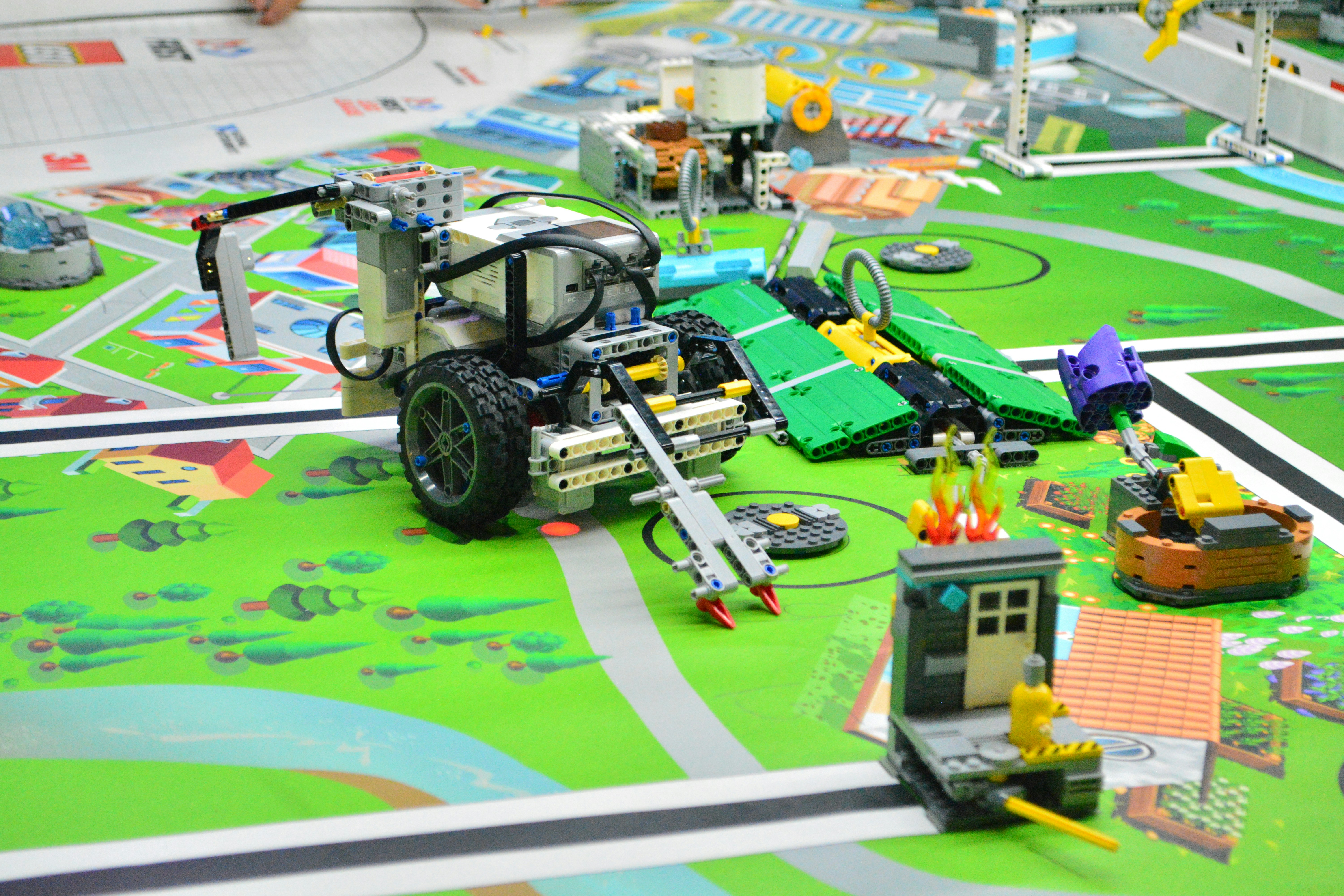
Introduction to the Sim-to-Real Gap
The sim-to-real gap refers to the discrepancies that arise when transitioning algorithms and models developed in simulation environments to practical, real-world applications. This phenomenon is particularly significant in domains such as robotics, machine learning, and artificial intelligence, where the complexities of physical environments can introduce challenges that simulations often fail to capture accurately.
Simulation environments serve an essential purpose in the development and testing of various algorithms. They allow researchers and engineers to experiment with different strategies and models in a controlled setting. For example, autonomous vehicles can be tested in virtual scenarios, enabling developers to fine-tune navigation algorithms without the risks and costs associated with real-world trials. Such environments facilitate rapid iteration and provide vast amounts of data that can be utilized to enhance learning algorithms.
However, a critical limitation persists: the behavior of simulated agents does not always correlate with their performance when deployed in dynamic and unpredictable real-world settings. Factors such as sensor noise, unmodeled dynamics, and environmental variability can adversely affect the efficacy of algorithms that have been rigorously tested in simulations. As a result, researchers face the ongoing challenge of closing the sim-to-real gap—ensuring the success of trained models after being transferred from the safe confines of simulation to the complexities of the real world.
Addressing this gap is crucial for improving the reliability and practicality of robotic systems and AI applications. Strategies for bridging this divide often include improving simulation fidelity, utilizing transfer learning, and incorporating domain adaptation techniques. Thus, understanding the nuances of the sim-to-real gap is vital for advancements in technology aimed at real-world deployment.
Historical Context of Sim-to-Real Research
The exploration of the sim-to-real gap has its roots in the early days of robotics and simulation technologies, where researchers have consistently sought ways to bridge the divide between virtual environments and real-world applications. One of the seminal moments in this field took place in the 1980s, with advances in computer graphics and modeling techniques enabling more accurate simulations. Notably, the development of physics engines in the 1990s played a critical role, allowing for more realistic representations of object interactions in simulated environments.
By the early 2000s, significant breakthroughs occurred with machine learning techniques, particularly reinforcement learning, which enabled robots to learn complex tasks directly from simulated experiences. A pivotal study published during this period illustrated the feasibility of training robotic agents in a simulated world before transferring knowledge to real-world applications. This study demonstrated early successes in reducing the sim-to-real gap, showcasing how virtual training could lead to improved physical performance.
However, several challenges have persisted, highlighted by studies showing that transferring learned behaviors from simulation to reality often resulted in suboptimal performance due to unmodeled dynamics and discrepancies in sensory feedback. Research conducted in the mid-2010s further emphasized the importance of domain adaptation techniques and error correction methods to address these issues. Various approaches, including domain randomization and simulation-to-real transfer learning, have been proposed to enhance the adaptability of robots and agents.
Throughout the years, key milestones have included the introduction of more sophisticated simulations that account for environmental variability and the role of real-world data in training models. As the field has progressed, the understanding of the sim-to-real dynamic has deepened, revealing both the potential and limitations of these methods. The historical context reflects a continuous evolution of strategies aimed at addressing the complex challenges associated with translating simulated performances into practical, real-world behaviors.
The sim-to-real gap represents a critical challenge in the realm of robotics and artificial intelligence, referring to the discrepancies between simulated environments and real-world applications. Recent advances have significantly contributed to narrowing this gap through various methodologies and technological innovations. Notably, new research has focused on improving the fidelity of simulations, enhancing the accuracy of physical models, and integrating machine learning to facilitate better adaptation from controlled environments to dynamic real-world settings.
One of the key areas of exploration involves employing domain randomization techniques. This approach allows researchers to introduce variability within simulation parameters, which helps systems better understand and adapt to a wider array of real-world conditions. Additionally, recent statistics indicate that robots trained in diverse and randomized simulated environments perform better in field testing, with reported improvements in success rates by up to 30% in complex tasks. Such improvements underline the growing understanding of how to bridge this gap effectively.
Furthermore, advancements in hardware have proven influential in addressing the sim-to-real gap. Enhanced sensor technologies provide more accurate data, facilitating better interactions with the environment. Case studies, such as the deployment of robotic arms in industrial settings, exemplify successful transfers from simulation to physical execution. For instance, the implementation of a robotic assembly line has demonstrated how finely tuned simulations, supported through iterative testing in real-world scenarios, reduce operational errors and improve efficiency.
Researchers are also utilizing transfer learning to enhance learning from simulations in real environments, which addresses the sim-to-real gap by refining how models generalize knowledge. This ongoing research, developing methodologies to enhance the simulation-to-real-world transition, demonstrates that while challenges remain, substantial progress is being made within the field.
Technological Advances Addressing the Gap
The gap between simulation and reality, often termed the “sim-to-real gap,” represents a significant challenge in fields such as robotics, aerospace, and autonomous systems. Recent technological advancements are proving pivotal in narrowing this divide, specifically through enhancements in simulation software, hardware improvements, and innovative methodologies like domain adaptation and transfer learning.
In the realm of simulation software, efforts are being made to create more realistic and comprehensive virtual environments. Modern simulation platforms leverage advanced physics engines and incorporate high-fidelity graphics that allow for more accurate representation of real-world dynamics. These upgrades facilitate better training of machine learning models, resulting in improved performance when they are deployed in real-world scenarios. Incorporating elements such as realistic sensory feedback and environmental variability enhances the robustness of these simulations, rendering them more aligned with actual operating conditions.
Hardware advancements play a crucial role in bridging the sim-to-real gap by enabling more powerful processing capabilities and parallel computational tasks. Graphics Processing Units (GPUs) and specialized AI hardware accelerate the training processes within simulations, allowing for more complex models to be utilized without prohibitive computation times. Furthermore, the development of inexpensive and accessible hardware has empowered a wider range of users to explore and experiment with simulations, leading to innovative applications and solutions.
Novel techniques such as domain adaptation and transfer learning are also reshaping the landscape by allowing knowledge gained in simulated environments to be effectively transferred to real-world applications. Domain adaptation focuses on minimizing the discrepancies between simulated and real data, allowing models trained in a virtual setting to perform adequately in reality. Meanwhile, transfer learning further enhances this process by allowing models to leverage previously acquired knowledge across different but related tasks, thereby accelerating the development of effective systems in novel contexts.
Challenges in Closing the Sim-to-Real Gap
The sim-to-real gap, which refers to the discrepancies between simulated environments and real-world applications, presents numerous challenges for researchers and practitioners. One primary limitation lies in the current simulation models themselves. Many existing models oversimplify real-world dynamics, failing to account for the myriad variables present in natural environments. Consequently, behaviors learned in simulation do not always translate effectively to real-world scenarios, leading to suboptimal performance when deployed in practice.
Moreover, the complexity of real-world environments adds another layer of difficulty. In a typical real-world application, factors such as weather conditions, dynamic obstacles, and unpredictable human behavior create a constantly changing landscape that is difficult to replicate in simulations. This variability can hinder the development of robust algorithms capable of generalizing across different contexts. As a result, the reliance on simplistic models can lead to performance degradation, as agents trained in a controlled setting struggle to adapt to unforeseen circumstances.
Another critical challenge is the potential for overfitting in machine learning models. When models are trained primarily on simulated data, they may learn to exploit the peculiarities and noise specific to the synthetic environment rather than acquiring transferable skills. This overfitting phenomenon diminishes their efficacy in real-world applications, where the nuances of the environment differ significantly from the training data. Researchers often face the conundrum of balancing the training process to foster generalization while minimizing the risk of overfitting.
To bridge the sim-to-real gap effectively, a deeper understanding of these challenges is essential. Future innovations must focus on developing advanced simulation techniques, enhancing model adaptability, and implementing rigorous validation frameworks to ensure the reliability of machine learning systems in real-world applications.
Case Studies of Successful Applications
In recent years, various industries have made significant strides in bridging the sim-to-real gap, showcasing the potential of simulation technologies in practical applications. One notable example is the deployment of robotic systems in manufacturing environments. Companies like Boston Dynamics have successfully utilized advanced simulations to train robots for complex tasks. By creating detailed virtual models of their operating environments, these companies have minimized the discrepancies between simulated and real-world performance, leading to increased efficiency and reduced training times.
Another compelling case study can be found in the realm of autonomous vehicles. Companies such as Waymo and Tesla have leveraged high-fidelity simulations to enhance their self-driving algorithms. In these cases, vast amounts of simulated data were generated to expose the algorithms to numerous driving scenarios that would be logistically difficult or dangerous to replicate in the real world. This approach not only allowed for thorough testing and tuning of the systems but also contributed to the substantial reduction of accidents during the real-world deployment phases.
Moreover, the use of simulation in the aerospace sector illustrates another successful initiative towards narrowing the sim-to-real gap. For instance, NASA utilizes simulation environments to test and validate control systems for spacecraft. Virtual simulations enable engineers to assess various failure scenarios without jeopardizing actual missions, thus ensuring that spacecraft can perform reliably under a range of conditions. Each of these initiatives underscores the importance of accurate modeling and the role it plays in achieving reliable real-world outcomes.
The methods these industries employ—ranging from detailed physics engines to machine learning algorithms—demonstrate the critical advancements in simulation technology. As these case studies reveal, not only is the sim-to-real gap being closed, but the implications for increased safety and efficiency across various sectors are becoming increasingly apparent.
Future Directions in Sim-to-Real Research
The future of sim-to-real research is poised for transformative advancements driven by a wave of emerging technologies and collaborative interdisciplinary efforts. As the boundaries between simulation and real-world applications continue to blur, several key areas are likely to shape the trajectory of research in this domain.
One of the most promising trends is the integration of machine learning and artificial intelligence (AI) in enhancing simulation fidelity. By leveraging algorithms that can learn from real-world data, researchers can create simulations that are not only more accurate but also capable of adapting to variations in the real environment. This adaptive simulation capability could significantly reduce the sim-to-real gap, allowing for more reliable deployment of robotic systems, autonomous vehicles, and other AI-driven technologies in real-world scenarios.
Furthermore, interdisciplinary collaboration is becoming increasingly vital. By bringing together experts from fields such as robotics, computer science, neuroscience, and cognitive psychology, researchers can develop holistic approaches that incorporate diverse perspectives and methodologies. Such collaborations can lead to breakthroughs in understanding how sensory information is processed and utilized by both simulated and real-world agents.
The advent of virtual and augmented reality (VR/AR) technologies also presents new opportunities for sim-to-real research. These tools can facilitate immersive training environments that allow for the testing and refinement of algorithms in realistic scenarios without the risks associated with physical trials. Innovations in hardware, such as more sophisticated sensors and processors, will enable systems to capture and analyze complex real-world interactions, promoting enhancements in the design and deployment of autonomous systems.
In conclusion, as the fields of simulation and real-world applications converge, the future of sim-to-real research will likely see a blend of advanced technologies, interdisciplinary partnerships, and novel methodologies. With continued investment and innovation, significant progress can be made in minimizing the sim-to-real gap, ultimately leading to more effective and reliable applications across various sectors.
Implications for Industry and Society
The ongoing exploration of the sim-to-real gap holds significant implications for various industrial sectors, particularly robotics, healthcare, and autonomous systems. Addressing the discrepancies that exist between simulation environments and real-world applications is essential for optimizing the performance and reliability of systems deployed in these areas. As industries adopt advanced simulation techniques, progress in mitigating the sim-to-real gap could enhance the efficiency of operations by allowing for more accurate predictions and performance evaluations.
In the realm of robotics, for instance, precise simulation tools are crucial for developing autonomous machines capable of navigating complex environments. The ability to train robots in virtual settings using realistic scenarios can lead to improved safety protocols during their deployment in real-world situations. Moreover, enhanced simulation fosters innovation by enabling rapid prototyping and iterative design processes, allowing engineers to test multiple configurations without incurring high costs associated with physical trials.
Healthcare also stands to benefit from advancements in bridging the sim-to-real gap. Medical simulations are increasingly used to train healthcare professionals, offering them realistic scenarios to practice surgical techniques and patient interactions. Improved fidelity in these simulations can lead to better-prepared practitioners, thereby enhancing patient safety and outcomes. As healthcare continues to integrate artificial intelligence and machine learning, minimizing the sim-to-real discrepancies can enable more accurate diagnostic tools and treatment plans, leading to innovations that improve overall healthcare delivery.
Autonomous systems, particularly in the automotive sector, highlight another area where narrowing the sim-to-real gap is vital. The efficacy of self-driving technology relies heavily on simulations for testing and validation. By refining the alignment between simulated conditions and real-world scenarios, manufacturers can ensure safety and reliability before deployment. This not only protects public safety but also bolsters consumer confidence in emerging technologies.
In conclusion, the implications of bridging the sim-to-real gap extend far beyond technological improvements; they present opportunities for enhancing operational efficiency, safety, and innovation across multiple industries, fundamentally reshaping their future landscapes.
Conclusion and Final Thoughts
In examining the sim-to-real gap, it becomes evident that bridging this divide is fundamental for the advancement of technology and industry. As we have discussed, simulations serve as crucial testing environments where complex systems can be evaluated in controlled settings. However, these controlled scenarios often fall short when applied to unpredictable real-world variables, leading to discrepancies that can hinder the applicability of simulation results.
The implications of addressing the sim-to-real gap are far-reaching. For sectors such as robotics, autonomous vehicles, and artificial intelligence, the ability to refine algorithms in a simulated environment before real-world deployment is invaluable. Such practice enhances safety, efficiency, and overall performance in practical applications. By better understanding the limitations and potential of simulations, industries can better prepare for operational challenges that arise when transitioning technologies from theoretical frameworks to real-world environments.
Furthermore, it is important to consider the complexities involved in creating more accurate simulations. This includes not only refining the simulation tools themselves but also incorporating feedback from real-world systems into the design of simulations. Collaborating across disciplines, including computer science, engineering, and behavioral sciences, can aid in producing more robust simulations that align closely with real-world scenarios. This multidisciplinary approach is necessary to push the boundaries of what simulations can achieve and to close the existing sim-to-real gap.
Ultimately, committing to addressing the sim-to-real gap opens new avenues for innovation. As researchers and practitioners continue to explore these challenges, the potential of simulation will expand, leading to transformative outcomes in numerous fields. Therefore, it is essential for stakeholders to engage in these discussions and consider the critical role simulations play in shaping our technological future.