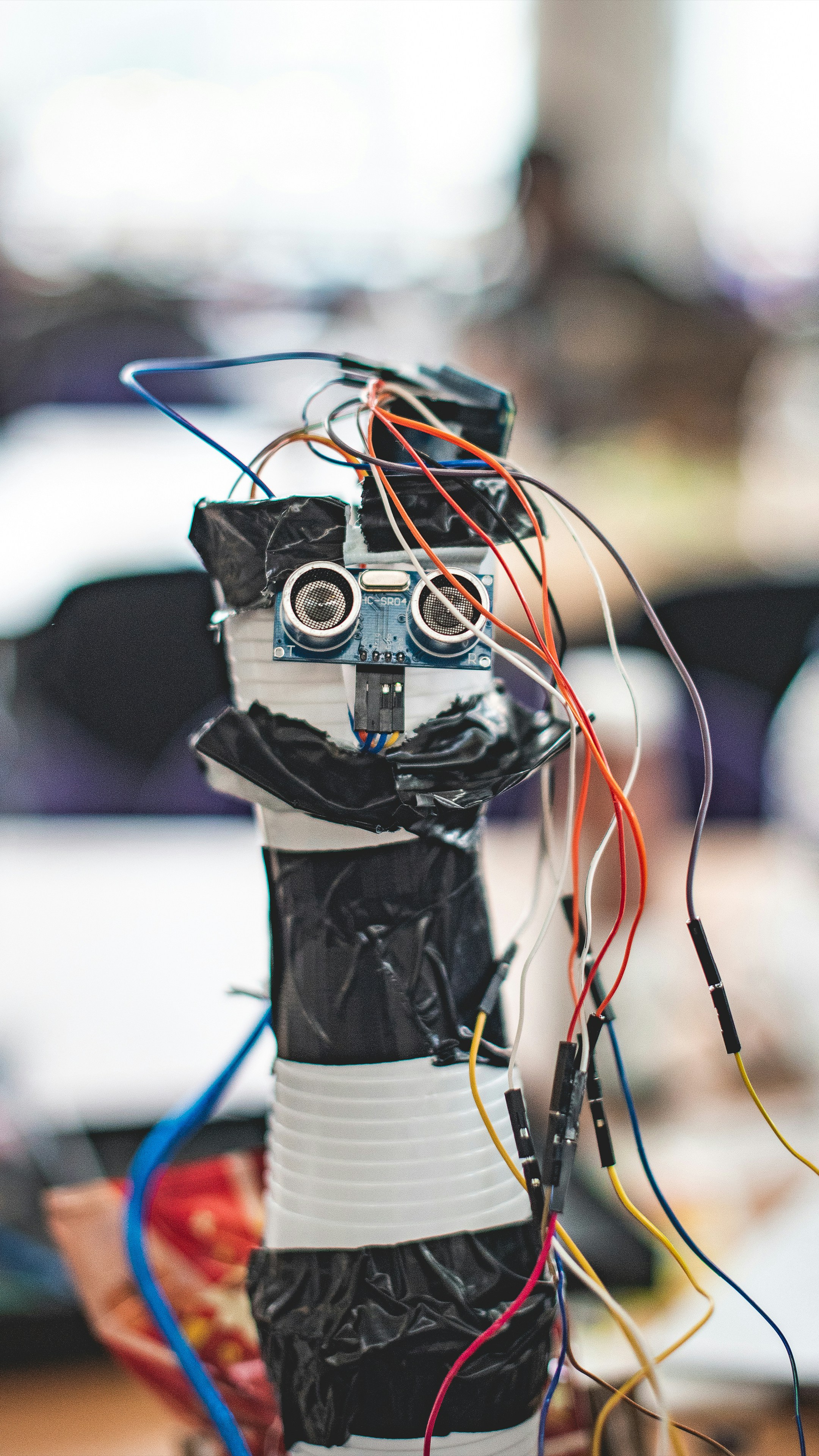
Introduction to Household Robots
Household robots are automated devices designed to assist individuals in their daily domestic tasks, ranging from cleaning and cooking to more sophisticated roles such as companionship and security monitoring. The concept of household robotics first emerged in the mid-20th century, with initial prototypes demonstrating simple mechanical functions. As technology progressed, these innovations laid the groundwork for more advanced robotics that could perform a broader range of household functions.
In recent years, there has been a surge of interest in household robots, fueled by improvements in artificial intelligence, sensor technology, and machine learning. These advancements have led to the development of robots capable of navigating complex environments and making decisions based on real-time input. The aim is for these robots to enhance the efficiency and quality of domestic life by automating mundane activities and providing support to users.
The proliferation of smart home devices has further accentuated the role of domestic robots, encouraging integration within interconnected household systems. As consumers become more accustomed to technology-rich environments, the acceptance of robotic assistants grows. Companies in the robotics sector are actively exploring innovative functionalities that could broaden the utility of household robots, making them more appealing and user-friendly.
However, challenges remain that hinder the widespread adoption of these technologies. Factors such as high development costs, complicated user interfaces, and limitations in reliability and functionality can pose significant barriers. Ultimately, understanding the early development of household robots and the factors influencing their evolution is crucial to appreciating the current bottleneck in making these devices an integral part of modern households.
Overview of Existing Household Robots
The current landscape of household robots encompasses a diverse array of products, each designed to cater to specific household tasks. Popular models range from robotic vacuum cleaners and lawn mowers to companion robots, each offering unique functionalities and varying levels of user satisfaction.
Robotic vacuum cleaners, such as the iRobot Roomba and Neato Botvac, have garnered significant attention over the past few years. These devices are engineered to autonomously navigate household spaces, targeting dust and debris with efficiency. User feedback often highlights their effectiveness in maintaining clean floors with minimal human intervention; however, challenges such as battery life, navigation accuracy, and handling of obstacles persist. As a result, while they demonstrate significant convenience, they also reveal critical aspects wherein improvement is necessary.
Next are robotic lawn mowers, exemplified by products like the Husqvarna Automower and Worx Landroid. These machines simplify the chore of lawn maintenance by autonomously trimming grass according to programmable schedules. Homeowners appreciate the time saved and the consistent lawn appearance; however, issues such as high costs, weather vulnerabilities, and terrain limitations present barriers to widespread adoption. Insights into user experiences indicate a desire for more robust designs that can adapt to various weather conditions and diverse yard layouts.
Lastly, companion robots, which include models like the TEO and Jibo, aim to provide companionship and stimulate interaction. These robots are often equipped with artificial intelligence that allows them to engage with users, providing entertainment and support. Despite the novelty these gadgets offer, user reception has been mixed, primarily due to limitations in their conversational abilities and functionality. The notion of creating robots that resemble human interaction remains a work in progress.
Technological Limitations
The effectiveness of household robots is significantly hampered by various technological limitations. One of the primary barriers is found in the realm of artificial intelligence (AI). While advancements have been made, AI systems currently deployed in household robotics often struggle with complex decision-making processes. This inadequacy stems from the inability of these systems to adapt to unforeseen situations or to learn from changing contexts effectively, which limits their functionality in dynamic home environments.
Additionally, real-time processing capabilities are critical for household robots to interact seamlessly with their surroundings. Presently, many robots exhibit lag in processing sensory information, which can lead to delayed responses or incorrect actions in dynamic scenarios. This deficiency prevents robots from operating safely and effectively, particularly in environments where quick reactions are essential, such as in households with pets or small children.
Sensor technology also poses a significant challenge. Many household robots employ outdated sensors that do not provide the level of detail required to navigate environments accurately. Limited sensor capabilities can restrain a robot’s ability to perceive obstacles, which results in navigation mishaps. For instance, when navigating through cluttered spaces, robots may fail to detect small objects, potentially causing them to become stuck or to collide with obstacles.
Lastly, the navigation systems utilized by household robots often rely on basic algorithms that do not accommodate the complexity of real-world movements. While some robots utilize mapping technologies, these can be insufficient when maneuvering through unpredictable home layouts. As a result, progress towards developing fully autonomous household robots is slow, primarily due to these technological barriers. Addressing these limitations will be crucial in advancing household robotics to become more effective and reliable in everyday settings.
Complexity of Domestic Tasks
The landscape of household chores is marked by an array of tasks that vary greatly in terms of complexity and detail. From basic cleaning routines to intricate cooking processes, the diversity of domestic chores poses substantial challenges for household robots. Often, these tasks require a level of cognitive understanding and adaptability that current technology has yet to master.
One primary challenge lies in the nature of cleaning tasks, which can involve a multitude of surfaces and materials. For example, ensuring that a marble countertop receives the correct cleaning treatment while avoiding damage demonstrates the necessity for nuanced understanding of cleaning methods. Unlike traditional vacuuming or surface wiping, implementing a tailored approach to each specific scenario can result in frustration when a robot fails to adapt to such varied cleaning demands.
Similarly, cooking encompasses a great deal of precision, from ingredient selection to timing, and relies heavily on sensory input and human judgment. Cooking requires not only the ability to follow a recipe but also the capacity to modify steps based on visual cues and smells, a level of discernment that household robots struggle to replicate. The interaction with various food items, addressing allergies, and catering to personal preferences makes the task of cooking exceedingly complex.
Furthermore, the myriad of household items and their respective functions add another layer of difficulty. Robots must navigate environments filled with an extensive range of tools and appliances, each with unique operational requirements and user expectations. This context-dependent nature of tasks exacerbates the challenges faced by robotic systems, leading to inefficiencies that can leave users dissatisfied.
User Acceptance and Emotional Factors
User acceptance plays a crucial role in the integration of household robots into everyday life. Central to this acceptance are user perceptions, which can be influenced by cultural contexts and individual experiences. Positive perceptions can drive enhanced adoption rates, while negative experiences can deter individuals from employing these devices. Understanding how potential users view household robots is essential; perceptions regarding intelligence, reliability, and utility directly impact their willingness to incorporate such technology into their homes.
Trust issues also significantly affect user acceptance. Homeowners must feel confident that robots will perform tasks safely and effectively without causing damage or harm. Users may harbor fears regarding the functionality and reliability of these machines, stemming from concerns about their programming and potential malfunctions. Furthermore, the perceived inability of robots to adapt to unexpected situations can exacerbate these trust issues. As such, addressing these concerns through transparency in design and communication is vital to fostering acceptance.
Cultural acceptance is another critical factor influencing the adoption of household robots. Varying cultural attitudes toward technology can either hinder or encourage acceptance. For example, communities that embrace technological innovation may be more inclined toward integrating robots into daily routines, while others may be more skeptical. This cultural backdrop shapes the emotional responses that individuals experience towards robots, which can range from excitement and curiosity to anxiety and apprehension.
Emotional responses toward robots also play a role in user acceptance. The anthropomorphism of robots—attributing human characteristics to machines—can elicit varied emotions. While some users may form emotional connections, viewing robots as helpful companions, others may regard them as threats to privacy or emotional well-being. Navigating these complex emotional landscapes is essential for manufacturers seeking to design robots that resonate positively with users.
Economic Considerations
The development and adoption of household robots are significantly influenced by various economic factors, which can create a bottleneck in both innovation and accessibility. One of the primary factors is the production cost associated with these robotic technologies. The initial investment required to research, develop, and manufacture household robots is substantial, often driven by the advanced materials and sophisticated technologies necessary for their functionality. Consequently, these high production costs can translate into elevated retail prices that may restrict potential consumers from making purchases.
Pricing strategies play a crucial role in this economic landscape. Manufacturers must balance the need to recoup their substantial investments while remaining competitive in a saturated market. As companies endeavor to create more efficient and cost-effective products, they often face the challenge of maintaining quality and performance, which further complicates pricing. Consumers are increasingly price-sensitive, especially in the context of household appliances, where affordability is a key determinant of purchasing decisions.
Market competition manifests as another essential economic consideration. With numerous companies entering the robotics market, there is a tendency for price wars that can undermine profit margins. This competition can spur innovation, pushing manufacturers to develop more advanced and user-friendly robots. However, it can also lead to a short-term focus on cost-cutting rather than long-term investment in research and development, which ultimately affects the overall quality and functionality of household robots.
Additionally, consumer purchasing power varies significantly across different demographics, which affects the market’s potential. In more affluent areas, there may be a higher acceptance and demand for innovative household robots, while in less affluent regions, economic constraints can limit accessibility. These intertwined economic factors collectively create a complex landscape that affects the advancement and proliferation of household robotics.
Ethical and Privacy Concerns
The rise of household robots has begun to transform domestic life, providing convenience and efficiency. However, this rapid advancement is accompanied by significant ethical implications and privacy concerns that merit thorough exploration. As these robots increasingly utilize artificial intelligence (AI) to learn and adapt to their environments, they inevitably become intertwined with sensitive data and personal information.
Data security is one of the foremost concerns regarding household robots. These devices often require internet connectivity to function optimally, which can expose them to potential cyber threats. If not properly secured, the data collected by these robots can be mishandled or exploited by malicious entities. This risk raises serious questions about the safety of personal information such as daily routines, preferences, and even images captured by robotic cameras.
Moreover, the specter of surveillance looms large as these robots operate within private spaces. Users may fear that their actions and conversations are being monitored and recorded, leading to a decline in comfort and privacy at home. The potential for misuse of surveillance capabilities by various stakeholders, including companies or hackers, further exacerbates these fears.
Ethical considerations surrounding the deployment of AI in household settings are equally complex. The introduction of robots that can make autonomous decisions raises questions about accountability and moral responsibility. For instance, if a robotic device were to malfunction or make an erroneous decision, determining liability could become a contentious issue. Furthermore, the implications of normalizing AI-driven household assistance raise concerns about human dependency and the diminishing role of human interaction in everyday tasks.
In light of these ethical and privacy issues, the acceptance and integration of household robots within society may be hindered. Addressing these concerns requires comprehensive discussions among stakeholders, including developers, policymakers, and consumers, to establish clear ethical guidelines and robust security protocols.
Future Directions in Robotics Research
The exploration of future directions in robotics research is paramount in addressing the existing bottlenecks hindering the progress of useful household robots. Key areas of focus include advancements in artificial intelligence (AI) and machine learning, which are set to enhance the autonomy and efficiency of these machines. Improved AI algorithms can enable robots to learn from their environments and adapt to varied tasks, which is crucial for applications in domestic settings.
Another significant aspect is the development of more sophisticated human-robot interaction frameworks. Efforts are being directed towards creating robots that not only understand spoken commands with greater accuracy but also engage in meaningful conversations with their users. By integrating natural language processing and emotional intelligence, future household robots could become more responsive and intuitive companions, ultimately enriching the user experience.
Collaborative robotics represents an emerging frontier in which multiple robots could work synchronously in a single environment. Research in this arena aims to facilitate seamless cooperation between robots and humans during household chores, ensuring that tasks are performed efficiently and harmoniously. Trials and innovations in collaborative robotics are crucial in proving that robots can operate safely alongside humans without disrupting household dynamics.
Furthermore, ongoing trials in various domestic contexts are vital for understanding the practical implications of these advancements. By implementing real-world testing scenarios, researchers can gather insightful data on how household robots can be optimized for daily use. Whether through exploring the adaptability in unpredictable settings or assessing user satisfaction, such studies form the bedrock for future innovations.
In conclusion, the combination of enhanced AI capabilities, improved human-robot interactions, and collaborative systems sets a promising backdrop for future robotics research. Each initiative cushions efforts to overcome existing limitations, thus paving the way for the development of more efficient and effective household robots.
Conclusion and Call to Action
In light of the discussion on the current bottleneck for useful household robots, it is clear that several interrelated factors contribute to the slow advancement in this field. A key takeaway is the necessity for continued technological innovation. Developers must prioritize creating robots that are not only functionally capable but also user-friendly to enhance the overall experience for consumers. Advances in artificial intelligence, machine learning, and sensor technology will play a crucial role in overcoming existing limitations.
Furthermore, user involvement is essential in shaping the future of household robotics. Engaging consumers in the design process can help ensure that these robots meet real-world needs. By soliciting feedback, manufacturers can refine functionality and improve usability, ultimately leading to products that are widely embraced in everyday life.
Another critical aspect of this evolution is the ethical considerations surrounding the deployment of household robots. As these devices become embedded in daily routines, it is imperative to consider their implications on privacy, security, and employment. Developers and stakeholders must engage in thoughtful discourse on these matters to establish comprehensive guidelines that protect users while promoting innovation.
Finally, a collective call to action is necessary. Stakeholders—including technologists, policymakers, and end-users—should work collaboratively to address the pressing issues facing the household robotics industry. By fostering an environment of cooperation and prioritizing transparent communication, we can accelerate the development of useful household robots that enhance quality of life.
Only through this united effort can we hope to realize the full potential of robots in our homes, transforming the way we live and interact with technology.