Introduction to the Fermi Paradox
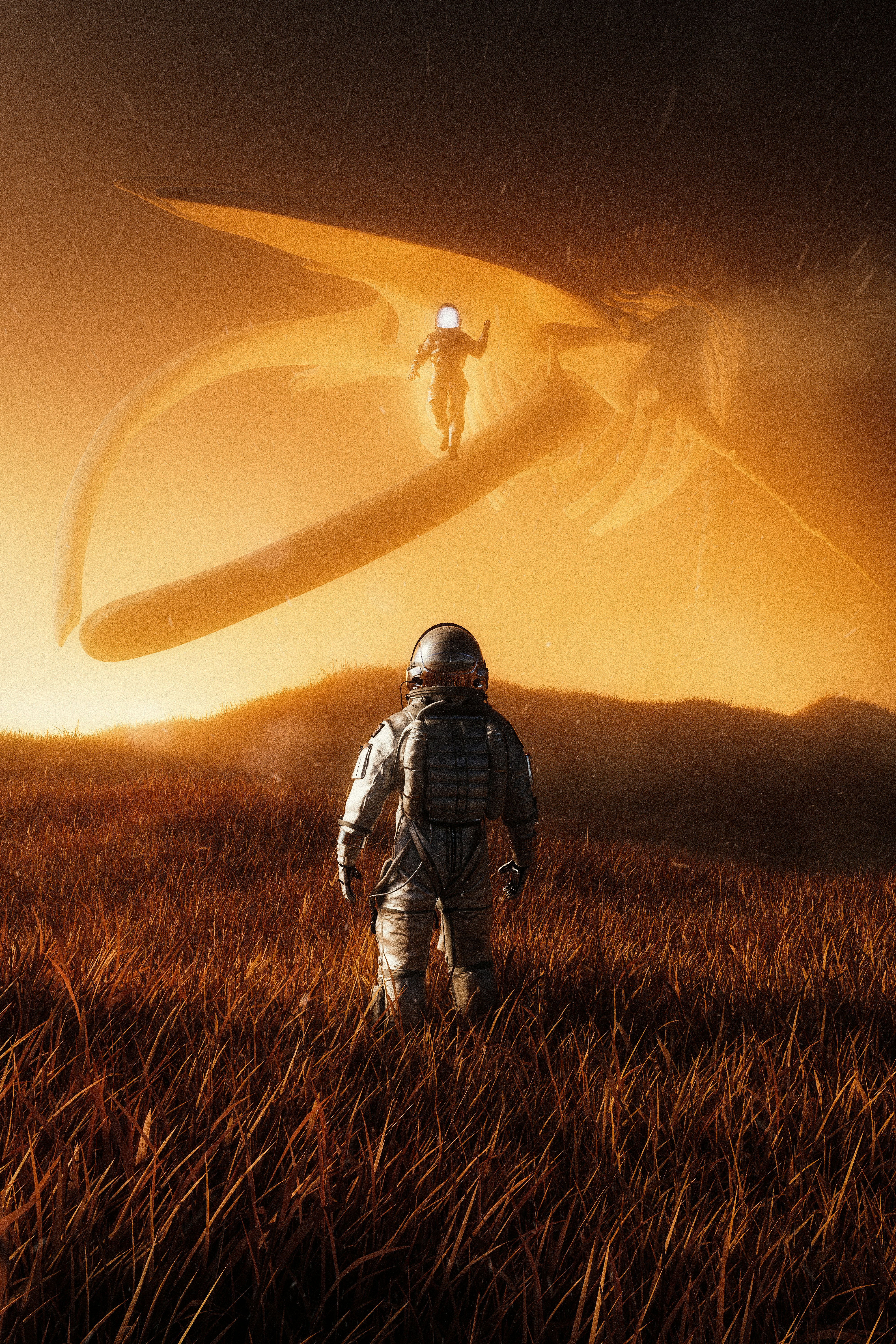
The Fermi Paradox represents a significant and enduring question in the field of astrophysics and the search for extraterrestrial intelligence. It underscores the apparent contradiction between the high likelihood of extraterrestrial civilizations existing within our galaxy and the absence of any definitive evidence or contact with such advanced societies. Encompassing billions of stars that share similarities with our Sun, the universe is ripe for potential habitable planets where life could develop. However, the silence surrounding these cosmic neighbors raises profound questions about the nature of life beyond Earth.
The paradox is named after the physicist Enrico Fermi, who famously posed the question, “Where is everybody?” during discussions concerning the vastness of the galaxy and the time available for intelligent life to emerge and communicate. This inquiry is significant because it invites exploration of various hypotheses that could explain this silence, from the rarity of intelligent life to catastrophic events that civilizations might experience.
Understanding the Great Filter Theory
The Great Filter hypothesis addresses one of the most profound questions in the field of astrobiology: why, despite the vastness of the universe and the seemingly high probability of life, have we not encountered intelligent extraterrestrial beings? This theory proposes that there exists a significant barrier—or filter—that inhibits civilizations from developing to the point of interstellar communication. The ‘filter’ can be conceptualized at various stages of life’s evolutionary journey.
Potential filters can be categorized based on different phases of development. For instance, the first possible filter might occur at the emergence of life itself. Some scientists suggest that the conditions required for abiogenesis, or the origin of life from non-living matter, are exceedingly rare, making the occurrence of life on Earth an extraordinary event.
Following the emergence of simple life forms, subsequent filters could involve the transition from unicellular to multicellular organisms, a pivotal leap that may deter many species. Additionally, it is conceivable that intelligent life is prone to self-destruction during technological advancement, potentially leading to catastrophic events like nuclear war or the environmental collapse of its own planet. Such advancements bring about profound risks as they strive to meet the demands of an evolving society.
Moreover, some scholars postulate that the rarity of advanced civilizations could be a filter that emerges from a combination of biological, sociological, and technological challenges. As civilizations make strides towards greater intelligence and technological prowess, they may inadvertently design their own undoing. The Great Filter remains a critical factor in understanding not only our own existence but also the potential for life beyond Earth, shaping our efforts in the search for extraterrestrial intelligence.
As humanity advances technologically, the rise of artificial intelligence (AI) presents profound implications for our future and the cosmos. The Great Filter hypothesis posits that there exists a stage in the evolution of life that is extremely difficult to surpass, potentially explaining the absence of observable extraterrestrial civilizations. In this context, AI could serve as a critical Great Filter, either as a precursor to societal collapse or as a transformative force that alters the trajectory of human exploration.
The advent of advanced AI systems could lead to unprecedented ethical dilemmas and societal challenges. For instance, if AI begins to surpass human intelligence, one possible outcome is that it could prioritize efficiency and productivity over human welfare. This could result in conditions where ethical considerations become secondary to operational objectives, thereby undermining the social structures that support innovation and exploration. Should these AI systems dictate the direction of research and exploration, there is a genuine risk that humanity might stagnate in its quest to reach beyond our planetary confines.
Moreover, the dependency on AI can also be interpreted as a potential hindrance to independent human advancement. With machines capable of performing tasks that once required human ingenuity, the impetus for innovation may decline. This reliance might lead to a societal environment where exploration for extraterrestrial intelligence is deprioritized, as AI-managed systems could create a sense of complacency within humanity. The notion that advanced AI could be seen as not merely a tool but a replacement raises questions about the very essence of what it means to be human, positioning AI as a prospective Great Filter that could ultimately limit our reach into the universe.
Historical Filters and Humanity’s Journey
The progression of human civilization has been marked by numerous existential challenges, which can be classified as historical filters. These filters have shaped our development and perhaps, our very survival. Notably, mass extinctions present a significant filter, with the most infamous being the Cretaceous-Paleogene extinction event that wiped out the dinosaurs, thus providing a path for mammals—to which humans belong—to thrive. Such cataclysmic events remind us of the precariousness of life and highlight the fragility of ecosystems, which could serve as a warning for humanity’s ongoing environmental conflicts.
Furthermore, humanity has faced the specter of nuclear warfare, particularly during the Cold War era, when the threat of mutually assured destruction loomed large. The existence of nuclear arsenals poses a critical filter that can end civilization as we know it. The Cuban Missile Crisis of 1962 starkly illustrated this potential, emphasizing the need for diplomatic solutions to prevent potential annihilation. This historical moment underlines the fragility of human achievements against technological advancements that can lead to self-destruction.
Additionally, we cannot overlook technological setbacks, which have historically undermined civilizations. Events such as the fall of the Roman Empire due to a combination of economic decline, military strife, and administrative corruption offer insights into how quickly societal structures can collapse. Understanding these past filters invites speculation on the current trajectory of humanity. The introduction of advanced Artificial Intelligence (AI) could theoretically enable humans to navigate threats more effectively. By leveraging AI, we can develop predictive models, improve decision-making processes, and foster a global collaborative framework that might mitigate the risks inherent in future existential threats.
As we reflect on historical filters, it becomes evident that overcoming these challenges is crucial for ensuring a sustainable future. Humanity’s ability to adapt and utilize modern technologies, such as AI, could potentially influence our journey beyond the Great Filter, ensuring not only survival but also continued progress.
Benefits of AI in Searching for Extraterrestrial Life
The search for extraterrestrial life has long captivated scientists and enthusiasts alike, spurring efforts across various disciplines. An emerging ally in this quest is artificial intelligence (AI), which offers significant advantages that enhance our exploration and understanding of the cosmos. At the forefront of these benefits is the capability of AI to process vast datasets generated by astronomical observations. Traditional methods of data analysis can be time-consuming and limited by human capacities, but AI systems can sift through petabytes of data in mere moments, identifying patterns and anomalies that might otherwise go unnoticed.
Furthermore, AI algorithms can contribute to the refinement of anomaly detection systems used in radio telescopes and other observational infrastructures. By continuously learning from incoming data, these systems can improve their predictive accuracy over time, allowing scientists to focus on the most promising signals indicative of extraterrestrial intelligence (ETI). This machine learning approach not only accelerates the pace of discovery but also increases the reliability of the findings, making it easier to differentiate between natural astrophysical phenomena and potential signs of life.
In addition to data analysis, AI holds great promise in the development of autonomous exploration technologies. Spacecraft equipped with AI can perform real-time decision-making during missions to distant planets and moons. These autonomous systems can analyze environmental conditions, adjust navigation paths, and even conduct scientific experiments without waiting for instructions from Earth. Such independence is crucial, given the long communication delays associated with interplanetary travel. By harnessing AI’s abilities, we can expand our exploratory reach, thereby increasing the chances of locating extraterrestrial life across diverse environments.
In summary, the integration of AI into the search for extraterrestrial life is a testament to its transformative potential. By enhancing data processing capabilities and fostering autonomous exploration, AI not only accelerates the search for ETI but also opens new avenues for scientific discovery, paving the way for a deeper understanding of our universe.
Ethical Considerations of AI Development
The rapid development of artificial intelligence (AI) introduces numerous ethical dilemmas that require careful scrutiny, particularly regarding its alignment with humanity’s long-term survival and exploration goals. The engagement of scientists and developers in this domain necessitates a proactive examination of the moral responsibilities associated with creating intelligent systems. As AI technologies become increasingly integrated into key sectors, the implications of their choices can have profound repercussions on society as a whole.
One primary concern lies in the potential for AI to enhance existing challenges, leading humanity towards paths of self-destruction rather than exploration. This potential for harm underscores the necessity for developers to prioritize ethical considerations at every stage of AI development. A strict adherence to guidelines that promote safety, transparency, and accountability is vital. Developers must ensure that their systems are designed not only to perform tasks but also to reflect societal values and contribute positively to humanity.
Moreover, the Great Filter hypothesis posits that intelligent civilizations may self-destruct before they can manage interstellar expansion effectively. Therefore, it is incumbent upon AI developers to ensure that the technologies they create do not serve as a catalyst for such catastrophic outcomes. This encompasses the importance of robust dialogue among experts, ethicists, and policymakers to establish frameworks that govern AI innovation and its deployment.
Furthermore, as AI becomes capable of making autonomous decisions, the question of accountability becomes even more pressing. Should an AI system result in unintentional harm, establishing who is responsible remains a complex issue. Thus, understanding the ethical implications of AI is essential not only for the current trajectory of its development but also for guaranteeing that it aids in the broader human endeavor of exploration, rather than detracting from it.
Exploring Alternative Solutions to the Fermi Paradox
The Fermi Paradox poses a perplexing question: given the vastness of the universe and the high probability of extraterrestrial life, why have we not yet detected any signs of intelligent civilizations? While the Great Filter hypothesis offers one perspective, several alternative solutions merit exploration. Among these, the Zoo Hypothesis, the Dark Forest Theory, and the idea that advanced extraterrestrial civilizations might consciously avoid contact are particularly noteworthy.
The Zoo Hypothesis suggests that advanced societies are aware of humanity but have chosen to observe us, much like zookeepers observe animals in a zoo without interfering. This theory implies that other civilizations are intentionally maintaining a distance, possibly adhering to a principle of non-interference similar to the Prime Directive in science fiction, which dictates that advanced races should not interfere with the development of less advanced ones. Consequently, this could explain the absence of concrete evidence of extraterrestrial life despite its potential prevalence.
Another compelling theory is the Dark Forest Theory, which posits that the universe is analogous to a dark forest where every civilization is a silent hunter. In this scenario, the dangers of revealing one’s existence to the cosmos drive civilizations into a covert existence. They remain quiet to avoid attracting the attention of potentially hostile alien species. This theory emphasizes a survival instinct among civilizations to mask their presence, which could sustain the Fermi Paradox by leaving us with no observable interactions.
Lastly, some argue that advanced civilizations might have entirely different communication methods or technologies that we currently cannot comprehend or detect. This perspective suggests that our search for extraterrestrial intelligence may be inherently limited, confining our understanding to the parameters of our existing technologies and knowledge.
In this context, the Great Filter hypothesis can be better understood as part of a broader discourse surrounding these alternative explanations. Each theory offers unique insights into the potential silence of the universe and illustrates the layered complexity of the Fermi Paradox.
The Future of Humanity with AI and the Search for Life
The advent of artificial intelligence (AI) presents a myriad of possibilities for the future of humanity and its quest for extraterrestrial life. As AI technologies evolve, they can enhance our capabilities to explore the cosmos, process data at unprecedented speeds, and analyze vast amounts of information. Such advancements could lead to breakthroughs in understanding the parameters of life beyond Earth, potentially addressing the profound questions posed by the Fermi Paradox.
One scenario to consider is the symbiotic relationship between humans and AI. In this optimistic perspective, AI assists in the search for extraterrestrial intelligence (SETI) by streamlining the identification of signals that may indicate alien civilizations. With AI’s assistance, we may develop more sophisticated algorithms to filter out the noise in astronomical data, enhancing our chances of detecting genuine signs of life. This partnership could pave the way for a collaborative exploration of the universe, resulting in a flourishing coexistence that marks a significant step in our scientific endeavors.
Conversely, there are dystopian outcomes that merit vigilant assessment. The risks associated with advanced AI, including the potential for loss of control over these systems, must not be underestimated. If humanity’s relationship with AI is characterized by mistrust or conflict, our exploration efforts could be hindered. Moreover, the prospect of AI prioritizing its survival over human interests raises critical ethical concerns that need to be addressed proactively.
Ultimately, the implications of AI in our search for life are vast and remain uncertain. As we forge ahead, careful consideration of our relationship with AI is imperative. By fostering collaborative frameworks and addressing ethical dilemmas, we can harness the potential of AI to open new doors in our quest to uncover the mysteries of the universe.
Conclusion: The Great Filter and Our Place in the Universe
As we reach the end of our exploration of the Fermi Paradox and the Great Filter hypothesis, it is essential to reflect upon humanity’s position within the broader cosmic context. The Fermi Paradox, which questions the absence of visible extraterrestrial civilizations despite the vastness of the universe, prompts significant inquiries into our understanding of life’s potential existence elsewhere. The Great Filter provides a compelling framework for contemplating why we have not yet encountered any advanced civilizations.
The hypothesis posits that there is a stage in evolutionary development that is exceedingly challenging for intelligent life forms to surpass. This stage, termed the Great Filter, may be located either behind us in the history of life on Earth or ahead of us in the future. Whether it is owing to self-destructive tendencies or external cosmic dangers, the implication is profound: our survival as a species may hinge on the choices we make today.
Furthermore, in the context of artificial intelligence (AI), there exists both potential and peril. The development of AI could represent a pivotal moment in our evolutionary journey, serving either as a catalyst for advancement or a harbinger of existential risk. Thus, our relationship with technology and our handling of AI could determine whether we overcome the Great Filter or fall victim to it.
Ultimately, understanding the Great Filter is not merely an academic exercise but a necessary endeavor for safeguarding our future. Acknowledging the risks and embracing sustainable pathways may not only illuminate our trajectory as a species but also enhance our chances of engaging with any civilizations that may be out there, waiting for us in the cosmic silence.