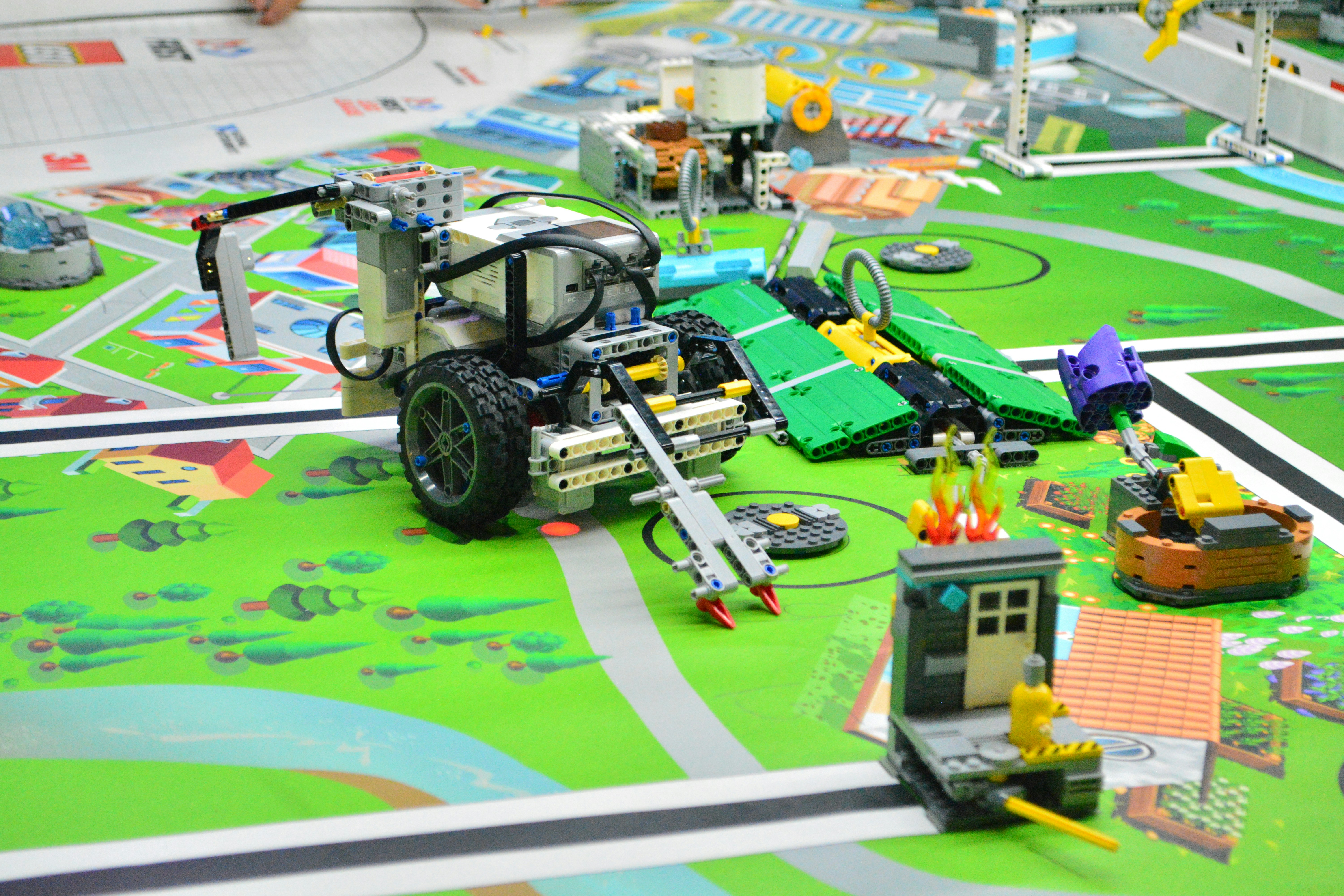
Introduction to Robotics Manipulation
Robotics manipulation is a crucial branch of robotics that focuses on enabling machines to interact effectively with their environment. At its core, manipulation involves the ability of robotic systems to grasp, move, or alter objects in a controlled manner. This field encompasses a wide range of tasks, from simple pick-and-place operations to complex sequences that require fine motor skills, reasoning, and sensory feedback.
The significance of robotics manipulation extends beyond mere functionality; it plays an essential role in various industries and applications. In industrial automation, for instance, robots equipped with manipulation capabilities are utilized to perform repetitive tasks, such as assembly line work and material handling. These robotic systems not only enhance efficiency and productivity but also reduce human exposure to unsafe working conditions.
Moreover, the proliferation of service robots in environments such as hospitals and homes illustrates the growing importance of manipulation in everyday life. Service robots often assist with tasks like cleaning, delivering items, or even providing companionship, showcasing their versatility and utility in enhancing human productivity and convenience.
In personal assistance scenarios, robots that can manipulate objects autonomously help address the needs of the elderly or disabled individuals. Such robots are designed to perform everyday tasks, thus improving the quality of life for those who require additional support.
In summary, robotics manipulation is a vital aspect of the field of robotics, facilitating the development of systems capable of performing a multitude of tasks across various applications. Understanding how manipulation works and the associated technological advancements is key to harnessing the full potential of robots in the future.
Understanding Diffusion-Based Planners
Diffusion-based planners represent a novel approach to robotics, particularly within the context of movement trajectory planning for robotic manipulators. These planners leverage the principles of diffusion processes, a concept deeply rooted in the realms of physics and mathematical modeling. At its core, a diffusion process involves the gradual spread of particles or energy through a medium, influenced by various dynamics.
The essential mechanism behind diffusion-based planners is the generation of probabilistic models that forecast potential paths a robotic manipulator might take. By simulating the diffusion of endpoints across the workspace, planners identify feasible trajectories based on their likelihood of success. The statistical nature of these models enables them to adapt to various constraints, such as obstacles and dynamic environments, making diffusion-based techniques particularly robust in complex scenarios.
The effectiveness of diffusion-based planners is underscored by their capacity to integrate information on environment topology, physical constraints, and even the manipulator’s kinematics. This integration allows for a more comprehensive planning framework, where the synthesized trajectories embody greater efficiency and safety. For instance, in applications involving delicate objects or dynamic settings, these planners can generate paths that minimize the risk of collision and ensure stability during manipulation tasks.
Moreover, diffusion planners benefit from being computationally efficient. The reliance on stochastic approaches makes them suitable for real-time applications, where the robotic system must adapt quickly to unforeseen changes in the environment. By employing mechanisms akin to natural processes, such planners not only enhance the manipulation capabilities of robots but also pave the way for future advancements in autonomous systems. Therefore, understanding diffusion-based planners is crucial for professionals engaged in robotics and automation, reflecting their growing significance in contemporary robotic applications.
The Technical Framework Behind Diffusion-Based Planning
Diffusion-based planners operate on a specialized mathematical framework that enables efficient problem-solving in robotic manipulation tasks. At their heart lies the algorithmic structure, which uses probabilistic models to navigate complex state spaces. A state space can be thought of as the totality of all possible configurations that a robot can occupy, encompassing both its position and orientation in a given environment.
One of the pivotal components of diffusion-based planning is the cost function. This function quantifies the desirability of different movement paths, guiding the planner towards optimal solutions. The cost function considers various parameters, including energy expenditure, time efficiency, and the complexity of the environment, allowing the algorithm to make informed decisions. These planners evaluate paths by assigning different costs, helping to systematically identify favorable routes within the state space.
In the context of robotic manipulation, establishing optimal paths is crucial. Optimality often relates to minimizing the overall cost while achieving task objectives. Diffusion-based algorithms typically employ heuristic methods and probabilistic sampling to explore the state space effectively. Through iterative sampling and path adjustments, these planners gradually converge on optimal solutions that facilitate manipulation tasks, such as grasping or moving objects. By simulating diverse scenarios, diffusion-based planners adapt to dynamic changes within an environment, enhancing their applicability in real-world settings.
The interplay between the algorithms, state spaces, and cost functions in diffusion-based planning illustrates a sophisticated approach that allows robots to operationalize complex tasks. This framework not only aids in achieving higher efficiency but also opens avenues for advancements in robotic movement strategies and automated decision-making processes.
Advantages of Diffusion-Based Planning Methods
Diffusion-based planners have emerged as a compelling approach in the field of robotic manipulation tasks, offering several significant advantages. One of the primary benefits is the inherent flexibility these planners provide. Unlike traditional methods that may follow predefined paths, diffusion-based planners use probabilistic frameworks to dynamically adapt to varying conditions. This adaptability allows robots to navigate complex environments where traditional algorithms might struggle.
Another notable advantage is the robustness of diffusion-based planning methods to uncertainties. In real-world applications, tasks may involve unpredictable variables such as moving obstacles or shifting terrain. Diffusion-based planners utilize stochastic processes to analyze and accommodate these uncertainties effectively. This capability means that robots can execute tasks with greater reliability, even when faced with unexpected challenges, enhancing their operational efficiency.
Additionally, diffusion-based planners excel in generating feasible trajectories under various constraints. They can create smooth and continuous paths in environments that are cluttered with obstacles, which is often a hurdle for conventional planning techniques. By exploring the configuration space strategically, these planners can identify optimal solutions that maintain the desired performance while navigating dynamic surroundings. As such, diffusion-based methods are particularly useful in scenarios where traditional algorithms might produce infeasible or inefficient trajectories.
Moreover, the improvement in planning accuracy is a crucial advantage. The probabilistic nature of diffusion-based planning enables the creation of more accurate models of both the robot’s movements and the dynamics of its environment. This aspect is essential for manipulation tasks, where precision is paramount. When combined, these factors contribute to the overall effectiveness of robotic systems, making diffusion-based planning a valuable asset in advancing robotics technologies.
Comparison with Other Planning Approaches
Diffusion-based planners represent an innovative approach in robotics manipulation tasks, prominently differing from traditional planning methods such as sampling-based and optimization-based planners. Each of these techniques has unique strengths and limitations, influencing their application in different robotic scenarios.
Sampling-based planners, for instance, operate by generating a representative sample of the robot’s configuration space, enabling the identification of feasible paths. This method excels in high-dimensional spaces where the complexity of the environment makes exhaustive search impractical. However, sampling-based planners may struggle in environments with narrow passages or require significant computational resources to generate an optimal path, particularly in dynamic settings.
On the other hand, optimization-based planners focus on formulating a cost function that minimizes a predefined criterion, such as energy consumption or time taken. They tend to produce high-quality solutions, especially in scenarios with clearly defined criteria. Nevertheless, these planners may become computationally intensive, especially when dealing with non-linear constraints or when the number of variables increases significantly.
Diffusion-based planners offer a novel alternative by leveraging a continuous probabilistic model to disperse a configuration toward optimal paths. This method has several significant benefits, such as its ability to handle complex constraints and its effectiveness in high-dimensional spaces without the substantial computational overhead seen in some sampling-based methods. Furthermore, diffusion-based planners can quickly adapt to dynamic environments, making them particularly advantageous in settings where the manipulation task is continuously evolving.
In essence, the comparative analysis of these planning approaches reveals that while sampling-based and optimization-based planners have their respective strengths, diffusion-based planners hold remarkable potential in scenarios requiring adaptability and efficiency in manipulation tasks. As the field of robotics advances, these techniques may overlap, with hybrid solutions emerging to exploit the benefits of each method.
Case Studies in Robotics Manipulation
Diffusion-based planners have shown remarkable effectiveness in various robotics manipulation tasks across multiple real-world applications. These planners employ probabilistic strategies to manage uncertainties, allowing robots to execute complex movements with precision and adaptability. This section presents a few exemplary case studies that highlight the successful implementation of diffusion-based planners.
One notable case involves a collaborative robot (cobot) deployed within a manufacturing facility. The implementation of a diffusion-based planner significantly improved the robot’s ability to adapt to dynamic environments. For instance, when working alongside human operators, the robot utilized real-time sensory data to make adjustments on the fly. This adaptive capability resulted in a 30% improvement in task completion times, showcasing the efficacy of diffusion-based strategies in cooperative settings.
Another compelling study demonstrated the ability of diffusion-based planners in agile robotic arms used for assembly tasks in the automotive industry. By integrating these planners, the robotic system was able to perform high-precision tasks that involved picking and placing components in a confined workspace without collisions. The introduction of this technology not only reduced errors but also enhanced the overall productivity of the assembly line.
Furthermore, a case study focused on healthcare applications highlighted the role of diffusion-based planners in robotic-assisted surgeries. In this scenario, these planners contributed to improving surgical precision by allowing the robotic system to adjust its movements in real-time based on the characteristics of the patient’s anatomy. The results indicated a decrease in surgery times and improved patient outcomes, underscoring the transformative impact of diffusion-based planners in sensitive manipulation tasks.
Through these case studies, it becomes evident that the integration of diffusion-based planners into robotics manipulation tasks offers substantial improvements in efficiency, precision, and adaptability. These advancements not only underscore the potential of these planners in various fields but also pave the way for future innovations in robotics technology.
Challenges and Limitations of Diffusion-Based Planners
Diffusion-based planners, while innovative, are not without their challenges and limitations. One of the primary issues pertains to computational complexity. The algorithms that govern diffusion-based planning often involve complex computations, especially when creating paths through high-dimensional spaces. This complexity can be particularly pronounced during real-time applications, where quick decisions are necessary for effective manipulation tasks.
Another critical factor is scalability. As the dimensionality of the robotic manipulation tasks increases, diffusion-based planners may struggle. The exponential growth in computational demands can hinder the efficacy of these planners in high-dimensional environments. This poses a significant limitation when deploying diffusion-based planners in complex settings, where the number of variables can multiply swiftly. Consequently, these planners may require extensive computational resources, which can be impractical for certain applications.
Adaptability also represents a notable challenge for diffusion-based planners. In dynamic environments where obstacles or parameters frequently change, the effectiveness of a planner can be compromised. Diffusion processes may take considerable time to re-evaluate and adapt to new conditions, which can result in delays or even failures in task execution. This lack of responsiveness in rapidly changing situations illustrates a fundamental limitation of diffusion-based planners in practical deployment.
Furthermore, the implementation of these planners often necessitates fine-tuning and extensive parameter adjustments to suit specific tasks, which can be labor-intensive for developers. All these factors combined indicate that while diffusion-based planners provide significant advantages in certain contexts, their challenges should not be overlooked, warranting careful consideration in design and application.
Future Directions and Developments
As the field of robotics continues to evolve, diffusion-based planners are expected to become increasingly sophisticated, offering enhanced capabilities for manipulation tasks. Ongoing research is focusing on improving the efficiency and effectiveness of these planners by integrating novel algorithms and approaches. For instance, advancements in deep learning methodologies are being explored to augment diffusion-based planning techniques, which may lead to more adaptable and robust solutions in complex environments.
Emerging trends indicate a growing focus on hybrid systems that combine the strengths of diffusion-based planners with other artificial intelligence techniques, such as reinforcement learning and evolutionary algorithms. These integrations aim to create a more versatile framework that can handle diverse manipulation scenarios with varying degrees of uncertainty. By leveraging the strengths of different AI paradigms, researchers hope to produce planners capable of learning from their experiences and dynamically improving their performance.
Moreover, the incorporation of real-time data processing in diffusion-based planners represents a significant leap forward in robotic manipulation. By enhancing the planners’ ability to process sensory feedback and adapt to changing conditions on-the-fly, robots can execute tasks more efficiently, leading to improved outcomes in applications such as automated assembly and precision surgery. Future developments are also likely to focus on making diffusion-based planning more accessible and user-friendly, aiming to reduce the complexity involved in deploying these systems in practical scenarios.
In conclusion, the future landscape of diffusion-based planners in robotics manipulation appears promising, with numerous avenues for research and innovation. As scholars and practitioners continue to explore these new directions, the potential for enhanced performance and broader applicability will solidify the role of diffusion-based planners in the robotics domain.
Conclusion
In the realm of robotics manipulation tasks, diffusion-based planners offer a compelling solution to the challenges faced by traditional methods. These planners utilize the principles of diffusion to generate paths that are not only efficient but also adaptable to dynamic environments. As discussed, the key advantage of diffusion-based planners lies in their ability to seamlessly integrate with complex robotic systems, thereby enhancing their performance in diverse applications.
Throughout this blog post, we have examined the fundamental mechanisms underlying diffusion-based planners and their significant implications for robotic manipulation. The ability to effectively navigate obstacles while maintaining the integrity of the task at hand indicates a paradigm shift in the methodology of robotic planning. By employing stochastic approaches, these planners can more effectively anticipate and adjust to variations in the environment, thus improving the reliability and efficacy of robotic operations.
As the robotics community continues to evolve, the importance of diffusion-based planners cannot be overstated. Their unique attributes provide not only robust solutions for current challenges but also avenues for future research and development. Encouraging the exploration of these innovative techniques may lead to breakthroughs in the autonomous capabilities of robots, augmenting their functionality across various sectors, such as manufacturing, healthcare, and logistics.
In conclusion, embracing diffusion-based planners represents a significant step toward enhancing robotic manipulation tasks. It is imperative for researchers and practitioners alike to delve deeper into this promising area of research, thereby fostering advancements in technology that could redefine the landscape of robotics. Future endeavors should focus on refining these techniques, ensuring they become an integral part of the robotics toolkit for efficient and sophisticated manipulation.