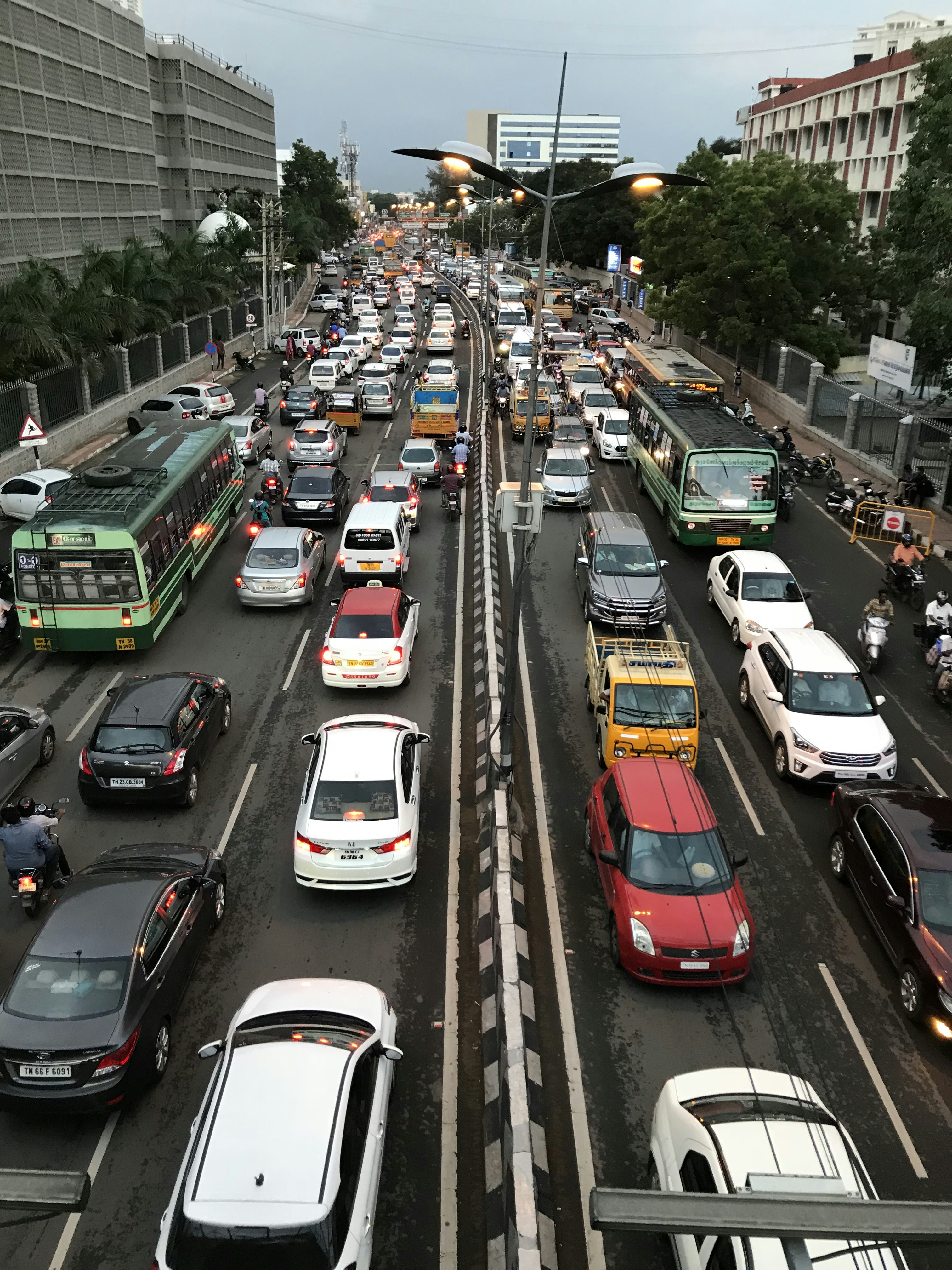
Introduction: The Traffic Problem in Urban India
The phenomenon of traffic congestion is a pressing issue in urbanized areas across India, particularly in metropolises such as Mumbai and Delhi. These cities are among the most densely populated in the world, leading to an overwhelming strain on their transportation infrastructure. The sheer volume of vehicles on the roads, coupled with inadequate public transportation systems, has created an environment rife with traffic snarls and gridlocks. According to various studies, these cities experience estimated traffic delays that significantly affect the quality of life of residents.
Multiple factors contribute to this chronic congestion. The rapid urbanization and subsequent increase in vehicle ownership have outpaced the development of road infrastructure. Additionally, inefficient traffic management systems fail to regulate the flow of traffic effectively. Sidewalk encroachments, construction activities, and unexpected closures further exacerbate these situations, compounding the problem. As a result, what should be a swift commute often turns into a frustrating ordeal, causing delays in reaching workplaces and appointments.
The economic implications of traffic congestion are only too clear. Millions of working hours are lost each year due to delays, costing industries significant productivity and leading to immense economic losses. Moreover, prolonged traffic can adversely affect the environment by increasing air pollution levels, further complicating the health crises in these urban centers. With a growing population, the situation is likely to worsen unless innovative solutions are explored and implemented promptly.
Considering these challenges, the need for strategically harnessing technology, particularly artificial intelligence, to address traffic congestion has never been more paramount. Innovative approaches could provide relief to daily commuters and restore efficiency to the affected cities, highlighting the urgency and importance of addressing this critical issue.
Understanding Artificial Intelligence and Its Applications
Artificial Intelligence (AI) represents a transformative paradigm that empowers machines to perform tasks that typically require human intelligence. This encompasses a variety of technologies, such as machine learning, data analytics, and computer vision, which collectively enhance the capability of systems to mimic cognitive functions, including learning, reasoning, and problem-solving.
Machine learning, a critical subset of AI, involves utilizing algorithms that allow systems to learn from and make predictions based on data. It can analyze vast amounts of information, identifying patterns and anomalies that human analysts might overlook. In relation to urban infrastructure, this can play a vital role in traffic management, where real-time data analytics can help in optimizing traffic flow.
Data analytics, another pivotal component of AI, refers to the systematic computational analysis of data. By harnessing large datasets from sources such as traffic cameras, sensors, and GPS devices, AI systems can provide insights that lead to improved urban planning and smart traffic solutions. Utilizing historical data of traffic congestion can enable authorities to forecast peak traffic times, thus allowing for preventive measures to be implemented.
Computer vision, which enables machines to interpret and process visual information, also significantly contributes to the traffic management landscape. By analyzing images and videos from the streets, AI can monitor vehicle counts, recognize traffic signals, and detect accidents in real time, facilitating immediate responses and efficient resource allocation.
Through the integration of these advanced technologies, AI offers a promising approach to address the complex challenges of traffic congestion in urban areas like Mumbai and Delhi, ultimately fostering smarter, more efficient cities.
AI-Powered Traffic Management Systems
Traffic congestion is a persistent challenge in urban areas like Mumbai and Delhi, exacerbated by increasing vehicle ownership and inadequate infrastructure. AI-powered traffic management systems present a viable solution to this issue. These advanced systems utilize real-time data from various sources such as sensors, cameras, and GPS devices to monitor and analyze traffic conditions effectively.
One of the key functionalities of AI-driven traffic management systems is their ability to predict traffic congestion before it escalates. By leveraging machine learning algorithms, these systems can analyze historical traffic patterns and current conditions to forecast potential bottlenecks. This early detection capability enables traffic management authorities to implement timely measures, such as adjusting signal timings or rerouting vehicles, to alleviate congestion.
Moreover, the optimization of traffic signal timings is another area where AI plays a critical role. Traditional systems often rely on fixed timings that do not account for real-time traffic variations. In contrast, AI systems continuously adjust these timings based on the volume of traffic detected at intersections. By dynamically managing traffic signals, these systems can significantly reduce wait times and improve the overall flow of vehicles.
Furthermore, AI-powered systems have the potential to facilitate better coordination between different modes of transport. For example, they can integrate information from public transport systems, which enhances first and last-mile connectivity for commuters. By managing the flow of vehicles more efficiently, these AI systems not only improve travel times but also contribute to reducing emissions by minimizing idle times. This holistic approach benefits both traffic flow and environmental sustainability.
Improving Public Transportation with AI
Artificial Intelligence (AI) holds significant potential in transforming public transportation systems in metropolitan areas like Mumbai and Delhi. By integrating AI technology, the overall efficiency and reliability of bus and train services can be enhanced, ultimately aiding in the reduction of traffic congestion. One of the primary applications of AI in public transportation is through the implementation of predictive analytics. Utilizing historical and real-time data, AI can forecast passenger demand for buses and trains, allowing for proactive scheduling adjustments. This ensures that services are aligned with actual commuter needs, reducing wait times and overcrowding during peak hours.
Furthermore, AI can optimize transportation routes based on real-time traffic and demand patterns. Intelligent algorithms can analyze factors such as commuter behavior, weather conditions, and urban development to create dynamic routing solutions. This adaptability not only improves public transportation accessibility but also encourages more citizens to opt for these services over personal vehicles, thereby decreasing the total number of vehicles on the roads. Such an approach fosters a more sustainable urban environment.
In addition, AI can facilitate the integration of different modes of transport, such as buses, metros, and ridesharing services. By creating a cohesive network, commuters can benefit from seamless travel experiences, further promoting public transport usage. Enhanced coordination between services can lead to reduced transition times and improved overall satisfaction among users.
The implementation of AI-generated insights into public transport systems will ultimately create a more predictable and reliable network for citizens of Mumbai and Delhi. This transformation is crucial for addressing the growing concerns of traffic congestion in these bustling cities, paving the way for a smoother, more efficient travel experience.
Smart Parking Solutions Using AI
The rapid urbanization and population growth in cities like Mumbai and Delhi have led to significant traffic congestion, particularly related to parking challenges. Smart parking solutions utilizing artificial intelligence (AI) present a promising approach to mitigate this issue. By integrating AI technologies, cities can enhance their parking systems, making them more accessible and efficient for drivers.
One of the fundamental aspects of AI-based smart parking solutions is the deployment of mobile applications that allow drivers to locate available parking spaces in real-time. These applications leverage AI algorithms to analyze various data points, such as occupancy rates and historical parking patterns, enabling them to provide users with updated information about parking availability. Consequently, drivers can avoid lengthy searches for parking, which often contribute to increased congestion on city streets.
In addition to mobile applications, advanced smart sensors are increasingly being employed in parking facilities. These sensors can detect when a vehicle occupies a parking space and relay this information back to the central system. By doing so, they can provide real-time data to mobile applications, ensuring that users are informed about the nearest available spots. This reduction in the time spent searching for parking not only alleviates frustration for drivers but also significantly reduces traffic congestion.
Furthermore, the implementation of AI-based systems improves the overall management of parking areas. Cities can utilize data collected from these technologies to analyze traffic patterns and optimize parking resources, ultimately contributing to a more organized parking ecosystem. As smart parking solutions proliferate, they offer a dual benefit of enhancing the parking experience for drivers while simultaneously addressing the pressing issue of congestion in metropolitan regions.
The Role of Autonomous Vehicles in Urban Mobility
As urban centers like Mumbai and Delhi grapple with severe traffic congestion, the introduction of autonomous vehicles (AVs) presents a transformative solution for improving urban mobility. AI technology plays a pivotal role in the development and effective functioning of AVs, which are designed to operate without human intervention. By leveraging sophisticated algorithms and real-time data analytics, these vehicles can significantly enhance traffic management systems, thereby alleviating congestion in densely populated areas.
One of the key advantages of AVs is their ability to communicate with each other as well as with traffic infrastructure. This communication enables a synchronized movement, where vehicles can share information about traffic conditions, accidents, and optimal routes. For instance, when one vehicle encounters a traffic jam, it can relay this information to nearby AVs, prompting them to alter their routes proactively. This decentralized decision-making process minimizes the likelihood of bottlenecks and enhances overall traffic flow.
Moreover, autonomous vehicles are equipped with advanced sensors and AI-driven navigation systems that can continuously monitor and respond to environmental changes. Such capabilities enable them to make split-second decisions that improve safety and efficiency. By reducing human error, which is a significant factor in urban traffic accidents, AVs can contribute to lower incident rates, ultimately leading to smoother traffic flow throughout the city.
In addition, the integration of AVs into public transportation systems could further reduce the number of private vehicles on the road. By offering on-demand transportation services, AVs could encourage commuters to utilize shared transportation options instead of individual vehicles. This shift has the dual benefit of reducing traffic density and minimizing carbon emissions, promoting a more sustainable urban environment.
Case Studies: AI Success Stories in Traffic Management
Various cities across the globe have successfully implemented artificial intelligence (AI) technologies to manage traffic congestion effectively. These success stories not only demonstrate the potential of AI in optimizing urban mobility but also provide valuable insights for cities like Mumbai and Delhi, which struggle with severe traffic issues.
One notable example is Barcelona, Spain, where AI algorithms have been deployed to monitor real-time traffic conditions. The city utilizes a combination of data from road sensors and cameras, feeding into an AI system that predicts traffic flow and adjusts signal timings accordingly. This intelligent traffic management resulted in a significant reduction in travel times and enhanced public transportation efficiency. By applying similar strategies, Mumbai and Delhi can adapt these AI-driven solutions to mitigate their chronic congestion problems.
Another compelling case comes from Los Angeles, USA, which implemented an AI-based traffic light control system. Leveraging machine learning, this system analyzes traffic patterns and adjusts signal schedules dynamically. Not only did it lead to reduced wait times at intersections, but the city also reported lower carbon emissions as a result of improved traffic flow. The successful application of AI in Los Angeles underscores the technology’s capability to create more sustainable urban environments, a crucial aspect for densely populated regions like Mumbai and Delhi.
In Singapore, the integration of AI into traffic monitoring has produced remarkable outcomes. The city’s smart transport system employs AI to facilitate real-time traffic analysis, including the management of vehicle and pedestrian movements. By using similar AI techniques, Indian megacities can potentially ease traffic congestion while enhancing safety measures for road users. Thus, the global success stories of AI in traffic management not only inspire innovative solutions but also showcase a path forward for urban centers facing similar challenges.
Challenges and Limitations of Implementing AI Solutions
As cities like Mumbai and Delhi explore the integration of AI solutions to tackle traffic congestion, several challenges and limitations must be addressed. One of the most pressing issues is the financial cost associated with implementing such advanced technologies. Initial investment in AI systems can be substantial, including expenses for software development, hardware deployment, and ongoing maintenance. This high cost may deter local governments from pursuing these solutions, especially in rapidly urbanizing environments where budget constraints are a common challenge.
Infrastructure requirements also pose a significant obstacle. Effective AI-based traffic management relies heavily on advanced sensors, high-speed internet connectivity, and data processing capabilities. Many urban areas in India may lack the necessary technological infrastructure to support these systems. Upgrading existing infrastructure to meet these demands can be time-consuming and financially burdensome, hindering the swift adoption of AI solutions.
Another critical concern is data privacy. The deployment of AI in traffic management involves the collection and analysis of vast amounts of personal and location-based data. This raises multiple privacy issues and ethical considerations, as citizens might be concerned about surveillance and the misuse of their data. Proper data governance protocols must be established to protect individual privacy and comply with regulations. Additionally, public trust in AI systems is vital; without it, citizens may resist the adoption of innovative traffic management approaches.
Finally, effective collaboration between government bodies, technology providers, and public stakeholders is crucial. Ensuring that all entities are in alignment can be challenging, especially in a diverse urban landscape. This interplay of various interests and goals may impede progress in implementing AI-driven traffic solutions effectively.
Future Prospects: AI and Sustainable Urban Mobility
The integration of Artificial Intelligence (AI) in urban mobility systems holds significant promise for cities like Mumbai and Delhi. As these metropolises grapple with escalating traffic congestion and environmental concerns, AI technologies can play a pivotal role in transforming urban transport into a more efficient and sustainable model. By employing advanced algorithms and data analytics, cities can enhance their traffic management systems, leading to improved traffic flow and reduced travel times.
AI-driven solutions such as smart traffic signals, predictive analytics for traffic forecasting, and real-time monitoring of vehicular movement can help authorities in making informed decisions. Notably, AI can also facilitate the use of public transportation by optimizing routes and schedules based on commuter demand. This shift not only proliferates the use of existing public resources but also encourages the adoption of cleaner transport alternatives, thereby diminishing the carbon footprint of the city.
Moreover, the potential of AI in promoting sustainable urban mobility extends beyond traditional transport methods. The rise of shared mobility services, such as bike and scooter sharing initiatives, can be enhanced through AI technologies that analyze user preferences and predict demand spikes. This kind of tailored approach fosters a culture of sustainability and responsible urban commuting.
Lastly, collaboration between public and private sectors is essential to fully harness the benefits of AI in transportation. Establishing synergies among stakeholders can accelerate the development of innovative solutions that adhere to sustainable development goals. In conclusion, the future of urban mobility in cities like Mumbai and Delhi will significantly rely on the adoption of AI technologies, paving the way for greener transport solutions and enhanced quality of life for urban dwellers.