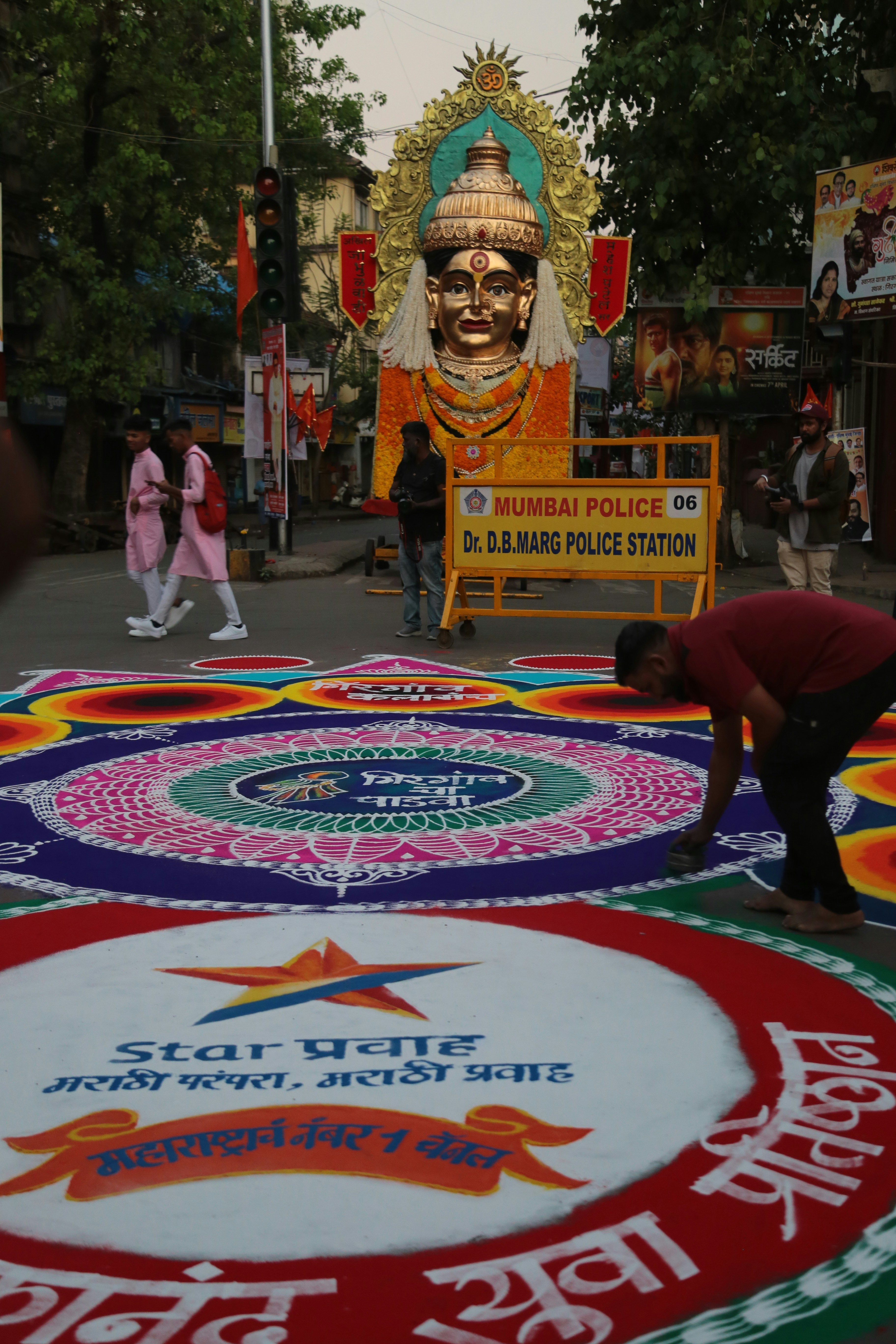
Introduction to Ganesh Chaturthi
Ganesh Chaturthi, a vibrant and colorful festival, celebrates the birth of Lord Ganesha, the elephant-headed deity revered for wisdom, prosperity, and good fortune. This annual event, particularly prominent in Mumbai and Navi Mumbai, typically occurs between August and September, corresponding to the Hindu month of Bhadrapada. The festival’s significance extends beyond mere celebration; it is deeply ingrained in the cultural identity of the region, reflecting the communal spirit and devotion of millions.
The celebrations commence with the installation of Ganesha idols in homes and public spaces, accompanied by rituals, prayers, and cultural performances. The diversity of Ganesha’s forms in the idols represents various aspects of life, and the elaborately crafted statues can range from modest to grand, depending on personal or community preferences. Devotees engage in a series of ceremonies, including aarti and bhajan sessions, which foster a sense of belonging and unity among participants.
In Mumbai, the festival transforms the cityscape into a vibrant tapestry of festivities, with local communities and organizations vying for attention with intricately designed pandals that display artistic creativity while often highlighting social issues and environmental topics. The immersion ceremony, or visarjan, concludes the festivities, symbolically returning Ganesha to his celestial abode while bringing communities together in a shared sense of closure and reflection.
This cultural phenomenon attracts both local and international visitors, making it a focal point for tourism and contributing significantly to the economic landscape of the region. As we look toward the future and embrace advancements in technology, it becomes pertinent to explore the potential impact of artificial intelligence on celebrating Ganesh Chaturthi in 2030. Understanding this traditional festival’s foundations will pave the way for predicting innovative transformations that technology could introduce.
Current Trends in AI Technology
As we move forward in the 21st century, artificial intelligence (AI) technology continues to evolve at an unprecedented pace. The integration of AI into daily life is reshaping various sectors, including cultural and religious celebrations. In recent years, AI has found applications across event management, audience engagement, and even in creative domains. With such transformations, the potential for AI to enhance traditional festivals, like Ganesh Chaturthi, is becoming increasingly apparent.
One of the notable trends is the use of AI for personalized experiences. By analyzing data from social media and past celebrations, AI systems can create tailored recommendations for attendees. This technology enables organizers to understand crowd preferences, thereby curating events that maximize enjoyment and participation. Similarly, facial recognition systems are being tested to streamline entry procedures at large gatherings, simplifying the logistics of managing thousands of attendees.
Additionally, advancements in machine learning and natural language processing are facilitating enhanced interactions between attendees and event organizers. AI-powered chatbots can now provide real-time assistance, answering inquiries about festival schedules, logistics, and safety protocols. Such technologies ensure that participants receive instant support, ultimately improving the overall experience.
Moreover, AI’s role in creative fields, such as music and art generation, has become increasingly significant. During festivals, AI algorithms can analyze existing cultural elements and generate new pieces that resonate with traditional themes. This fusion of AI with cultural expression is poised to enrich celebrations, while also preserving the essence of cherished rituals.
These technological advancements are setting a promising foundation for future celebrations, including Ganesh Chaturthi in 2030. With the increasing adoption of AI, the upcoming festivities will likely reflect greater interactivity, personalization, and engagement, elevating the collective experience of participants.
The Role of AI in Festivals: A Historical Perspective
Throughout history, technology has played a significant role in shaping how festivals are conducted and experienced. From the introduction of sound systems to the coordination tools that enable mass gatherings, innovation has continually transformed these cultural celebrations. As we look towards the future, the role of artificial intelligence (AI) in festivals is poised to become increasingly pivotal, enhancing not only the logistics but also the community engagement aspects.
As early as the 20th century, organizers started utilizing various technological advancements to streamline their operations. Event management software has allowed for better planning and coordination. Social media emerged as a platform for promoting festivals, fostering a sense of community among attendees. A recent trend has been the integration of data analytics to predict attendance and preferences, enabling organizers to tailor experiences based on the demographics and interests of participants.
With the evolution of artificial intelligence, we stand on the precipice of a new era for festival celebrations. AI has the potential to revolutionize numerous facets of festival management. For instance, AI algorithms can analyze patterns from previous events to optimize resource allocation and reduce waste. Chatbots can provide real-time assistance to attendees, enhancing their experience and engagement. Furthermore, machine learning can be utilized to analyze social media sentiments, allowing organizers to adjust their strategies for improved participation.
These innovations create a distinct paradigm where community-centric values are strengthened through technology. As we glean insights from the historical impact of technology on festivals, it is evident that AI will serve as a crucial tool in revitalizing and enriching cultural celebrations, including future Ganesh Chaturthi festivities in Mumbai. This understanding lays the groundwork for envisioning AI-enhanced experiences that promote sustainability, inclusivity, and enhanced participation.
Predictive Analysis of AI in Ganesh Chaturthi 2030
As Ganesh Chaturthi approaches in 2030, the integration of artificial intelligence (AI) into the festivities is poised to redefine the celebratory landscape in Mumbai. The potential applications of AI can significantly enhance both the experience of devotees and the logistical aspects of the celebration. One of the most promising innovations is the use of augmented reality (AR) technologies that can create immersive experiences for participants. With AR, devotees can access virtual tours of beautifully decorated pandals, enabling them to engage with the festivities more interactively.
AI-driven crowd management systems are another significant advancement expected by 2030. Utilizing machine learning algorithms, these systems can analyze real-time data from surveillance cameras and social media to predict crowded areas, ensuring the safety and comfort of attendees. By predicting crowd flow, authorities can effectively manage entry and exit points at various venues, minimizing congestion and enhancing the overall experience during the festival.
Moreover, the concept of personalized rituals through AI is likely to gain traction. Devotees may have the opportunity to connect with AI-driven apps that guide them in customizing their worship practices. These applications can suggest personalized puja procedures based on the user’s preferences, past behaviors, and spiritual needs. Such strategies not only elevate the emotional connection to the festival but also ensure that individuals, regardless of their level of knowledge about the rituals, can participate meaningfully.
As AI continues to evolve, it will be integral to shaping a unique Ganesh Chaturthi experience in 2030. Through enhanced immersion, efficient crowd control, and personalized engagement, the festival is set to embrace modernity while preserving its rich traditions, making it more accessible and enjoyable for all participants.
Emerging Technologies Shaping the Future Celebration
The celebration of Ganesh Chaturthi is poised to undergo a significant transformation by 2030, driven by advancements in emerging technologies. Among these innovations, artificial intelligence (AI) will play a critical role in personalizing the festival experience, but it will not stand alone. Technologies such as virtual reality (VR), blockchain, and the Internet of Things (IoT) will complement AI to create a more immersive and engaging celebration.
Virtual reality can transport devotees into a fully equipped 3D environment where they can participate in various rituals from the comfort of their homes. By leveraging VR, individuals who are unable to attend the festivities in person can still experience the grandeur of Ganesh Chaturthi. They could walk through colorful pandals, witness intricate decorations, and participate in virtual aartis, thus expanding accessibility and involvement.
Blockchain technology holds immense potential for enhancing the transparency and security of donations made during Ganesh Chaturthi. By utilizing smart contracts, contributors can ensure that their donations go directly to the intended causes or community projects. This decentralized ledger approach not only creates trust among donors but also enables tracking of funds, reinforcing accountability within organizations that manage these charitable efforts.
Moreover, IoT devices can improve the management of public gatherings during the festival. Connected sensors can monitor crowd density to enhance safety protocols and ensure smoother movement of participants. These devices can also help manage waste more efficiently by reporting on waste levels, thus promoting environmental sustainability during the celebrations.
Collectively, these emerging technologies will create a future celebration that not only highlights traditional values but also embraces modern innovations, paving the way for a more interactive, secure, and sustainable Ganesh Chaturthi by 2030.
Environmental Impact and Sustainability through AI Solutions
As the cultural significance of Ganesh Chaturthi continues to grow in Mumbai, so does the environmental burden associated with its celebrations. In this context, leveraging artificial intelligence (AI) presents opportunities for promoting sustainability and reducing ecological footprints. With the application of intelligent algorithms and data-driven technologies, it is possible to design eco-friendly solutions that align with the festivities.
One primary area where AI can contribute is pollution management. Utilizing AI-driven air quality monitoring systems can help authorities track pollutants in real-time, offering actionable insights for timely interventions. For instance, deploying sensors across the city during the festival could identify pollution hotspots, allowing for targeted mitigating strategies such as traffic management or localized clean-up efforts. Additionally, AI-enabled predictive analytics can analyze data from previous celebrations to forecast pollution levels, assisting local governments in planning more effective environmental strategies.
Moreover, AI can facilitate responsible immersion practices for Ganesh idols. Traditionally, the immersion of idols in water bodies contributes to severe water pollution; however, AI solutions can help promote sustainable idol materials and guide devotees towards eco-friendly practices. For example, through machine learning, one could categorize different idol materials based on their environmental impact and relay information to devotees regarding the use of biodegradable or clay idols. This educational approach could be paired with visual AI solutions to illustrate the importance of sustainable choices.
Furthermore, AI can enhance community engagement by rallying the public around eco-conscious initiatives. By developing platforms that connect participants to local NGOs and environmental efforts, such as beach clean-ups after immersions, AI can encourage a collective responsibility towards ecological preservation. Thus, the integration of AI into Ganesh Chaturthi celebrations in 2030 holds the potential to foster a more environmentally sustainable approach that respects cultural traditions while promoting planetary health.
Community Engagement and AI: A New Paradigm
The celebration of Ganesh Chaturthi in Mumbai has always relied on the vibrant participation of communities, uniting people through shared cultural experiences. As we look towards the future, the integration of Artificial Intelligence (AI) presents an unprecedented opportunity for enhancing community engagement during this important festival. AI technology can transform various aspects of organizing and participating in local events, leading to a more enriched experience for devotees and organizers alike.
One of the most significant ways AI can facilitate community engagement is through data-driven insights. By employing AI algorithms, organizers can analyze past participation patterns, preferences, and feedback from attendees. This data can help in tailoring events to meet the community’s expectations, ensuring gatherings resonate with local sentiments and traditions. For instance, AI can predict which events are likely to draw more participants and what types of activities would generate greater interest, optimizing resource allocation and planning efficiency.
Moreover, AI can enhance individual participant experiences through personalized interactions. Chatbots and virtual assistants can be developed to provide real-time support, answering queries related to event schedules, locations, and transportation. Such AI tools can offer attendees suggestions based on their preferences, creating a more customized experience during the festivities. By understanding individual needs and desires, these AI solutions can foster a sense of belonging and encourage active participation within the community.
Furthermore, the use of AI for community engagement extends to promoting inclusivity and accessibility. Machine learning can assist in designing events that cater to diverse demographic groups, ensuring that everyone has the opportunity to partake in the celebration. This not only enriches the festival atmosphere but also strengthens community bonds, reinforcing the essence of Ganesh Chaturthi as a collective celebration.
In conclusion, the application of AI in community engagement for Ganesh Chaturthi offers a promising avenue for enhancing the festival experience, making it more inclusive and personalized. By embracing these innovations, Mumbai can set a new standard for the celebration, fostering deeper connections among its residents for years to come.
Case Studies: Speculative Examples of AI Implementation
As we consider the potential transformations that AI technologies could bring to the Ganesh Chaturthi celebrations in 2030, several speculative case studies emerge, each highlighting innovative scenarios that showcase AI’s role in enhancing traditional practices.
One notable case involves the use of AI-driven drones that monitor crowd safety during large processions. Equipped with advanced facial recognition technology, these drones could identify individuals who require assistance or those behaving unusually in real-time, ensuring a more secure environment. In collaboration with local law enforcement, AI could help manage traffic flows efficiently, allowing devotees to move seamlessly through swathes of festivities while reducing congestion and potential hazards.
Another intriguing example is an AI-powered chatbot deployed across social media platforms to enhance community engagement during the festival. This chatbot, designed to assist both locals and tourists, could provide personalized recommendations for pandals to visit, cultural events happening nearby, or even facilitate the arrangement of eco-friendly immersion options for Ganesh idols. This integration of AI into the social fabric of Ganesh Chaturthi would ensure that information is readily available while promoting awareness of sustainable practices.
Lastly, consider an immersive virtual reality experience created by leveraging AI, enabling devotees to participate in rituals and celebrations from afar. With this technology, individuals unable to attend the physical festivities, either due to distance or circumstances, could engage in a virtual setting that replicates the charm and vibrancy of Mumbai’s Ganesh Chaturthi. This speculative case study emphasizes the potential for AI to bridge gaps, making the celebration more inclusive and accessible.
These fictional yet plausible scenarios illustrate how AI might reshape the future of Ganesh Chaturthi, fostering safety, engagement, and inclusivity while staying true to the spirit of the festival.
Conclusion: Embracing Tradition with Technology
As we look toward Ganesh Chaturthi 2030, the interplay between tradition and technology emerges as a central theme in the evolution of this revered festival in Mumbai. The predictions presented shed light on how innovative technologies can enhance the experience while remaining respectful to the rich cultural heritage of the celebration. It is evident that the integration of artificial intelligence, augmented reality, and smart city initiatives have the potential to revolutionize how devotees engage with the festival.
The future celebrations may witness the incorporation of AI-driven community engagement platforms, enabling better connectivity among participants and offering personalized user experiences that resonate with individual values and beliefs. Such advancements could foster a more inclusive environment that transcends geographical barriers and invites a wider audience to partake in this time-honored tradition.
Moreover, the utilization of technology in environmental sustainability efforts, such as eco-friendly idols and waste management solutions, showcases a commitment to preserving the essence of Ganesh Chaturthi while taking significant strides toward cleaner, greener celebrations. As we embrace these emerging technologies, it becomes imperative to maintain a balance where the core principles of devotion, reverence, and social unity remain intact.
In reflecting on the insights discussed, it is essential for stakeholders—from community leaders to technology developers—to collaborate meaningfully, ensuring that advancements serve to enhance the cultural tapestry of Ganesh Chaturthi rather than detract from it. By harmonizing the old with the new, we can envision an inspiring future where tradition coexists with innovation, enriching the communal celebration of Ganesh Chaturthi for generations to come.