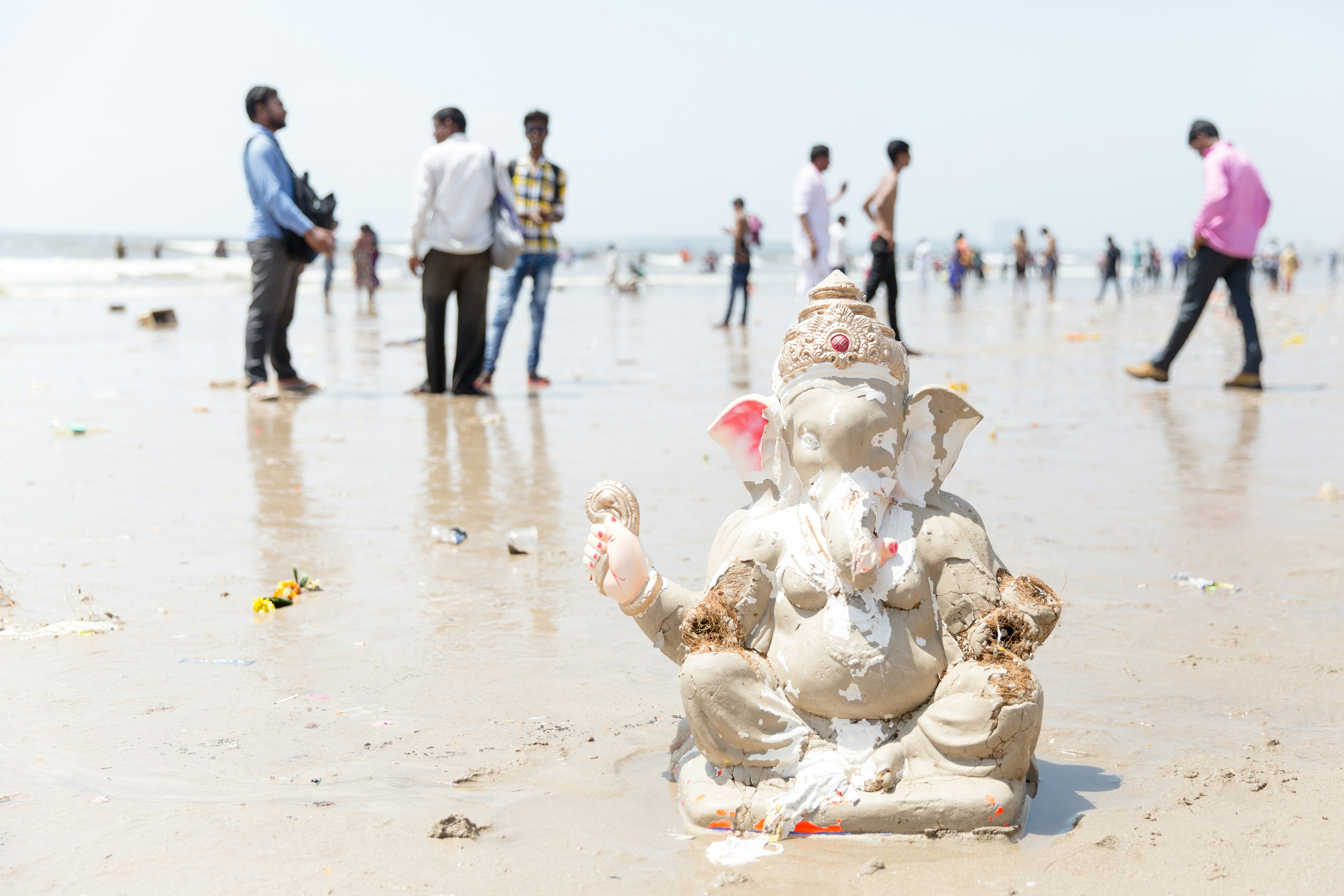
Introduction to Ganesh Chaturthi
Ganesh Chaturthi is a prominent Hindu festival that celebrates the birth of Lord Ganesha, the elephant-headed god, who symbolizes wisdom, prosperity, and good fortune. This festival generally falls between August and September, depending on the lunar calendar, and is characterized by elaborate celebrations across India, especially in Maharashtra. In Airoli, a vibrant suburb in Navi Mumbai, the festival is marked with immense enthusiasm, showcasing the rich cultural tapestry of the region.
Significance of Ganesh Chaturthi extends beyond mere religious observance; it embodies the spirit of community and togetherness. Families and friends gather to create or purchase beautifully crafted Ganesha idols and set them up in their homes, signifying the arrival of the deity. The celebrations kick off with rituals that include prayers (puja), invoking Lord Ganesha’s blessings for a successful and harmonious life.
During the festival, devotees engage in numerous cultural activities such as singing, dancing, and performing traditional music, which serves to enhance the atmosphere of joy and reverence. The immersion ceremony, known as visarjan, is a pivotal aspect of the celebrations, where the idols are paraded through the streets in vibrant processions before being immersed in nearby water bodies. In Airoli, the spirited visarjan procession signifies the farewell of Lord Ganesha, and as devotees chant and celebrate, they reaffirm their faith in his return the following year.
Moreover, Ganesh Chaturthi encourages environmental awareness as many local communities advocate for eco-friendly practices in terms of idol creation and immersion. Overall, this festival is not merely about rituals; it is a cultural phenomenon that fosters a sense of belonging and unity among residents, making it a memorable occasion in the lives of many, particularly in Airoli.
The Evolution of Ganesh Chaturthi Celebrations
Ganesh Chaturthi, a festival dedicated to the Hindu deity Lord Ganesha, has undergone significant transformation since its inception in the late 19th century. Initially celebrated as a private family event, this festival has evolved into a widely recognized public celebration, attracting thousands of devotees every year. The early commemorations were closely associated with domestic rituals and community gatherings, fostering a spirit of togetherness.
As urbanization progressed, particularly in the 20th century, the celebratory nature of Ganesh Chaturthi began to undergo pivotal changes. With the influx of people into cities, large communal celebrations emerged. This democratization of the festival was particularly propelled by the efforts of social reformers like Lokmanya Tilak, who campaigned for public celebrations to foster national unity and encourage collective participation among the masses. Within urban environments, this transformation sparked the creation of elaborate pandals, which serve as temporary shrines for worship during the festival.
The impact of technology on Ganesh Chaturthi has been profound. The advent of digital media, social networking platforms, and mobile applications has revolutionized the ways people engage with the festival. Celebrants now share pictures, videos, and experiences online, allowing for a greater reach and connection among the community. Moreover, advancements in sustainable practices and eco-friendly materials have led to a surge in awareness regarding the environmental impact of idol immersion. This has prompted many to seek alternatives, integrating new technologies into the traditional festivities to foster a sense of responsibility towards the environment.
In conclusion, the evolution of Ganesh Chaturthi celebrations reflects broader societal changes, significantly shaped by urbanization and technological advancements. Today, the festival stands as a testament to collective devotion while also highlighting the balance between tradition and modernity in the dynamic landscape of contemporary celebrations.
Understanding AI and GANs
Artificial Intelligence (AI) is a branch of computer science that focuses on creating systems capable of performing tasks that typically require human intelligence. These tasks encompass a wide range of functions, including understanding natural language, recognizing images, and making decisions. AI systems are designed to enhance efficiency and accuracy in various applications, thus playing a significant role in modern technological advancements.
One of the innovative frameworks within AI is Generative Adversarial Networks (GANs). Introduced by Ian Goodfellow in 2014, GANs consist of two neural networks—the generator and the discriminator—that work in tandem to produce new data instances that mimic real-world datasets. The generator creates data while the discriminator evaluates its authenticity, providing feedback that helps to refine the generator’s output. This adversarial process results in the creation of highly realistic data, making GANs particularly valuable in fields like image synthesis, video generation, and, notably, event simulations.
The relevance of AI and GANs in predicting events, such as festivals, is profound. By leveraging these technologies, researchers and developers can simulate scenarios that represent various outcomes based on historical data and potential variables. For instance, during the Ganesh Chaturthi festival, GANs could be employed to model crowd behaviors during the visarjan process, allowing for better planning and resource allocation. Such predictive analytics enable city planners and event organizers to make informed decisions, ensuring public safety and enhancing the overall experience.
In conclusion, understanding the fundamentals of AI and GANs is crucial for harnessing their potential in making predictions and simulations. The intersection of these technologies continues to expand, paving the way for innovative applications in diverse sectors, including cultural events like Ganesh Chaturthi.
Significance of AI in Festivals
The integration of Artificial Intelligence (AI) into cultural festivities, such as Ganesh Chaturthi, is transforming how these events are organized and celebrated. Firstly, AI technology aids in logistics and planning, making the entire process seamless and more efficient. For instance, through predictive analytics, organizers can forecast the number of attendees, allowing for better preparation of resources such as seating arrangements, food supply, and crowd control measures. This reduces last-minute chaos and enhances the overall experience for everyone involved.
Moreover, AI has the potential to enrich the celebratory atmosphere by personalizing experiences for attendees. By leveraging data from social media interactions and past festival attendance, AI-driven applications can recommend activities based on individuals’ preferences. This encourages more meaningful participation, as visitors engage in activities tailored to their interests. For families and community members, such personalization can foster a greater sense of belonging and involvement in cultural practices, thus strengthening communal ties during the festival.
In addition to enhancing organization and personal experiences, AI contributes to improved safety and security during large gatherings. AI-powered surveillance systems can monitor crowds, enable real-time recognition of unusual activities, and alert security personnel to potential issues before they escalate. Such measures ensure a safer environment for all participants, which is particularly essential during festivals that draw large crowds.
Lastly, AI actively encourages community engagement through interactive platforms. By facilitating online forums, social media integration, and live chat support, AI fosters conversations among attendees. This engagement not only amplifies the festival’s reach but also serves to preserve tradition by keeping younger generations actively involved in celebrations. Therefore, the significance of AI in festivals transcends mere technological advancements; it builds a bridge between heritage and modernity, ensuring that cultural festivities like Ganesh Chaturthi thrive in an ever-evolving world.
Dynamic Visarjan Simulations: Concept and Importance
Dynamic visarjan simulations represent a cutting-edge application of technology in the cultural observance of Ganesh Chaturthi, particularly focusing on the immersion (visarjan) of idols into water bodies. These simulations utilize artificial intelligence (AI) to recreate and analyze the complex dynamics involved in the visarjan process. The primary objective of these simulations is to enhance the understanding and management of the visarjan events, ensuring they remain safe and sustainable while preserving the cultural significance associated with them.
The core purpose of dynamic visarjan simulations is to predict outcomes based on various parameters, such as geographic locations, water levels, crowd sizes, and environmental conditions. By integrating historical data and real-time analytics, these simulations can generate predictive models that inform decision-making for local authorities and community organizers. This predictive capability is invaluable, as it allows for a more efficient allocation of resources during the festivities, helping to reduce congestion and environmental impacts.
Moreover, the significance of employing AI in this context cannot be overstated. By analyzing a myriad of variables, dynamic visarjan simulations facilitate an in-depth understanding of potential challenges that may arise during the immersions. For instance, they can predict the amount of wastewater generated during the visarjan, enabling planners to implement appropriate measures to mitigate pollution. This not only enhances public safety but also emphasizes the community’s commitment to ecological stewardship.
In essence, dynamic visarjan simulations serve a dual purpose: they enhance the cultural experience of Ganesh Chaturthi while promoting sustainability through informed decision-making. As we approach Ganesh Chaturthi 2030 in Airoli, embracing such AI-powered solutions stands as a testament to our ability to harmonize tradition with modern technology, thereby enriching the festival for future generations.
Envisioning Ganesh Chaturthi 2030 in Airoli
As we look towards the future, specifically the Ganesh Chaturthi celebrations in Airoli in 2030, advanced AI technologies are likely to play a pivotal role in reshaping these age-old traditions. The use of dynamic simulation models powered by artificial intelligence could revolutionize the way the festival is celebrated, enhancing both safety and engagement within the community.
In 2030, one can envision the creation of virtual reality (VR) experiences that allow participants to immerse themselves in the celebrations, even from remote locations. This technology could facilitate global participation, enabling devotees worldwide to connect with Airoli’s vibrant festivities. Enhanced interactive applications may also be developed, allowing families to perform traditional rituals in augmented reality settings, thereby preserving the cultural significance while catering to diverse audiences.
Furthermore, the role of AI in managing crowds and optimizing logistics during Ganesh Chaturthi could greatly improve the overall experience. Smart traffic management systems integrated with AI could ensure smoother transportation and accessibility to key celebration points. The implementation of drones equipped with AI capabilities for live video coverage might provide real-time updates and foster a sense of unity among participants, even those who are unable to attend physically.
Community involvement is likely to be more pronounced, with AI tools facilitating collaboration across neighborhoods for organizing events. Social media platforms can leverage machine learning algorithms to highlight upcoming activities and engage residents, encouraging a stronger sense of community spirit. These innovations could lead to a more communal atmosphere, fostering inclusivity and participation from various demographics.
In summary, envisioning Ganesh Chaturthi in Airoli in 2030 involves the integration of AI technologies that enhance participant interactions and community collaborations, thereby redefining the celebratory landscape while respecting traditional values.
Technological Innovations: The Role of Data Analytics and Simulation Tools
The celebration of Ganesh Chaturthi is a vibrant and culturally significant event, especially in Airoli. As the festival is celebrated with grandeur, the integration of technology and data analytics is becoming increasingly relevant in enhancing the overall experience. Data analytics functions as a pivotal tool in the planning and management of the festivities, enabling organizers to predict attendance, manage logistics, and assess community engagement. By leveraging real-time data, planners can gather insights into attendee demographics, preferences, and behaviors, allowing them to tailor the celebration to the wishes of the community.
Simulation tools play a crucial role in visualizing the festival’s setup and execution. These applications enable event organizers to create virtual models of the venue, depicting everything from the placement of idols to the flow of crowds. Simulations help identify potential bottlenecks, ensuring a smoother and safer experience during the immersion (visarjan) phase. By employing these innovative technologies, organizers can anticipate challenges and develop solutions that minimize disruptions during the celebrations.
The advancements in data analytics also extend to environmental considerations. With growing concerns regarding pollution and waste management during Ganesh Chaturthi, data-driven insights can help monitor the ecological impact of the festivities. By analyzing data related to waste generation and water quality, organizers can implement strategies to reduce the festival’s environmental footprint, thus achieving a balance between cultural practices and ecological sustainability.
In this era of digital transformation, the blending of traditional festivities with cutting-edge technology not only enhances operational efficiency but also enriches the participants’ experience, thereby ensuring that the vibrancy of Ganesh Chaturthi in Airoli continues to thrive well into the future.
Community Perspectives: Insights from Local Residents
As Airoli prepares for Ganesh Chaturthi 2030, local residents are increasingly engaged in discussions about how emerging technologies, particularly artificial intelligence, will shape the celebrations. Through various interviews and surveys, community members have expressed a diverse array of expectations and hopes centered around AI-powered solutions and dynamic simulations.
Many residents envision that AI could enhance the overall experience of Ganesh Chaturthi by optimizing the visarjan process. The traditional immersion of the Ganesh idol, known as visarjan, is often accompanied by immense crowds and logistical challenges. By employing dynamic simulations, residents believe that authorities could improve traffic management, ensuring smoother flows and reduced congestion during this significant festival. One local resident stated, “I hope that technology can help us manage the crowds and make the experience more enjoyable for everyone,” reflecting a popular sentiment about embracing AI for practical solutions.
Furthermore, several community members voiced the potential for AI to preserve the cultural and spiritual essence of Ganesh Chaturthi. Residents expressed optimism about using virtual reality simulations to create immersive experiences that educate both locals and visitors about the festival’s rituals and significance. A resident shared, “Using virtual platforms could allow us to showcase our traditions to a broader audience, making the festival more inclusive and engaging.””>
Despite the enthusiasm for AI integration, there are also legitimate concerns among the residents regarding the preservation of cultural heritage amid technological advancements. Some emphasize the importance of maintaining the traditional elements that define Ganesh Chaturthi. They seek a balance where technology complements rather than replaces cultural practices, underscoring the need for community dialogue in the planning process.
Conclusion: Embracing Tradition through Innovation
The celebration of Ganesh Chaturthi has always been a vibrant fusion of culture, devotion, and community spirit. As we project ourselves toward 2030 in Airoli, the integration of artificial intelligence into the festivities signifies an exciting evolution of our traditional practices. The dynamic visarjan simulations, powered by advanced technologies, are not merely tools to enhance the celebratory environment; they serve as a bridge connecting past traditions to contemporary methods.
Innovations such as AI-driven simulations facilitate a deeper engagement with the rituals of Ganesh Chaturthi, allowing a broader audience to participate in and appreciate the heritage. These technological advancements offer a unique opportunity to enhance the overall experience of visarjan while ensuring that the essence of the celebration is preserved. Moreover, they provide solutions to logistical challenges, ensuring that the celebrations are not only festive but also sustainable and efficient.
While embracing these new methodologies, it is critical to remember the roots of our cultural practices. The core values and rituals that define Ganesh Chaturthi must remain at the forefront of our celebrations. As we adopt innovative practices, we must also seek to educate and instill a sense of pride in these traditions among the younger generations. By doing so, we can ensure that the significance of Ganesh Chaturthi is not lost, but rather enriched through the integration of modern technology.
In conclusion, the path towards future celebrations of Ganesh Chaturthi in Airoli represents an opportunity to harmonize tradition with innovation. By fostering an environment where cultural heritage thrives alongside technological advancements, we can create memorable experiences for all, embedding a sense of community and continuity in the practice of our cherished traditions.