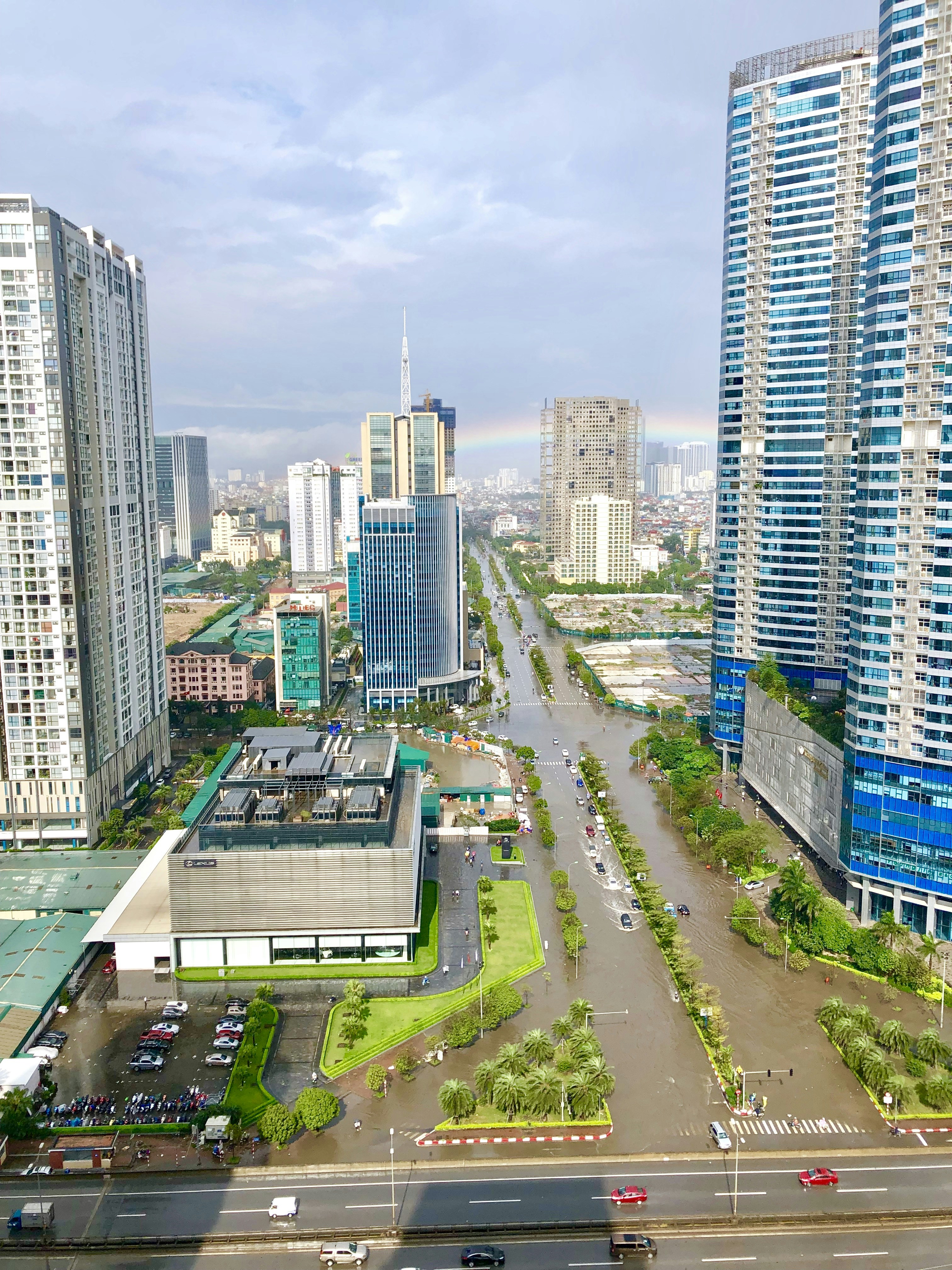
Introduction to Mumbai’s Monsoon Challenges
Mumbai, the bustling financial capital of India, is renowned for its vibrant culture and dynamic economy. However, it also experiences one of the most intense monsoon seasons globally, which occurs from June to September. This monsoon period is characterized by heavy rainfall, which can lead to both life-nurturing benefits and severe challenges for the city’s residents. The monsoon rains are crucial for replenishing water sources and supporting agriculture, but they also pose significant risks, including flooding, landslides, and the disruption of daily life.
The dual nature of the monsoon in Mumbai has been a long-standing issue. Historically, the city has faced severe flooding due to inadequate drainage systems. Infrastructure struggles to cope with the volume of water that the intense monsoons bring, leading to traffic congestion, property damage, and threats to public safety. Events such as the catastrophic flooding in 2005, where over 900 mm of rainfall was recorded in a single day, serve as stark reminders of the challenges presented by the monsoon season.
Furthermore, climate change has exacerbated these challenges, resulting in unpredictable rainfall patterns and increased intensity of storms. As the city grapples with rising sea levels and urbanization, the risks posed by the monsoons are becoming increasingly critical. The integration of simulation models that utilize cultural climate data and world models can play a pivotal role in predicting and mitigating these challenges. By understanding the historic patterns of monsoon behavior and the current environmental context, these models can provide insights that are vital for urban planning, disaster preparedness, and policy-making.
In light of the importance of preparing for these seasonal rains, it is essential to explore effective simulation strategies to better address Mumbai’s monsoon challenges.
Understanding World Models in Climate Simulation
World models play a crucial role in climate simulation, functioning as sophisticated tools designed to predict weather patterns and understand complex climate dynamics. These models utilize an array of data inputs, including temperature readings, humidity levels, and atmospheric pressure variations, to simulate climatic conditions across different regions. Specifically, in the context of agricultural settings and urban environments like Mumbai, these models are pivotal for forecasting monsoon dynamics and ensuring that proper measures can be taken to mitigate adverse effects.
The methodologies employed in creating these models involve advanced data collection techniques, ranging from satellite imagery to ground-based weather stations. Data assimilation ensures that the most accurate and relevant information is integrated into the models, thus enhancing their predictive capabilities. The computational techniques underpinning these models, often rooted in numerical weather prediction and climate science, enable researchers to analyze vast quantities of environmental data efficiently. This is particularly significant for urban planners who need reliable forecasts to manage water resources and prepare for potential flooding during monsoon seasons.
Furthermore, world models are essential for understanding monsoon variability, which is influenced by numerous factors including ocean temperatures, atmospheric circulation, and local geographical features. By studying these elements, scientists can improve the accuracy of climate simulations and better assess potential impacts on urban areas. Ultimately, the integration of world models and cultural climate data serves not only the scientific community in enhancing forecast precision but also supports the strategic planning needed for sustainable urban development, particularly in monsoon-prone cities like Mumbai.
The Role of Cultural Climate Data in Modeling
Cultural climate data encompasses a variety of socio-economic and demographic factors that significantly affect how communities interact with their environment. In the context of Mumbai, these factors are crucial for enhancing climate models aimed at simulating the city’s monsoon behavior. Understanding cultural climate data allows researchers and urban planners to gain insights into how Mumbai’s unique societal characteristics influence water management and flood response mechanisms.
Population density represents a vital aspect of cultural climate data. Mumbai, being one of the most densely populated cities in the world, experiences immense pressure on its infrastructure during monsoon rains. Urban areas with high population density often face exacerbated flooding, as the volume of runoff can overwhelm existing drainage systems. Integrating population data into climate models can provide a more realistic picture of flood risks, ultimately aiding in developing effective management strategies.
Furthermore, urbanization patterns play a critical role in determining drainage efficiency and flood response. Rapid development in Mumbai has resulted in alterations to natural water flow paths, often leading to increased surface runoff and reduced groundwater recharge. By incorporating detailed urbanization metrics into climate simulations, it becomes possible to predict how changes in land use may affect flooding events during monsoons. This understanding is not only beneficial for simulations but is also essential for planning sustainable urban infrastructure.
Socio-economic status is another significant factor that influences community resilience to climate impacts. In Mumbai, the disparities in wealth and access to resources can determine how effectively households can respond to flooding. For example, wealthier areas may have more resilient infrastructure and better access to emergency services, while poorer communities may struggle with inadequate resources. Modeling these differences using cultural climate data can enhance overall flood preparedness and response initiatives.
Case Studies: Successful Implementations in Other Cities
Across the globe, several cities have successfully employed world models and cultural climate data to address similar monsoon and flooding challenges, offering valuable insights into potential strategies for Mumbai. One notable example is the city of Bangkok, Thailand, which has faced chronic flooding due to its topography and heavy rainfall during the monsoon season. In response, researchers integrated advanced hydrological models with local historical rainfall data to predict flood inundation zones. This initiative not only enhanced flood management strategies but also informed urban planning decisions, significantly reducing the impact of flooding on local communities.
Another exemplary case is Rotterdam, Netherlands, renowned for its innovative approach to water management. The city utilized simulation models to assess the performance of its stormwater drainage systems under different climate scenarios. By analyzing real-time data and historical climate patterns, Rotterdam was able to adapt its infrastructure to be more resilient against potential flooding events, resulting in a notable decline in flood-related damage over the last decade. The integration of comprehensive data has served as a model for sustainable urban development tailored to climate resilience.
Lastly, in the city of Mumbai, the integration of world models and local cultural climate data could mirror the successes observed in cities like Jakarta, Indonesia, where the implementation of real-time monitoring systems combined with predictive modelling reduced urban flooding. Lessons learned from these cities suggest that active collaboration between government authorities, academic institutions, and local communities is essential in creating actionable strategies. By drawing parallels from these international examples, Mumbai may harness similar methodologies to effectively tackle its own monsoon-related challenges while ensuring long-term sustainability and security for its residents.
Building a Tailored Model for Mumbai
Mumbai, a bustling metropolis located on India’s west coast, faces significant challenges stemming from its monsoon season, which can lead to severe flooding and infrastructure strain. To develop an effective simulation model that addresses these challenges, careful consideration of the city’s unique physical and cultural landscape is crucial. A tailored model must integrate various parameters including local climate data, urban geography, and socio-economic factors.
One of the primary considerations when building this model is the topography of Mumbai. The city is characterized by a mix of coastal areas, low-lying regions, and elevated terrain. This diverse geography plays a critical role in the way water accumulates and drains. Incorporating hydrological data specific to these areas will allow for a better understanding of how water flows during heavy rains. Additionally, rainfall patterns must be accurately reflected in the model, taking into account historical data on monsoon precipitation intensity and distribution.
Moreover, cultural climate data is essential for a comprehensive understanding of the impacts of flooding on the local population. This includes factors such as urban density, existing drainage systems, and public infrastructure resilience. For instance, the model should assess the efficacy of Mumbai’s drainage systems in coping with extreme weather events, considering how urban design choices can exacerbate or alleviate flooding risks.
To ensure the model’s success, collaboration with local stakeholders—including urban planners, government agencies, and community organizations—will be vital. They can provide insights on historical flooding events and current operational challenges faced by the city. By integrating these diverse data sources and collaborating with relevant parties, the tailored simulation model can serve as an effective tool for predicting monsoon impacts and informing future urban design strategies aimed at minimizing flooding risk in Mumbai.
Impact of Climate Change on Monsoon Patterns
The monsoon season in Mumbai is a critical period for the city, significantly influencing its economy, agriculture, and water resources. However, the impact of climate change on monsoon patterns is becoming increasingly evident. Studies indicate that rising global temperatures are altering precipitation patterns, leading to expectations of both increased intensity and frequency of rainfall during the monsoon months. This phenomenon poses significant challenges for urban infrastructure and disaster management in Mumbai.
Increased rainfall intensity can result in severe flooding, as the existing drainage systems may become overwhelmed. Historical data indicates that in recent years, Mumbai has experienced some of its heaviest monsoon downpours, often causing catastrophic disruptions. Furthermore, it is anticipated that climate change will lead to fluctuating annual monsoon rainfall averages, creating uncertainty that complicates planning and resource allocation. As seizures of normal monsoon behavior occur, adjustments in agricultural practices are also necessary to mitigate adverse effects on crop yields.
Simulations play a vital role in understanding these changing patterns, as they can project future monsoon scenarios under various climate change models. By incorporating cultural climate data, simulations offer insights into how monsoon patterns may shift, allowing planners and policymakers in Mumbai to make informed decisions regarding urban development and disaster preparedness. Enhanced simulations can aid urban planners in creating resilient infrastructure capable of withstanding more severe weather events.
As Mumbai faces the challenges posed by shifting monsoon patterns, the integration of climate data and advanced modeling techniques will be essential. It allows for a proactive approach, improving adaptability and resilience in the face of climate variability.
Community Engagement: Making Data Accessible
Effective community engagement is essential for harnessing the power of climate simulation data, especially in urban areas like Mumbai, where the impact of monsoons can be severe. The complexity of climate models may often leave local communities feeling disconnected from vital information that could aid in disaster preparedness and mitigation strategies. Therefore, it is imperative to develop approaches that make such data understandable and actionable for these communities.
One of the key strategies in achieving this goal is through localized workshops and seminars. These sessions should focus on translating technical terms into layman’s language, ensuring that residents understand the implications of data on their housing and neighborhoods, as well as on the broader urban ecosystem. Collaborating with community leaders and local organizations can also amplify outreach efforts, fostering trust and encouraging participation in discussions surrounding climate simulation outcomes.
Furthermore, utilizing digital platforms can enhance accessibility to climate data. Interactive maps and mobile applications can serve as effective tools for navigating the intricate details of monsoon forecasts and related information. By presenting data in visual formats, residents can grasp complex weather patterns more intuitively, which can greatly aid in enhancing their understanding and, ultimately, their preparedness.
Importantly, empowering community members to engage with simulation data not only increases their awareness but also encourages them to contribute to climate action initiatives actively. By participating in local decision-making processes, residents can advocate for infrastructure improvements and sustainable practices that reduce vulnerability to flooding and other climate-related challenges.
In conclusion, making climate data accessible to local communities paves the way for improved disaster resilience. Through educational initiatives and the use of technology, residents can become informed stakeholders who play a crucial role in mitigating the risks associated with Mumbai’s monsoons.
Future Directions: Improving and Innovating Modeling Techniques
The evolution of climate modeling, particularly in the context of simulating Mumbai’s Monsoons, necessitates a continuous improvement of current techniques to ensure they remain relevant and effective. One promising avenue for advancement lies in the integration of artificial intelligence (AI) and machine learning (ML) into existing models. These technologies offer enhanced predictive capabilities by analyzing vast datasets, thereby identifying patterns and trends that were previously undetectable through traditional methods. By employing AI and ML, researchers may significantly improve the accuracy of predictions regarding tropical storms, rainfall distribution, and other climate-related phenomena.
Moreover, the adaptability of AI allows for real-time data processing, enabling models to adjust based on changing weather patterns and newly acquired information. This responsiveness can be vital in a city like Mumbai, where monsoon dynamics can shift rapidly and unpredictably, leading to significant implications for urban planning and disaster management.
In addition to technology integration, the future of climate modeling in Mumbai hinges on fostering collaboration among key stakeholders. Scientists, urban planners, and policymakers must work cohesively to share insights and strategies, creating a multidisciplinary approach that captures the nuances of local environmental conditions while factoring in socio-economic considerations. For instance, engaging local communities to provide input on climate impacts can enhance the models’ relevance, ensuring that predictions are seen through the lens of those most affected.
This collaborative framework will support the development of innovative modeling techniques that are both comprehensive and contextually appropriate, addressing the multifaceted challenges posed by climate change. As researchers continue to refine modeling methodologies, a diligent effort towards continuous learning and adaptation will be crucial to truly simulate Mumbai’s fluctuating monsoon patterns effectively.
Conclusion and Call to Action
In addressing the challenges presented by Mumbai’s monsoon seasons, it is critical to synthesize empirical data from world models with cultural climate insights. This integration enables a more nuanced understanding of how environmental changes and urban dynamics intersect, ultimately leading to more effective adaptation strategies. As discussed, the variability of monsoon patterns, driven by global climate trends and local topography, requires urban planners and policymakers to be equipped with comprehensive forecasts and analyses that account for both quantitative data and qualitative cultural factors.
Furthermore, engaging local communities in this process is essential. By incorporating local knowledge and experiences into the planning phases, we can ensure that the proposed solutions are culturally appropriate and thus more likely to be successful. Stakeholders must prioritize collaboration across sectors, pooling expertise from climatologists, urban developers, and community leaders to create robust frameworks that can respond dynamically to shifting climatic conditions.
As an individual, your role in this collective effort cannot be overstated. Advocating for responsible urban planning, supporting initiatives aimed at climate resilience, and participating in local discussions about environmental issues can significantly contribute to a sustainable future for Mumbai. We encourage readers to actively engage with local authorities and take part in public forums to voice concerns and propose solutions concerning monsoon management and climate adaptation.
Ultimately, Mumbai’s approach to its monsoon challenges will set a precedent for other urban centers facing similar climatic adversities. By committing to a holistic integration of world models with cultural climate data, we can pave the way for resilient urban ecosystems capable of thriving amidst unpredictability.