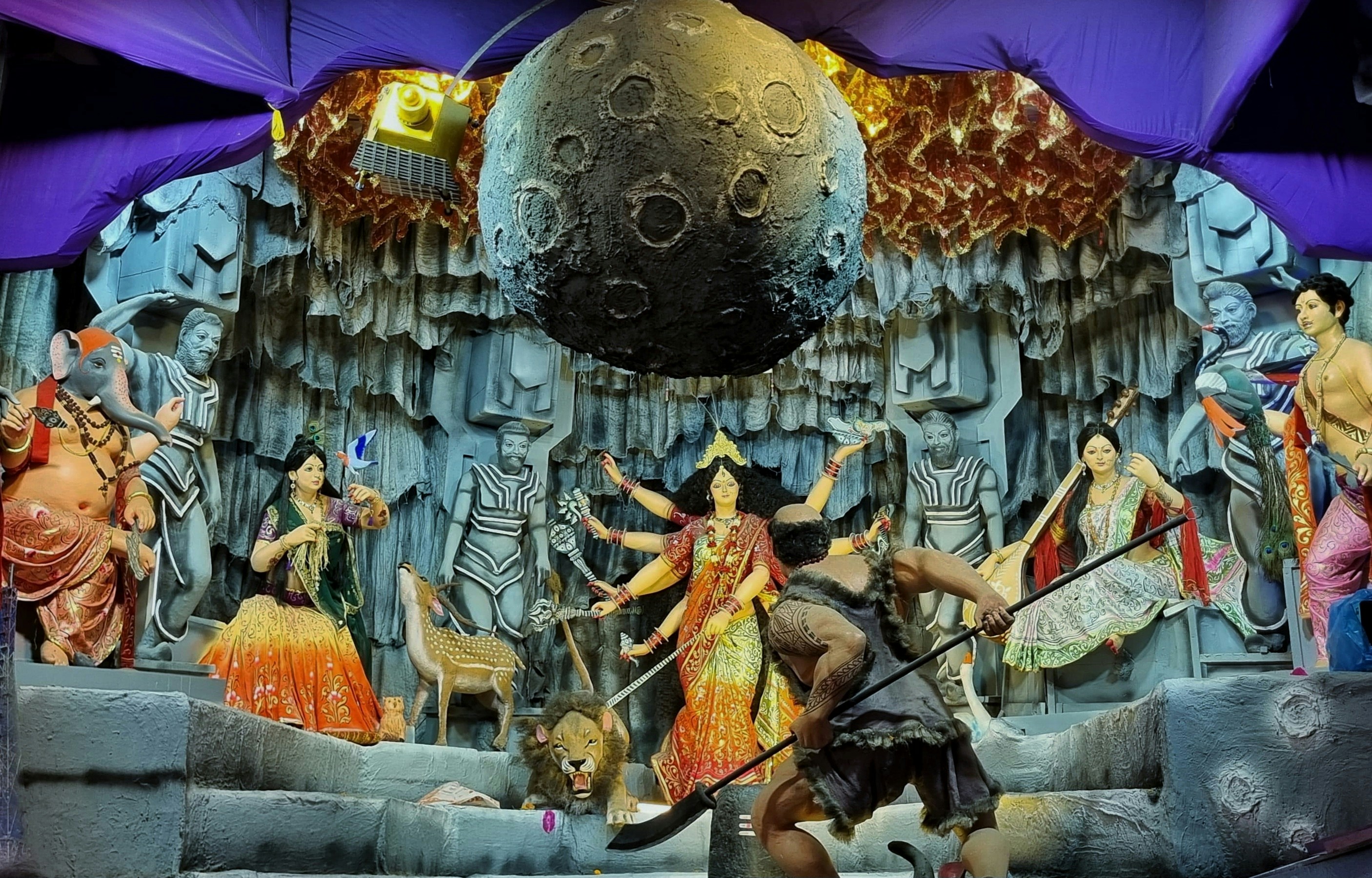
Introduction to the Mahabharata
The Mahabharata is an ancient Indian epic that stands as one of the longest epic poems in the world, comprising approximately 100,000 shlokas or over 200,000 individual verse lines. This monumental text, traditionally attributed to the sage Vyasa, consists not only of a narrative of the Kurukshetra War but also encompasses a wealth of philosophical and devotional material, including the revered Bhagavad Gita. Its profound insights into dharma (duty/righteousness), ethics, and morality have made it a significant reading not just in literary circles, but also in spiritual and philosophical discussions.
The Mahabharata offers a complex tapestry of characters and themes that resonate with both historical and moral significance. Central to the narrative are the Pandavas and the Kauravas, two royal families embroiled in a fierce battle for supremacy. Major figures such as Arjuna, Krishna, Draupadi, and Duryodhana contribute richly to the plot, creating personal conflicts and political intrigue that reflect the struggles of human existence. Alongside the main story, the epic includes numerous subplots and parables that enhance its depth, exploring themes of friendship, loyalty, betrayal, and justice.
The Evolution of Storytelling with Technology
Storytelling has undergone significant transformation from its origins in oral traditions to contemporary digital formats. Initially, oral storytelling served as a primary method of passing down knowledge, history, and cultural narratives through generations. These narratives were often embellished through vivid imagery and emotive language, creating a rich tapestry of shared experiences. However, with the advent of written language, storytelling began to evolve, allowing for texts, books, and later, printed media, to capture stories in a more permanent form.
As technology progressed, the emergence of audio-visual media represented a new frontier for storytelling. The invention of film brought stories to life in a manner that was previously unimaginable, utilizing visuals, sound, and performance art to create immersive experiences. This evolution continued with the introduction of interactive formats, such as video games, where audience participation became an integral part of narrative delivery. In today’s landscape, virtual reality (VR) and artificial intelligence (AI) are at the forefront of storytelling innovation.
Virtual reality technology enables users to step directly into the narrative, allowing for a more interactive approach to experience stories. Immersive environments created through VR make it possible for audiences to engage with plots and characters in a multi-sensory manner, bringing an entirely new dimension to storytelling. Meanwhile, artificial intelligence enhances this experience by personalizing narratives based on user interaction and preferences. AI can adapt story elements in real-time, responding to the audience’s choices, thereby making storytelling a dynamic and personalized journey.
This intersection of VR and AI is particularly relevant in projects such as narrating the Mahabharata in Patna. Such initiatives represent the culmination of centuries of storytelling evolution, highlighting how technology can preserve ancient narratives while making them accessible and engaging for modern audiences. As technology continues to advance, the possibilities for storytelling appear limitless.
Understanding Immersive VR Technology
Immersive virtual reality (VR) technology offers a unique way for users to engage with digital environments, creating an experience that feels incredibly authentic. At the core of immersive VR are several key components that work together to transport users into interactive realms, allowing them to explore and interact in ways not possible with traditional media.
One of the most critical elements of this technology is the VR headset. These headsets are designed to cover the eyes and ears of the user completely, blocking out the real world and presenting a 360-degree view of a virtual environment. High-definition displays combined with motion tracking are essential features of modern headsets, enabling users to look around and feel as if they are truly part of the VR experience.
Spatial audio technology is another fundamental component of immersive VR. This audio capability enhances the overall experience by simulating sound from various directions, making the virtual world feel more realistic. Users can hear sounds occurring behind, ahead, or beside them according to their head position, further blurring the lines between the real and digital realms.
Moreover, interactive elements such as hand controllers or motion sensors allow users to engage with the virtual environment actively. This interactivity is vital as it encourages exploration and involvement, offering a unique level of engagement compared to passive viewing experiences. Users may have the ability to manipulate objects, navigate through the space, and even interact with digital characters within the narrative.
Together, these components contribute to an immersive experience that captivates users, making technologies like immersive VR a powerful medium for storytelling and education. As innovations in VR technology continue to evolve, the potential for creating even more engaging and interactive experiences grows exponentially.
The Role of AI in Narration
Artificial Intelligence (AI) has profoundly transformed various aspects of storytelling, particularly in the realm of narration. Its ability to analyze texts, generate voiceovers, and deliver interactive experiences represents a significant evolution in how narratives are shared and consumed. In the context of complex epics like the Mahabharata, AI stands out for its capacity to dissect intricate storylines and characters, providing a structured approach to their interpretation.
One of the core advancements enabling this capability is natural language processing (NLP), which allows AI to understand and generate human language. NLP techniques empower AI to read and comprehend vast amounts of textual data, extracting not only linguistic patterns but also thematic elements and emotional undertones. This understanding enables the AI to narrate the Mahabharata in a manner that resonates with audiences, offering varying perspectives depending on the chosen style of narration.
Moreover, voice generation technology has also seen forward strides, permitting AI to create lifelike voiceovers. These synthetic voices can simulate a variety of tones and emotions, making the narration more relatable and immersive. For instance, during the AI’s narration of pivotal moments in the Mahabharata, the modulation in voice can imitate the gravitas of Arjuna’s dilemmas or the wisdom of Krishna, enhancing the storytelling experience.
Additionally, AI can integrate interactive elements into the narrative process. Users may engage with the story in unprecedented ways, such as making choices that influence the outcome or exploring character backstories. This level of interaction not only enriches the experience but also encourages a deeper connection to the historical and cultural significance of the Mahabharata.
The amalgamation of these technologies underscores AI’s pivotal role in modern storytelling, particularly in crafting an immersive experience that honors ancient narratives while catering to contemporary audiences.
Cultural Significance of Immersive Storytelling in Patna
The city of Patna, with its rich historical roots and deep cultural heritage, serves as a profound backdrop for the retelling of the Mahabharata, one of India’s greatest epics. The Mahabharata is not merely a story; it embodies the moral dilemmas, philosophical debates, and epic battles that reflect the complexities of human nature. By integrating modern technology such as virtual reality (VR) into the narratives of this traditional story, there arises a dynamic opportunity for the present generation to connect with their heritage in an innovative manner.
Patna is home to diverse demographics, with a mix of younger individuals eager for novel experiences and older generations holding a deep respect for traditional storytelling. These factors create a fertile ground for immersive storytelling, enabling both these groups to explore their cultural legacy. The local interest in traditional narratives is significant. From childhood, many individuals are engaged with the stories of the Mahabharata, fostering a natural curiosity about their origins and meanings. Providing a VR experience that allows one to experience these narratives in a multi-sensory way can enhance understanding and appreciation.
Moreover, the implementation of immersive storytelling through VR has the potential to attract a greater number of tourists to Patna. As travelers increasingly seek unique experiences, a project that narrates the Mahabharata in an engaging manner could captivate both local and international audiences. Such an initiative not only enhances cultural tourism but also supports local economies. Community engagement becomes a pivotal aspect, as local artists and narrators could collaborate in creating the VR experience, thus rooting the project in authenticity and shared cultural pride.
Designing the VR Experience for the Mahabharata
Creating a virtual reality (VR) experience that effectively narrates the Mahabharata involves several significant considerations, starting with the selection of pivotal scenes to animate. The narrative of the Mahabharata is vast and complex, spanning numerous episodes and characters; thus, choosing key moments is crucial for providing a coherent and engaging experience. Some possible scenes include the game of dice, the Bhagavad Gita discourse, and the battle of Kurukshetra, all of which highlight critical themes such as duty, morality, and the struggle between good and evil.
Character development is another important aspect of the VR experience. Each character embodies distinct traits and philosophies, which need to be accurately portrayed to maintain the authenticity of the story. Utilizing advanced AI-driven technologies can aid in animating facial expressions and body language to reflect the characters’ emotional states and moral dilemmas, allowing users to connect on a deeper level with the narrative.
Sound design plays a pivotal role in enhancing the immersive experience. Background scores that resonate with the epic’s cultural roots, combined with realistic sound effects, can create a vivid atmosphere that draws users into the world of the Mahabharata. Additionally, voiceovers by skilled narrators can guide users through the story, ensuring that the essential elements are conveyed clearly.
User interaction is a critical component in creating a captivating VR environment. Incorporating elements that allow users to make choices or explore different perspectives can enhance engagement, providing a more personal experience as they navigate through the narrative. Ethical considerations must also be at the forefront of the design process, particularly concerning culturally sensitive storytelling. It is essential to approach the Mahabharata with respect, portraying its lessons and values appropriately, taking care to avoid misrepresentation or cultural appropriation.
Benefits of VR Narration for Education and Engagement
The integration of virtual reality (VR) within educational frameworks, particularly in the narration of rich narratives such as the Mahabharata, provides several noteworthy advantages. One of the primary benefits is the facilitation of understanding complex themes through immersive experiences. Traditional methods of storytelling may struggle to convey the intricate layers of moral dilemmas and philosophical debates present in such ancient texts. However, VR lets students witness these narratives unfold in a three-dimensional space, enriching their comprehension of the context and emotions involved.
Furthermore, VR experiences significantly enhance the retention of information. Engaging with content on a sensory level can lead to improved cognitive processing and memory recall. Studies have shown that students exposed to immersive educational experiences are more likely to remember key concepts and narratives. With the Mahabharata’s vast array of character arcs and events, a VR narration helps emphasize critical moments, allowing learners to internalize them more effectively.
Another notable aspect is the ability of VR to engage younger audiences more meaningfully. Today’s students are familiar with digital platforms and interactive technologies, so a VR experience resonates with their lifestyle. Instead of passively consuming information, students are placed at the center of the story, stimulating their curiosity and prompting them to delve deeper into the themes of duty, justice, and the human experience presented in the Mahabharata.
Lastly, the use of AI narrators within this immersive landscape adds a unique dimension to the storytelling experience. AI can adapt to the individual learning pace of users, providing tailored educational experiences. This adaptability not only supports various learning styles but also ensures that students remain engaged throughout their journey in exploring the Mahabharata’s rich tapestry of ideas.
Challenges in Implementing VR Narration
The implementation of a virtual reality (VR) narration project, particularly one as intricate as telling the Mahabharata, is accompanied by a set of challenges that must be meticulously addressed. One of the primary hurdles involves technological limitations. Developing high-quality VR content requires advanced hardware and software capabilities, which may not be readily available or affordable for all stakeholders. Ensuring that users have access to the latest VR technology can create disparities that detract from an inclusive experience, potentially alienating segments of the audience.
Furthermore, accessibility issues pose another significant challenge. In a place like Patna, the varied literacy levels, socio-economic conditions, and differences in digital proficiency among the population must be taken into account. Not everyone will be familiar with VR interfaces, which can lead to difficulties in engagement and comprehension of the epic narrative being offered. Therefore, creating content that caters to a broad audience—including those who may not have previous experience with VR technology—is essential.
Audience acceptance is also crucial for the success of such an ambitious project. The cultural significance of the Mahabharata means that stakeholders must be sensitive to the interpretations and presentations of its themes. Resistance may arise from groups who believe that VR could trivialize or misrepresent the narrative. Building trust and fostering an appreciation for innovative storytelling methods will be paramount in overcoming this barrier.
Finally, the financial implications of developing high-quality VR content cannot be understated. The costs associated with creating immersive experiences, including hiring skilled personnel and acquiring advanced technology, could be substantial. Therefore, securing sufficient funding and strategic partnerships will be essential to navigate these financial challenges and ensure the project’s sustainability.
Conclusion and Future of VR in Storytelling
As we delve into the implications of AI-narrated immersive VR experiences, it is clear that they hold the potential to revolutionize the way stories are told and perceived. Through the lens of cultural narratives like the Mahabharata, the integration of artificial intelligence with virtual reality does not merely enhance the storytelling; it transforms it into a multi-sensory experience that invites active engagement from its audience. The combination of these advanced technologies allows for a deeper understanding of complex narratives, as users can explore the story dynamically, making choices that affect their journey through the legendary tales.
The educational implications of such immersive experiences cannot be overstated. With AI capabilities enabling personalized learning paths, students can engage with classical literature and history more effectively. VR technology can provide contextual backdrops and interactive components that facilitate a richer comprehension of cultural heritage. This paradigm shift in educational methods posits immersive VR as an indispensable tool in future curricula, fostering a learning environment where history comes to life.
Looking forward, the evolution of VR technology is poised to further enrich the experience of classical narratives. As advancements in AI develop, we can anticipate more sophisticated filmmaking techniques that will blur the lines between reality and fiction. This will create an increasingly seamless narrative experience for users, whereby they can not only consume stories but also be transported into worlds that resonate on a personal level. As we embrace this future, the intersection of VR and storytelling could lead to unprecedented opportunities for cultural exploration and historical education, allowing stories like the Mahabharata to reach and resonate with global audiences.