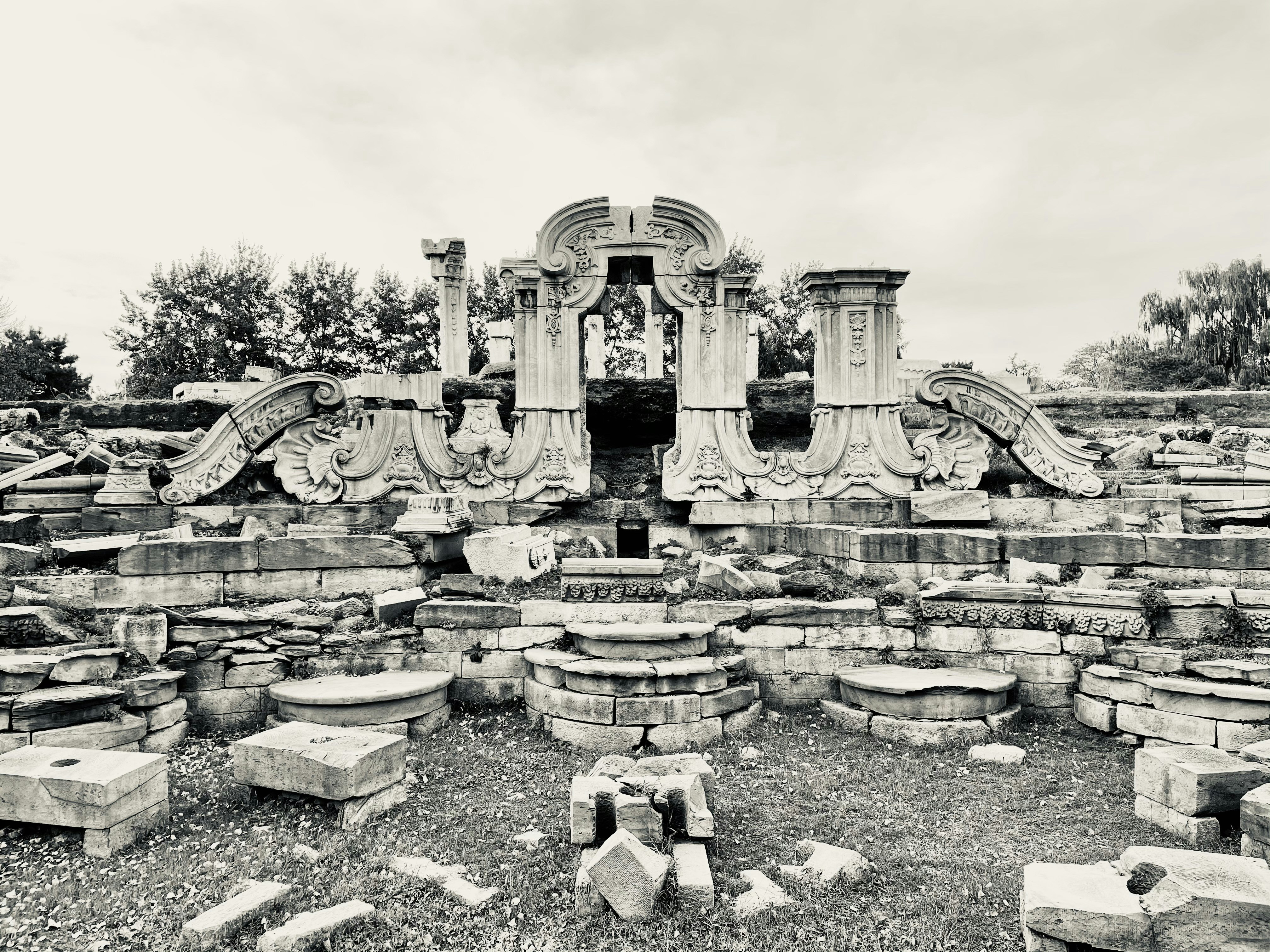
Introduction to Vikramshila
Vikramshila, one of the most significant ancient Buddhist monasteries, was established during the Pala dynasty in the 8th century CE. Situated in present-day Bihar, India, it served as a prominent center for learning and scholarship in Buddhism, second only to Nalanda. The monastery played a crucial role in the revival and expansion of Mahayana Buddhism in the region through its systematic approach to education and its diverse curriculum, which included scriptures, logic, grammar, and philosophy.
The architectural wonders of Vikramshila reflect the remarkable craftsmanship of its time. The monastery featured an elaborate layout with a central stupa surrounded by numerous residential cells for monks, meditation halls, and classrooms. This layout exemplifies the fusion of artistic expression and functionality, designed to cater to the needs of both scholarly pursuits and meditation practices. The ruins of Vikramshila today are a testimony to its historical importance and the architectural ingenuity that characterized its original construction.
Despite its grandeur, Vikramshila faced decline following invasions and changes in religious patronage. The monastery was eventually abandoned, leaving behind only its ruins that stand as poignant reminders of its glorious past. These remnants are vital for historical reconstruction efforts, shedding light on the cultural and educational heritage of Buddhism in India. The current condition of these ruins poses challenges for historians and archaeologists, who aim to preserve the site’s legacy while exploring innovative methods to digitally reconstruct its architectural beauty.
The fascination surrounding Vikramshila continues as scholars, enthusiasts, and technology developers consider the potential of generative AI in reconstructing its remnants, enabling a revival of its ancient glory in a digital format. By understanding the historical significance and context of Vikramshila, we can better appreciate its role in shaping Buddhist scholarship and engage with ongoing efforts to preserve its legacy for future generations.
The Role of Digital Reconstruction
Digital reconstruction is an innovative approach that combines technology and archaeology to recreate historical sites and artifacts that have been damaged, destroyed, or are in a state of disrepair. This method employs various digital tools such as 3D modeling, virtual reality, and augmented reality to provide a visual representation of structures as they once appeared. The significance of digital reconstruction extends beyond mere visualization; it serves as a vital resource for historians, archaeologists, and the public in understanding the cultural and historical context of these ancient sites.
In the realm of archaeology, digital reconstruction aids in preserving the memories of our past while also allowing researchers to explore hypotheses about how these structures were used, interacted with their surroundings, and what they may have originally looked like. By employing advanced 3D modeling techniques, experts can recreate accurate representations of sites that have suffered significant degradation over time. This not only facilitates scholarly research but also elevates public interest by making historical narratives more accessible and engaging.
Furthermore, the incorporation of virtual and augmented reality allows for immersive experiences that can enhance the understanding of these ancient wonders. Visitors can virtually walk through reconstructed sites, engaging with elements that would have been integral to their historical functions. For example, in the case of the Vikramshila ruins, utilizing 3D technologies could shed light on architectural styles, spatial relationships, and the craftsmanship involved in their construction. Such insights may contribute valuable knowledge to the academic dialogue surrounding these important cultural heritage sites.
As digital tools continue to evolve, they offer unparalleled opportunities for archaeologists to decode the complexities of historical narratives, ultimately enriching our comprehension of human history. The role of digital reconstruction, therefore, not only preserves the architectural legacies of civilizations but also fosters a deeper connection to the world’s cultural heritage.
Generative AI: A New Frontier in Archaeology
Generative AI represents a transformative development in the field of archaeology, offering unprecedented opportunities to analyze and reconstruct heritage sites. By utilizing advanced algorithms, generative AI can process extensive historical data, including photographs, blueprints, and literature from scholarly sources. This capability enables researchers to create accurate digital reconstructions of significant archaeological sites that have been lost, damaged, or never fully explored.
One of the primary functions of generative AI in heritage preservation is its ability to simulate and predict the forms of structures based on existing fragments. AI models can analyze the architectural styles, materials used, and cultural significance of various elements, allowing for the generation of virtual representations that might closely resemble the original edifices. For example, projects have successfully employed generative AI to digitally recreate ancient ruins, providing a glimpse into their historical context and structural integrity.
Generative AI has demonstrated its effectiveness in several notable projects. In one instance, researchers used AI algorithms to reconstruct the Temple of Bel in Syria, which was destroyed during the civil conflict. By inputting available data regarding the temple’s structure and surrounding environment, the AI generated detailed 3D models that not only depicted the original architecture but also its spatial relationships with other historical sites. This kind of digital reconstruction not only aids in research but serves as an important tool for cultural heritage education and tourism.
Furthermore, generative AI can assist archaeologists in visualizing scenarios that reflect both the past and potential future states of a site subjected to environmental factors. As climate change continues to threaten archaeological sites globally, these AI-driven simulations can inform preservation strategies, ensuring that the past is not only remembered but also respected. As AI technology advances, its integration in archaeology promises to enhance our understanding of ancient civilizations and preserve their legacy for future generations.
Challenges in Reconstructing Vikramshila
The digital reconstruction of historical sites such as Vikramshila presents multiple challenges that need to be effectively addressed to ensure authenticity and accuracy. One of the primary issues stems from incomplete data. The ruins of Vikramshila, much like other ancient sites, suffer from significant gaps in geographic and architectural information. Limiting factors include the loss of physical remnants over time and the absence of comprehensive archaeological findings. This can lead to uncertainty regarding scale, dimensions, and even the layout of structures.
Another pressing concern is the lack of historical records. Documentation from the period when Vikramshila was thriving is sparse, and much of the knowledge comes from fragmented texts and unreliable sources. This deficiency impedes researchers’ ability to form a complete vision of the site’s configuration and cultural significance. Furthermore, since Vikramshila was a center of learning and culture, any digital attempt must also consider the philosophical and educational aspects that characterized its environment, which are often not well-documented.
Material degradation poses a further challenge. The natural elements and human activity have contributed to the erosion and deterioration of the remaining structures. Digital reconstruction efforts must take this degradation into account, which can complicate the modeling of physical structures and their conditions accurately.
Lastly, accurate cultural representation is crucial when reconstructing Vikramshila digitally. This involves understanding and incorporating the beliefs, traditions, and aesthetics of the time into the reconstruction. Misrepresentation can lead to a disconnection from the cultural heritage and a diluted understanding of Vikramshila’s historical context. Overcoming these challenges requires collaboration among historians, archaeologists, and digital creators to facilitate a comprehensive and respectful representation.
Case Studies of AI in Archaeological Reconstruction
Generative AI has emerged as a transformative technology in the field of archaeology, particularly in digital reconstruction efforts. One notable example is the use of AI in reconstructing the ancient Roman city of Pompeii. Researchers employed generative adversarial networks (GANs) to recreate missing structures and fill in gaps in existing archaeological data. This not only aided in visualizing the city as it once stood but also provided a platform for education and tourism, helping visitors engage with the historical narrative in an immersive way.
Another significant case is the reconstruction of the Neolithic settlement of Çatalhöyük in Turkey. By integrating 3D modeling techniques with AI, archaeologists were able to generate a comprehensive digital representation of the site. The AI analyzed spatial patterns in existing excavation data to predict likely structures and arrangements that had not been preserved. This approach has informed researchers about daily life during that era and sparked discussions on environmental adaptations in ancient societies.
Furthermore, the reconstruction of the ancient Egyptian site of Karnak demonstrated how AI can reconstruct large-scale architectural remains. By utilizing historical texts alongside AI-generated models, the research team was able to visualise not just the physical aspects but also the cultural significance embedded in the structures. The success of these projects indicates that AI-driven methodologies can be effectively tailored to various archaeological contexts.
The experiences drawn from these case studies offer valuable insights for the digital reconstruction of the Vikramshila ruins. Employing similar AI techniques could enhance the accuracy of reconstructions by integrating historical context, while also enabling the exploration of architectural elements that have yet to be unearthed. Overall, the lessons learned from these AI applications can pave the way for innovative archaeological practices at Vikramshila.
Collaboration between Technology and Archaeologists
The intersection of technology and archaeology has become increasingly significant in recent years, particularly in the context of digital reconstructions of historical sites such as the Vikramshila Ruins. The partnership between technology experts and archaeologists is paramount, as it combines the rigorous methodologies and historical knowledge of the latter with the innovative tools and techniques developed by the former. This interdisciplinary collaboration allows for a more comprehensive approach to the study and reconstruction of archaeological artifacts and structures.
Technology professionals bring a wealth of knowledge about data analysis, 3D modeling, and virtual reality, which can significantly enhance the visualization of historical sites. These digital tools can recreate environments and artifacts in a way that traditional methods cannot, offering an immersive experience that aids in understanding the social and cultural contexts of historical civilizations. However, the risks of oversimplifying or misrepresenting cultural heritage are apparent; therefore, it is vital that archaeologists remain integral to the process, guiding the technology teams to ensure that reconstructions are not only visually compelling but also historically accurate and culturally sensitive.
An essential aspect of this collaboration is the continuous exchange of knowledge. Archaeologists can educate technology experts about the significance of various structural elements, building materials, and historical contexts, while technology specialists can introduce archaeologists to emerging tools and methods that can refine their research. For instance, photogrammetry and LiDAR technology can produce detailed and accurate topographical maps that can be invaluable for archaeologists working on site assessments or restoration projects.
Ultimately, the successful integration of technology and archaeology hinges on mutual respect and understanding of both fields. By fostering this partnership, practitioners can ensure that the digital reconstructions of sites like Vikramshila not only preserve historical accuracy but also respect the cultural sensitivities associated with them.
Implications for Cultural Heritage Preservation
As the world increasingly recognizes the importance of preserving cultural heritage, the role of technology in this sphere has gained heightened attention. Generative AI offers promising avenues for creating digital reconstructions of historical sites, such as the Vikramshila ruins. These digital representations not only serve as a tool for understanding architectural styles and historical contexts, but they also play a significant role in education, tourism, and public engagement.
In educational settings, digital reconstructions can enhance curriculum by providing students with immersive experiences. Using generative AI, educators can create detailed simulations of the Vikramshila site, allowing learners to explore its intricate structures and understand its historical significance. Such engagement transforms abstract knowledge into tangible experiences, fostering a deeper appreciation for cultural heritage among younger generations.
The tourism sector stands to benefit considerably as well. Digital reconstructions can entice visits to the physical site by providing potential tourists with a preview of the historical experience. Engaging virtual tours can showcase the grandeur of the Vikramshila ruins, even when they are in ruins. This can lead to increased interest and foot traffic, helping to generate funds for ongoing preservation efforts.
Furthermore, generative AI’s ability to share these digital reconstructions on various platforms can raise public awareness about the significance of sites like Vikramshila. Social media, virtual reality, and educational apps can amplify the reach of these initiatives, promoting a culture of appreciation and responsibility toward maintaining cultural heritage. Ultimately, by harnessing the power of generative AI, we can foster an environment that not only respects but actively engages with historical narratives, ensuring that future generations inherit a rich and nuanced understanding of the past.
Future Prospects for Vikramshila and Generative AI
The future of digital reconstruction efforts for Vikramshila Monastery is poised for exciting advancements, steeped in the potential of evolving technologies and methodologies. As researchers and technologists delve deeper into the application of generative AI, the prospects for reconstructing this historic site with greater accuracy and detail become increasingly promising.
One significant area of advancement lies in the development of enhanced algorithms capable of learning from extensive historical datasets. Through machine learning, generative AI can analyze and synthesize existing architectural data, historical texts, and archaeological findings to create a more comprehensive digital model of Vikramshila. This approach not only holds the potential to fill in gaps where information is sparse but also allows for the creation of multiple variations reflective of different historical periods.
Moreover, advancements in 3D modeling and virtual reality (VR) technologies can facilitate an immersive experience for researchers and the public alike. By utilizing generative AI in tandem with these tools, stakeholders may generate highly detailed visualizations of what the monastery originally looked like. Such interactive experiences can deepen appreciation for Vikramshila’s cultural significance and enhance educational outreach.
As ongoing research and excavation efforts continue to shed light on Vikramshila’s rich history, it is likely that future reconstructions will not only aim for aesthetic accuracy but also integrate cultural narratives that reflect the lives of those who inhabited the monastery. Collaborative digital platforms could emerge, allowing historians, archaeologists, and technologists to work in tandem, enriching the data available for reconstruction. This cross-disciplinary approach is essential in accurately portraying the nuances of Vikramshila, as each layer of its history is unveiled.
In conclusion, the integration of generative AI into the digital reconstruction of Vikramshila represents a promising frontier in preserving and understanding historical sites. As technology advances, so too does the potential to illuminate the past, providing new insights into the monastery’s significance in ancient India.
Conclusion: Merging Technology and History
In recent years, the integration of generative artificial intelligence into the field of archaeology has emerged as a groundbreaking approach for reconstructing historical sites, such as the ancient Vikramshila ruins. This cutting-edge technology allows researchers to create detailed digital representations based on available data, which can include excavation records, architectural diagrams, and historical texts. By utilizing these resources, generative AI can simulate how these ruins might have appeared in their prime, providing invaluable insights into their structure and significance.
The potential of generative AI in this context is immense. It not only facilitates the visualization of lost artifacts and architectural wonders but also enhances our understanding of historical narratives. As we embark on this journey of digital reconstruction, it is paramount to recognize the importance of preserving cultural heritage. Implementing innovative technologies like generative AI must be approached with meticulous ethical considerations to ensure that we do not lose sight of the original context of these sites. While digital recreations can vividly illustrate the past, they should be regarded as interpretations rather than definitive representations.
Furthermore, responsible usage of generative AI requires close collaboration between technologists and historians. Engaging with cultural experts ensures that the digital narratives crafted by AI align with contemporary understandings of history and promote respectful representations. As we leverage AI’s capabilities to reconstruct significant historical locations like Vikramshila, it is essential to foster an environment where technology and historical scholarship reinforce one another. In conclusion, the intersection of generative AI and cultural heritage not only opens new avenues for education and engagement but also demands a commitment to safeguarding the integrity of the past while embracing the future.”