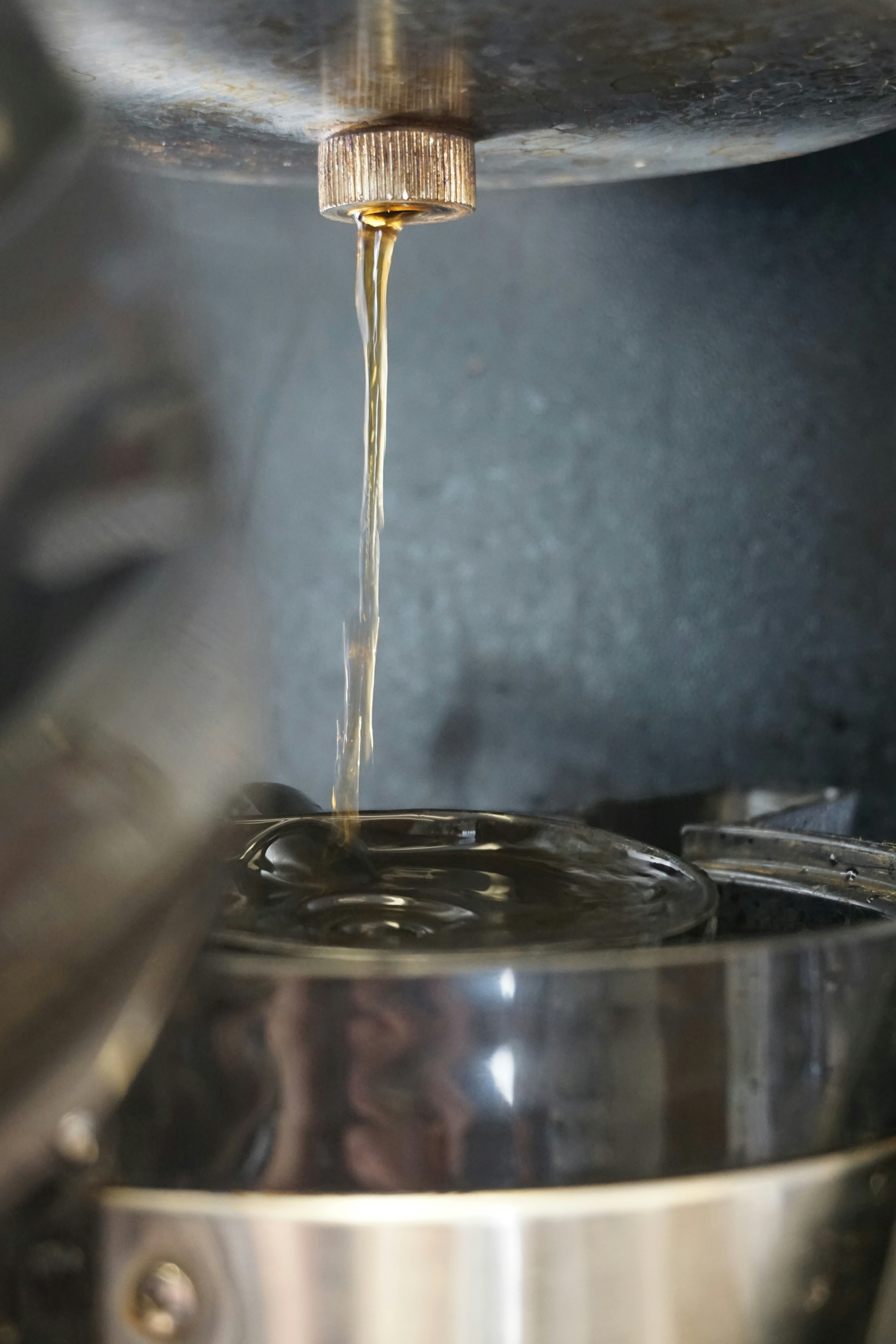
Introduction to Diffusion
Diffusion is a fundamental physical process that describes the movement of particles from regions of high concentration to regions of low concentration. This phenomenon can be observed in multiple contexts, such as the dispersal of perfume in a room or the mixing of colored dyes in water. At its core, diffusion is driven by the random thermal motion of molecules, leading to a tendency for substances to spread out evenly over time.
The rate of diffusion is contingent upon several key factors. One critical factor is the concentration gradient, which refers to the difference in concentration between two areas. A steeper gradient results in a faster diffusion rate, as there is a greater drive for particles to move towards the area of lower concentration. Conversely, if the concentration difference is minor, the rate of diffusion slows accordingly.
Temperature also plays a significant role in diffusion. An increase in temperature typically results in higher kinetic energy of the particles, thereby enhancing their movement and accelerating the rate of diffusion. This aspect is particularly important when considering the applications of diffusion in various fields, such as biology and chemistry, where temperature control may influence experimental outcomes.
Furthermore, the media through which diffusion occurs can affect its rate. For instance, diffusion in gases generally occurs faster than in liquids, due to the larger distances between molecules in a gas. When examining solids, diffusion can be much slower, as the tightly packed nature of particles restricts their movement. Understanding these factors not only clarifies the process of diffusion but also facilitates the exploration of related concepts, such as progressive distillation, which leverages the principles of diffusion to enhance separation processes.
What is Progressive Distillation?
Progressive distillation is a sophisticated separation technique employed to isolate and purify specific components within a mixture, relying on the principle of differing boiling points. This method is particularly significant in the chemical and petroleum industries, where it serves as a foundational process in the refining of raw materials. The core concept behind progressive distillation is that each component in a mixture will vaporize at a distinct temperature, allowing for the capture and collection of various substances as they boil off at their respective boiling points.
The equipment utilized in progressive distillation typically includes a distillation column, condensers, and reboilers. The distillation column is designed to provide the necessary surface area for repeated vaporization and condensation to occur, enhancing the separation efficiency. As the mixture is heated, the more volatile components vaporize and rise through the column, where they encounter cooler surfaces that facilitate their condensation back into liquid form. This process can be repeated multiple times, significantly increasing the purity of the separated components.
Progressive distillation finds application across a diverse range of industries. In petroleum refining, it is essential for transforming crude oil into various fractions like gasoline, diesel, and jet fuel. Meanwhile, in the production of alcoholic beverages, this technique is vital in preserving flavor while removing unwanted impurities. The versatility of progressive distillation makes it an invaluable tool, enabling companies to achieve high quality and purity in their products. Overall, by understanding the principles and applications of progressive distillation, one can appreciate the critical role it plays in modern industrial processes.
The Relationship Between Distillation and Diffusion
Distillation and diffusion are intrinsically linked processes that play a significant role in the separation of various components within mixtures. In the context of progressive distillation, particularly, the efficiency of molecular movement and interaction is influenced by a myriad of factors, predominantly temperature, pressure changes, and phase transitions. When a mixture is subjected to heating during the distillation process, the kinetic energy of the molecules increases. This rise in temperature not only promotes the evaporation of volatile components but also enhances the diffusion rates of those molecules. The higher kinetic energy results in more vigorous molecular motion, thereby facilitating a quicker separation of components.
Furthermore, pressure changes during distillation can significantly impact diffusion. For instance, reducing pressure in a distillation apparatus can lower the boiling points of the components. This phenomenon leads to whittling down the distances between molecules, thus accelerating their diffusion rates. The relationship between pressure modulation and diffusion efficiency underscores the importance of optimizing operational conditions to enhance separation processes in various applications.
Additionally, the phase changes involved in distillation, particularly the transformation from liquid to vapor and back again, are pivotal to understanding the overall diffusion dynamics. During distillation, when a liquid mixture is heated to its boiling point, the vapor phase becomes rich in the volatile components. Once condensed, these vapors can be separated further. The interactions among molecules, especially during phase transitions, are crucial for influencing their movement. The efficiency of this phase change directly correlates with diffusion rates, as the extent and nature of molecular interactions determine how quickly components can migrate.
In summary, the interplay between distillation techniques and diffusion processes reveals critical insights into the behavior of mixtures under varying conditions. By understanding this relationship, professionals can enhance separation efficiency, ultimately leading to more effective distillation practices.
Mechanisms of Speeding Up Diffusion Through Distillation
Progressive distillation serves as a crucial method for enhancing the rate of diffusion within various systems. At the core of its effectiveness are mechanisms that significantly increase molecular motion, primarily influenced by temperature elevation. When the temperature is increased, the kinetic energy of the molecules also rises, resulting in more vigorous molecular movements. This heightened activity facilitates quicker interactions and accelerates the process of diffusion.
Another vital mechanism involves the establishment of concentration gradients. Progressive distillation effectively separates mixtures based on differences in volatility, allowing for the creation of distinct concentration zones. As the more volatile components evaporate, they lead to a decrease in concentration in their initial area, prompting a faster transfer of molecules from higher concentration regions to lower ones. This differential shallows the energy barrier that typically hinders diffusion, allowing the process to occur more swiftly.
The cycles of vaporization and condensation also play an integral role in facilitating faster diffusion. In the distillation process, as a component vaporizes, it disperses into the gas phase, where it can diffuse more freely than in a liquid state. Upon reaching the cooler zones, this vapor condenses back into a liquid, where it can then be reintroduced into the mixture. This cyclical process continuously enhances the mobility of particles and ensures that the driving forces behind diffusion are robustly maintained. The result is a streamlined mechanism where diffusion can occur at an accelerated rate, proving essential in both industrial processes and laboratory settings.
Factors Influencing the Efficiency of Progressive Distillation
Progressive distillation is a multifaceted process whose efficiency can be influenced by a variety of factors. Understanding these factors is crucial for optimizing the distillation procedure and obtaining desired results. Here are some of the key aspects that affect the efficiency of this method.
Firstly, the type of distillation apparatus utilized plays a significant role in efficiency. Different designs, such as simple or fractional distillation columns, yield varying results based on their ability to separate components of the mixture. For instance, fractional distillation offers a more effective separation due to the increased surface area for vapor-liquid contact, which enhances the rate of diffusion. Selecting the appropriate apparatus based on the nature of the mixture is essential for maximizing efficiency.
Secondly, temperature and pressure settings are critical factors that impact the distillation process. The boiling point of the substances being distilled is directly influenced by these parameters. Generally, raising the temperature increases the vapor pressure of the components, thus accelerating the movement of molecules and enhancing diffusion rates. However, optimal pressure settings must be maintained to prevent unwanted decomposition or loss of volatile compounds. Therefore, striking the right balance is pivotal for ensuring efficient progressive distillation.
Finally, the characteristics of the mixture being distilled cannot be overlooked. Factors such as viscosity, density, and composition all interact to influence the efficiency of progressive distillation. A more homogeneous mixture can lead to improved mass transfer rates, while heterogeneous mixtures may present challenges that require tailored approaches. Understanding these properties enables the refining of distillation strategies, ultimately contributing to enhanced performance and outcomes.
Progressive distillation has gained prominence in modern separation techniques, offering a distinct alternative to traditional distillation methods. While traditional distillation primarily relies on the simple boiling and condensation of liquid mixtures to achieve separation, progressive distillation enhances this process, leading to improved efficiency in separating components.
One of the primary advantages of progressive distillation is its ability to minimize the time required for separation. In traditional methods, the separation process can be lengthy, particularly for mixtures with closely boiling components. Progressive distillation employs a series of stages that allow for continuous separation, thereby reducing the overall time spent during the distillation operation. This is especially beneficial in industrial applications where time efficiency is crucial.
Energy consumption is another critical factor distinguishing these two distillation methods. Traditional distillation operates on the single-batch process, often leading to higher energy costs due to prolonged heating and cooling cycles. In contrast, progressive distillation integrates multiple stages and can recycle energy more effectively, resulting in lower energy expenditure. This not only benefits the financial aspects of production but also aligns with sustainable practices by minimizing energy waste.
Yield quality is a further area where progressive distillation showcases significant benefits. By utilizing its method of repeated separation through various stages, this approach ensures a higher purity and better quality of the final products compared to traditional distillation. The ability to precisely control temperature and pressure at each stage of the process prevents product degradation and improves the overall yield.
In summary, the comparison between progressive distillation and traditional distillation illustrates the former’s advantages in terms of time efficiency, reduced energy consumption, and enhanced yield quality. As industries continue to seek innovative solutions for separation processes, progressive distillation proves to be a promising approach.
Real-World Applications of Progressive Distillation in Enhancing Diffusion
Progressive distillation plays a pivotal role in various industries by enhancing diffusion processes, enabling more efficient separation and extraction of compounds. One notable application is in the pharmaceutical industry, where it is employed in the purification of active pharmaceutical ingredients (APIs). In this context, progressive distillation allows for the separation of impurities from the desired compounds with precision. The controlled temperature gradients utilized in this technique facilitate faster diffusion of the compounds, resulting in higher yields of purer products while minimizing the potential for thermal degradation of sensitive materials.
Similarly, in the food and beverage industry, progressive distillation is used to concentrate flavors and aromas in products such as spirits and essential oils. For instance, during the production of whiskey, distillers utilize this technique to extract the desired flavor components while leaving behind undesirable substances. The enhancement of diffusion via progressive distillation not only accelerates the production process but also improves the quality and consistency of the final product, leading to better consumer satisfaction.
Furthermore, the petrochemical refining sector also benefits significantly from progressive distillation. In refining crude oil, the method is crucial in separating various hydrocarbons based on their boiling points. The implementation of progressive distillation allows for more efficient diffusion of lighter fractions from heavier feeds, which streamlines the overall refining process. The result is increased throughput and better energy efficiency, which are critical factors in maintaining competitiveness within the industry.
Through these practical examples, it becomes evident that progressive distillation is an invaluable tool across various sectors. By expediting diffusion, this method not only enhances product quality but also improves operational efficiencies, underlining its importance in modern industrial applications.
The Future of Distillation Techniques and Their Impact on Diffusion
As industrial processes strive for greater efficiency and sustainability, the future of distillation techniques is increasingly oriented towards innovation. Emerging technologies are poised to optimize the traditional distillation methods that currently underpin various industries, significantly impacting diffusion processes. Automation is one of the pivotal trends shaping the future landscape of distillation. By using sophisticated sensors and control systems, distillation operations can be optimized in real-time, leading to improved precision and minimized resource consumption. This automation not only enhances the reliability of separation processes but also reduces human error, fostering a safer working environment.
Another vital area of focus is energy efficiency. Conventional distillation processes are often energy-intensive, leading to increased operational costs and environmental concerns. Innovations in energy recovery systems and heat integration techniques aim to address these issues. For example, heat exchangers can be designed to recycle energy generated during the distillation process, thereby reducing overall energy requirements. Further research into low-energy distillation methods, such as pervaporation and membrane distillation, could revolutionize efficiency metrics across multiple sectors.
Moreover, the development of advanced materials for distillation, such as new alloys and membranes, holds enormous potential for enhancing separation capabilities. These innovative materials can improve selectivity and reduce fouling, which is essential for maintaining the efficiency of distillation processes. In combination with computational modeling, researchers can better understand the interaction of these materials with various substances, leading to the design of more effective distillation columns and units.
As these advancements continue, the synergy between distillation techniques and diffusion processes will likely result in groundbreaking changes, streamlining operations and promoting the sustainable practices necessary for the future.
Conclusion
The interaction between progressive distillation and the rate of diffusion is a pivotal concept in various scientific fields, including chemistry and engineering. Throughout this blog post, we have explored how the intricate processes of progressive distillation can significantly enhance the diffusion of substances. By understanding these interactions, researchers and practitioners can devise more efficient techniques to separate and purify compounds.
Progressive distillation plays a critical role in optimizing the conditions for diffusion, thereby improving yield and reducing time and resources required for separation processes. The ability to manipulate variables in distillation methods has been shown to facilitate a more rapid and effective diffusion of volatile components. This knowledge is essential not just for industrial applications but also for theoretical insights into diffusion phenomena.
Looking ahead, there are numerous avenues for future research that can further unravel the complexities of progressive distillation and diffusion. Investigating the impact of various parameters such as pressure, temperature, and composition on both processes could yield significant advancements. Furthermore, exploring the integration of new technologies and materials in distillation frameworks can enhance diffusion efficiency and establish more sustainable practices.
In conclusion, a thorough understanding of progressive distillation and its impact on speeding up diffusion is invaluable. It opens doors to innovative methods that can revolutionize separation processes across multiple disciplines, ensuring that scientists and engineers are equipped with the necessary insights to drive progress in their respective fields.