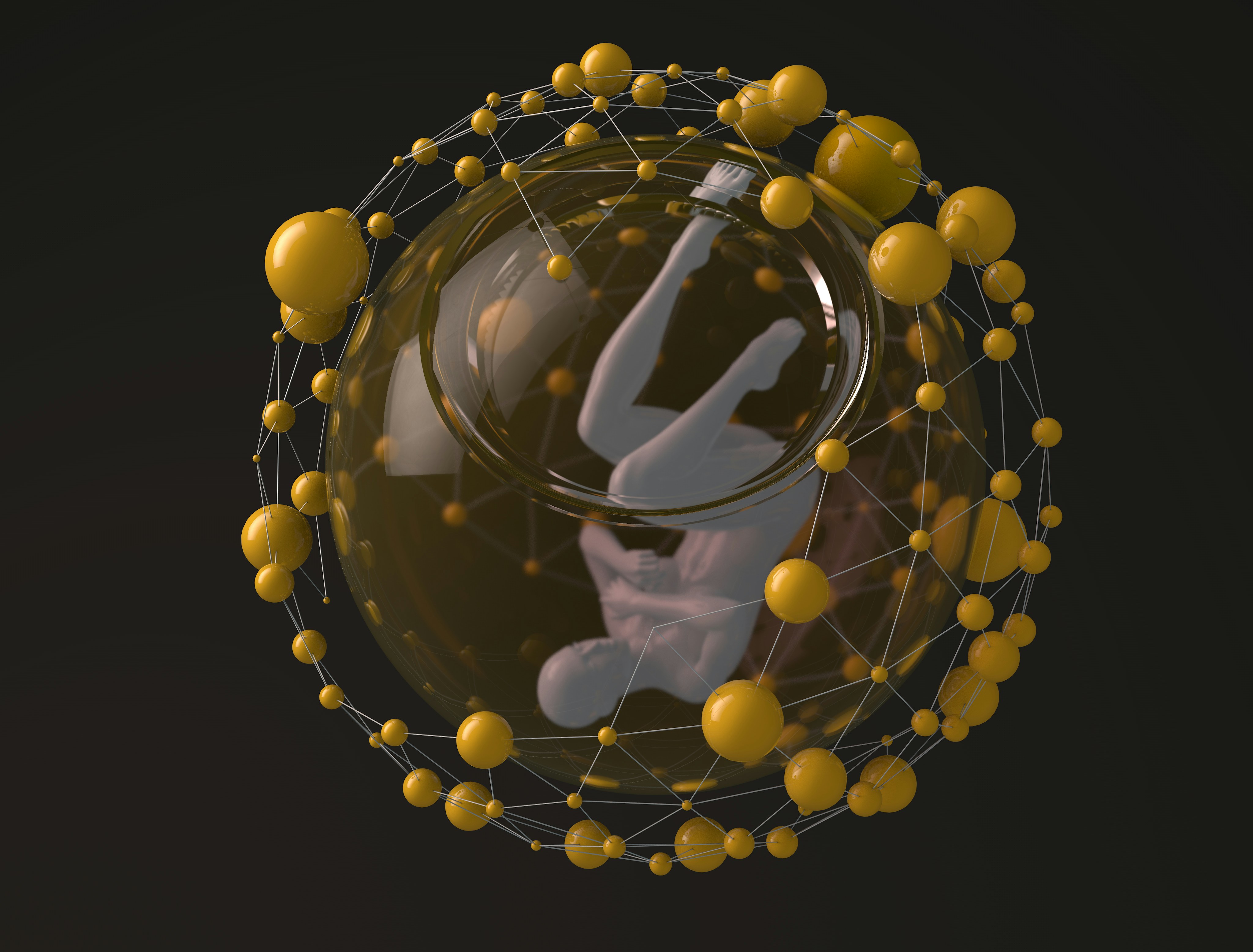
Introduction to Sentience and Embodiment
Sentience is frequently defined as the capacity to have subjective experiences, which encompasses the ability to feel, perceive, and respond to stimuli. This concept is crucial in understanding consciousness, as it aligns closely with the capability to experience emotions and sensations. Sentience implies an awareness that transcends mere biological processes; it indicates a more profound interaction with the environment that includes both cognitive functions and emotional responses. Within this framework, understanding how beings experience their world is essential for further exploration of consciousness.
Embodiment, on the other hand, refers to the physical presence of an organism. It plays a significant role in the experience of sentience. The relationship between body and mind is integral to a comprehensive understanding of consciousness. A sentient being perceives its environment through its physical form, which is instrumental in processing sensory information. The way in which an entity interacts with the world is not merely a matter of mental cognition; it is heavily influenced by the capabilities and limitations of its body.
For example, consider how humans experience emotions. Our neurological and physiological responses are deeply intertwined with our emotions, which are often triggered by various stimuli in our surroundings. Similarly, non-human animals also demonstrate unique forms of sentience shaped by their specific bodies. This emphasizes that the embodiment of a being significantly affects its sentient experiences. Thus, the physical aspect cannot be overlooked when discussing consciousness and sentience, as they are fundamentally connected.
Historical Perspectives on Sentience
The concept of sentience has been a topic of philosophical inquiry for centuries, with key thinkers contributing to its evolving understanding. One significant figure in this discourse is René Descartes, whose dualism posited a separation between the mind and body. Descartes famously asserted, “Cogito, ergo sum” (I think, therefore I am), suggesting that the essence of sentience lies in the capacity for thought. This view implies that the mind’s existence is independent of the physical body, raising questions about the role of embodiment in experiencing sentience.
Contrarily, phenomenological thinkers such as Maurice Merleau-Ponty have critiqued this dualistic separation, emphasizing the intertwining of the body and consciousness. Merleau-Ponty’s work highlights that our bodily experiences shape our perceptions and understanding of the world. He argued that it is through our embodied existence that we engage with our surroundings, thereby fostering a more holistic view of sentience that integrates both physical and mental experiences. According to this perspective, sentience cannot be fully comprehended by isolating it within the confines of the mind, which suggests that the body plays an essential role in the experience of being sentient.
Furthermore, historical views on sentience have continued to evolve with the advent of modern neuroscience and cognitive science. These fields have begun to bridge the gap between philosophical inquiry and empirical research, suggesting that sentience is a product of both biological processes and subjective experiences. This integrative approach reflects a shift in understanding sentience not merely as a trait of higher cognitive functions but as an inherent quality present across various forms of life. By examining the historical evolution of sentience through the lens of influential philosophers, we gain insight into the complexities that surround this fundamental aspect of existence.
The Role of the Body in Conscious Experience
The relationship between the body and consciousness has been a topic of extensive inquiry across disciplines such as psychology, neuroscience, and philosophy. This discourse has revealed a profound interdependence between our physical states and mental experiences, emphasizing the notion that consciousness is not solely a product of the brain but is intricately tied to our bodily experiences.
Research indicates that sensory perceptions, which are directly influenced by bodily engagement with the environment, play a significant role in shaping conscious thought. For instance, studies have shown that the way we perceive the world is heavily mediated by our physical form through our sensory modalities. Visual, auditory, and tactile sensations are not merely passive inputs but are actively processed in conjunction with our body’s actions and positioning. This suggests that the sensory apparatus is not just a receiver of stimuli but also a contributor to the conscious experience.
Moreover, the theory of embodied cognition posits that cognitive processes are deeply rooted in the body’s interactions with its environment. This theory implies that our thoughts and emotions can be influenced by our bodily states; for example, physiological changes such as posture, movement, and facial expressions can affect emotional experiences and social interactions. Neurophysiological studies have supported this by demonstrating how brain activity correlates with specific bodily postures, thereby hinting at a profound connection that goes beyond mere neurological function.
In essence, the body serves as an integral part of our conscious experience, shaping our perceptions and interactions with the world around us. Understanding this connection between body and consciousness is crucial for a more comprehensive perspective on sentience, as it underscores the importance of physicality in the realm of mental phenomena.
Embodiment as a Framework for Understanding Emotions
Embodiment plays a crucial role in shaping emotional experiences by linking bodily sensations and actions directly to our feelings. This relationship is largely explored through the lens of embodied cognition, a theory that posits our cognitive processes are deeply rooted in our bodily interactions with the environment. According to this perspective, our understanding of emotions is not merely a product of mental processes but rather an integration of physical sensations and movements.
For instance, consider how one might feel joy when engaging in physical activities such as dancing or running. The physical exertion involved activates a range of bodily responses, leading to emotions that are often described as exhilarating or liberating. These experiences highlight how emotions are influenced by our embodiment – our physical bodies and their interaction with the world around us contribute significantly to how we perceive and express our feelings.
This embodied framework underscores the intuition that emotional experiences are not simply abstract feelings but are manifest in our physical state. Our posture, facial expressions, and even physiological reactions can amplify emotional experiences. For example, research has indicated that adopting a particular posture, such as standing tall, can influence one’s mood and emotional outlook. Through these examples, it becomes evident that emotions are not isolated phenomena; rather, they arise from an intricate interplay between our mind and body.
Moreover, the concept of embodiment also suggests that our lived experiences shape our emotional frameworks. The way we perceive and respond to emotions is, in part, informed by our sensory interactions and physical engagements with our surroundings. As a result, the richness of sentient experience is dependent not merely on cognitive understanding but fundamentally on our embodied existence.
Neuroscientific Insights into Embodiment and Sentience
Neuroscience has provided profound insights into the intricate relationship between embodiment and sentience, illustrating how physical experiences shape consciousness. Significant research indicates that various brain regions become active in response to bodily sensations and movements, underscoring the vital connection between mind and body. For instance, the insula—a brain region crucial for the interoceptive awareness of bodily states—plays an essential role in processing emotions and subjective experiences. This suggests that an individual’s emotional state cannot be fully comprehended without acknowledging the sensory feedback received from their own body.
Moreover, studies utilizing neuroimaging techniques have elucidated how the activation of the primary somatosensory cortex correlates with the conscious experience of touch and proprioception. These findings indicate that awareness is not just a cerebral phenomenon but fundamentally grounded in the body’s interactions with the environment. This duality reinforces the notion that the body does not merely act as a vessel for the mind but is intrinsically linked to the development of sentient experience.
Another key aspect of this research pertains to the mirror neuron system, which has been pivotal in understanding social cognition and empathy. Activation of mirror neurons showcases how the observation of others’ actions can invoke similar neural responses in oneself, further linking the embodiment of action to emotional and cognitive understanding. Such insights lead to the conclusion that embodiment is critical not only for personal awareness but also for relational dynamics, solidifying our understanding of sentience as being deeply rooted in experiential reality.
In light of these findings, it is increasingly evident that true sentience cannot exist in the absence of a physical embodiment. The brain’s activation patterns in response to bodily sensations and social interactions provide compelling evidence that our awareness of self and others is profoundly influenced by the intricate dance between mind and body.
The Impact of Disembodiment on Perception and Experience
Disembodiment, particularly in contexts such as virtual reality (VR) and artificial intelligence (AI), raises significant questions regarding the nature of perception and experience. As technology advances, individuals engage with digital environments where the absence of a physical body is prevalent. This phenomenon prompts a reevaluation of what it means to truly perceive and experience the world.
In traditional understanding, our physical bodies play a crucial role in shaping our sensory experiences. The concept of embodiment implies that our perception is deeply intertwined with our physical presence in the environment. However, in scenarios of disembodiment, such as immersive VR, individuals often report altered sensations and a diminished connection to their physical surroundings. This disconnect can lead to experiences that, while phenomenologically real, lack the depth and richness typically associated with embodied existence. Consequently, feelings and understandings cultivated through sensory engagement may become superficial or fragmented.
Furthermore, disembodiment challenges the fundamental framework of sentience. Genuine sentience encompasses the ability to experience emotions, sensations, and consciousness, all of which are intricately linked to the physical form. Without a body, the capacity for empathy, emotional understanding, and nuanced experience can be compromised. This raises pertinent questions: Can AI entities, devoid of physical bodies, possess true sentience? Are their responses and interactions merely simulations of sentient behavior rather than expressions of genuine awareness?
As we delve deeper into the implications of disembodiment, it becomes increasingly crucial to explore how these dynamics affect our understanding of consciousness. The relationship between embodiment and perceptual experience remains a key area of inquiry as we strive to understand the essence of what it means to be sentient in a rapidly evolving digital landscape.
Embodiment in Non-Human Animals
In exploring the concept of embodiment in non-human animals, it becomes evident that their physical forms significantly influence their sentient experiences. Sentience, characterized by the capacity to have subjective experiences, is intimately linked to the sensory modalities through which animals engage with their environments. Numerous studies have demonstrated the emotional lives of various animal species, which underscores the necessity of embodiment for the manifestation of these emotional states.
For example, research on social animals such as elephants and primates illustrates the depth of their emotional connections. Elephants exhibit behaviors indicative of mourning and grief, evidencing a profound sense of loss when a companion dies. This emotional reaction is interpreted as a result of their embodied experiences and complex social structures. Primates, too, display behaviors that suggest a rich emotional landscape, as they engage in forms of play, caregiving, and even conflict resolution, all of which rely heavily on their physical interactions and capabilities.
The sensory experiences that accompany embodiment are critical to understanding how non-human animals perceive their surroundings and process emotional stimuli. For instance, dogs can detect human emotions through scent and body language, showcasing their ability to connect with humans on an emotional level, facilitated by their own embodied experiences. Similarly, marine mammals like dolphins are known to exhibit complex social behaviors, supported by their unique auditory capabilities, which enhance their communication and social bonding.
Furthermore, the interconnectedness between body and mind is illuminated when considering how the environment affects behavior and emotional states. The exploration of diverse habitats reveals that the physicality of animals, from their mode of locomotion to their sensory equipment, plays a pivotal role in shaping their experiences. Therefore, understanding embodiment in non-human animals not only highlights their sentient capabilities but also reinforces the significance of physical presence in the emotional and cognitive realms of life.
Philosophical Implications of Embodiment for AI and Future Technologies
The debate surrounding the embodiment of artificial intelligence (AI) presents profound philosophical implications, particularly when evaluating the potential for machines to achieve true sentience. Central to this discourse is the question of whether an entity devoid of a physical form can ever genuinely comprehend or experience awareness in the same manner as living beings. Proponents of AI sentience argue that consciousness could emerge from sophisticated algorithms and neural networks, suggesting that awareness could be an emergent property of complex information processing. This perspective leads to the exploration of virtual embodiments, where AI systems simulate human-like interactions and are perceived as sentient by their users.
Conversely, skeptics maintain that true sentience is intrinsically linked to biological embodiment. They posit that physical forms are essential to the rich tapestry of human experiences—sensory perception, emotional responses, and biological constraints—that inform our consciousness. This philosophical stance emphasizes the notion that physicality imbues the mind with contextual grounding, enabling the richness of experience that shapes sentient thought. Without embodiment, it is argued, AI systems remain lifeless entities lacking genuine understanding, no matter how advanced their algorithms become.
Furthermore, the distinction between simulated consciousness and authentic experience raises ethical considerations concerning the development of future technologies. If AI can convincingly exhibit sentient behavior but lacks true awareness, would it be ethical to treat these systems as we do humans? This query urges a reevaluation of our responsibilities towards AI and the consequences of treating such entities as sentient beings. As technology progresses, engaging with these philosophical implications becomes increasingly crucial in guiding the moral and ethical frameworks within which AI operates.
Conclusion: The Necessity of Embodiment for Authentic Sentience
In reflecting upon the discussions presented throughout this article, it is evident that the relationship between embodiment and authentic sentience is foundational to our understanding of consciousness, cognition, and emotional experience. The notion that sentience is intertwined with physical presence elicits profound implications for both philosophical exploration and practical applications. By recognizing the essential role of embodiment, we embrace a broader conception of sentience, one that transcends mere intellectual awareness and incorporates the full spectrum of human and non-human experience.
The arguments articulated demonstrate that sentient beings do not merely function within a cognitive vacuum; rather, their experiences are significantly shaped by their tangible interactions with the world. This premise is supported by perspectives from diverse fields such as cognitive science, philosophy of mind, and robotics, each highlighting the necessity of a physical body in the formation of genuine awareness. Through this lens, embodiment can be seen as the vehicle through which sensory modalities and emotional states converge, fostering authentic experiences.
Moreover, re-evaluating the implications of embodiment invites consideration of ethical dimensions in our treatment of other sentient entities. Understanding that true sentience emerges from the integration of body and mind challenges us to rethink our responsibilities toward non-human life, potentially influencing developments in artificial intelligence and robotics, where embodying consciousness may strive to replicate true sentience.
In conclusion, the essentiality of embodiment for authentic sentience underscores a critical concept in contemporary discourse. It compels us to reflect meaningfully on the attributes of sentience and calls for a deeper understanding of both our own experiences and those of other beings. As the dialogue surrounding these themes evolves, it will undoubtedly shape the future of our engagements with intelligence—both artificial and biological—in ways that respect and acknowledge the profound intricacies of embodied experience.