Introduction to Neural Networks
Neural networks are computational models inspired by the human brain’s architecture and functioning, forming a crucial component of artificial intelligence (AI). They are designed to recognize patterns and make decisions based on input data. At their core, neural networks consist of interconnected nodes, or neurons, organized into layers. These layers include an input layer, one or more hidden layers, and an output layer, each serving distinct roles in processing information.
The fundamental process that neural networks employ is learning from data through a method known as supervised learning. During training, the network receives a set of input-output pairs, adjusting its internal parameters to minimize the error in its predictions. This iterative process allows the network to improve its performance over time, distinguishing it from traditional algorithms that rely on explicit programming and rigid rule-based logic.
Neural networks differ significantly from conventional algorithms in their approach to problem-solving. Traditional algorithms typically follow predefined sequences of instructions, making them less flexible in adapting to new or unseen data. In contrast, neural networks learn from examples, becoming increasingly proficient as they are exposed to more data. This adaptability is particularly advantageous in complex tasks such as image recognition, natural language processing, and game playing.
As a crucial element of modern AI systems, neural networks have transformed various fields, leading to advancements in technology ranging from automated diagnostics in healthcare to autonomous systems in transportation. Understanding the basic terminology associated with neural networks, such as weights, biases, and activation functions, is essential for grasping their functionality. This introduction lays the foundation for a deeper examination of neural networks, revealing their capabilities and applications in the broader context of artificial intelligence.
The Inspiration from the Human Brain
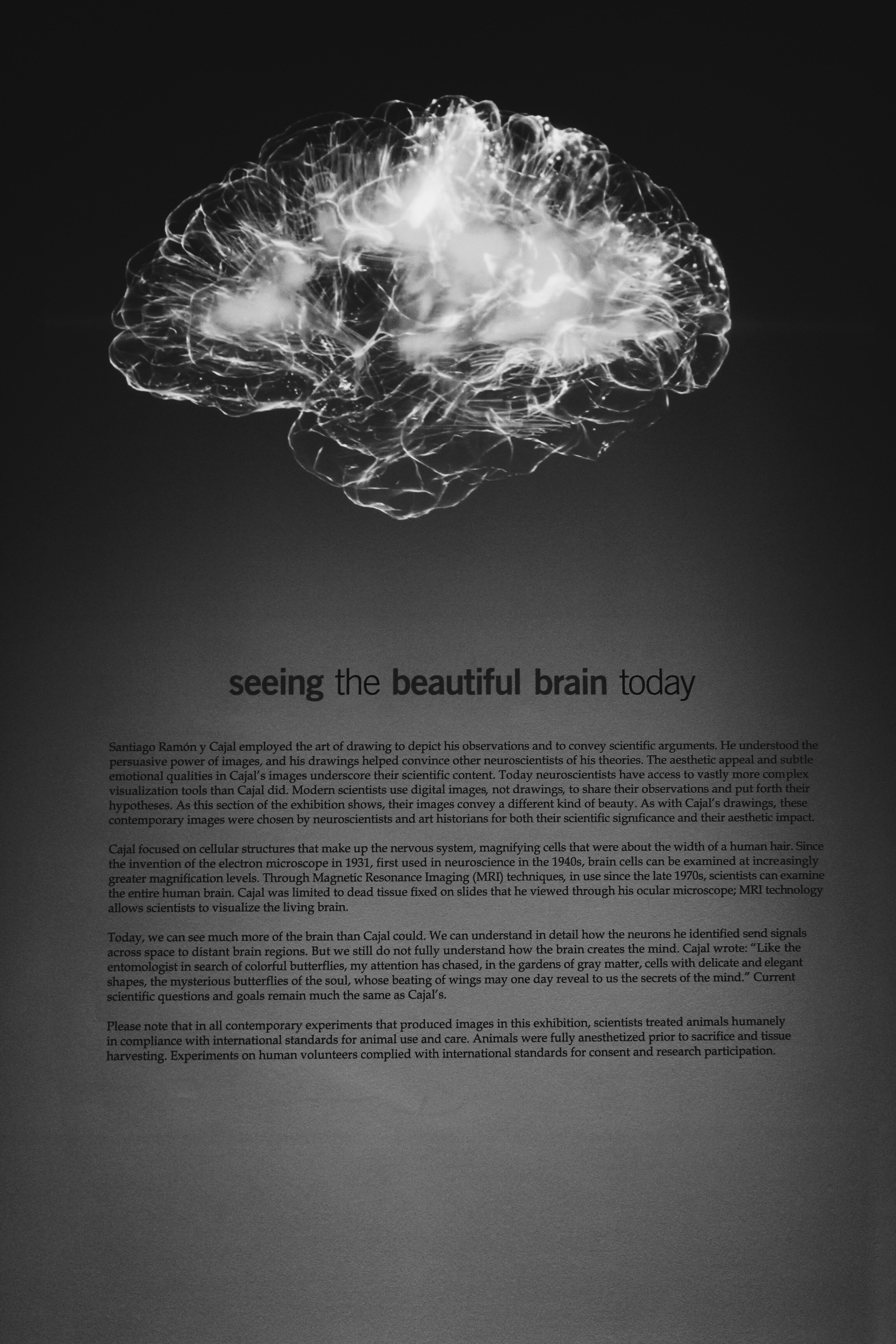
Neural networks, a cornerstone of artificial intelligence, are fundamentally modeled after the biological structure of the human brain. The brain comprises billions of neurons, interconnected through synapses, which facilitate the complex processes of learning, reasoning, and memory. This intricate architecture serves as the foundational inspiration for designing artificial neural networks.
Similar to how a biological neuron functions, artificial neurons, or nodes within a neural network, receive inputs, process these signals, and transmit outputs. Each biological neuron collects inputs from other neurons through its dendrites, which are akin to the inputs that artificial neurons accept. The cell body of the neuron processes these signals and, if a certain threshold is met, sends the output through its axon. In a neural network, inputs are transformed through a mathematical function to produce an output, mimicking this biological signal processing.
The connections between neurons in the human brain, known as synapses, vary in strength and are modified through experiences in a process called synaptic plasticity. Neural networks replicate this concept with weights, which can be adjusted during the training process. By applying algorithms such as backpropagation, neural networks fine-tune the strength of these connections based on the errors in outputs, similar to how learning occurs in a living brain.
Moreover, the brain utilizes layers of neurons to process and classify information through hierarchical structure. Analogously, neural networks are often built in layers, enabling them to extract increasingly abstract features from input data. This layered approach allows neural networks to learn complex patterns, just as the human brain does through its multi-layered processing mechanisms. Overall, the architectural parallels between the human brain and neural networks provide a compelling foundation for understanding how artificial intelligence can emulate cognitive functions.
Components of a Neural Network
Neural networks consist of several key components that work in tandem to process information and derive meaningful insights from data. The three primary components of a neural network are the input layer, hidden layers, and output layer. Each layer serves a distinct role in the overall functioning of the network.
The input layer is the first layer of the neural network and serves as the gateway for data to enter the system. Each neuron in this layer corresponds to a specific feature of the input data. For instance, if the goal is to classify images, the input layer would receive pixel values corresponding to different features of the image. The input data is then normalized and prepared for processing, as it is essential to ensure that the network can efficiently learn the underlying patterns.
Following the input layer are one or more hidden layers. These layers perform various computations and transformations on the data. The term “hidden” denotes that these layers do not interact directly with the external environment; rather, they function internally within the network. Each hidden layer consists of multiple neurons, and their outputs serve as the input for subsequent layers. The activation functions applied to each neuron’s output determine the behavior of the network and play a critical role in learning complex patterns. By adjusting the weights associated with the connections between neurons, the network learns from the data input, gradually improving its ability to make accurate predictions.
The final component of a neural network is the output layer. This layer produces the end result of the neural network’s processing, providing the predicted values or classifications based on the data input. The arrangement of neurons in the output layer typically depends on the nature of the task; for example, in a binary classification task, there would be a single neuron representing one of the two classes. The output layer essentially summarizes the computations made by previous layers, delivering actionable insights from the processed data.
How Neural Networks Process Information
Neural networks are designed to simulate the way the human brain processes information. They consist of interconnected nodes, or neurons, arranged in layers, with each node responsible for processing input data. The flow of information through these layers is facilitated by weighted connections that adjust as the network learns from experience. Each input is assigned a weight that indicates its importance, allowing the neural network to prioritize certain features over others when making predictions.
When data is fed into a neural network, it initially enters the input layer, where each input feature corresponds to a node. As this information moves through the various hidden layers, it undergoes transformations that involve applying an activation function. This function introduces non-linearity into the model, enabling the neural network to capture complex patterns and relationships within the data. Common activation functions include the sigmoid, hyperbolic tangent, and ReLU (Rectified Linear Unit), each offering different advantages during the learning process.
The process of information flow can be broken down into two main phases: the forward pass and the backward pass. During the forward pass, data is processed from the input layer through the hidden layers to the output layer, where the final predictions are made. In the backward pass, the neural network evaluates its predictions by calculating the error and adjusting the weights accordingly through a process called backpropagation. This iterative process helps to minimize the difference between predicted and actual outcomes, effectively refining the network’s ability to make accurate predictions over time.
Through this combination of weighted connections and activation functions, neural networks effectively mimic human cognitive processes, allowing them to learn from data and improve their performance. The architecture of neural networks, while inspired by biological systems, leverages mathematical concepts to achieve computational efficiency and accuracy in tasks ranging from image recognition to natural language processing.
Learning Mechanisms in Neural Networks
Neural networks possess a distinctive ability to learn from data, allowing them to improve their performance over time. The process of training a neural network involves several fundamental mechanisms, primarily focused on optimizing the model’s weights through a methodical approach. One of the central techniques employed in this training process is backpropagation, which plays a crucial role in refining the network’s predictions. Backpropagation allows the network to calculate the gradient of the loss function with respect to each weight by applying the chain rule, enabling efficient adjustments based on the errors made in the predictions.
In conjunction with backpropagation, gradient descent serves as the optimization algorithm that updates the model’s weights. This technique seeks to minimize the loss function by iteratively adjusting the weights in the opposite direction of the gradient. The choice of learning rate, a hyperparameter that defines the size of the weight updates, is vital to ensure that the network converges to an optimal solution without overshooting or oscillating around the minimum. Variants of gradient descent, such as stochastic gradient descent and mini-batch gradient descent, further enhance the learning process by altering how much data is used in each update step, thereby improving the efficiency and performance of training.
Throughout the training process, numerous epochs may be conducted, allowing the network to repeatedly learn from the data. Each pass through the full dataset provides an opportunity for the network to refine its parameters, thereby enhancing its ability to generalize and accurately predict outcomes on unseen data. By understanding these learning mechanisms, one can appreciate how neural networks adapt and evolve, ultimately leading to their application in various fields such as image and speech recognition, natural language processing, and beyond.
Applications of Neural Networks
Neural networks, a vital component of artificial intelligence, have demonstrated their capability across various applications, including image recognition, natural language processing, and autonomous vehicles. These systems function by mimicking the way human brains operate, capturing intricate patterns and relationships within data, which subsequently influences a wide array of industries and processes.
In image recognition, neural networks have transformed the way computers interpret visual information. By utilizing convolutional neural networks (CNNs), which are specifically designed to process pixel data, systems can identify objects within images with remarkable accuracy. This technology is integral to applications such as facial recognition, where the ability to recognize and understand human faces enables everything from social media enhancements to security systems. The accuracy of these image recognition systems continues to improve, leading to even more widespread adoption in fields such as healthcare, where they assist in diagnosing medical conditions through imaging techniques.
Natural language processing (NLP) utilizes recurrent neural networks (RNNs) and transformer models to enable machines to understand and generate human language. This application is particularly significant in chatbots and virtual assistants, where the ability to comprehend and respond to natural dialogue enhances user experiences. As a result, businesses are increasingly incorporating these intelligent systems to improve customer service and streamline communication. Furthermore, NLP ensures that language translation tools are more effective, breaking down language barriers and facilitating global communication.
Moreover, the evolution of autonomous vehicles is heavily reliant on neural networks. By processing vast amounts of sensory data, these networks allow vehicles to navigate complex environments. They analyze inputs from cameras, radar, and LiDAR, identifying obstacles and making real-time decisions to improve safety and efficiency. The integration of neural networks into self-driving cars not only enhances road safety but also holds the potential to revolutionize transportation systems globally.
Advantages and Limitations of Neural Networks
Neural networks are known for their remarkable capabilities in processing large datasets, enabling them to extract intricate patterns and correlations that may be challenging for traditional algorithms. This characteristic is particularly advantageous in fields such as image recognition, natural language processing, and financial forecasting, where vast amounts of information are available. The ability of neural networks to learn from this data, adjust their parameters, and improve their predictions over time makes them a powerful tool for modern applications.
Another significant strength of neural networks is their flexibility in solving a wide range of problems. They can be adapted to various scenarios and tasks, from regression analysis to classification problems. This adaptability is largely due to their layered architecture, which allows for the combination of multiple input factors to produce more accurate outputs. Consequently, neural networks can address complex problems that require nuanced understanding and inference.
However, despite their advantages, neural networks are not without limitations. One prominent issue is the tendency to overfit, particularly when they are trained on limited data. Overfitting occurs when a model learns not only the underlying patterns but also the noise in the training data, leading to poor generalization on new data. This can undermine the effectiveness of neural networks, making them less reliable than more straightforward models in certain contexts.
Moreover, interpretability can pose a challenge when utilizing neural networks. Unlike simpler algorithms that provide clear decision rules, neural networks often function as black boxes, making it difficult to understand how their conclusions are reached. This lack of transparency can be a significant drawback in industries where explainability is crucial, such as healthcare and finance. Therefore, while neural networks offer substantial advantages, they also present challenges that must be addressed to harness their full potential in real-world applications.
Future Trends in Neural Network Research
The landscape of neural network research is continually evolving, driven by technological advancements and interdisciplinary collaborations. One prominent trend is the integration of quantum computing with neural networks. Quantum computing promises to revolutionize data processing speeds and capacity, potentially allowing neural networks to handle complex datasets far beyond current capabilities. This intersection is an area of intense exploration, as researchers aim to develop quantum algorithms that can enhance the performance and efficiency of traditional neural network models.
Additionally, there is a significant focus on improving neural network architectures. Recent innovations, such as transformers and attention mechanisms, have shown promising results in various tasks, including natural language processing and computer vision. These advanced architectures enable models to better capture dependencies within data, leading to increased accuracy and reduced training times. Future research will likely continue this trend of architectural refinement, aiming to create even more efficient and robust neural networks.
Another notable trend involves the synergy between neural networks and biological research. As our understanding of the human brain deepens, researchers are drawing inspiration from its functioning to develop more sophisticated neural network models. Concepts such as neural plasticity—the brain’s ability to adapt and reorganize itself—are being explored to improve the learning capabilities of artificial neural networks. The burgeoning field of neuromorphic computing, which seeks to mimic brain-like processing, is also gaining traction, leading to innovative chips that can perform tasks more efficiently than conventional hardware.
Furthermore, the rising awareness of ethical implications surrounding artificial intelligence (AI) is prompting researchers to adopt more transparent and responsible practices in developing neural networks. Initiatives aimed at ensuring fairness, accountability, and transparency in AI systems reflect a growing commitment to addressing the societal impact of these technologies.
Conclusion
In this exploration of neural networks, we have delved into their intricate brain-like architecture and examined how these systems mimic biological processes to perform complex tasks. Neural networks are at the core of many advanced technologies, from image and voice recognition to autonomous vehicles and medical diagnosis. By processing vast amounts of data through interconnected layers, these networks learn to identify patterns and make predictions with remarkable accuracy.
Furthermore, we discussed the significance of different types of neural networks, including convolutional neural networks (CNNs) and recurrent neural networks (RNNs), each tailored to handle specific types of data and tasks. The flexibility of neural networks allows them to be applied across various fields, making them invaluable to industries such as healthcare, finance, and entertainment. The advancements in hardware, coupled with increasingly sophisticated algorithms, continue to enhance the capabilities of neural networks, making them more efficient and effective.
Looking ahead, the potential impact of neural networks on society is profound. As we integrate these systems into everyday applications, ethical considerations will become paramount, particularly regarding privacy, decision-making, and fairness. The balance between leveraging the power of neural networks and addressing these ethical dilemmas will shape the direction of future innovations. Ultimately, neural networks serve not only as tools to solve existing problems but also as catalysts for new advancements that could redefine our technological landscape.