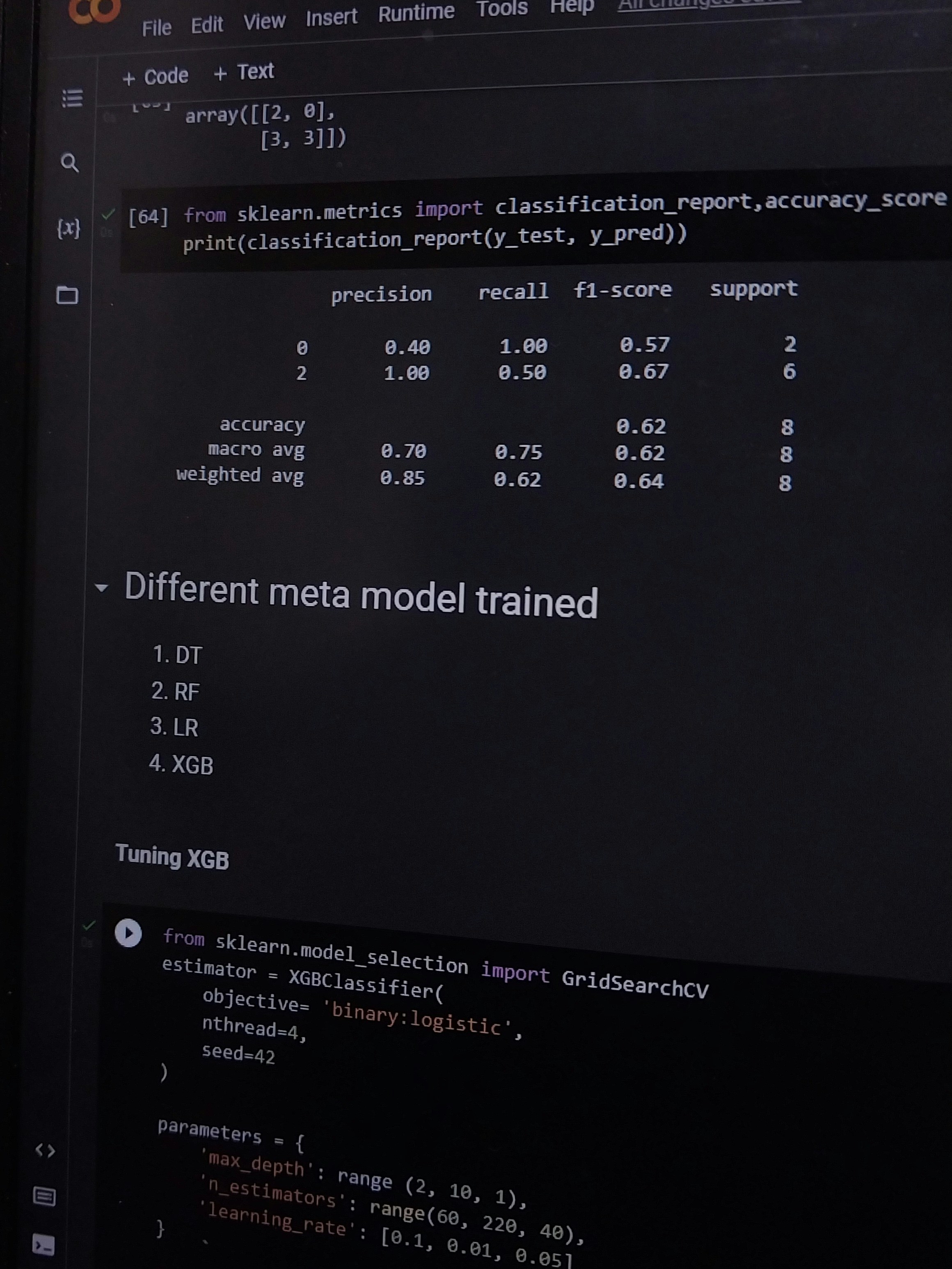
Introduction to Model Evaluation Metrics
In the realm of machine learning, evaluating the performance of models is crucial to ensure their effectiveness and reliability. Model evaluation metrics provide a quantitative framework to assess how well a model performs the tasks for which it was designed. These metrics are essential for comparing different algorithms and for guiding improvements in model design and parameter tuning. First and foremost, the evaluation of a model’s performance allows practitioners to determine whether the predictions made by the model align with the expected outcomes.
Commonly used evaluation metrics include accuracy, precision, recall, F1-score, and area under the receiver operating characteristic (ROC) curve, among others. Understanding these metrics helps in identifying the strengths and weaknesses of a model in various contexts. For example, accuracy is often the first metric considered; however, in cases of imbalanced datasets, it can be misleading. Thus, precision and recall emerge as critical metrics, particularly for applications where the cost of false positives and false negatives varies significantly.
Precision measures the accuracy of the positive predictions made by a model, indicating the proportion of true positives out of all predicted positives. Conversely, recall (also known as sensitivity) assesses the model’s ability to identify all relevant instances, measuring the proportion of true positives out of all actual positives. By comprehensively analyzing these metrics, practitioners can gain insights into the model’s performance that go beyond simple accuracy.
In summary, the evaluation of machine learning models is pivotal, and key metrics such as precision and recall provide valuable insights into model performance. As we dive deeper into the discussion of precision and recall, understanding these metrics will enhance our ability to develop and implement effective machine learning solutions.
What is Precision?
Precision is a crucial metric in the realm of machine learning, utilized to gauge the quality of positive predictions made by a predictive model. Specifically, precision measures the proportion of true positive results in relation to the total number of predicted positives, thereby providing insights into the model’s accuracy regarding the positives it identifies. The fundamental formula for calculating precision is given as:
Precision = True Positives / (True Positives + False Positives)
To further elucidate, let’s consider a practical example. Suppose a classifier is used to identify the presence of a disease in a group of 1,000 test subjects. Out of these, 100 individuals are actually sick, and the model accurately identifies 80 of them as positives (true positives). However, it also wrongly labels 20 healthy individuals as being sick (false positives). In this scenario, the precision of the model can be calculated as follows:
Precision = 80 / (80 + 20) = 80 / 100 = 0.8
This indicates that when the model predicts a positive case, there is an 80% likelihood that the prediction is correct. A higher precision value suggests that the model makes fewer mistakes with respect to false positives, which is especially vital in applications where false alarms can lead to significant consequences, such as in medical diagnoses or fraud detection.
Understanding the concept of precision allows data scientists and machine learning practitioners to assess the reliability of their predictive models. It highlights the importance of being accurate in positive predictions, ensuring that resources and efforts are optimally allocated when these predictions inform critical decisions.
What is Recall?
Recall, often referred to as sensitivity or true positive rate, is a crucial metric in the evaluation of classification models. It measures a model’s ability to correctly identify all relevant positive instances in a dataset. In essence, recall assesses how well a model can detect positive cases when they truly exist. This is particularly significant in scenarios where false negatives carry substantial costs, such as in medical diagnoses or fraud detection.
The formula for calculating recall is straightforward: it is the ratio of true positives (TP) to the sum of true positives and false negatives (FN). Mathematically, it can be expressed as:
Recall = TP / (TP + FN)
Where:
- True Positives (TP): The instances that are correctly predicted as positive.
- False Negatives (FN): The instances that were incorrectly predicted as negative, even though they are positive.
For example, consider a medical test intended to identify a disease. If there are 100 patients with the disease and the test successfully identifies 80 of them, the recall for the test would be:
Recall = 80 / (80 + 20) = 0.80
This means that the test accurately detects 80% of the patients with the disease while missing 20%. In contexts such as disease detection, a high recall is often prioritized to ensure that as few positive cases as possible are overlooked.
Understanding recall is essential for optimizing classification models, particularly in critical applications where each identified case can significantly impact outcomes. By focusing on maximizing recall, practitioners can enhance their models’ effectiveness in capturing all relevant positive instances.
The Mathematical Relationship Between Precision and Recall
Precision and recall are two of the most important metrics for evaluating the performance of classification models in machine learning. Their relationship is often characterized by the precision-recall tradeoff, where changes in one metric can lead to simultaneous changes in the other. Understanding this relationship is crucial for selecting the right model and making informed decisions based on its performance.
Precision is defined as the ratio of true positive predictions to the total number of positive predictions made by the model. It reflects the model’s ability to avoid false positives. In contrast, recall, also known as sensitivity, is the ratio of true positives to the total number of actual positives. This metric indicates how well the model is able to identify all relevant instances.
The mathematical relationship between these two metrics can be described through the confusion matrix, which highlights the true positives, false positives, true negatives, and false negatives produced by a model. When adjustments are made to improve precision, such as increasing the threshold for classification, it can result in a decrease in recall. Conversely, attempts to enhance recall, like lowering the classification threshold to capture more positives, may decrease precision as more false positives are included.
This tradeoff necessitates a careful balance depending on the specific context of the task. For instance, in scenarios where false positives carry a higher penalty, such as in spam detection systems, prioritizing precision may be more significant. Alternatively, in medical diagnoses, where missing a positive case can have serious consequences, a higher emphasis on recall is warranted.
Ultimately, the relationship between precision and recall underscores the need for robust model evaluation frameworks that incorporate both metrics, allowing practitioners to comprehensively assess model performance and make nuanced decisions.
When to Use Precision vs. Recall
Understanding when to prioritize precision over recall, or vice versa, is critical in developing effective machine learning models. The choice largely depends on the specific application and the consequences of false positives versus false negatives. In scenarios where the cost of a false positive is high, such as in email spam detection, precision becomes paramount. Here, falsely classifying a legitimate email as spam may result in the loss of crucial communication, necessitating a model that excels in precision.
Conversely, in cases where false negatives carry a significant consequence, recall should take precedence. A prime example would be in a medical screening context, such as cancer detection. Failing to identify a patient with cancer (a false negative) can have dire outcomes, making it essential that the model captures as many true positives as possible, hence prioritizing recall over precision. In this application, even if the model identifies some incorrect positives (i.e., healthy individuals misclassified as having cancer), it is more acceptable than missing a true case.
It is important to recognize the trade-offs between these two metrics as no model can maximize both simultaneously. In many real-world applications, a focus on one may necessitate a compromise on the other. For this reason, the precision-recall curve is often employed to visualize these trade-offs, allowing practitioners to select the optimal balance that aligns with specific business objectives or ethical considerations. Understanding the context of the application enables data scientists to make informed decisions on which metric to prioritize, ultimately leading to more effective model deployment.
F1 Score: A Harmonizing Metric
The F1 score represents a balanced measure that combines both precision and recall, offering a single metric to evaluate a model’s performance, particularly in binary classification tasks. This score is essential in situations where the class distribution is uneven, making it crucial to account for both false positives and false negatives when assessing a model.
To calculate the F1 score, one first needs to determine the values of precision and recall. Precision is the ratio of true positives to the sum of true positives and false positives, while recall is the ratio of true positives to the sum of true positives and false negatives. The F1 score is then computed using the formula: F1 = 2 * (Precision * Recall) / (Precision + Recall). This calculation ensures that both metrics contribute equally to the final score, providing a balance that is sometimes overlooked when examining precision or recall in isolation.
The F1 score is particularly useful in instances where the cost of false negatives is high, such as in medical diagnosis or fraud detection. In these contexts, maximizing both precision and recall is essential, and the F1 score serves as an effective means of gauging this balance. It is also beneficial when comparing various models to determine which one offers an optimal trade-off between precision and recall, especially when class distributions are skewed. By utilizing the F1 score, data scientists can have a clearer understanding of the model’s performance, beyond just accuracy, directing their focus towards models that maintain a high level of both precision and recall.
Challenges in Balancing Precision and Recall
In the field of model evaluation, practitioners often grapple with the challenge of balancing precision and recall. The two metrics serve distinct purposes; precision measures the accuracy of positive predictions, while recall assesses the model’s ability to identify all relevant instances. This fundamental difference creates a scenario where improving one may detrimentally affect the other, leading to potential trade-offs that practitioners must navigate carefully.
One prevalent challenge is found in datasets that exhibit class imbalance. In situations where one class significantly outnumbers another, a model may achieve high accuracy by favoring the majority class at the expense of the minority class’s precision and recall. Achieving a robust balance therefore requires techniques such as resampling, threshold tuning, or utilizing cost-sensitive learning. Each of these techniques has implications that must be considered based on the specific context and goals of the model.
Additionally, domain specificity plays a significant role in the trade-off between precision and recall. For instance, in medical diagnosis, high recall is often paramount to ensure that all true positive cases are detected, even if it comes with a lower precision rate. Conversely, in spam detection, higher precision may be more desirable to avoid incorrectly classifying legitimate emails as spam, even if some spam messages go undetected.
Finally, the evaluation metrics also influence the model development process. As models are evaluated and calibrated to either improve precision or recall, the overall effectiveness in real-world applications can vary. In real-time systems, where resources may be limited, optimizing for both precision and recall simultaneously can become exceedingly difficult. Thus, it is crucial for practitioners to understand the implications of their choice of metrics and strive for a balance tailored to their specific problem domain and dataset characteristics.
Visualizing Precision and Recall
Visualizing precision and recall is a crucial aspect of model evaluation that can significantly enhance our understanding of classifier performance. One of the most effective methods for this visualization is through the use of precision-recall curves. These curves provide a clear graphical representation of the trade-offs between precision and recall at various threshold settings for classification models.
A precision-recall curve is created by plotting precision on the y-axis and recall on the x-axis. Each point on the curve represents the precision and recall scores corresponding to a specific classification threshold. It is important to note that a model with high precision does not always achieve high recall and vice versa. Hence, visualizing these metrics can aid in selecting the most appropriate model according to the specific requirements of a project.
This visualization is especially beneficial when dealing with imbalanced datasets, where the number of instances of one class vastly outnumbers those of the other. In such cases, accuracy may not provide a full picture of model performance; hence the precision-recall curve becomes a more reliable tool. The area under the precision-recall curve (AUC-PR) can be a useful metric to summarize model performance. A higher AUC-PR value denotes a more favorable precision-recall relationship.
Further, combining precision-recall curves with other visual tools, such as ROC curves, can offer even deeper insights into model behavior across varying decision thresholds. The intersection and divergence of these curves can indicate points where a model may be more suitable for particular applications.
In summary, effective visualization of precision and recall is vital in model evaluation, enabling practitioners to make informed decisions during model selection based on diverse performance criteria.
Conclusion and Best Practices
In the landscape of machine learning model evaluation, understanding the concepts of precision and recall is paramount for practitioners. Precision refers to the ratio of true positive results to the total predicted positive results, effectively indicating the accuracy of positive predictions. Recall, on the other hand, measures the proportion of actual positives that were correctly identified by the model. Both metrics are critical, especially in scenarios where the cost of false positives and false negatives can have significant consequences.
When selecting evaluation metrics for a machine learning model, it is essential to consider the context and objectives of the specific use case. If the focus lies on minimizing false positives, precision should be prioritized. However, if the goal is to ensure that most actual positives are identified, then recall takes precedence. In many situations, achieving a balance between the two is necessary, which can be accomplished through the use of the F1 score, a metric that harmoniously combines both precision and recall into a single score.
Best practices for practitioners include conducting thorough exploratory data analysis (EDA) to gain insights into the distributions and imbalances present in the dataset. This understanding aids in choosing the most appropriate metric for the task at hand. Additionally, utilizing confusion matrices can provide a comprehensive view of model performance across different classification thresholds.
Furthermore, engaging in regular evaluation and validation of models ensures that the chosen metrics accurately reflect the objectives. Strategies such as cross-validation can enhance trust in model performance metrics. In conclusion, the thoughtful application and understanding of precision and recall within the evaluation process will contribute significantly to the effectiveness of machine learning solutions deployed in real-world scenarios.