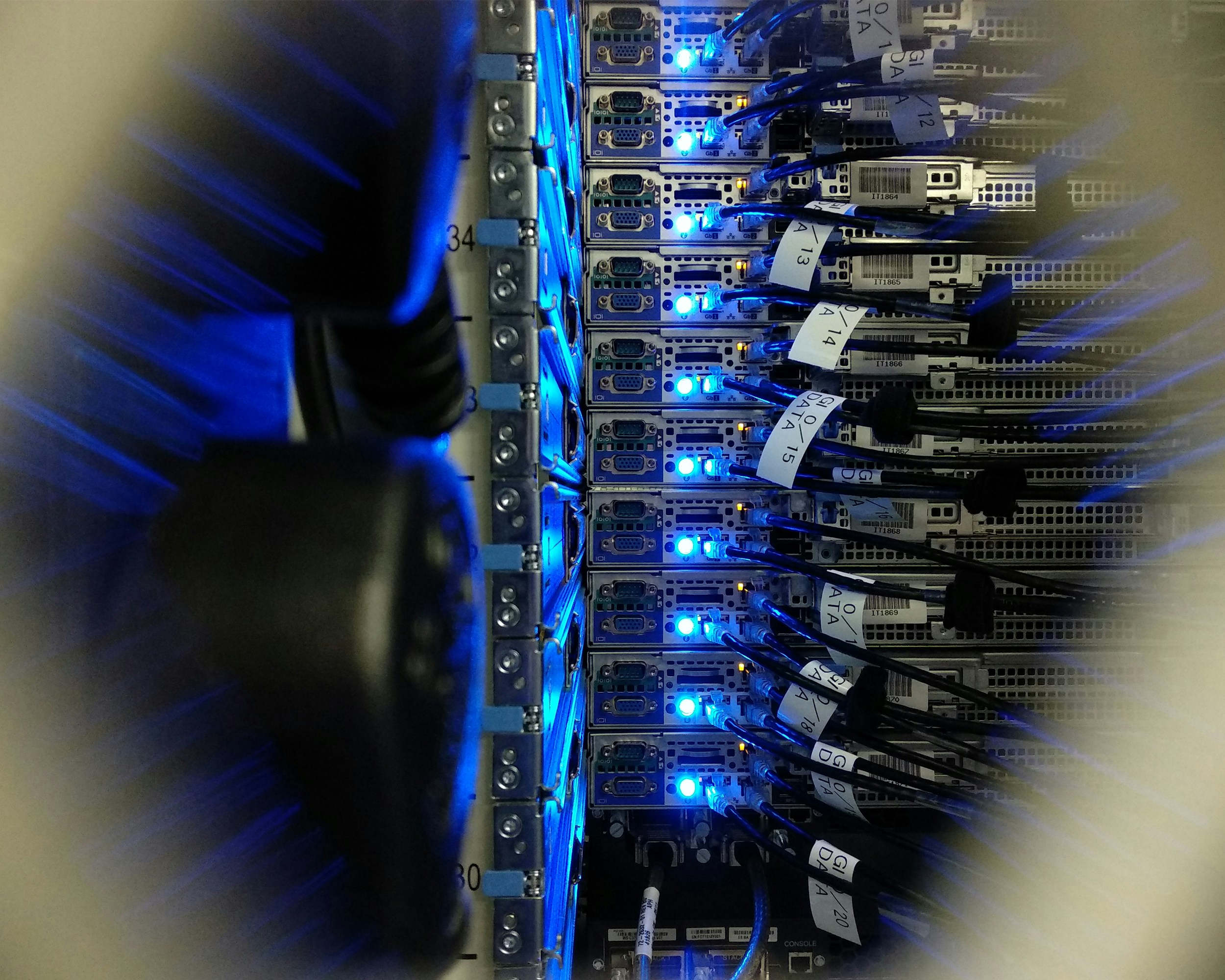
Introduction to Optical Interconnects
Optical interconnects represent a transformative technology in the realm of data transfer, particularly in the context of artificial intelligence (AI) applications and modern computing environments. Unlike traditional electrical interconnects, which transmit data using electrical signals through copper wires, optical interconnects utilize light signals transmitted through fiber optics. This fundamental difference allows for superior data transfer speeds and increased bandwidth, which are critical for handling the immense data loads associated with AI workloads.
The significance of optical interconnects becomes especially pronounced in the context of AI servers, which often require rapid data exchange between processors and storage systems to perform complex calculations and data analysis. As AI applications continue to evolve, the volume of data being processed is set to increase exponentially. Optical interconnects can be pivotal in addressing the growing demand for high-speed data transfer, which electrical interconnects may struggle to meet due to inherent limitations like resistance and signal degradation over longer distances.
Moreover, optical interconnects offer advantages in terms of energy efficiency and reduced latency. Their ability to carry multiple signals simultaneously over a single fiber optic cable minimizes the number of interconnects needed, which not only streamlines physical space in data centers but also lowers energy consumption. These factors contribute to the growing popularity of optical interconnects in high-performance computing environments, where every millisecond of latency can significantly impact overall system performance.
In summary, as AI technologies and data communication requirements continue to advance, transitioning to optical interconnects will be essential for enhancing data transfer capabilities. Understanding the distinctions between optical and electrical interconnects is crucial for stakeholders aiming to optimize their infrastructures for the future of AI and data processing.
The Need for Speed: Data Transfer Requirements in AI
Artificial Intelligence (AI) has rapidly evolved, transforming various industries by enhancing data processing capabilities and providing insights from vast datasets. This evolution has significantly amplified the demand for higher data transfer speeds, as AI applications rely heavily on the timely processing of information to function optimally. Companies are increasingly harnessing data-intensive AI applications, including machine learning algorithms, real-time analytics, and complex simulations, which require the seamless flow of immense data volumes.
Real-time analytics, in particular, are crucial for AI applications that necessitate immediate responses, such as autonomous vehicles, financial trading systems, and personalized customer experiences. The speed at which these systems can process data directly impacts their effectiveness and reliability. Consequently, the necessity for faster data transfer is not just a matter of efficiency; it is essential for the practical deployment of AI technologies in dynamic environments.
Furthermore, as AI models grow in complexity and size, largely driven by advancements in deep learning, the data transfer requirements become even more stringent. Large-scale datasets are increasingly being processed in distributed environments, which demand high-bandwidth solutions to ensure that multiple nodes or processors can communicate effectively without bottlenecks. These demands are propelling advancements in technologies like optical interconnects, which provide the bandwidth and speed necessary to meet the growing data transfer needs in AI applications.
The continuous drive for faster data transfer speeds is not merely a technical challenge; it reflects the increasing reliance on AI across multiple sectors, where immediate insights can lead to significant competitive advantages. Thus, addressing these demands is pivotal for the future of AI, as well as for the technological innovations that will support its growth and integration into everyday practices.
How Optical Interconnects Work
Optical interconnects represent a fundamental technology in the modern telecommunications and computing landscape. At their core, these interconnects utilize light for data transmission, allowing for significantly faster transfer rates compared to traditional electrical methods. The primary principle behind optical interconnects is the transmission of information through light pulses, which encode data and are sent through optical fibers.
Fiber optics, the backbone of optical interconnects, consist of flexible strands of glass or plastic capable of transmitting light over long distances with minimal signal loss. This transmission occurs due to the principle of total internal reflection; when light travels through the core of the fiber at a specific angle, it reflects off the walls and continues moving along the fiber without escaping. The data is typically modulated onto a light signal, often using techniques such as intensity modulation or phase modulation, which translates the digital bits into light pulses.
The components involved in creating effective optical interconnects include light sources, typically laser diodes or light-emitting diodes (LEDs), which generate the light signals. Additionally, photodetectors are employed to convert the received light back into electrical signals, enabling processing by electronic systems. Integrated optics has facilitated the miniaturization of these components, allowing for compact designs suitable for high-density interconnect applications.
In terms of operational efficiency, optical interconnects offer reduced power consumption and enhanced bandwidth, making them ideal for data centers and high-performance computing environments. As demand for higher data transfer rates continues to grow, understanding the technical workings of optical interconnects becomes crucial for developing future communication infrastructures.
Advantages of Optical Interconnects Over Traditional Methods
Optical interconnects represent a significant evolution in data transfer technology, particularly in comparison to traditional copper-based solutions. One of the primary advantages of optical interconnects is their ability to provide increased bandwidth. Unlike copper cables, which have inherent limitations due to their electrical properties, optical fibers can carry vast amounts of data over long distances without degradation. This feature is essential for modern data centers and high-performance computing environments that require rapid data transmission.
Another crucial benefit is the reduction in latency. Optical interconnects facilitate faster signal transmission, minimizing the delay associated with data communication. This characteristic is particularly beneficial in applications that demand real-time data feeds, such as financial trading systems or online gaming platforms. By effectively lowering latency, optical systems enhance overall responsiveness and improve user experiences.
In addition to bandwidth and latency improvements, optical interconnects contribute to lower power consumption. The energy efficiency of transmitting data via light rather than electricity means that optical systems require less power, reducing operational costs and the environmental footprint. In a world increasingly focused on sustainability, this aspect cannot be overstated. Lower power usage also leads to less heat generation, which is an integral benefit in maintaining optimal operating conditions within high-density computing facilities.
Furthermore, optical interconnects offer enhanced scalability. As demand for data transmission continues to grow, the flexibility of optical systems allows for easier upgrades and expansions. This ease of scalability is essential for businesses anticipating future growth, providing a more future-proof solution compared to traditional copper networks.
Overall, the advantages of optical interconnects over traditional methods are clear. The combination of increased bandwidth, reduced latency, lower power consumption, and enhanced scalability positions optical interconnects as a critical component in the ongoing evolution of high-speed data networks.
Real-World Applications of Optical Interconnects in AI Servers
As artificial intelligence (AI) technology continues to evolve, the demand for high-speed data transfer capabilities in data centers has become paramount. Optical interconnects, known for their bandwidth and speed advantages, are increasingly adopted in AI server environments. These advanced interconnects facilitate faster communication between servers, thereby streamlining computational processes essential for AI workloads.
One notable example of optical interconnects in AI applications is at NVIDIA, a leader in AI hardware and software development. NVIDIA’s data centers leverage optical interconnect technology to interlink graphic processing units (GPUs) across their architecture, significantly enhancing the data throughput necessary for training large AI models. By utilizing optical cables, NVIDIA has reported improved performance metrics, which have led to faster and more efficient AI model training times, ultimately providing their customers with more powerful AI solutions.
Another compelling case study comes from Google Cloud, which implemented optical interconnects in its data center operations. The company’s use of optical fiber connections has resulted in reduced latency and enhanced bandwidth, allowing for more efficient data transfers across their extensive computing resources. This optimization has had a direct impact on the performance of their AI offerings, particularly in terms of real-time data processing for applications such as natural language processing and image recognition.
Moreover, Microsoft Azure has also integrated optical interconnects within its infrastructure. Their deployment of photonic technologies has enabled the handling of vast data loads with minimal energy consumption. This capability not only improves operational efficiency but also aligns with sustainability initiatives aimed at reducing the carbon footprint of data centers.
In summary, the integration of optical interconnects into AI server frameworks has demonstrated substantial benefits in terms of performance improvement and operational efficiency. As more companies recognize these advantages, it is likely that the adoption of optical technologies will continue to rise, further revolutionizing the AI landscape.
Scalability and Future Prospects of Optical Interconnects
As the demand for high-speed data transfer continues to grow, especially in the realm of artificial intelligence (AI), optical interconnects have emerged as a prominent solution. The scalability of these technologies is vital for meeting future requirements in a world increasingly driven by data. Optical interconnects leverage the unique properties of light to transmit data at much higher rates than traditional copper interconnects, which are often limited by electrical resistance and heat production.
One of the significant advantages of optical interconnects is their potential for scalability. As AI technologies evolve, the volume of data processed will continue to increase exponentially. Optical interconnects can be designed to accommodate higher bandwidths, allowing for enhanced communication between components within data centers and computing clusters. Innovations such as wavelength-division multiplexing (WDM) enable multiple data streams to be transmitted simultaneously over the same fiber, a feature that can be crucial in meeting future bandwidth demands.
In addition to WDM, advancements in integration techniques, such as photonic integrated circuits (PICs), are promising for the future of optical communication. By integrating various optical functions onto a single chip, these circuits can drastically reduce space and power consumption, thereby fostering the scalability of optical interconnects in compact AI systems. Furthermore, research into materials that exhibit better light confinement and transmission properties, such as silicon photonics, is paving the way for significantly improved performance.
As we look toward the future, the combination of continued innovation in optics and the growing reliance on AI will drive the evolution of optical interconnects. This evolution is not limited to technological improvements; it also encompasses the economic aspects, where optical solutions may become more cost-effective to manufacture and deploy. This dynamic landscape suggests that optical interconnects will play an increasingly critical role in shaping the architecture of future AI systems.
Challenges and Limitations of Optical Interconnects
Optical interconnects have emerged as a promising solution for accelerating data transfer in artificial intelligence (AI) applications. However, several challenges and limitations hinder their widespread adoption. One significant obstacle is the manufacturing complexities associated with optical components. Unlike traditional electronic components, which can be mass-produced using established semiconductor technologies, optical devices require precision fabrication techniques that can be more time-consuming and costly. This complexity could potentially lead to variations in performance, which is detrimental in high-speed communication environments.
Integration of optical interconnects with existing electronic systems presents another considerable challenge. Many current data centers and computing architectures are heavily reliant on electronic-based interconnects. Transitioning to a hybrid model that incorporates both optical and electronic systems necessitates significant redesign and reconfiguration, which can introduce technical hurdles. Compatibility issues may arise between optical components and legacy systems, further complicating the integration process. As a result, organizations may face substantial challenges in adapting their infrastructure to fully leverage the benefits of optical technologies.
Cost implications are also a critical factor that cannot be overlooked. While optical interconnects promise higher bandwidth and lower latency, the initial investment for optical components and the required infrastructure upgrades can be significant. This financial burden is particularly concerning for organizations operating under tight budgets or those unwilling to divert funds from other critical operations. Additionally, the maintenance and operational costs associated with new technologies can impact long-term feasibility. As such, stakeholders must carefully assess the trade-offs between the potential advantages of optical interconnects and their associated financial requirements.
The Role of Optical Interconnects in AI Research and Development
The integration of optical interconnects in artificial intelligence (AI) research and development has significantly influenced the pace of innovation in this field. Optical interconnects utilize light to transmit data, offering high bandwidth and low latency compared to traditional electrical interconnects. As AI applications grow in complexity and data volume, the demand for efficient data transfer mechanisms becomes critical.
Collaborations between tech companies and academic institutions play a vital role in harnessing the capabilities of optical interconnects. These partnerships aim to advance not only the performance of AI systems but also the foundational research into photonics and integrated optics. For example, companies focused on semiconductor technology are engaging with universities to explore novel materials and designs for optical communication systems that could dramatically enhance speed and efficiency in data processing.
Research projects funded through these collaborations are addressing significant challenges currently faced in AI, such as the need for rapid data transfer to support real-time analytics and machine learning applications. Moreover, academic institutions are often at the forefront of theoretical exploration, developing innovative algorithms and models that can benefit from enhanced data throughput provided by optical interconnects. This synergistic relationship ensures that technological advancements in hardware directly influence AI research outcomes.
In addition, the scalability of optical interconnects presents opportunities for future developments in AI infrastructure. As organizations increasingly rely on large-scale datasets for training AI models, the ability to efficiently handle and transmit massive amounts of data will be essential. Therefore, ongoing investigations into optical interconnects promise to not only streamline current AI processes but also lay the groundwork for future breakthroughs in artificial intelligence.
Conclusion: The Future of AI and Optical Interconnects
As artificial intelligence (AI) continues to evolve, the demand for rapid and efficient data transfer is becoming increasingly critical. Optical interconnects are poised to play a significant role in this transformation, offering solutions to some of the key limitations faced in conventional data transfer technologies. By harnessing the speed of light for data transmission, optical interconnects can greatly reduce latency and enhance bandwidth capacity, thereby facilitating real-time processing for AI applications.
The ability of optical interconnects to support higher data rates with lower energy consumption makes them indispensable in the development of advanced AI systems. As AI algorithms become more complex and datasets expand at an unprecedented rate, the reliance on optical technology is likely to deepen. Furthermore, the potential for optical interconnects to seamlessly integrate with existing systems offers a promising pathway for enhanced performance in data centers, cloud computing, and edge computing environments.
Looking ahead, the future of AI and optical interconnects is expected to be characterized by continuous innovations. Research and development efforts aimed at optimizing optical hardware will likely lead to breakthroughs that further push the boundaries of AI capabilities. Trends such as miniaturization, improved materials, and integration with photonic circuits are anticipated to emerge as focal points for researchers and industry leaders alike.
In conclusion, the collaborative synergy between AI advancements and the rapid development of optical interconnects heralds a new era in data transfer capabilities. As these technologies converge, they promise to unlock new potential, driving efficiency and performance in AI systems while overcoming current limitations. The journey forward will undoubtedly be shaped by the ongoing improvements in optical technology, making it a critical component in the future landscape of artificial intelligence.