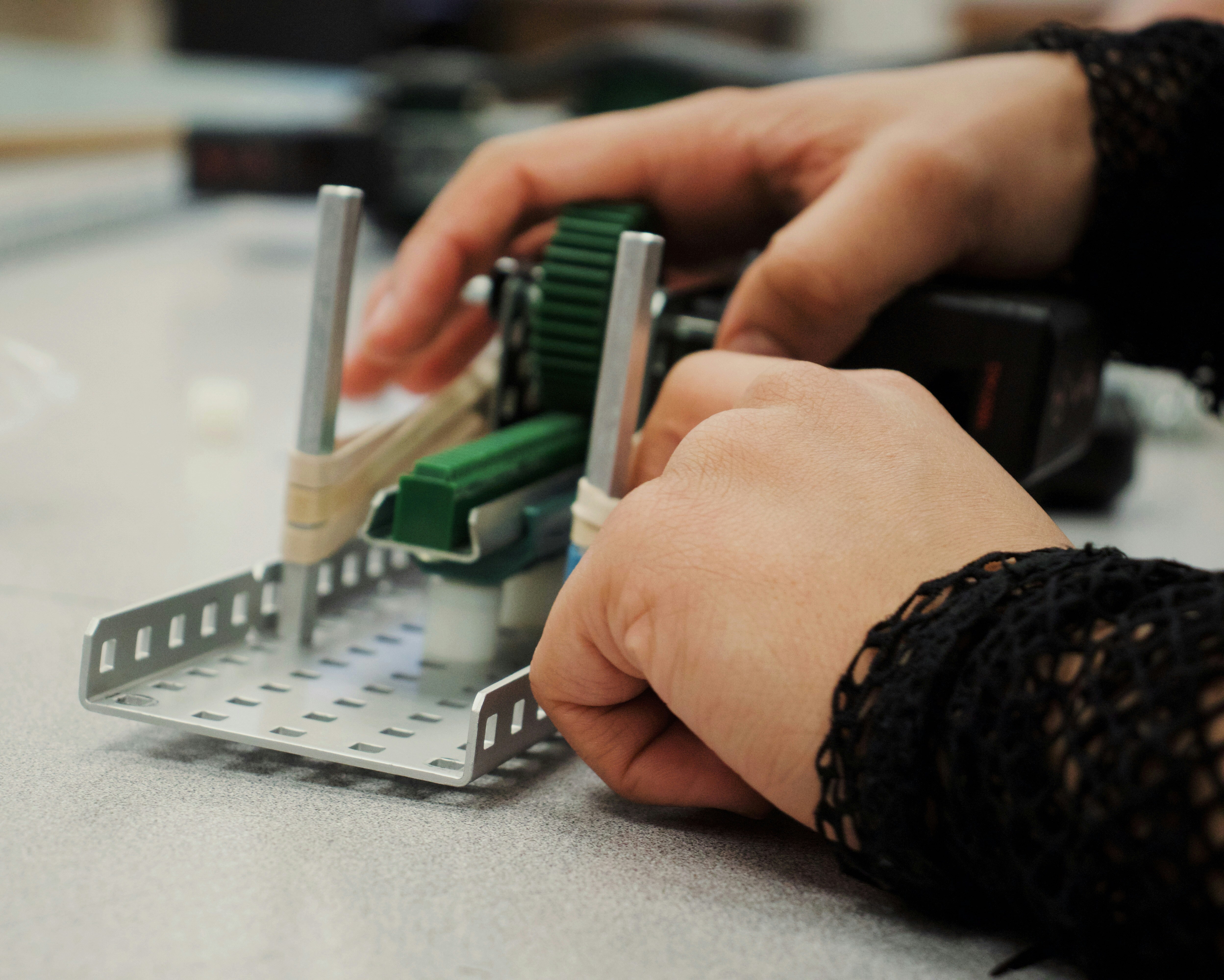
Introduction to Dexterous Manipulation
Dexterous manipulation refers to the ability of a robotic system to interact with objects in a way that mimics human hand dexterity and finesse. This capability encompasses a range of actions, including grasping, lifting, and manipulating various objects of differing sizes, shapes, and materials. The manipulation techniques employed are critical not only in robotics but also in the field of human-robot interaction, which seeks to create systems that can operate seamlessly in environments designed for humans.
In essence, dexterous manipulation involves the integration of multiple skills: sensory perception, coordination, and adaptive control. The significance of this capability lies in its potential to enhance the efficiency and safety of robotic systems in applications such as manufacturing, medicine, and personal assistance. For instance, robots equipped with dexterous manipulation abilities can perform complex tasks such as surgical procedures, delicate assembly processes, and even household chores, thus improving productivity and augmenting human capabilities.
The evolution of manipulation techniques can be traced back to early robotics, where simple grasping mechanisms were one-dimensional and heavily reliant on pre-programmed actions. As technology advanced, significant developments occurred, leading to the emergence of more sophisticated systems that employ machine learning and adaptive algorithms. These advancements enable robots to learn from their environments and adjust their manipulation strategies dynamically based on real-time feedback.
Understanding the journey of dexterous manipulation from rudimentary beginnings to the complex systems available today provides valuable insights into future trends and developments in the field of robotics. This discussion sets the groundwork for deeper exploration into the advancements made since 2025, highlighting the transformation and impact of dexterous manipulation on both technology and society.
Technological Innovations in Hardware
Since 2025, the field of robotics has witnessed a remarkable evolution in hardware innovations, significantly enhancing the capabilities for dexterous manipulation. One of the most noteworthy developments is in the design of robotic arms, which have been engineered to mimic human-like movements closely. These advancements in robot design include lightweight materials and novel joint configurations that enhance flexibility and range of motion, allowing for more precise and delicate tasks.
Additionally, the integration of advanced sensors has transformed how robotic systems perceive and interact with their environments. Notable innovations include the use of tactile sensors that provide feedback on grip strength and object texture, enabling robots to handle fragile items with care. Vision systems, equipped with high-resolution cameras and sophisticated image processing algorithms, afford robots the ability to identify and track objects in real-time, thus facilitating better navigation and manipulation in dynamic settings.
Another significant advancement can be found in the development of actuators. With the advent of smart actuators equipped with advanced control algorithms, robotic systems have become more responsive and adaptive. These innovations allow for the fine-tuning of movements, providing the necessary agility required for complex tasks, ranging from assembly lines to intricate surgeries. Moreover, the capability to operate in uncertain environments has been vastly improved; robotic systems can now adjust their actions based on real-time feedback and changing scenarios.
In summary, the innovations in hardware since 2025 have created a foundation for more agile, versatile, and responsive robotic systems. By enhancing robot design, incorporating superior sensor technology, and developing advanced actuation methods, researchers and engineers have significantly improved the dexterous manipulation capabilities of modern robotics. These advancements not only broaden the potential applications of robots but also pave the way for future developments in automated systems.
Software Developments and Algorithms
The field of dexterous manipulation has witnessed significant advancements in software developments and algorithms since 2025. These improvements are largely driven by progress in machine learning, artificial intelligence (AI), and sophisticated control algorithms. These technologies have collectively enhanced the capabilities of robots, enabling them to execute complex tasks with higher precision and adaptability.
Machine learning algorithms, a subset of AI, have become increasingly adept at processing large datasets, allowing robots to learn from vast arrays of information. This has led to improved recognition of objects, enabling robots to manipulate them more effectively. For instance, reinforcement learning techniques have enabled systems to refine their manipulation strategies through trial and error, enhancing their ability to adapt to varying environments.
In addition to machine learning, control algorithms have undergone refinement, providing robots with better feedback mechanisms. These algorithms govern a robot’s movement and response to stimuli, facilitating smoother and more coordinated movements. Improved algorithms enable predictive modeling, allowing robots to anticipate the dynamics of their environment and adjust their actions accordingly. This results in more fluid and natural interactions, closely mimicking human dexterity.
Moreover, the integration of computer vision technologies has played a critical role in software advancements. By employing enhanced visual perception systems, robots can now better understand their surroundings, identifying and manipulating objects with greater accuracy. This combination of computer vision and improved control systems has empowered robots to tackle tasks that are traditionally viewed as complex, such as assembling intricate components or performing delicate surgical procedures.
Through these developments, the interplay between advanced software and algorithms continues to expand the boundaries of what is achievable in dexterous manipulation, ensuring that robotic systems are more capable and versatile than ever before.
Human-Robot Collaboration
Since 2025, the realm of human-robot collaboration has witnessed remarkable advancements, particularly in how robots are designed to comprehend and respond to human actions. This evolution has enabled more effective partnerships across various sectors, including manufacturing, healthcare, and service industries. The integration of sophisticated algorithms and machine learning capabilities has empowered robots to interpret human behavior, leading to an enhanced collaborative dynamic.
In manufacturing, robots have transitioned from performing rigid tasks to functioning as adaptable partners. They now actively respond to the movements and intentions of human workers, promoting a smoother workflow. For instance, robots equipped with advanced sensory technologies can identify and adjust to the pace of their human counterparts, thus increasing overall productivity while ensuring safety. This synergy allows human operators to focus on complex problem-solving and decision-making, while robots handle repetitive or hazardous tasks.
In the healthcare sector, the collaboration between humans and robots has grown increasingly beneficial. Robotic assistants now support medical professionals in various capacities, from surgical assistance to patient care. These robots are designed to recognize and anticipate the actions of healthcare providers, facilitating more intuitive interactions. As a result, the quality of patient care has improved significantly, enabling healthcare workers to devote more time to their patients and enhancing recovery outcomes.
Furthermore, in the service industry, robots have become invaluable assets, particularly in hospitality and customer service. They can engage with customers, understand their needs, and respond with appropriate actions, thereby improving customer satisfaction. This capability is achieved through the implementation of natural language processing and emotional recognition systems, allowing robots to demonstrate empathy in their interactions.
Overall, the advancements in human-robot collaboration since 2025 reflect a significant shift towards more intuitive and effective partnerships. As robots continue to evolve, they are expected to assume increasingly complex roles, further enhancing productivity and innovation across various industries.
Applications of Dexterous Manipulation in Various Industries
Dexterous manipulation technology has made significant strides in recent years, transforming various industries through enhanced efficiency, safety, and productivity. In the healthcare sector, surgical robots exemplify advancements in dexterous manipulation. These devices allow for precise movements during complex procedures, enabling surgeons to perform minimally invasive surgeries with greater accuracy. For instance, Intuitive Surgical’s da Vinci system has improved patient recovery times while reducing the risks associated with traditional surgical methods. As a result, hospitals have reported increased patient throughput and enhanced surgical outcomes.
In the manufacturing industry, dexterous manipulation is redefining assembly lines and production processes. Robotic arms equipped with advanced sensors and machine learning algorithms can adapt to varying product designs, making them versatile tools for assembly tasks. A notable application is seen in automotive manufacturing, where robots can now handle intricate components with precision. Companies like Tesla have integrated dexterously manipulative robots to streamline production, resulting in reduced labor costs and increased production rates.
Logistics also benefits from the advancements in dexterous manipulation. Automated guided vehicles (AGVs) are increasingly employed in warehouses to navigate and perform tasks such as sorting, packing, and transporting goods. Amazon, for example, utilizes Kiva robots that can adeptly move through dynamic warehouse environments, significantly speeding up the order fulfillment process. This application not only enhances operational efficiency but also minimizes human error, contributing to a safer working environment.
These case studies across healthcare, manufacturing, and logistics highlight how advancements in dexterous manipulation are reshaping industry standards. By adopting such innovative technologies, organizations are able to enhance their processes, ensuring higher productivity and safety levels while meeting growing consumer demands.
Challenges and Limitations
The field of dexterous manipulation has witnessed significant advancements since 2025; however, it continues to face numerous challenges and limitations that hinder its widespread adoption and application. One primary issue is the complexity of these systems. Dexterous manipulators often require sophisticated algorithms and sensing technologies, which can complicate their design and operation. This increased complexity can also lead to higher failure rates, making them less reliable in critical applications such as surgical procedures or precision assembly.
Moreover, the cost associated with implementing dexterous manipulation systems can be prohibitive for many organizations. High initial investments in technology, training, and maintenance can deter potential adopters. This financial barrier is particularly pronounced in industries where profit margins are thin, and the return on investment for such advanced systems needs to be clearly demonstrated. Consequently, the economic aspect continues to represent a significant limitation to the full-scale deployment of robotics in dexterous manipulation.
Integration into existing workflows remains another substantial challenge. Many industries operate on legacy systems that may not easily accommodate the insertion of new technology. The disruption caused by incorporating these advanced manipulators can lead to resistance from employees, who may be wary of adapting to new methods of operation. In this regard, a strategic approach is vital to ensure seamless integration without compromising productivity.
Finally, ethical considerations cannot be overlooked. There are growing concerns about the implications of relying on robotic systems for tasks traditionally performed by humans. Issues related to job displacement, liability in accidents, and the fairness of automated decision-making processes require thorough examination. As dexterous manipulation technologies evolve, addressing these ethical dilemmas will be crucial for ensuring their acceptance in society.
Future Trends and Predictions
The field of dexterous manipulation is on the brink of revolutionary changes as we look towards the future. Advancements in artificial intelligence (AI), robotics, and sensor technology are expected to drive significant improvements in dexterous manipulation capabilities. One of the anticipated technological breakthroughs is the development of robots equipped with advanced machine learning algorithms that can learn from and adapt to their environments in real time. This capability will not only enhance their dexterity but also allow robots to perform complex tasks that require a high degree of precision and adaptability.
Furthermore, the integration of AI and robotics will likely lead to the emergence of new applications across various industries. For instance, in healthcare, robots with improved dexterous manipulation could assist surgeons with precision tasks during delicate procedures, while in manufacturing, enhanced robotic arms could automate intricate assembly tasks previously requiring human finesse. This shift towards automation will also lead to increased efficiency and safety in work environments, reducing the likelihood of injuries associated with manual manipulation.
Human-robot interaction is another area set to evolve dramatically. As robots become more adept at dexterous manipulation, it is crucial to establish intuitive and natural communication channels between humans and machines. This could lead to the development of collaborative robots (cobots) that can work alongside human operators, providing assistance without the need for extensive training or supervision. Future interactions may include the use of haptic feedback, where users can feel the force exerted by the robots, making the collaboration seamless and effective.
In conclusion, the landscape of dexterous manipulation is rapidly transforming, fueled by technological advancements in AI and robotics. The future promises a convergence of innovation that will enhance human-robot partnerships and open new avenues for applications across multiple sectors, shaping a more integrated and efficient society.
Expert Opinions and Insights
The field of robotics has witnessed notable advancements in dexterous manipulation since 2025, and expert opinions reflect a wide range of insights about its future trajectory. Roboticists agree that the integration of artificial intelligence (AI) into dexterous robots has significantly enhanced their capabilities. According to Dr. Emily Chen, a leading researcher in human-robot interaction, “The ability of robots to adapt their manipulation strategies in real-time has opened new avenues for their deployment in complex environments such as homes, hospitals, and factories.” This adaptability is crucial for tasks requiring high precision and nuanced movements.
Moreover, Dr. John Peterson, an industry expert specializing in robotic control systems, emphasizes the improvement in sensor technology. He states, “The development of advanced tactile sensors allows robots to perceive their environment much like humans do. This capability not only improves the manipulation of delicate objects but also enhances collaborative tasks between robots and humans.” The synergy between improved sensing and AI-driven decision-making is indeed a game-changer in dexterous manipulation.
Another significant trend noted by researchers is the impact of soft robotics. Dr. Sara Malik points out that soft materials can be engineered to provide enhanced dexterity. She mentions, “The use of flexible materials means that robotic hands can conform to various object shapes, reducing the risk of damage to fragile items and improving the efficiency of tasks like assembly and handling.” This innovation is pivotal in expanding the applications of robotics in sectors where traditional rigid actuators fall short.
In summary, experts in the field of robotics and dexterous manipulation anticipate that ongoing research will continue to bridge the gap between human capabilities and robotic performance. The insights and advancements in sensory technology, AI integration, and soft robotics hint at a promising future for dexterous manipulation in various domains.
Conclusion and Reflection
In analyzing the advancements in dexterous manipulation since 2025, it is evident that significant strides have been made in both technology and application. These innovations have not only enhanced the capabilities of robotic systems but have also enabled a more profound synergy between humans and machines. The integration of sophisticated algorithms and sensor technology has improved the precision and adaptability of robot manipulators, making them increasingly efficient in complex tasks.
Moreover, the implications of these advancements extend beyond industrial applications; they pave the way for greater functionality in assistive technologies, where dexterous manipulation can enhance the quality of life for individuals with physical limitations. The partnership between research institutions and technology firms has fostered a fertile environment for innovation, underscoring the importance of collaboration in the field of robotics.
As we reflect on these developments, it is crucial to recognize the ethical considerations and societal impacts tied to them. The evolution of dexterous manipulation calls for ongoing dialogue about the roles that robots will play in everyday life and how human factors, such as trust and adaptability, will shape this relationship. Continued research and innovation in this domain is necessary to ensure that advancements serve the greater good, facilitating not only mechanical efficiencies but also enhancing human experiences.
In conclusion, the journey of dexterous manipulation is far from complete. The future holds vast potential for further breakthroughs that could redefine interaction paradigms between robots and humans. By remaining committed to exploration and oversight, we can harness these advancements safely and effectively, leading to a more integrated and beneficial coexistence with technology.