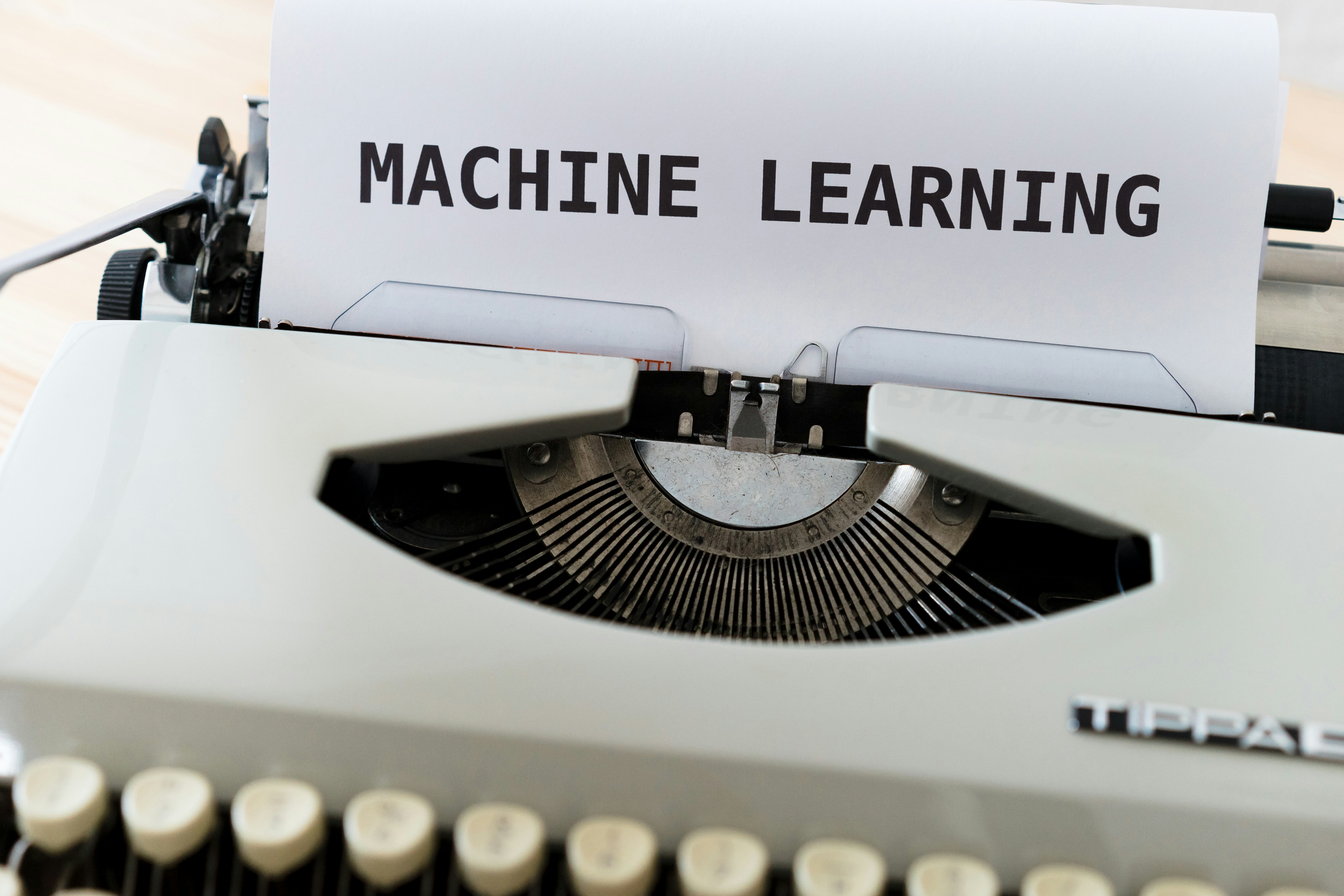
Introduction to Dictionary Learning
Dictionary learning is a vital concept in the field of machine learning, focusing on how to effectively represent and encode data. At its core, dictionary learning aims to find a set of components, known as dictionary elements, which can provide a sparse representation of the data. This process helps in capturing the essential features while disregarding the irrelevant ones, thus facilitating better data analysis and interpretation.
The basic algorithms involved in dictionary learning include K-SVD (K Singular Value Decomposition) and Sparse Coding techniques, which optimize the dictionary to minimize reconstruction error. This optimization not only enhances the efficiency of data representation but also leads to improved performance in various machine learning tasks, such as classification and regression. By fitting the dictionary to the data, these algorithms allow for reconstructing input data from a significantly reduced number of components, thereby supporting the principle of sparsity.
Significantly, dictionary learning plays a crucial role in scaling machine learning techniques to larger, more complex models. As the size of data increases and models approach the trillion-parameter frontier, effective representation becomes even more essential. Dictionary learning techniques enable practitioners to avoid the pitfalls of high dimensionality, which often leads to overfitting and inefficiencies in processing. Thus, the significance of dictionary learning in handling larger datasets cannot be overstated; it not only optimizes storage and computation but also enhances the model’s generalization capabilities.
In this ever-evolving landscape of machine learning, understanding dictionary learning and its implications for large-scale models provides a foundation for exploring more advanced methodologies and strategies that cater to the growing demands of modern applications.
The Rise of Trillion-Parameter Models
In recent years, the field of machine learning has witnessed groundbreaking advancements, particularly with the emergence of models containing a trillion parameters or more. These models, often referred to as trillion-parameter models, have revolutionized various applications, including natural language processing, image recognition, and complex decision-making systems. The increase in model parameters is not merely an exercise in scale; it has profound implications for model performance, leading to significantly improved accuracy and capability in understanding complex data patterns.
The expansion towards trillion-parameter models has been fueled by advances in computational infrastructure and algorithmic innovations. The proliferation of Graphics Processing Units (GPUs) and tensor processing units (TPUs) has allowed researchers and practitioners to train these large models efficiently. Better fundraising and investment in high-performance computing initiatives have further supported this trend, enabling the construction and experimentation with larger-scale architectures that were previously impractical. Additionally, techniques such as distributed training across multiple devices have been implemented, facilitating the scaling of these towering architectures.
However, the rise of trillion-parameter models brings about substantial challenges. The computational requirements for training such large models necessitate significant resources, including extensive amounts of RAM and high-bandwidth interconnects. Furthermore, the training time can span days or even weeks, depending on the complexity of the model and the sophistication of the underlying algorithms. The energy consumption associated with running these expansive models has also become a topic of concern for researchers, leading to a push for more efficient training protocols and greener alternatives.
As the pursuit of even larger models continues, the implications for the machine learning landscape are profound. Innovations in model design and learning paradigms must go hand in hand with the growth in parameter count in order to ensure that such advancements are sustainable and beneficial for the broader technological ecosystem.
In the landscape of machine learning and data processing, dictionary learning has emerged as a robust technique, yet it must be contextualized against other prevalent methodologies such as neural networks and matrix factorization. Each approach possesses unique strengths and weaknesses, particularly when confronted with the challenges posed by large-scale parameters.
Dictionary learning excels in scenarios where data can be represented as a linear combination of learned basis elements. This flexibility allows it to effectively model sparse representations, making it particularly valuable in applications like image and signal processing. One of the primary advantages of dictionary learning is its capacity to handle high-dimensional data with a relatively lower computational burden when compared to neural networks. In many instances, it can achieve competitive reconstruction accuracy while minimizing overfitting due to its inherent feature sparsity.
On the other hand, neural networks, especially deep learning frameworks, have gained significant traction due to their unparalleled ability to model complex, non-linear relationships within data. These networks generally perform exceptionally well on tasks involving sequential data, such as natural language processing and time series prediction. However, the complexity and number of parameters involved can lead to issues such as overfitting and prolonged training times, necessitating substantial computational resources.
Matrix factorization techniques serve as another alternative that strives to capture latent structures within data. While they are often employed in recommendation systems and collaborative filtering, they can sometimes struggle with scalability and may not be as effective in capturing intricate features when compared to dictionary learning or neural networks. Additionally, the rigid structure of factorized representations can limit their applicability in dynamic or high-dimensional settings.
In evaluating these methods, it becomes crucial to consider the specific application requirements, as the choice between dictionary learning, neural networks, and matrix factorization heavily influences resultant model performance, especially at a trillion-parameter scale.
Challenges in Scaling Dictionary Learning
Scaling dictionary learning to accommodate trillion-parameter models presents multiple formidable challenges. One primary obstacle is the computational complexity involved in training such expansive models. As the number of parameters increases, the resources required for computation also rise significantly. Traditional dictionary learning algorithms need to be adapted or entirely reconstituted to efficiently manage the volume of data and complexity presented by these larger frameworks.
Furthermore, memory usage becomes a critical concern. Storing and accessing dictionaries that could potentially consist of trillions of parameters demands substantial memory capacity. For many existing systems, this excessive memory requirement can lead to inefficiencies, with storage solutions becoming a constraining factor. Researchers must explore optimized data structures and memory management techniques to mitigate this issue, ensuring that memory consumption remains feasible while still pursuing the benefits of large-scale dictionary learning.
Additionally, convergence issues frequently arise when dealing with such high-dimensional settings. Ensuring that the learning algorithm converges to an optimal solution becomes increasingly complex, as the risk of overfitting also spikes. High-dimensional data can lead to sparse solutions that do not generalize well to unseen datasets. Adopting advanced regularization techniques and sophisticated optimization algorithms can help in achieving better convergence properties, yet these methods must be efficient given the scale.
Overall, tackling the intrinsic challenges of scaling dictionary learning to trillion-parameter models requires thoughtful consideration of computational resources, memory capacities, and convergence strategies. Employing innovative solutions and optimized approaches will be essential in overcoming these hurdles, thus leveraging the full potential of dictionary learning in the age of expansive models.
Current Applications and Case Studies
Dictionary learning has garnered attention across various domains, demonstrating its effective application in numerous real-life scenarios. This approach involves extracting a set of basis vectors, or “dictionaries,” that can efficiently represent data, thus allowing for improved performance in tasks such as image processing, natural language processing, and even biomedical applications.
One notable example is in the field of image denoising, where dictionary learning has been employed to enhance the quality of images corrupted by noise. By constructing a tailored dictionary from clean image patches, algorithms can more accurately approximate and recover the underlying structure of images. Several case studies indicate that models leveraging dictionary learning exhibit superior performance compared to traditional methods, effectively reducing noise while preserving essential details.
In natural language processing, dictionary learning has been utilized for feature extraction in text classification tasks. The ability to create compact, meaningful representations from large text corpora enables practitioners to streamline data processing and improve the performance of machine learning models. A prominent case study demonstrated how dictionary learning facilitated the classification of sentiment in social media posts, yielding results that surpassed previous benchmark methods.
Additionally, in the realm of biomedical applications, researchers have applied dictionary learning strategies to enhance the accuracy of disease diagnosis through medical imaging analysis. By utilizing learned dictionaries to represent complex medical images, the detection of anomalies or diseases can become more efficient and reliable. These case studies not only highlight the adaptability and effectiveness of dictionary learning but also underscore its practical relevance in addressing challenges across diverse fields.
Future Directions for Dictionary Learning
As the field of artificial intelligence continues to evolve, dictionary learning stands at the forefront of potential advancements that could enable its application to trillion-parameter models. Future research is likely to focus on refining the algorithms that underpin dictionary learning, making them more efficient and scalable. One promising direction includes exploring sparse coding techniques that can extract meaningful features from vast datasets without compromising computational power.
Another area ripe for exploration is the integration of dictionary learning with other machine learning paradigms, such as deep learning. Hybrid approaches that combine the strengths of deep neural networks and dictionary learning could lead to enhanced model performance while navigating the challenges of large-scale parameterization. By leveraging the representational power of neural networks alongside the interpretability of dictionaries, researchers may unlock new capabilities within larger models.
Moreover, advancements in hardware technology, particularly with respect to graphics processing units (GPUs) and tensor processing units (TPUs), can significantly influence the scalability of dictionary learning techniques. As computational resources expand and become more accessible, the feasibility of applying dictionary learning at larger scales becomes increasingly plausible. Research trends are also likely to explore more efficient data sampling and model compression methods that will help mitigate the computational burden.
Furthermore, interdisciplinary approaches combining insights from statistics, applied mathematics, and computer science can foster novel techniques and methodologies in dictionary learning. Focusing on automating parameter tuning and optimizing hyperparameters may also result in speedier implementations and improved outcomes. Ultimately, this culminates in the prospect of constructing dictionary learning frameworks that are not only effective at the scale of trillion-parameter models but also robust against the myriad challenges associated with them.
The Role of Hardware in Scaling Models
As the demand for advanced machine learning models grows, so does the imperative to enhance the hardware that supports these innovations. In particular, technologies such as Graphics Processing Units (GPUs) and Tensor Processing Units (TPUs) play a crucial role in enabling the scalability of dictionary learning. These specialized hardware accelerators have been designed to handle the increasingly complex calculations required for large-scale applications, thereby significantly improving performance.
Dictionary learning, particularly in the context of deep learning, requires substantial computational power. The capability of GPUs to perform parallel processing makes them exceptionally well-suited for the demands of dictionary learning. By efficiently handling multiple operations simultaneously, these processors expedite the training process, allowing models to scale more effectively. This is especially relevant as models reach trillion-parameter scales, which inherently require advancements in hardware capabilities.
Moreover, the rise of TPUs has further revolutionized how we approach large-scale models. These processors are optimized specifically for machine learning tasks, enabling faster computation and lower energy consumption compared to traditional CPU architectures. The integration of TPUs into the training pipeline of dictionary learning can result in substantial reductions in training time. These advancements are critical as they permit researchers and practitioners to focus on refining and enhancing the learning algorithms rather than being hindered by hardware limitations.
In conclusion, the evolution of hardware, particularly through GPUs and TPUs, plays an indispensable role in the scalability of dictionary learning and other large-scale models. As hardware technology continues to advance, the potential for even more sophisticated models and applications becomes evident, supporting the ongoing pursuit of breakthroughs in various fields of artificial intelligence.
Integration with Other Machine Learning Techniques
The field of machine learning has continually evolved, leading to the development of numerous models and algorithms that are capable of addressing a variety of complex tasks. One area that shows considerable promise is the integration of dictionary learning with other machine learning techniques. Dictionary learning, a method that seeks to represent data in terms of a set of basis functions or ‘dictionary’, provides a powerful framework for feature extraction and representation. However, its capabilities can be greatly enhanced when combined with techniques such as deep learning, support vector machines, and ensemble methods.
Hybrid models that incorporate dictionary learning alongside deep learning architectures can capitalize on the strengths of both approaches. For instance, the hierarchical structure of deep neural networks can be enhanced by using dictionary learning to extract meaningful features before they are passed to deeper layers for sophisticated processing. This integration can lead to improved interpretability, reduced computational cost, and enhanced performance, making it ideal for high-dimensional datasets.
Additionally, integrating dictionary learning with support vector machines can improve the accuracy of classification tasks. By incorporating dictionary-based features, the underlying representation of the data can be adapted to better separate distinct classes. This symbiotic relationship can result in models that not only perform better but are also more robust to overfitting.
Furthermore, the use of ensemble learning techniques in conjunction with dictionary learning can provide a comprehensive approach to model building. By combining multiple models that utilize dictionary learning, the overall decision-making process can leverage diverse viewpoints, thus enhancing predictive performance and reliability.
In conclusion, the integration of dictionary learning with other machine learning techniques presents a significant opportunity to develop advanced models that leverage the strengths of various approaches. Utilizing a hybrid framework can potentially transform the landscape of machine learning applications, particularly as the size and complexity of data continue to grow.
Conclusion and Final Thoughts
Throughout this discussion, we have examined the concept of dictionary learning and its implications for scaling to trillion-parameter frontier models. As we navigate this complex landscape, it becomes evident that dictionary learning offers a significant potential in enhancing the efficiency and effectiveness of large-scale machine learning systems. By employing learned dictionaries, researchers can potentially reduce redundancy and improve expressiveness within models, which is particularly crucial as the number of parameters continues to escalate.
The key takeaway from this article is the necessity of exploring advanced algorithms and methodologies that integrate dictionary learning principles. These approaches not only aim to optimize computational resources but also strive to achieve state-of-the-art performance in various tasks. The fusion of dictionary learning with deep learning frameworks presents a promising avenue that researchers are increasingly pursuing, with notable success in applications such as image and speech recognition.
However, the transition to trillion-parameter models posed various challenges, including increased computational demands and the need for novel optimization techniques. Addressing these obstacles through interdisciplinary collaboration will be crucial for pushing the boundaries of what is possible. Future research will likely focus on developing more robust frameworks that leverage the strengths of dictionary learning while mitigating its limitations.
In reflecting on the viability of dictionary learning in this context, it is clear that this field is ripe for exploration. As we look toward the future, researchers and practitioners are encouraged to engage with evolving methodologies that will facilitate the optimization of massive models. Ultimately, the success of dictionary learning in scaling to trillion-parameter models will depend on the collective innovation and adaptation of the machine learning community.