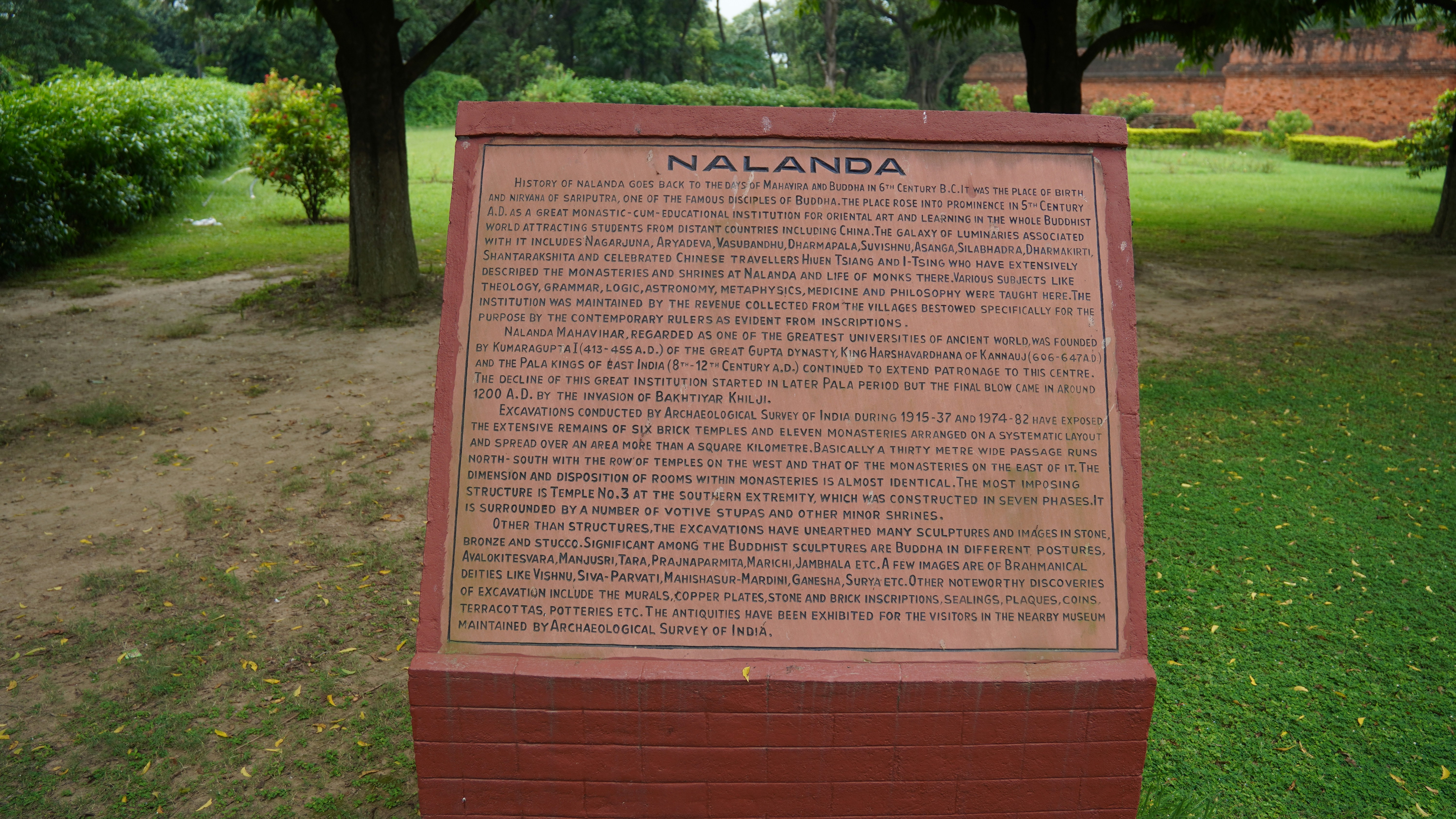
Introduction to Nalanda University
Nalanda University, located in the Indian state of Bihar, stands as a monumental symbol of the rich educational heritage of ancient India. Founded in the 5th century CE, this esteemed institution flourished until the 12th century, playing a pivotal role in the dissemination of knowledge across Asia. As one of the world’s earliest residential universities, Nalanda attracted thousands of students and scholars from far-flung regions, including China, Korea, Japan, Tibet, Mongolia, Sri Lanka, and Southeast Asia. The university’s curriculum encompassed various subjects, including philosophy, medicine, mathematics, and astronomy, making it a beacon of intellectual pursuit.
The architectural significance of Nalanda’s ruins is equally noteworthy. The remnants of the university showcase innovative design elements that reflect the advanced engineering and artistic capabilities of that era. The site consists of numerous stupas, monasteries, and temples, arranged in a manner that indicates a well-planned academic environment. The unique design combines elements of Buddhist architecture with traditional Indian styles, characterized by intricate sculptures and terracotta works. Each structure bears testimony to the style and craftsmanship of the period, highlighting the architectural prowess of the craftsmen and builders of Nalanda.
As a UNESCO World Heritage Site, Nalanda University’s ruins are recognized not only for their historical relevance but also for their potential to inform contemporary architectural practices. This ancient university continues to inspire discussions about educational philosophy, communal learning, and architectural design. Today, as researchers and architects explore the possibility of reconstructing Nalanda’s lost architecture, they draw inspiration from its cultural significance and its profound legacy as a center for knowledge and enlightenment in ancient India.
The Rise and Fall of Nalanda Architecture
The architectural significance of Nalanda, which flourished as a renowned center of learning in ancient India, can be traced back to its establishment in the 5th century CE. During its peak, this great university attracted scholars and students from various parts of the world, including China, Korea, Tibet, Mongolia, and Southeast Asia. As a result, Nalanda became a melting pot of cultures, ideas, and philosophies, stimulating remarkable architectural advancements. The complex was a masterpiece of raw and finished brick construction, complemented by intricate carvings and sculptures that adorned its temples, monasteries, and stupas.
Nalanda’s architecture was a reflection of various influences, combining elements from Buddhist, Hindu, and indigenous styles. The most notable structures included the famous “Great Stupa,” a domed shrine that housed relics, and a series of multi-storied monasteries. The campus also contained numerous classrooms equipped with advanced features for instructional purposes, which symbolized a progressive approach to education at that time. This architectural ensemble not only served functional needs but also conveyed the spiritual ethos of the Nalanda community.
However, the decline of Nalanda began in the 12th century, largely due to external invasions, particularly by Bakhtiyar Khilji, which led to its eventual destruction in 1193 CE. The once-thriving center of knowledge was ravaged, resulting in the loss of countless manuscripts, artifacts, and architectural wonders. Several contributing factors, including political instability and changing cultural priorities, diminished Nalanda’s prominence in the centuries that followed. Ultimately, the fall of Nalanda marks a significant turning point in the architectural heritage of India, as it ceased to be a beacon of learning and creativity through its stunning structures, which now remain only as reflections of a lost era.
Understanding Generative AI
Generative AI refers to a subset of artificial intelligence that uses algorithms and statistical models to create new content based on existing data. This technology primarily utilizes machine learning, allowing systems to learn patterns and features from large datasets. By analyzing these datasets, generative AI can generate novel outputs, which can range from text and images to music and architectural designs.
At the heart of generative AI is the concept of neural networks, especially deep learning architectures, which are designed to mimic the human brain’s structure and functioning. These networks can be trained on extensive architectural data, enabling them to not only learn design principles but also replicate intricate styles and forms that have historical significance. This aspect of generative AI has profound implications for the field of architecture, particularly in reconstructing lost or destroyed historical structures, such as those from the ancient Nalanda University.
The potential applications of generative AI in architecture are vast. Architects and designers can leverage this technology to enhance their creative processes. By inputting various parameters, generative AI can suggest design options that may not be immediately apparent to human designers. This synergy between human creativity and AI efficiency fosters a more innovative approach to architectural design. Furthermore, generative AI can simulate various environmental factors, ensuring that proposed structures are not only aesthetically pleasing but also sustainable and functional.
In recent years, advancements in AI technology have transformed numerous fields, from healthcare to entertainment. In architecture, the integration of generative AI is revolutionizing how spaces are conceptualized and developed, paving the way for a future where lost architectural marvels like Nalanda could be vividly reconstructed and appreciated once more.
The Intersection of AI and Archaeology
The application of artificial intelligence (AI) in archaeology has ushered in a transformative era for the field. By harnessing machine learning algorithms and advanced computational techniques, researchers are now able to analyze large datasets that were previously too complex or voluminous to handle. This intersection of AI and archaeology not only enhances our ability to study ancient structures but also facilitates the reconstruction of lost architecture, offering invaluable insights into bygone civilizations.
One compelling case study is the use of AI in the reconstruction of the ancient city of Pompeii. By utilizing deep learning algorithms, archaeologists were able to analyze the vast amount of data collected from excavations, including visual imagery and historical records. This technology aided in creating detailed three-dimensional models that accurately represent the structures as they existed prior to the catastrophic eruption of Mount Vesuvius. Such advancements have proven invaluable in educational settings, enabling students and scholars to visualize complex architectural designs that are otherwise difficult to comprehend.
Similarly, the application of AI techniques has been instrumental in examining the ruins of the Nalanda University, a renowned center of learning in ancient India. By using generative design algorithms, researchers aim to create virtual reconstructions of its intricate architecture. This effort not only preserves the knowledge of Nalanda’s hallowed halls but also allows for an exploration of architectural styles and innovations that characterized the period.
Moreover, AI-driven analysis can facilitate predictive modeling, enabling archaeologists to better understand the possible layout of lost structures based on environmental data and existing relics. This predictive capability helps visualize how the Nalanda architecture might have appeared, bridging the gap between historical documentation and present-day research.
The integration of AI within archaeology represents a promising frontier, offering innovative tools to uncover, reconstruct, and understand the complexities of historical sites. As technological advancements continue to evolve, the potential for AI to illuminate lost architectural wonders will no doubt expand, allowing researchers to narrate the stories of past civilizations with greater accuracy.
Potential Techniques for Architecture Reconstruction
The reconstruction of lost architectural marvels, such as the Nalanda University complex, relies heavily on various techniques offered by generative AI. These advanced methods enable the recreation of historical structures by processing significant amounts of data from a variety of sources. Among the prominent techniques employed are 3D modeling, data synthesis from historical documents and images, as well as the seamless integration of technologies that enhance the reconstruction process.
3D modeling is one of the foundational techniques used in architectural reconstruction. By utilizing algorithms that convert 2D images and diagrams into three-dimensional representations, it allows historians and architects to visualize structures in a more dynamic and interactive manner. Generative AI can analyze old photographs and sketches, extracting key features and geometric patterns to generate accurate digital models. This capability is particularly significant for sites like Nalanda, where the original structural details are often fragmented.
Another essential technique involves data synthesis, wherein generative AI collates information from textual records and remaining visual artifacts. This approach aids researchers in recreating a more comprehensive understanding of the architecture. Historical texts provide insights into the design principles and cultural significance of the structures, while existing images offer visual cues. AI tools can bridge the gaps by extrapolating data to fill in the missing parts of the architectural puzzle.
Furthermore, the fusion of various technologies enhances the reconstruction process. Techniques such as machine learning and computational design contribute to refining models and optimizing structural accuracy. By integrating multiple sources of information, including ground-penetrating radar and augmented reality, it allows for a holistic reconstruction that stays true to the original form of Nalanda’s architecture. Thus, through the application of these generative AI techniques, the possibility of resurrecting the ancient grandeur of Nalanda becomes increasingly viable.
Challenges in Reconstructing Nalanda Architecture
Reconstructing the lost architecture of Nalanda University presents numerous challenges that are both technical and ethical in nature. One of the primary hurdles lies in the acquisition of incomplete data. The remnants of this ancient learning center offer fragmented insights into its architectural grandeur, leaving researchers with gaps that could lead to inaccuracies in the reconstruction process. Despite advances in technology, including imaging and modeling techniques, the historical evidence available remains insufficient to ensure a fully accurate representation of Nalanda’s original structures.
Cultural sensitivities also play a significant role in the challenges of reconstruction. The site of Nalanda holds immense historical and spiritual significance for many, and any attempt to recreate its architecture must respect the sentiments of the communities associated with it. The risk of misuse or misrepresentation of cultural heritage can lead to public dissent and should be approached with caution. Engaging with local communities, historians, and cultural experts could mitigate these concerns, ensuring that the project honors the legacy of Nalanda rather than diminishes it.
Furthermore, maintaining historical accuracy presents a multifaceted challenge. The architectural styles, materials, and construction methods used in ancient Nalanda differ significantly from contemporary practices. Efforts to use modern technology and materials may necessitate compromises, which could skew the integrity of the original design. Lastly, the ethical implications of recreating lost heritage cannot be overlooked. The act of reconstructing Nalanda involves a delicate balance between restoration and reinterpretation, raising questions about authenticity and the responsibility of the current generation toward its historical legacy. All these aspects must be thoroughly considered to navigate the complexities of reviving such an iconic site.
Case Studies: AI in Action at Historical Sites
The application of generative AI in the field of archaeology has paved the way for groundbreaking methods to reconstruct and visualize lost historical architecture. Many case studies exemplify how AI technology not only aids in heritage preservation but also revitalizes historical narratives. One prominent example is the reconstruction of the ancient city of Pompeii, where researchers employed generative algorithms to recreate 3D models of buildings buried under volcanic ash. By analyzing existing fragments, the AI generated accurate simulations of what these structures would have looked like in their prime, facilitating a deeper understanding of Roman urban planning.
Another noteworthy case study is the restoration of the Athenian Acropolis. Utilizing a combination of drones and machine learning algorithms, archaeologists were able to document and analyze the site extensively. The platform integrated historical data with real-time imagery to generate detailed reconstructions that were crucial for visualizing both architectural details and spatial relationships between the structures. Such initiatives showcase the potential of generative AI to bridge gaps left by time and environmental change.
Furthermore, the Lost City of Atlantis has drawn the interest of AI researchers eager to explore hypothetical reconstructions. By employing generative methods that cumulatively integrate historical literature and geographical data, various interpretations of Atlantis have emerged. While speculative, these reconstructions encourage dialogue around lost civilizations and their architectural achievements, similar to what could be achieved with Nalanda’s remains.
These case studies underscore the capabilities of generative AI in reconstructing and visualizing historical architecture, offering a practical preview of its applications for Nalanda. By leveraging advanced technologies, stakeholders can not only honor the lost beauty of these sites but also foster educational endeavors that engage the public with the rich tapestry of history.
Future of AI in Historical Reconstruction
The future of generative AI in historical reconstruction holds immense promise for enhancing our understanding of architectural heritage, particularly for lost structures like Nalanda. Advances in artificial intelligence and machine learning are paving the way for innovative methodologies in reconstructing ancient sites that have long been forgotten. By analyzing existing data, combining historical texts, and utilizing cutting-edge imaging techniques, AI has the potential to recreate complex architectural forms and urban layouts that were once vibrant.
One of the most significant implications of generative AI is its capability to produce highly detailed 3D models. Through deep learning algorithms, AI can analyze fragments of historical documentation and archaeological findings to generate visual representations that are not only accurate but also incorporate speculative elements based on contextual understanding. This approach encourages collaborative efforts among historians, architects, and technologists, leading to a holistic view of reconstruction.
Moreover, generative AI can facilitate the exploration of various design alternatives, allowing researchers to visualize different interpretations of architectural elements. Such freedom of design may lead to discovering new architectural styles, techniques, or materials that were utilized in bygone eras. Beyond structural accuracy, AI’s role in adjusting for aesthetic and cultural nuances adds depth to historical reconstructions, enhancing our appreciation of ancient civilizations.
The integration of generative AI into cultural heritage preservation signifies an evolution in how we engage with the past. As methodologies evolve, a new paradigm emerges wherein AI serves not merely as a tool for reconstruction but also as a means to preserve forgotten histories. Looking ahead, the synergy between generative AI and historical research may unlock narratives that have remained hidden, fostering a deeper connection with our collective heritage.
Conclusion: Bridging the Past with the Future
As explored throughout this blog post, the integration of generative AI in reconstructing the architectural marvels of Nalanda University presents a groundbreaking intersection of technology and historical preservation. This ancient site, once a beacon of learning in India, holds immense cultural and historical significance. The application of advanced technologies, such as generative AI, enables a new approach to restoration and exploration of these lost structures.
Generative AI offers innovative possibilities for architectural reconstruction, employing algorithms that can process extensive data related to Nalanda’s past. By analyzing historical records, photographs, and existing ruins, generative AI can create accurate representations of what these structures may have once looked like. Furthermore, this technology allows for experimentation with various architectural designs, making it possible to visualize Nalanda’s grandeur in its prime.
In acknowledging the challenges faced in reconstructing Nalanda’s architecture, it becomes evident that relying solely on traditional methods is insufficient. The integration of AI technology not only aids in creating a more detailed reconstruction but also serves as a tool for education and engagement with the history of Nalanda. By bridging the past with futuristic technological capabilities, stakeholders can ensure that Nalanda remains a significant part of cultural heritage.
The potential of generative AI to redefine our comprehension and representation of lost architectures like Nalanda cannot be underestimated. It embodies a commitment to preserving history while embracing innovation, ultimately leading to a richer understanding of our shared cultural legacy. As we look into the future, collaboration between technologists, historians, and preservationists will be essential in realizing this vision and ensuring that the splendor of Nalanda is never forgotten.