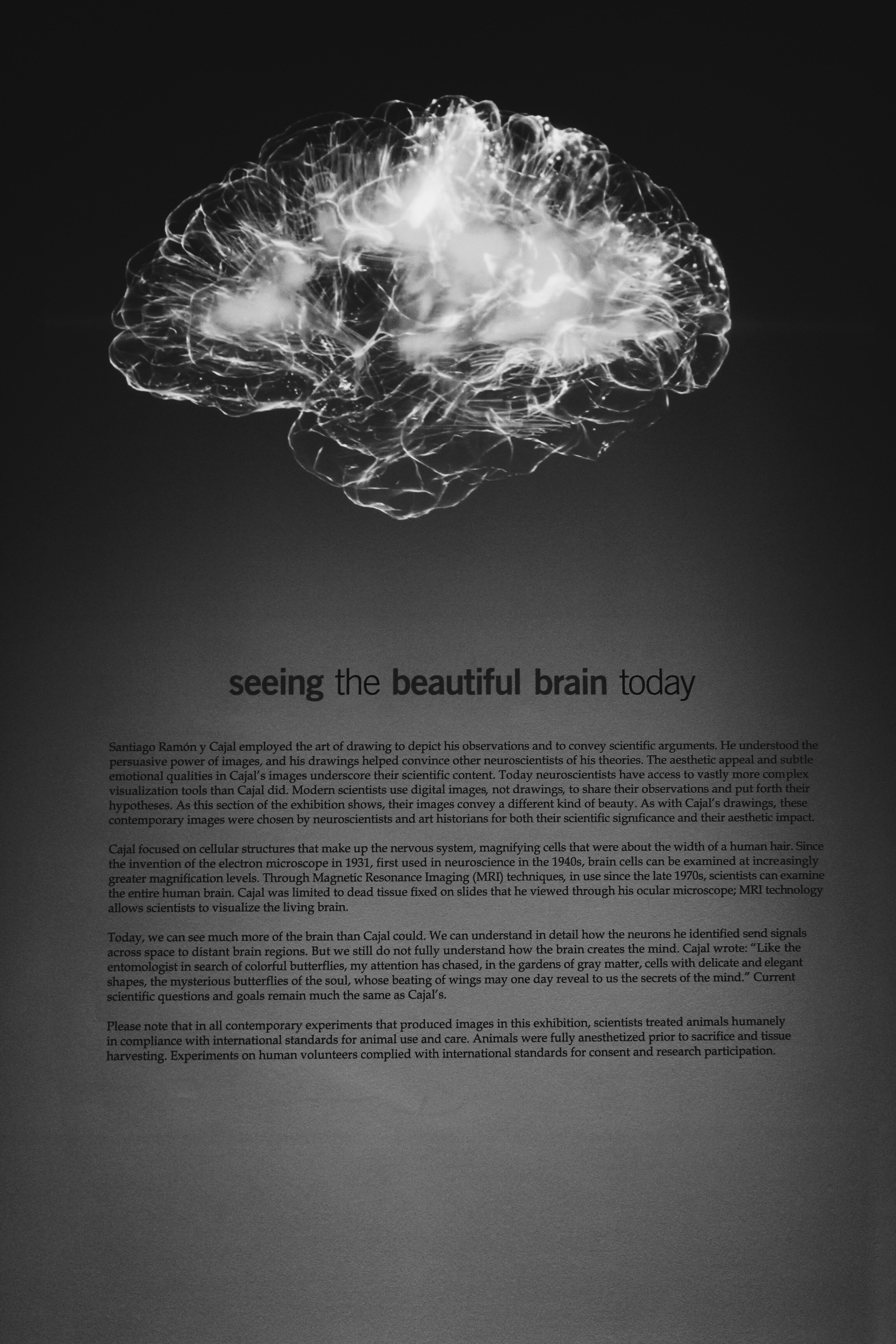
Introduction to Neural Networks
Neural networks represent a revolutionary concept in the realm of artificial intelligence, making significant strides in data analysis and decision-making processes. Born from the endeavor to replicate the human brain’s ability to learn and process information, these networks offer a sophisticated framework for diverse applications such as image recognition, natural language processing, and predictive analytics.
The architecture of neural networks is inspired by biological neurons. Each neural network consists of interconnected nodes, or neurons, arranged in layers. The fundamental building blocks are the input layer, one or more hidden layers, and an output layer. Each neuron in the network processes information and passes it on to the neurons in subsequent layers. This structure enables the model to capture complex patterns and relationships in data.
One of the most remarkable features of neural networks is their ability to learn from data through a process called training. During training, the network adjusts its internal parameters based on the errors in its predictions, refining its performance over time. This learning process often uses a technique known as backpropagation, which allows the network to minimize the differences between predicted and actual results.
Key terms such as activation functions, weights, and biases are instrumental in understanding how neural networks operate. Activation functions determine the output of a neuron based on its input, while weights and biases are parameters that are fine-tuned during the learning process. These principles lay the groundwork for more advanced concepts that will be explored in later sections, emphasizing the versatility and power of neural networks in modern technological applications.
What Are Neural Networks?
Neural networks are a subset of artificial intelligence that emulate how the human brain processes information. The fundamental building blocks of neural networks are artificial neurons, which serve as the network’s basic functional units. These neurons are organized into layers, with each layer performing a specific transformation on the input data.
To understand neural networks in a simplified manner, one can visualize them as a complex system of interconnected nodes, each contributing to the overall decision-making process. The network begins with an input layer, where raw data enters the system. Following the input layer, there are one or more hidden layers that transform the data through weighted connections. Each connection has an associated weight that adjusts as the network learns. Finally, the output layer provides the resulting prediction or classification based on the processed information.
An analogy that can help demystify neural networks is thinking of them as a team of experts working collaboratively to solve a problem. Imagine a group of specialists, each with their expertise in different areas. They communicate and share insights through discussions, progressively refining their collective understanding until they reach a consensus. Similarly, in a neural network, each neuron contributes its expertise by processing input and forwarding its output to the next layer, gradually honing the network’s ability to make accurate predictions.
Through this method of layered learning and adjustment, neural networks are remarkably powerful tools in various applications such as image recognition, natural language processing, and game playing. By understanding the basic structure and functionality of neural networks, one can appreciate their potential to solve complex tasks while mimicking the intricacies of human cognition.
The Components of Neural Networks
A neural network is composed of several fundamental components, each playing a vital role in the processing and transformation of input data into actionable outputs. Understanding these components is essential for grasping the overall functionality of neural networks.
The first integral element is the input layer, which serves as the entry point for data into the network. Each neuron in this layer represents a feature of the input data. For instance, in image processing tasks, individual pixels may each correspond to one neuron, allowing the network to analyze the image comprehensively.
Following the input layer are one or more hidden layers. These layers are where most computations occur. Each hidden layer contains neurons that apply a mathematical transformation to the input received. The complexity of the tasks that the neural network can handle generally improves with the number of hidden layers and their configurations.
An essential aspect of the neurons in hidden layers is the use of activation functions. These functions help determine whether a neuron should be activated, thus enabling the network to learn complicated patterns and functions. Common activation functions include the sigmoid, ReLU (Rectified Linear Unit), and tanh, each contributing differently to the learning process.
Additionally, neural networks rely on weights and biases to adjust the importance of the inputs as they pass through the network. Weights are parameters within the network that are updated during the training process, while biases allow for the adjustment of the output independently of the inputs, offering further flexibility in learning complex patterns.
Finally, the output layer is responsible for producing the final results of the neural network’s computations. Depending on the task at hand, the output can take various forms, such as a single value for regression tasks or multiple values for classification problems.
How Neural Networks Learn: The Training Process
Neural networks learn by processing data through multiple layers of interconnected nodes, often referred to as neurons. The training process of a neural network can be understood through a series of well-defined steps, which include the preparation of datasets, mapping inputs to outputs, and iterative optimization.
The initial stage of training involves assembling a dataset, which consists of examples that the network will learn from. Each example in the dataset comes with an input, such as images or text, and a corresponding output that represents the desired prediction, often in the form of labels. The objective of training is to learn a function that can effectively map inputs to outputs.
The process begins with forward propagation, where input data is fed through the network layers. Each neuron applies a weighted sum followed by an activation function, producing an output that is passed to the subsequent layer. This continues until the output layer generates a final prediction. At this point, the network’s prediction can be compared to the actual output using a loss function, which quantifies the error between predicted and actual values. This step is crucial for understanding how far off the predictions are.
Subsequently, the network utilizes a method known as backpropagation, where it computes gradients of the loss function with respect to each weight in the network. This feedback mechanism allows the neural network to adjust its weights to minimize the prediction error during subsequent iterations. Finally, an optimization algorithm, such as stochastic gradient descent, is employed to refine these weights systematically, enhancing the network’s learning capability.
This training cycle continues for multiple epochs, allowing the model to learn increasingly accurate representations of the underlying data patterns. Ultimately, the success of the neural network’s training process is determined by its ability to generalize well to unseen data.
Types of Neural Networks
Neural networks have evolved into various types, each suitable for different tasks and applications. Their structural differences lie in the manner they process and interpret information. Understanding these types is crucial for selecting the appropriate network for specific problems.
The most basic form is the feedforward neural network. In this architecture, data moves in one direction—from the input nodes, through hidden layers, and finally to the output nodes. These networks are predominantly used in straightforward tasks such as classification and regression. Their simplicity allows for efficient training using algorithms such as backpropagation.
In contrast, convolutional neural networks (CNNs) are specifically designed for processing grid-like data, such as images. They feature convolutional layers that automatically detect patterns and features within the input data, which significantly enhances performance in image recognition tasks. CNNs are utilized in applications ranging from facial recognition to medical image analysis.
Another prominent type is the recurrent neural network (RNN), which is particularly suited for sequential data such as time series or natural language. RNNs maintain a memory of previous inputs via loops within the network, allowing them to capture temporal dependencies. This makes them ideal for applications in language modeling, translation, and speech recognition.
Finally, deep neural networks (DNNs) represent a more complex structure that consists of multiple hidden layers. DNNs can learn intricate patterns through their layered approach, making them powerful tools for a variety of tasks, including audio processing and advanced game playing strategies. Their ability to model highly complex functions enables them to excel where simpler networks may falter.
Neural Networks Applications in Real Life
Neural networks, a revolutionary technology within the field of artificial intelligence, have proven their mettle across various industries, showcasing their adaptability and efficiency. In healthcare, for example, neural networks assist in diagnosing diseases by analyzing medical images, such as MRIs and CT scans. These networks can recognize patterns that are often imperceptible to the human eye, facilitating earlier and more accurate diagnoses. Hospitals have begun incorporating these AI-driven systems, improving patient outcomes and streamlining operational workflows.
Finance is another sector that has embraced neural network applications. Financial institutions utilize these models for algorithmic trading, credit scoring, and fraud detection. By analyzing vast amounts of transaction data in real-time, neural networks can signal unusual activities indicative of fraud, thus safeguarding financial transactions. Furthermore, their predictive capabilities enable banks to assess creditworthiness more effectively, minimizing risk and enhancing decision-making processes.
In the retail sector, neural networks play a crucial role in optimizing inventory management and personalizing customer experiences. By analyzing purchase patterns and customer preferences, retailers can forecast demand more accurately, ensuring that popular items are adequately stocked while reducing surplus. Personalized marketing campaigns powered by neural network algorithms can target ads to individuals based on prior behavior, significantly enhancing engagement and sales conversion rates.
Lastly, neural networks are pivotal in the development of autonomous vehicles. These advanced AI systems rely on neural network architectures to process sensor data and make real-time decisions regarding navigation, obstacle avoidance, and environment understanding. Companies like Tesla and Waymo harness these technologies to create safer and more efficient self-driving cars, marking a significant milestone in automotive innovation.
Challenges and Limitations of Neural Networks
Neural networks, while a powerful tool in artificial intelligence, present several challenges and limitations that researchers and practitioners must navigate. One significant issue is overfitting, where a neural network learns the training data too well, including noise and outliers, leading to poor performance on unseen data. This often necessitates the implementation of regularization techniques or the collection of more diverse training datasets to enhance generalization.
Another critical limitation pertains to interpretability. Neural networks are often described as “black boxes” due to their complex structures and the intricate relationships they learn. This lack of transparency poses challenges in many domains, particularly in fields such as healthcare and finance, where understanding the reasoning behind predictions is essential for accountability and trust. Ongoing efforts to make neural network outputs more interpretable include incorporating attention mechanisms and utilizing model-agnostic interpretation methods.
The data requirements of neural networks further contribute to their challenges. Training these models typically requires large volumes of labeled data, which can be difficult and expensive to obtain. In many real-world applications, sufficient amounts of high-quality data may not be available, leading to biased models or inadequate performance. Additionally, the presence of class imbalance in datasets can exacerbate these issues, making it critical for practitioners to implement strategies for data augmentation and synthesis.
Lastly, the computational resources needed to train and deploy neural networks are considerable. High-performance hardware, often with specialized GPUs or TPUs, is required to handle the intensive computations involved. This can lead to accessibility issues for smaller organizations or independent researchers, who may lack the financial or infrastructural means to utilize advanced neural network architectures. As a result, ongoing research and innovation are essential to address these limitations and expand the usability of neural networks across various applications.
Future Trends in Neural Networks
As we advance further into the 21st century, the field of neural networks is witnessing a myriad of exciting trends that promise to reshape the landscape of artificial intelligence. One of the most notable areas of innovation is unsupervised learning. Traditional neural networks primarily depend on large labeled datasets to learn from, but unsupervised learning techniques enable networks to glean insights and patterns from unlabeled data. This direction not only enhances learning efficiency but also expands the potential applications of neural networks across various domains where labeled data is sparse or unavailable.
In addition to unsupervised learning, transfer learning is emerging as a vital trend in neural networks. This method allows pre-trained models to be adapted for different yet related tasks, significantly accelerating the training process and improving performance in scenarios with limited data. By leveraging the knowledge gained from broader training tasks, transfer learning enhances the versatility of neural networks, making them suitable for an array of applications, from natural language processing to computer vision.
Moreover, the intersection of quantum computing with artificial intelligence heralds a revolutionary shift in the capabilities of neural networks. Quantum computing offers the potential to solve complex problems at unprecedented speeds, significantly enhancing the efficiency with which neural networks can process data. This would allow for more sophisticated models that can operate in real time, thus paving the way for breakthroughs in various fields including cryptography, material science, and biochemical research.
In essence, the future of neural networks is marked by these pivotal advancements that are reshaping how machines learn and process information. By harnessing the power of unsupervised learning, transfer learning, and quantum computing, researchers are set to push the boundaries of what is achievable with neural networks, creating systems that are smarter, faster, and more versatile.
Conclusion and Key Takeaways
In summary, neural networks represent a powerful and widely utilized technology within the realm of artificial intelligence. Their ability to mimic the way the human brain processes information allows for the handling of complex datasets and the identification of intricate patterns. Throughout this discussion, we delved into the fundamental principles governing neural networks, including their architecture composed of layers of interconnected nodes, the role of activation functions, and the process of training through backpropagation.
Understanding neural networks is crucial, as their applications span various fields such as image and speech recognition, natural language processing, and even decision-making systems in autonomous vehicles. This technology has not only transformed these industries but continues to evolve, leading to advancements like deep learning, which enhances the capabilities of neural networks further. With the increasing demand for automation and sophisticated data analysis, the importance of mastering the nuances of neural networks cannot be overstated.
Moreover, as we continue to leverage these systems in novel applications, staying informed about recent advancements and best practices in neural network design and implementation is essential for both professionals and enthusiasts in the field of technology. While the journey of understanding and applying neural networks may present challenges, it also offers significant opportunities to innovate and improve efficiency in various sectors.
Ultimately, embracing the potential of neural networks allows for not only the resolution of pressing issues but also the exploration of previously unimaginable possibilities, paving the way for a future where artificial intelligence plays an integral role in our lives.