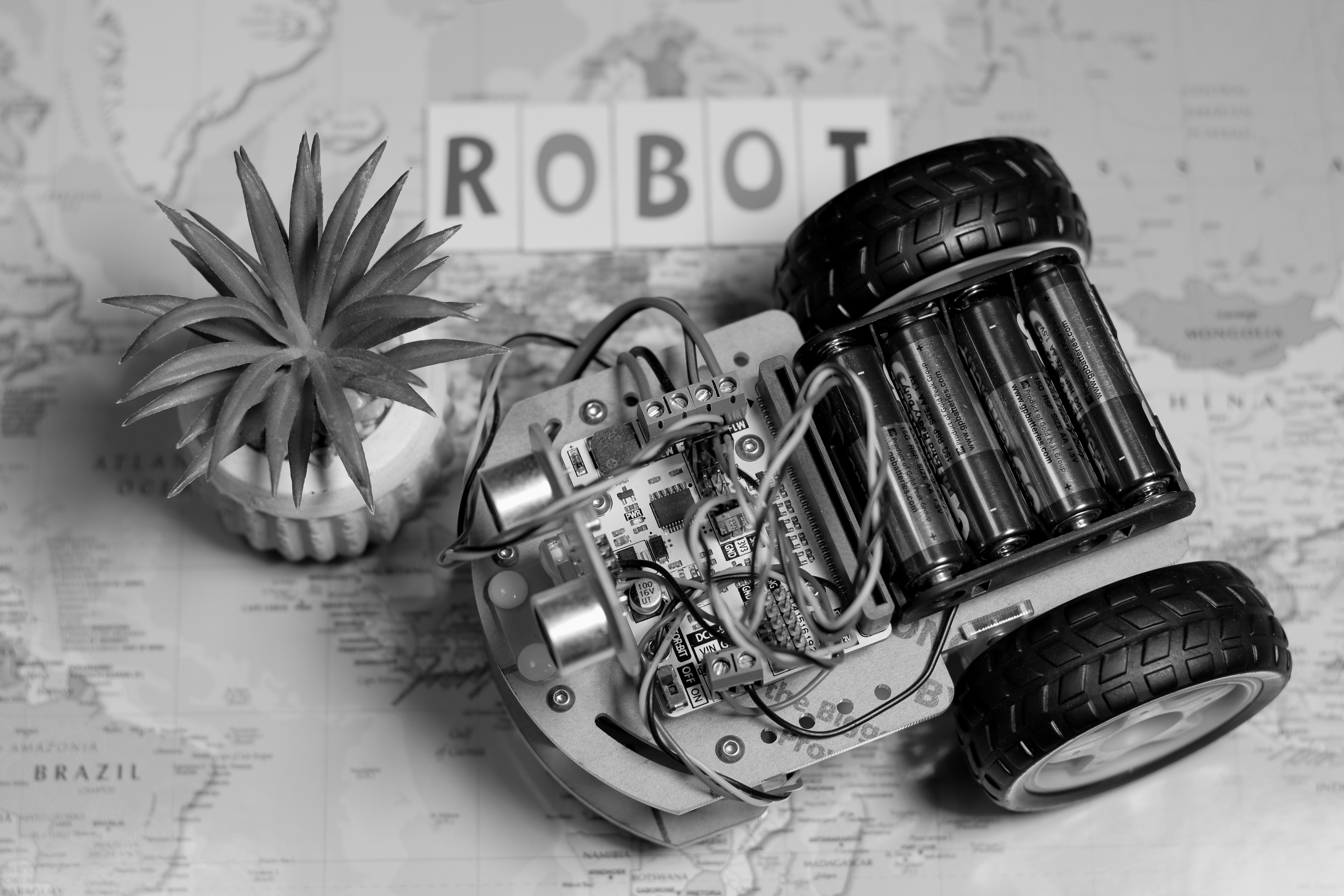
Introduction to Motion Planning in Robotics
Motion planning is a fundamental component of robotics, serving as the blueprint that enables robots to navigate their environment effectively. This process involves calculating a sequence of movements that a robot must undertake to reach its destination while avoiding obstacles and adhering to constraints. By ensuring that robots can interpret their surroundings and operate within defined parameters, motion planning significantly enhances the efficiency and safety of robotic systems.
The significance of motion planning cannot be overstated, as it plays a pivotal role in various applications ranging from industrial automation to autonomous vehicles. In these contexts, it is crucial for robots to make timely and accurate decisions that impact their functioning within dynamic and sometimes unpredictable environments. Furthermore, advancements in motion planning algorithms facilitate more sophisticated behaviors in robots, thus expanding their capabilities in real-time decision-making.
However, motion planning presents a host of challenges. These include dealing with complex environments, handling dynamic obstacles, and managing uncertainty in sensor readings. The diversity of these challenges requires the integration of various methodologies that provide viable solutions to align robot behavior with real-world scenarios. Traditional methods, such as Rapidly-exploring Random Trees (RRT) and A* algorithms, have evolved alongside new approaches that leverage machine learning techniques to improve planning efficiency.
Among the emerging strategies in motion planning, diffusion policies and LLM-based motion planning are gaining traction within the field. These methods promise to tackle the limitations of classical approaches by harnessing the power of advanced computational techniques. As we delve further into this comparative analysis, it becomes imperative to understand both the conventional frameworks and the cutting-edge advancements that shape the landscape of robotics today.
What is Diffusion Policy?
Diffusion policy in robotics refers to a methodology that leverages diffusion processes to determine optimal paths through complex environments. This approach relies on probabilistic models to facilitate the navigation of robots in uncertain and dynamic surroundings. By utilizing concepts from stochastic calculus and statistical mechanics, diffusion policies are capable of evaluating multiple paths and selecting those that minimize potential hazards while maximizing efficiency.
At its core, a diffusion policy can be mathematically represented using partial differential equations that characterize the spread of information or control signals within a physical space. These equations provide a framework for modeling the movement of probability distributions, which ultimately guides decision-making in navigation tasks. As the robot identifies possible routes, the diffusion process helps to weigh factors such as distance, obstacles, and dynamic changes in the environment.
The advantages of employing diffusion policies are noteworthy. First, they are adept at handling high-dimensional state spaces, making them particularly suitable for applications in robotics where the complexity of the environment varies greatly. Additionally, diffusion policies facilitate continuous path planning, allowing robots to adapt their movements in real-time as new information becomes available. This contrasts with more traditional planning methods, which might rely on fixed paths and become less effective when confronted with unforeseen obstacles.
Applications of diffusion policies can be found in various fields, including autonomous vehicle navigation, robotic arms in manufacturing, and even mobile robots in humanitarian assistance. In these scenarios, diffusion policies demonstrate their effectiveness in dynamic and unpredictable environments where traditional methods may falter. Ultimately, the inherent adaptability and efficiency of diffusion policies make them an invaluable tool in the domain of robotics.
Understanding LLM-Based Motion Planning
Large Language Models (LLMs) have emerged as a significant advancement in robotics, particularly in the context of motion planning. These sophisticated models, originally developed for natural language processing, have been adapted to interpret spatial data and generate coherent motion plans for robotic systems. By leveraging vast datasets and advanced algorithms, LLMs can understand complex instructions and devise movement strategies that are intelligible and purposeful. This application of LLM technology enables robots to navigate their environments more intelligently and interactively.
The key strength of LLM-based motion planning lies in their ability to process and synthesize information at a high level. LLMs can analyze extensive datasets that include environmental features, navigation paths, and even user preferences, allowing them to create detailed and context-aware motion plans. This adaptability is especially valuable in dynamic environments where traditional methods may struggle to account for unpredictability. The integration of LLMs can facilitate enhanced communication between users and robotic systems, enabling a more intuitive interface during operation.
However, it is pertinent to acknowledge the limitations of LLM-based systems in motion planning. One notable concern is the reliance on extensive training data, which can lead to issues surrounding generalization and overfitting. Furthermore, LLMs may exhibit computational intensity, requiring significant resources that might not be feasible for all applications. In scenarios where instantaneous decision-making is critical, traditional deterministic approaches may outperform LLM-based solutions due to their more straightforward logic and reduced latency. Consequently, while LLMs represent a promising avenue for motion planning, a thorough understanding of both their capabilities and limitations is essential for effective implementation in robotics.
Comparative Overview of Diffusion Policies and LLM-Based Planning
Diffusion policies and LLM-based motion planning represent two prominent approaches in the field of robotics, each offering unique methodologies and advantages suited to different scenarios. Understanding their operational mechanisms is key to appreciating their respective capabilities.
Diffusion policies function by gradually spreading information through a system over time, allowing for informed decision-making based on past experiences and environmental context. These policies are particularly effective in dynamic environments where the robot must adapt to varying conditions. One significant advantage of diffusion policies is their ability to facilitate seamless integration of learned experiences, enhancing adaptability. However, a potential drawback lies in the computational intensity of the diffusion process, which may result in slower response times for rapid movements or real-time applications.
On the other hand, LLM-based motion planning leverages large language models to process and interpret complex queries, enabling robots to generate coherent action sequences. This approach can be particularly beneficial when handling intricate tasks that require deep contextual understanding. LLM-based planning excels in scenarios where language and multimodal data play a crucial role in guiding robot actions. However, a notable challenge is the extensive training required to achieve proficiency, as the models must be exposed to vast datasets to perform effectively. Furthermore, reliance on qualitative language input may lead to ambiguities in motion execution.
Both diffusion policies and LLM-based motion planning showcase significant strengths and limitations. The choice between these two methodologies will depend on the specific requirements of the robotic application, including processing speed, environmental adaptability, and task complexity. As research progresses, a deeper understanding of their functionalities will facilitate the advancement of robotics, potentially leading to hybrid solutions that combine the strengths of both methodologies.
Use Cases of Diffusion Policies in Robotics
Diffusion policies have emerged as a vital tool in the field of robotics, particularly in enhancing the decision-making processes of autonomous systems. One notable use case is in mobile robot navigation. By utilizing diffusion policies, robots can effectively map their environment while optimizing their path based on real-time data. This approach leverages the continuous nature of diffusion processes to adjust navigational strategies dynamically, resulting in improved efficiency and safety when navigating complex terrains.
Another international application of diffusion policies is observed in robotic grasping tasks. Robots tasked with handling various objects have demonstrated improved dexterity and adaptability when employing these policies. For instance, diffusion policies enable a robotic hand to calculate optimal grasp configurations that account for object variability in size, shape, and texture. By utilizing stochastic planning methods derived from diffusion techniques, robots can better predict and adjust their movements, ultimately leading to higher success rates in tasks requiring precision.
In the realm of multi-robot systems, diffusion policies have proven beneficial in coordinating collaborative tasks. A case study involving a swarm of drones utilized diffusion-inspired algorithms to improve communication and task allocation among the drones. The result was a more efficient operation with reduced instances of malfunction due to overlaps in task execution. Additionally, these diffusion-based strategies facilitated enhanced exploration capabilities, allowing the drones to cover larger areas while minimizing redundant efforts.
The exploration of these use cases highlights the versatility and applicability of diffusion policies across various robotic applications. The outcomes demonstrate not just technological advancement but also provide valuable insights into the lessons learned from implementing diffusion strategies in practical settings. Continuous research in this area promises to unveil further opportunities for improving robotic capabilities.
Use Cases of LLM-Based Motion Planning in Robotics
Large Language Models (LLMs), particularly those deployed for motion planning in robotics, have found a myriad of applications across various sectors. One prominent use case is in autonomous vehicle navigation. With the increasing complexity of urban environments, LLMs enable vehicles to interpret and react to real-time data from sensor readings and environmental cues, facilitating safer navigation and decision-making. The flexibility of LLMs allows these systems to process vast amounts of contextual information, aiding in route optimization and obstacle avoidance.
Another compelling application of LLM-based motion planning is in robotic manipulators used within manufacturing settings. These robots are frequently required to carry out intricate tasks that necessitate precise movements, such as assembly or quality control. By leveraging LLMs, these robotic systems can better understand task specifications, adapt to unexpected changes in their environment, and utilize learned patterns to improve efficiency. Feedback from practitioners has indicated that implementing LLMs has led to a noticeable enhancement in productivity, significantly reducing downtime and increasing throughput.
Furthermore, LLMs have been effectively integrated into mobile robotics for tasks such as exploration and mapping. Robots equipped with this technology can autonomously navigate unknown terrains, interpreting complex data inputs to adjust their path dynamically. Such capabilities are particularly useful in search and rescue operations, where quick and accurate decision-making can save lives. Practitioners in the field commend the adaptability and reliability of LLM-based systems, emphasizing their potential in a variety of dynamic scenarios.
Overall, the successful implementation of LLM-based motion planning in robotics illustrates the technology’s ability to enhance operational efficiency, adaptability, and decision-making in complex environments. As this area continues to develop, further insights from real-world applications will undoubtedly shape the future landscape of robotics.
Challenges and Limitations of Each Approach
In the rapidly evolving field of robotics, diffusion policies and LLM-based motion planning present unique challenges and limitations that researchers and practitioners must navigate. Understanding these obstacles is essential for advancing robotics applications effectively.
One significant challenge associated with diffusion policies is computational complexity. The algorithms used for this method often involve solving complex equations that can demand extensive computational resources, particularly as the complexity of the task increases. As robots are required to operate in more dynamic and unpredictable environments, the need for real-time decision-making exacerbates this issue. The computational burden may result in delays that hinder the responsiveness of robotic systems, particularly in high-stakes scenarios.
On the other hand, LLM-based motion planning also faces substantial challenges. Primarily, these models require extensive training data to achieve optimal performance, which can be difficult and expensive to obtain. The dependency on large datasets can limit the applicability of LLM-based motion planning in scenarios where data is scarce or unavailable. Additionally, the training process can be time-consuming and requires significant experimentation to achieve satisfactory results.
Scalability is yet another common limitation between the two approaches. Diffusion policies might struggle to scale effectively across varied tasks or environments, as their performance is heavily reliant on carefully defined parameters. Similarly, while LLM-based systems tend to generalize well once trained, they may perform poorly when faced with novel or unforeseen challenges not represented in the training data.
Ultimately, while both diffusion policies and LLM-based motion planning offer innovative solutions for motion planning in robotics, they are not without their respective challenges, including computational complexity, the need for extensive training, and scalability issues. Addressing these limitations is crucial for enhancing robotic functionalities and expanding their applications in real-world scenarios.
Future Trends in Motion Planning: Merging Approaches
The field of robotics is witnessing rapid advancements, especially in motion planning techniques. Among the most dynamic approaches are diffusion policies and large language model (LLM)-based methods. As research progresses, there is a significant potential for these two methodologies to converge or complement each other, showcasing their unique strengths in tackling complex motion planning tasks.
Diffusion policies, known for their ability to model uncertainty in dynamic environments, enable robots to make more informed decisions while navigating. Conversely, LLM-based motion planning leverages natural language processing capabilities to facilitate better interactions between human operators and robotic systems. As these approaches mature, their integration could lead to enhanced decision-making processes that are intuitive and grounded in real-time data analysis.
Ongoing research is already reflecting this trend. For instance, leading institutions are exploring ways to fuse the predictive robustness of diffusion models with the contextual understanding provided by LLMs. Innovations such as using LLMs to refine the interpretation of environmental factors for diffusion policies can lead to superior outcomes. Such hybrid methods may also address the challenge of high dimensionality in motion planning, rendering extensive problem-solving capabilities in diverse settings, including autonomous vehicles and robotic manipulation.
Moreover, enhanced collaborations among AI researchers, roboticists, and cognitive scientists are paving the way for novel strategies that blend both types of motion planning approaches. Future advancements may see robots being equipped with the ability to not only navigate efficiently but also to understand and respond to verbal commands in contextually rich scenarios. This could revolutionize how humans and robots interact, leading to more collaborative efforts in complex tasks.
Conclusion: Choosing the Right Approach for Robotics Applications
Throughout this analysis of diffusion policies and LLM-based motion planning in robotics, we have explored the distinctive features and potential advantages of each methodology. Waste of resources often occurs when selecting an ineffective strategy, making it critical for practitioners to assess their specific environments and requirements before making a decision.
Diffusion policies excel in scenarios where adaptability and continuous improvement are paramount. They facilitate the gradual refinement of solutions through iterative learning, showcasing robustness in dynamic environments. This makes diffusion policies particularly appealing for applications that necessitate ongoing adjustments based on sensory feedback, such as autonomous navigation or robotic manipulation in uncertain conditions.
On the other hand, LLM-based motion planning is suitable for applications that rely on the rapid generation of optimal paths based on learned information from extensive datasets. This approach incorporates advanced machine learning algorithms that provide quick and efficient decision-making capabilities, making it ideal for structured environments where timing and precision are crucial.
Ultimately, the selection of the appropriate method hinges on a thorough understanding of the strengths of each approach within the context of the intended application. Practitioners must consider factors such as operational conditions, the level of uncertainty, and the required responsiveness. By matching these parameters with the capabilities of diffusion policies or LLM-based motion planning, effective and efficient robotic solutions can be implemented.