Introduction to World Models in Traffic Prediction
World models are advanced computational frameworks designed to represent complex environments, allowing for enhanced decision-making processes. In the context of traffic prediction, these models serve as invaluable tools that can simulate and forecast traffic conditions by utilizing real-time and historical data. Their significance is particularly pronounced in urban settings, where dense populations and intricate traffic networks pose substantial challenges to effective transportation management.
At their core, world models integrate various data sources—including traffic flow, pedestrian movement, and vehicular behavior—into a cohesive system. This facilitates a nuanced understanding of how different factors influence traffic dynamics. By employing machine learning and artificial intelligence, these models can adapt over time, learning from new data inputs and refining their predictive capabilities. This adaptability is crucial in rapidly evolving urban environments like Mumbai, where traffic patterns may shift due to numerous variables, such as weather conditions, construction work, and special events.
Furthermore, world models demonstrate their potential in application by providing actionable insights for traffic management and urban planning. For example, through accurate predictions, city officials can implement timely interventions to alleviate congestion, optimize public transportation schedules, and enhance the overall commuter experience. In the bustling metropolis of Mumbai, where local trains and road traffic often intertwine, leveraging such advanced models could significantly improve coordination amongst different transportation modalities, leading to smoother travel experiences for residents and visitors alike.
Overview of Mumbai’s Local Train System
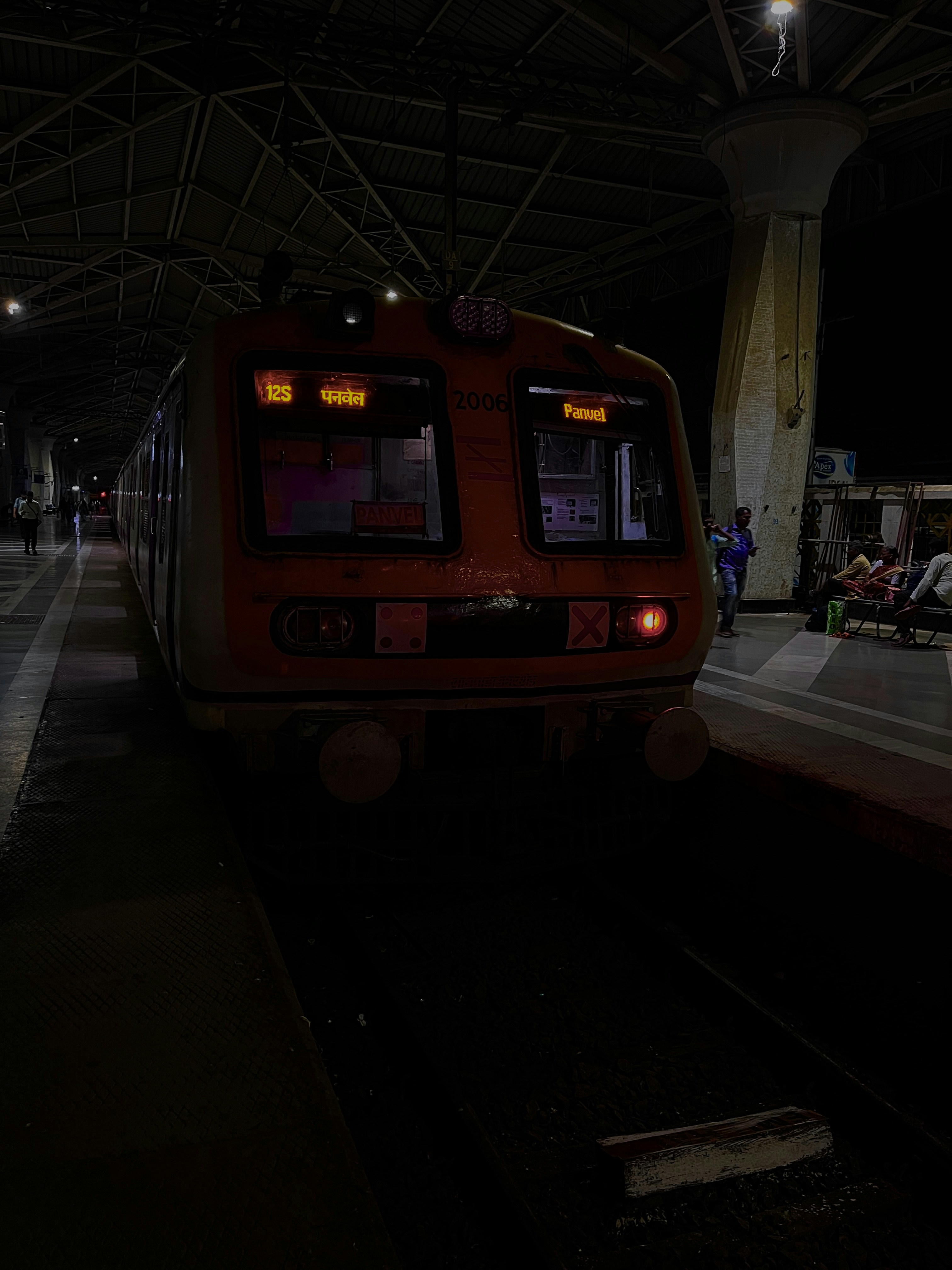
Mumbai’s local train system is an integral part of the city’s transportation network, renowned for its ability to transport millions of commuters daily. Established in 1853, the system has undergone significant evolution and expansion, becoming the backbone of urban mobility in one of the world’s most densely populated cities. Currently, the local train network consists of three main lines: the Western Line, Central Line, and Harbour Line, collectively covering over 400 kilometers. These lines facilitate travel across various regions of the city and suburbs, connecting vital hubs and enhancing commuting efficiency.
In terms of capacity, the local train system carries approximately 7.5 million passengers daily, thereby demonstrating its critical role in supporting the city’s workforce. The efficiency of this mode of transportation can be attributed to its frequency, with trains running every few minutes during peak hours. However, this remarkable capacity also comes with considerable challenges. Overcrowding during rush hours is a persistent issue, often leading to safety concerns and discomfort among passengers.
The significance of Mumbai’s local train system cannot be understated. It enables individuals from diverse socioeconomic backgrounds to travel to work, education, and social engagements with relative ease. Despite these advantages, the system faces several challenges, including aging infrastructure, inadequate maintenance, and limited technological integration. These issues create obstacles to reliable operation, impacting daily commutes and creating frustration among users. As a result, there is an increasing emphasis on enhancing the local train service with the integration of advanced technologies and predictive models, such as those provided by Genie 3 and V-JEPA, to improve operational efficiency and commuter experience.
The Need for Improved Traffic Prediction in Mumbai
Mumbai, a bustling metropolis, faces significant challenges when it comes to traffic prediction. The existing systems often struggle with accuracy, leading to a range of complications for commuters and the infrastructure of the city itself. One of the primary limitations is the reliance on historical data, which may not accurately reflect current or future traffic conditions. This can result in misleading predictions that contribute to delays and overcrowding during peak hours.
Inaccurate traffic predictions not only frustrate daily commuters but also exacerbate issues like environmental pollution and economic loss. When public transport systems, including local trains, operate unpredictably, it increases wait times and leads to higher operational costs. Moreover, businesses are affected by delays in logistics and the overall productivity dip caused by traffic congestion.
The economic impact extends beyond immediate commuter dissatisfaction; it affects the broader economic landscape of Mumbai. With a significant portion of the workforce relying on local trains and road transport, inefficient traffic management can hinder the city’s growth and development. Businesses may find it increasingly difficult to attract talent if commuting becomes a cumbersome experience. Thus, addressing the limitations in traffic prediction should be a priority for city planners and policymakers.
To enhance the reliability of traffic predictions in Mumbai, it is essential to embrace innovative technologies that integrate real-time data with advanced modeling techniques. Systems like Genie 3 and V-JEPA show promise in this arena, as they can adapt to changing conditions and provide more accurate forecasts. By investing in such solutions, stakeholders have the opportunity to alleviate congestion, improve commuter experience, and foster economic growth in this dynamic city.
Introducing Genie 3: A World Model for Traffic Prediction
The Genie 3 model stands at the forefront of traffic prediction methodologies, integrating advanced artificial intelligence techniques to solve complex urban mobility challenges. Its architecture is designed to process diverse data inputs which include real-time train schedules, historical traffic patterns, weather conditions, and even social media feeds that may indicate potential disruptions or events affecting transportation.
One of the key features of Genie 3 is its ability to utilize large volumes of data efficiently, making it particularly suitable for the intricacies of Mumbai’s local train services. By employing deep learning algorithms, the model constructs a comprehensive understanding of the interactions between various traffic elements. This is critical when accounting for Mumbai’s unique transportation demands, wherein trains and road traffic are interdependent; delays in train services can ripple through the entire traffic network.
Moreover, the Genie 3 model is engineered to adapt to the specific nuances of Mumbai’s rail systems. Its modular design allows for the incorporation of localized data, which can personalize predictions and improve accuracy. For instance, it can adjust its parameters in response to changes in passenger volume during festivals or special events, which are common in such a densely populated city. The model also includes predictive maintenance capabilities, allowing transport authorities to foresee potential disruptions before they occur.
In applying Genie 3 to Mumbai’s transit framework, we can anticipate significant improvements not only in predicting train arrivals and departures but also in optimizing overall traffic flow. This capability ensures a more reliable travel experience for Mumbai’s residents, contributing to better urban planning and development. Consequently, by embedding such robust models into everyday traffic prediction, cities like Mumbai can pursue more dynamic and responsive transport systems.
V-JEPA: A Novel Approach to Learning from Traffic Data
The V-JEPA (Variational Joint Embedding Predictive Architecture) model represents a significant advancement in the realm of traffic data prediction, offering a novel framework for processing complex, high-dimensional datasets. This innovative architecture is specifically designed to learn underlying patterns within the data, which is crucial for accurate traffic forecasting in a bustling metropolis like Mumbai.
One of the primary strengths of V-JEPA is its ability to integrate various environmental inputs seamlessly, enabling it to discern nuanced relationships among different variables affecting traffic flow. For instance, V-JEPA leverages both historical traffic data and real-time external factors such as weather conditions, public events, and even social media trends. By doing so, the model can formulate highly predictive insights about traffic congestion and other dynamics that may impact commuting times.
This model employs sophisticated machine learning techniques, including variational inference, to handle the inherent uncertainty and variability present in traffic data. This allows V-JEPA to create a probabilistic understanding of future traffic scenarios, rather than presenting deterministic outcomes, which can often be misleading. As a result, stakeholders, including urban planners and commuters, can benefit from insights that incorporate a breadth of possibilities, enhancing decision-making processes.
Moreover, V-JEPA’s capacity for handling large-scale datasets is noteworthy. It can assimilate vast streams of information, learning from them continuously to improve its predictive capabilities over time. By utilizing powerful data augmentation techniques and non-linear embeddings, V-JEPA identifies patterns that traditional models might overlook, thereby significantly enhancing the accuracy of traffic predictions.
Ultimately, the deployment of the V-JEPA model has the potential to revolutionize how traffic predictions are generated in urban settings, leading to smarter traffic management solutions that can significantly alleviate congestion and improve overall travel efficiency.
Modeling Mumbai’s Dynamic Traffic Environment
Mumbai, known for its vibrant culture and economic significance, is equally recognized for its complex and unpredictable traffic conditions. The city’s dense population and myriad vehicles contribute to a dynamic traffic environment laden with challenges. As automotive congestion escalates and urban development continues, effective traffic prediction becomes critical. Machine learning technologies, such as Genie 3 and V-JEPA, are emerging as essential tools for modeling these intricate scenarios.
Both Genie 3 and V-JEPA offer advanced capabilities in adapting to fluctuating traffic patterns and unexpected variables. Unlike traditional predictive models that may rely on static datasets, these machine learning algorithms can process real-time data to generate accurate traffic predictions. This adaptability is particularly vital in Mumbai where accidents, road construction, or weather changes can significantly alter traffic dynamics within moments.
Genie 3 utilizes a generative approach to simulate various traffic conditions and scenarios, drawing on historical data and real-time inputs. This enables it to predict traffic flow and congestion levels more effectively. On the other hand, V-JEPA employs a more joint embedding approach, considering multiple factors simultaneously, such as time of day, day of the week, and socio-economic events, to create a comprehensive model of traffic behavior.
Moreover, by integrating these technologies with existing traffic management systems, Mumbai can harness the power of machine learning to not only enhance real-time prediction capabilities but also to formulate long-term urban planning strategies. This integration is crucial for creating a sustainable urban transport system capable of managing the unpredictable nature of Mumbai’s roads, ensuring that both commuters and economic activities can flourish.
Case Studies of Successful Implementations
World models have been increasingly integrated into urban traffic systems worldwide, demonstrating substantial improvements in traffic management and flow optimization. One prominent example can be found in the city of Los Angeles, where the use of smart traffic signals, supported by predictive modeling tools, has led to a 20% reduction in average travel times. Such models analyze real-time data from traffic cameras and sensors to optimize signal timings, thereby minimizing congestion during peak hours.
Another notable case is Singapore, which has successfully implemented an intricate traffic prediction model that incorporates factors such as vehicle density, weather conditions, and historical traffic patterns. By utilizing machine learning algorithms, Singapore’s model forecasts potential traffic conditions with impressive accuracy. Reports indicate that this system reduced waiting times at intersections and improved overall traffic flow, enabling smoother commutes for its residents.
Additionally, the city of Amsterdam has integrated world models to enhance its cycling infrastructure. By predicting traffic patterns and cyclist behavior, Amsterdam’s model has enabled city planners to strategically implement bike lanes and signals, resulting in a safer environment for cyclists. This proactive approach not only improved safety but also encouraged more residents to adopt cycling as a primary mode of transport, thus alleviating car traffic.
These implementations underline the effectiveness of world models in urban traffic systems. The core lessons extracted from their success highlight the importance of real-time data utilization and the integration of predictive analytics. For Mumbai, applying similar strategies could lead to significant improvements. By adapting these proven models to account for local traffic dynamics, the city could facilitate smoother travel experiences while efficiently managing congestion.
Anticipated Outcomes and Future Directions
As Mumbai embarks on the integration of advanced predictive models such as Genie 3 and V-JEPA into its local train and traffic systems, the anticipated outcomes by 2026 appear promising. One of the foremost expected enhancements lies in the commuter experience. By employing these world models for traffic prediction, commuters can anticipate travel times with greater accuracy, allowing for better time management and less stress during their daily journeys. Furthermore, reduced congestion through optimized train scheduling and traffic flow will likely lead to a more comfortable travel environment.
In addition to improvements in user experience, the implementation of these predictive systems is expected to yield significant environmental benefits. Efficient train operations and smoother traffic flow can contribute to a decrease in carbon emissions. By minimizing idle times, optimizing routes, and facilitating quicker transit, the overall carbon footprint of public transportation in Mumbai is likely to show a marked reduction, aligning with broader sustainability goals.
The efficiency gains might extend beyond just transportation as well. With enhanced traffic management supported by these models, emergency services can be mobilized more effectively, leading to improved response times during crises. The integration of these predictive systems may further result in valuable data collection, enabling continuous refinement of both rail and traffic operations.
Looking toward future research directions, experts may delve into how machine learning algorithms can evolve to incorporate more dynamic data sets, such as real-time social media trends or event schedules that influence commuter patterns. Moreover, advancements in technology may facilitate even smarter integrations, possibly incorporating artificial intelligence to refine algorithms continuously. This iterative progression could position Mumbai as a leading example of urban transport innovation, setting a precedent for other metropolitan areas worldwide.
Conclusion and Call to Action
As urban populations grow and cities like Mumbai continue to expand, effective urban transport solutions must evolve to meet increasing demands. The integration of advanced predictive technologies such as Genie 3 and V-JEPA offers a promising approach to significantly enhance local train and traffic prediction systems. These world models harness state-of-the-art algorithms to forecast traffic patterns and train schedules, thus enabling a more efficient transit experience for commuters.
Adopting these innovations could lead to numerous benefits, including reduced congestion, improved on-time performance of local trains, and a more sustainable urban transport ecosystem. By providing accurate, data-driven insights, Genie 3 and V-JEPA can inform policy decisions and operational strategies, ultimately fostering a more reliable, user-friendly transit network in Mumbai.
It is crucial for stakeholders—including government authorities, urban planners, and transportation agencies—to recognize the significance of these technological advancements. Embracing world models like Genie 3 and V-JEPA will not only optimize existing infrastructure but also enhance future urban transport initiatives. Therefore, we urge decision-makers to invest in research and development for these predictive models, ensuring that Mumbai’s transportation system meets the needs of its citizens effectively.
By prioritizing the adoption of cutting-edge tools and methodologies, Mumbai can set a benchmark for urban mobility solutions in densely populated cities worldwide. Let us embark on this transformative journey towards improved local train and traffic integration, ultimately leading to a more efficient, sustainable, and connected urban experience for all residents.