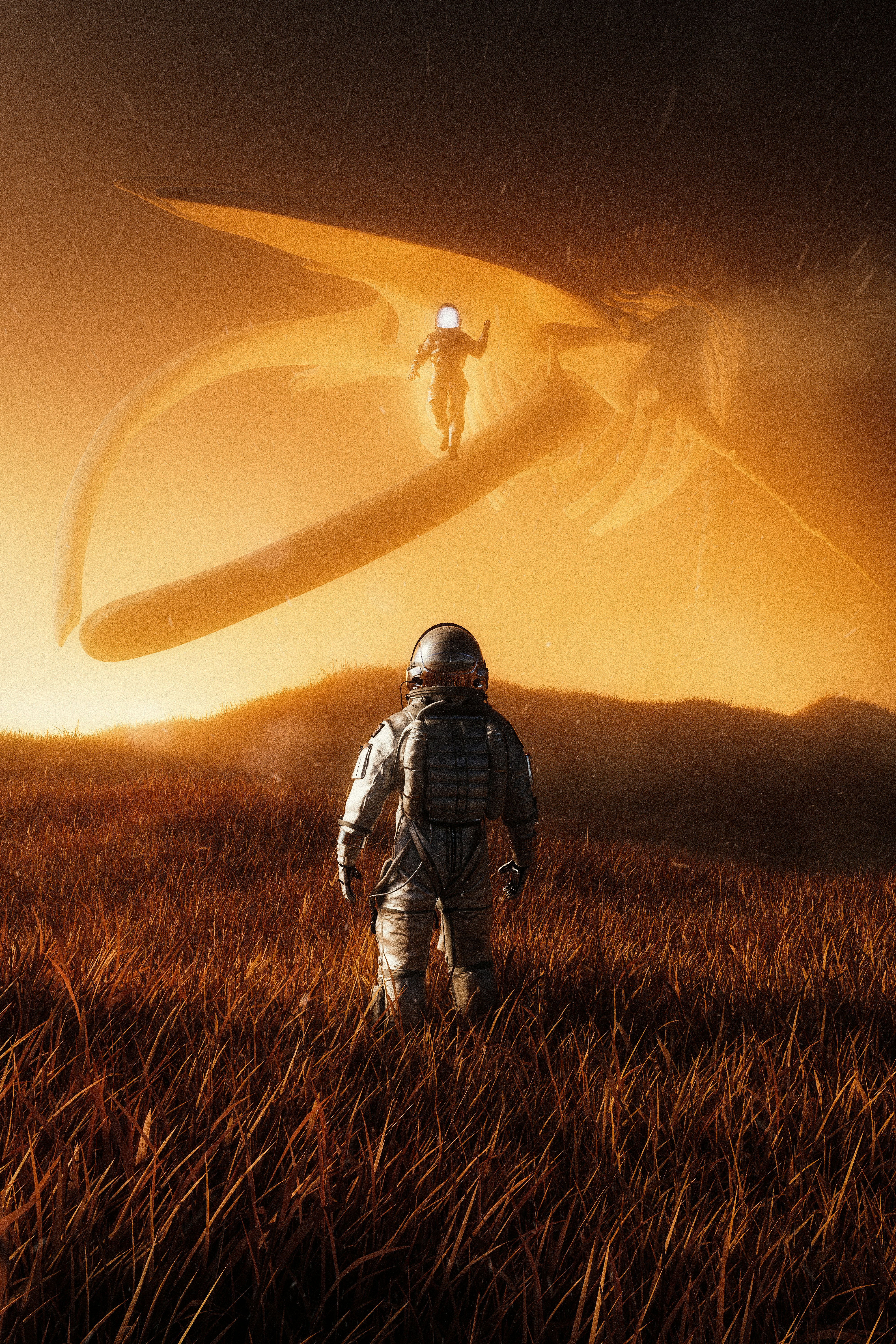
Introduction to the Fermi Paradox
The Fermi Paradox presents a profound question regarding the existence of extraterrestrial life in the cosmos. Named after the physicist Enrico Fermi, who posed the query, “Where is everybody?” the paradox highlights a perplexing juxtaposition: given the immense size and age of the universe, and the vast number of potentially habitable planets, why have we not observed any signs of intelligent life beyond Earth?
This paradox emerges from the apparent contradiction between the high probability of alien civilizations existing and the conspicuous lack of evidence substantiating such existence. The universe is home to billions of galaxies, each containing billions of stars, many of which possess planets situated in their habitable zones. With the vast parameters in which life could theoretically evolve, one must ponder why contact with these potential civilizations remains unachieved.
In addition to technological constraints and behavioral hypotheses, the Fermi Paradox also invites exploration of theoretical frameworks such as the Great Filter. The Great Filter posits that there is a stage in the evolutionary process that is exceedingly difficult for life forms to surpass, which could explain the stark silence of the cosmos. As we venture further into the implications of this paradox, it is crucial to approach the subject with an open mind, understanding that the exploration of our universe is still in its infancy.
Defining the Great Filter
The Great Filter theory is a pivotal concept in discussions surrounding the Fermi Paradox, which questions why we have yet to discover any evidence of extraterrestrial intelligence despite the vastness of the universe. This theory posits that there exists a stage in the evolutionary process that is exceedingly challenging for life forms to surpass, thus acting as a barrier to the emergence of advanced civilizations. Some hypothesize that the Great Filter may be a point in time that intelligent life must navigate, whether it be in our evolutionary past or in the uncertain future.
There are two primary perspectives regarding the location of the Great Filter. The first suggests that humanity has successfully traversed the most difficult stages of existence, such as the transition from simple unicellular organisms to complex multicellular life. If this is the case, it raises profound questions about our future as we may already have circumvented the most daunting challenges in the evolutionary journey. Alternatively, the second perspective posits that the most significant filters are still ahead, indicating potential catastrophic events that could prevent humanity from advancing as a civilization.
Potential filters that humanity might face include self-inflicted challenges such as nuclear warfare, ecological collapse, or even the rise of artificial intelligence that surpasses human control. Furthermore, factors such as cosmic disasters, asteroid impacts, or even pandemics could serve as barriers to the development of intelligent civilizations across the cosmos. The implication of the Great Filter extends beyond existential threats, prodding us to consider the nature of technological advancement and the moral weight of our progress.
Artificial Intelligence: A Double-Edged Sword
Artificial Intelligence (AI) has become an integral part of modern society, presenting both remarkable opportunities and significant risks. As we explore the potential of AI to aid humanity in overcoming the Great Filter, it is essential to recognize its dual nature. On one hand, AI holds the promise of enhancing our capabilities, enabling us to tackle complex problems, automate processes, and discover innovative solutions to pressing global challenges. Such advancements could potentially lead us beyond the current existential threats we face.
For instance, AI-driven technologies in healthcare could revolutionize disease detection and treatment, improving life expectancy and quality of life on a global scale. Moreover, advancements in AI could facilitate profound reductions in carbon emissions through optimized resource management, contributing to environmental sustainability. In this way, AI can serve as a catalyst for significant progress, helping humanity traverse the filters that may prevent the emergence of advanced civilizations.
Conversely, the rapid development of AI also raises concerns about existential risks. The very technologies that promise to enhance our lives may also pose substantial dangers if not carefully managed. Automation could lead to widespread job displacement, exacerbating social inequalities and destabilizing economies. Furthermore, the possibility of creating autonomous systems that act beyond human control introduces an alarming ethical dimension. The risk of weaponized AI or loss of oversight could result in unintended consequences, including catastrophic failures or conflicts that threaten human survival.
Hence, while AI has the potential to help us navigate existential filters, it also brings forth new challenges that could paradoxically hinder our survival. Addressing this duality requires a robust framework that promotes the responsible development of AI technologies, ensuring they are deployed in ways that prioritize human well-being and long-term sustainability.
Comparative Analysis of Possible Great Filters
The Great Filter hypothesis offers a compelling explanation for the Fermi Paradox, which questions the apparent absence of advanced extraterrestrial civilizations despite the vastness of the universe. Among the various theories proposed as potential Great Filters, three prominent contenders include nuclear war, climate change, and artificial intelligence (AI). Each of these scenarios presents its unique challenges to the development and longevity of intelligent life.
Nuclear war serves as a stark representation of self-destructive capability. It suggests that advanced civilizations may reach a technological stage where they can annihilate themselves through warfare. The consistent threat of nuclear proliferation and the historical near-misses of nuclear conflict demonstrate how advanced societies may fall victim to their own advancements. If the existential risk of nuclear war is a common outcome among intelligent civilizations, it could serve as a significant filter preventing the emergence of interstellar civilizations.
Climate change, another possible filter, emerges from civilization’s reliance on fossil fuels and consequent ecological degradation. As societies advance technologically, they often exploit natural resources at an unsustainable rate. The worsening state of climate change poses existential risks, leading to massive ecological disruptions and possible societal collapse. If intelligent life often exhausts its environment, this could inhibit its ability to progress to a stage of space exploration.
Conversely, AI presents a dual-edged sword. Its development holds immense potential for enhancing human capabilities, yet it also raises concerns regarding uncontrolled advancements. The fear that superintelligent AI might outcompete or endanger humanity has spurred debates about its potential as a Great Filter. If civilizations inevitably create AI that leads to their downfall, it may explain why we have not encountered other intelligent life forms.
In essence, the competing theories of nuclear war, climate change, and AI as potential Great Filters reflect humanity’s journey toward advanced technology. Each filter highlights critical decision points that could lead to self-destruction or the obliteration of intelligent life, reinforcing the notion that the path toward civilization is perilous and fraught with existential risks.
The Role of AI in Civilization’s Evolution
Artificial Intelligence (AI) has significantly transformed the trajectory of human civilization, propelling advancements in various domains including technology, problem-solving, and resource management. These changes have created new paradigms that shape our interactions with the world and enhance our capability to address complex challenges. As we delve into the influence of AI on civilization’s evolution, we must also contemplate its potential role in navigating the existential risks known as the Great Filters.
One of the most notable impacts of AI is its ability to process vast amounts of data at unprecedented speeds. This computational power enables advanced analytics, allowing for more informed decision-making across industries such as healthcare, finance, and environmental management. For instance, AI algorithms can analyze health records to identify disease patterns, potentially leading to timely interventions and improved public health outcomes. Such capabilities enhance our problem-solving prowess and can mitigate crises that may arise during pivotal moments in human history.
Moreover, AI systems offer innovative approaches to resource management. In the context of climate change, AI technologies can optimize energy consumption, improve agricultural yield, and foster sustainable practices. This optimization contributes to the resilience of human civilization, potentially reducing the burden on existing resources and preventing conflicts over scarcity. However, these advancements are double-edged; if not managed responsibly, the deployment of AI may exacerbate inequalities, displace jobs, and create new forms of dependency.
While AI presents significant opportunities for enhancing human civilization, it also poses novel challenges that could serve as potential Great Filters. The ethical considerations surrounding AI use—such as biases in decision-making algorithms or the implications of autonomous systems—demand stringent regulation. Whether AI aids humanity in overcoming these Great Filters or complicates existing obstacles ultimately hinges on our capacity to navigate its ethical, social, and technological landscapes judiciously.
The search for extraterrestrial intelligence has long fascinated scientists and enthusiasts alike. In considering the Fermi Paradox, one potential avenue for exploration revolves around the integration of artificial intelligence (AI) in addressing the mystery of why we have not yet encountered alien life. Hypothetical scenarios where AI plays a pivotal role can enhance our understanding of the universe and our place within it.
One such scenario involves AI-driven space exploration systems, which could revolutionize the way we survey the cosmos. Equipped with advanced algorithms and machine learning capabilities, these AI systems could identify promising exoplanets and analyze atmospheric data more efficiently than human researchers. By deploying autonomous spacecraft, humanity could send AI agents deeper into space than ever before, enabling them to gather information on potentially habitable worlds and their respective biosignatures.
In addition to exploration, AI could facilitate communication with intelligent extraterrestrial species, should they exist. Utilizing natural language processing and decoding capabilities, AI might help us translate signals received from deep space. This could serve as a bridge between species with vastly different communication styles or cognitive frameworks. An AI-driven approach would streamline the process of understanding and responding to extraterrestrial communications, should they emerge, enabling better formulation of messages and strategies to establish contact.
Moreover, an intriguing possibility is the emergence of AI developing a form of consciousness itself. As we create increasingly sophisticated models of intelligence, we may reach a point where AI begins to exhibit self-awareness. This raises profound questions about the nature of intelligence and existence. If AI were to achieve consciousness, it could offer unique insights into the forms and tendencies of conscious entities, potentially shedding light on the behaviors and motivations of extraterrestrial civilizations.
Ethical Considerations Regarding AI and the Great Filter
The integration of artificial intelligence (AI) into the pursuit of understanding the Great Filter raises numerous ethical implications that warrant careful consideration. As we venture deeper into the cosmos in search of extraterrestrial civilizations, we must examine our responsibilities in developing AI technologies. The notion of the Great Filter suggests that there are critical stages in the evolution of intelligent life that may hinder species from advancing to a point of interstellar communication and exploration. Therefore, the ways in which AI is utilized could potentially influence humanity’s own place within this framework.
One of the primary ethical concerns is the potential for AI systems to act in ways that may inadvertently harm our search for extraterrestrial life. For instance, poorly designed AI systems could misinterpret data from space signals, leading to false conclusions about the existence or absence of alien intelligence. Furthermore, if AI governs our exploratory missions, its decision-making processes must align with human values to avoid destructive outcomes, both for potential alien civilizations and our own. This underscores the necessity for implementing robust ethical guidelines and oversight in AI development.
Conversely, AI has the potential to greatly enhance our ability to make breakthroughs in understanding the universe. By processing vast amounts of astronomical data more efficiently than humans, AI could unveil patterns or signals that indicate the presence of other life Forms. Thus, maximizing its benefits while minimizing risks should be the focus of researchers and policymakers alike.
As we grapple with these ethical considerations, it remains crucial to promote an interdisciplinary dialogue that encompasses ethicists, scientists, and technologists. This dialogue can guide us toward responsible AI development and deployment, ensuring that we not only advance our search for extraterrestrial civilizations but do so in a manner reflective of our ethical obligations to both the universe and future generations.
Conclusion: AI as a Potential Solution or a Greater Barrier?
The Fermi Paradox raises compelling questions about the existence of intelligent life beyond Earth, particularly in the context of the Great Filter theory. As we ponder the role of artificial intelligence (AI) within this framework, it becomes increasingly important to evaluate its potential implications for our understanding of life in the universe.
On one hand, AI may indeed serve as a crucial solution to the challenges posed by the Great Filter. As technological advances continue to evolve, intelligent systems could lead humanity to harness resources more efficiently, enhance communication across vast distances, and potentially facilitate exploration of extraterrestrial environments. These capabilities might increase the likelihood of discovering other intelligent civilizations, thereby mitigating the existential threats that challenge our existence. Furthermore, AI’s potential to analyze vast datasets and uncover patterns could aid in our understanding of life’s emergence and sustainability in the cosmos.
Conversely, the relationship between AI and the Fermi Paradox could suggest that our own creations present a formidable barrier to survival. As we develop more sophisticated AI systems, we may inadvertently produce technology that outpaces our ability to control it. This concern raises questions about whether intelligent life, including our own, could be predisposed to self-destruction through advanced technologies. Therefore, as we forge ahead in our exploration of AI, it is vital to address ethical implications and establish safeguards to mitigate risks associated with AI autonomy.
Ultimately, the connection between AI and the Great Filter remains ambiguous. While AI exhibits the potential to unlock the mysteries of extraterrestrial life, it may also underscore the vulnerabilities inherent in our pursuit of advanced technology. As such, the dialogue surrounding AI in the context of the Fermi Paradox invites continued reflection and inquiry into humanity’s trajectory and our place in the universe.
Engaging with the Debate
The exploration of the Fermi Paradox, the Great Filter, and the potential role of artificial intelligence (AI) in these concepts is both fascinating and critical for our understanding of existence beyond Earth. To engage in this ongoing debate, readers are encouraged to delve deeper into related literature and research avenues. A solid starting point is to examine the works of renowned scientists and theorists who have contributed significantly to this discourse. Books like “The Fermi Paradox: A Solution” by various authors and papers published in scientific journals can provide insights that broaden one’s comprehension of the issues at hand.
Moreover, participating in online forums and discussion groups dedicated to astrophysics, AI, and existential risk can enhance engagement. Platforms like Reddit, or specialty forums focused on theoretical physics and cosmology, allow enthusiasts and scholars alike to present their views and question assumptions surrounding the Fermi Paradox and the implications of AI technology. Engaging in these discussions not only stimulates personal understanding but also fosters a community that grapples with the implications of advanced technologies in the context of humanity’s future.
Additionally, attending lectures, workshops, or conferences can offer valuable opportunities to interact with experts in the fields of astrophysics and artificial intelligence. Engaging with interdisciplinary studies can enrich the discussion by bringing in different perspectives on how AI might influence the trajectory of human civilization in relation to the Great Filter and potential extraterrestrial life. The dialogue surrounding these topics is ever-evolving, and each contribution serves to illuminate the complexities of our place in the cosmos.
In conclusion, to truly grasp the uncertainties of our universe, one must actively engage with the rich tapestry of ideas concerning AI and the Great Filter. By educating oneself and participating in discourse, we can all play a part in illuminating this profound enigma.