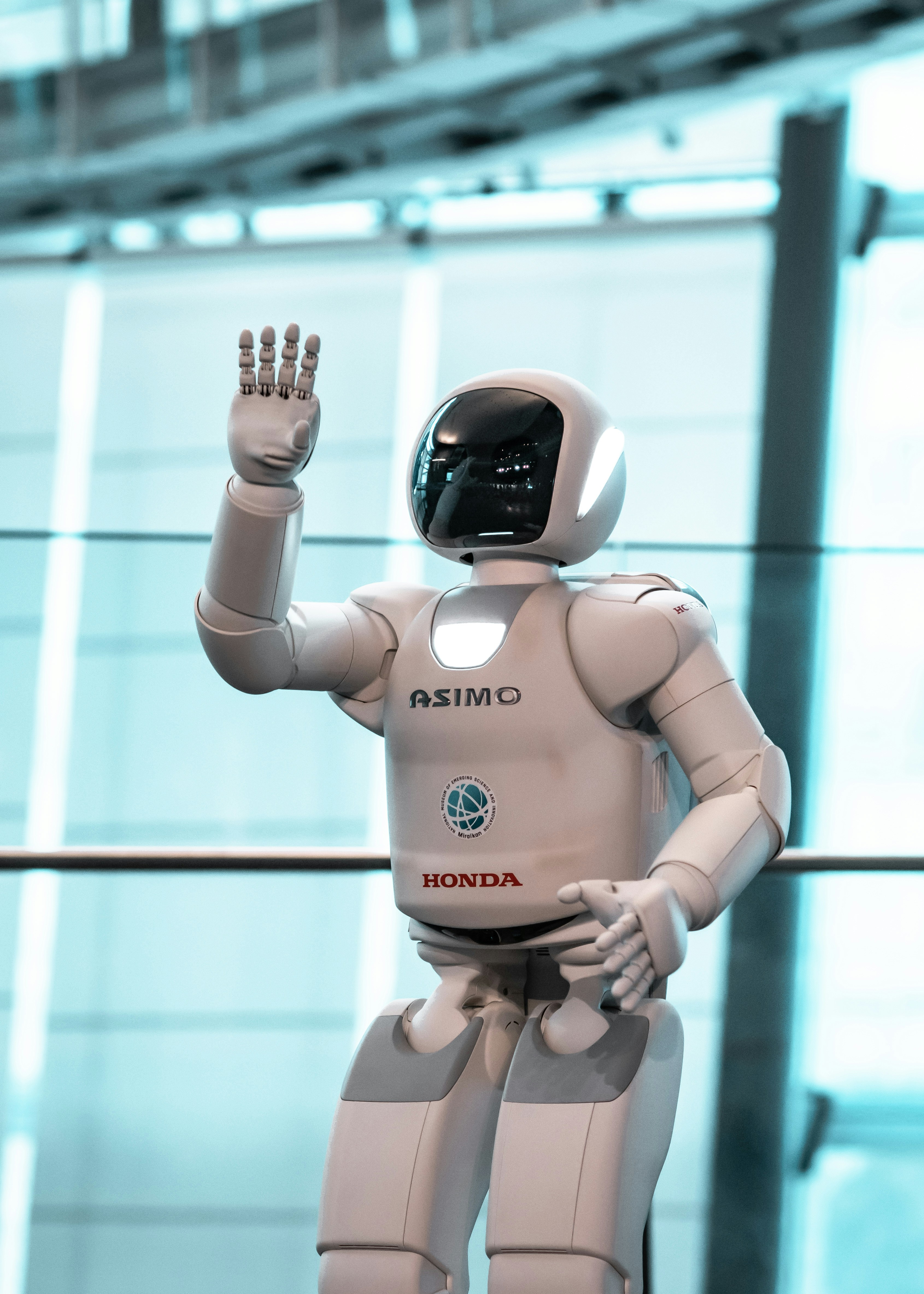
Introduction to Humanoid Robots
Humanoid robots are advanced robotic systems designed to simulate human form and behavior. These machines typically possess a torso, arms, and legs, which allow them to perform tasks with a resemblance to human physicality. The development of humanoid robots dates back to the early 20th century, with early concepts sprouting from both fiction and early automatons. A key milestone in this journey was the advent of specialized materials and control systems, which enabled movements and functionalities similar to those of humans.
The objectives of humanoid robotics are numerous. Primarily, these robots are designed to interact with environments constructed for humans, allowing for tasks such as caregiving, companionship, and assistance in industrial applications. The eventual goal is to create machines that can not only mimic human motions but also engage in social interactions, recognizing and responding to human emotions effectively.
The evolution of humanoid robots has been propelled by advancements in artificial intelligence (AI), computer vision, and sensor technologies. Initially, early models had limited capabilities and often operated under rigid programming. However, as machine learning techniques developed, contemporary humanoid robots became more flexible, adapting their behavior through experience and learning from interactions.
Today, humanoid robots are employed in diverse sectors, including healthcare, education, and entertainment. For instance, in healthcare settings, they assist patients with daily tasks, providing emotional support and monitoring health parameters. In educational environments, these robots serve as interactive learning aids, enhancing student engagement and facilitating new teaching methodologies. The increasing presence of humanoid robots in various fields highlights their significance and demonstrates the rapid progress in robotic technology.
Importance of Dexterity in Humanoid Robots
Dexterity serves as a pivotal foundation for the effectiveness of humanoid robots, bridging the gap between human-like capabilities and machine performance. It refers to the ability of an entity to execute tasks with precision, flexibility, and adaptability, elements that are critical in the design and function of advanced robotic systems. In the context of humanoid robots, dexterity encompasses several components, including fine motor skills, spatial awareness, and the capacity to interact with a dynamic environment.
Fine motor skills enable humanoid robots to manipulate objects with great accuracy, a necessity for performing intricate tasks commonly encountered in daily human life. Examples of such tasks include assembling devices, preparing food, or handling delicate items without causing damage. The intricacy of human actions demands that these robots replicate such movements, thus emphasizing the need for highly coordinated joints and sensors to achieve an adequate level of finesse in operation.
Moreover, spatial awareness is essential for humanoid robots as it allows them to navigate complex environments, making decisions based on the arrangement and proximity of objects. This aspect of dexterity is particularly relevant in scenarios where robots must work alongside humans, as it enables them to accurately gauge distances, avoid obstacles, and appropriately position themselves to undertake tasks effectively. The adaptability of robots is equally important, requiring them to modify their actions based on varying contexts and challenges they may face during operation. As the landscape of robotic applications continues to expand—from manufacturing to service sectors—the significance of dexterity becomes increasingly paramount, underscoring the necessity for ongoing advancements in robotic engineering.
Current State of Humanoid Robotics (2023 and Beyond)
As of 2023, the field of humanoid robotics has witnessed remarkable advancements that have transformed the landscape of robotic technology. These developments have not only paved the way for more sophisticated humanoid robots but have also significantly enhanced their functionality and dexterity. One of the key aspects of this evolution is the integration of artificial intelligence (AI), which has enabled robots to exhibit more human-like behavior and decision-making capabilities.
Recent breakthroughs in machine learning algorithms allow humanoid robots to interact more dynamically with their environment. These robots are increasingly capable of recognizing objects, understanding natural language commands, and even performing complex tasks that require a high degree of dexterity. The refinement of AI has led to improved sensor technologies, allowing for better perception and adaptability in real-time situations, which is crucial for humanoid robots tasked with assisting humans in various settings.
Moreover, advancements in materials science have played an essential role in enhancing the physical attributes of humanoid robots. The development of lightweight yet durable materials, such as advanced composites and flexible polymers, has made it possible to design robots with an increased range of motion and agility. This progress is particularly relevant as researchers strive to create robots that can replicate human-like movements and grasping abilities.
Engineering innovations have also contributed to the current state of humanoid robotics. The introduction of efficient robotic joints and actuators has allowed for enhanced control and stability. Consequently, humanoid robots can perform intricate tasks with precision, further bridging the gap between human and robotic capabilities. As we look ahead to 2026, it is evident that the foundation laid in 2023 will serve as a springboard for even more advanced developments in humanoid robotics, evolving towards a future where these machines may integrate seamlessly into daily human activities.
Defining the Best Dexterity in 2026
The evaluation of humanoid robots in terms of dexterity hinges on several critical criteria. Dexterity, defined as the ability to perform tasks with precision and agility, is essential for humanoid robots seeking to navigate complex and unpredictable environments. The evaluation framework primarily revolves around three fundamental aspects: range of motion, control precision, and adaptability.
Range of motion refers to the extent to which a robot’s joints can move, akin to human flexibility. A high degree of mobility is crucial for tasks that require reaching, grasping, or manipulating objects in confined or dynamic spaces. Robots that exhibit extensive range of motion can more effectively perform diverse tasks, from fine motor skills like assembling small components to gross motor activities such as lifting and moving heavy objects.
Control precision is the second cornerstone of dexterity assessment. This aspect evaluates how finely robots can manipulate objects without causing damage or instability. Advanced sensor technology and intricate control algorithms play pivotal roles in improving control precision, enabling robots to conduct tasks that necessitate delicate handling, such as operating fragile items or performing intricate surgical procedures. The ability to execute tasks with high precision not only enhances the robot’s utility but also reduces the risk of error and accidents in multifaceted environments.
The third critical criterion is adaptability, which encompasses a robot’s capability to adjust its actions based on varying environmental conditions and unexpected variables. This adaptability is crucial for humanoid robots functioning in real-world settings where they encounter different surfaces, obstacles, and dynamic interactions. Incorporating artificial intelligence into humanoid design enhances this adaptability, allowing robots to learn from experiences and refine their dexterous skills over time.
In essence, the fusion of range of motion, control precision, and adaptability sets the foundation for defining the best dexterity in humanoid robots of 2026, enabling them to perform intricate tasks effectively and safely in diverse environments.
Top Humanoid Robots with Exceptional Dexterity (2026 Edition)
As we advance into 2026, several humanoid robots stand out for their remarkable dexterity, a capability that has vast implications across various industries. These robots are engineered to perform intricate tasks that require precision and finesse, thereby revolutionizing the way we perceive automation in our daily lives.
One notable prototype is the Atlas robot developed by Boston Dynamics. Atlas integrates advanced artificial intelligence with a sophisticated set of sensors and actuators, enabling it to navigate difficult terrains and carry out complex maneuvers. Designed for versatility, Atlas can lift heavy objects, climb ladders, and even perform gymnastic routines, showcasing dexterity akin to that of a human. Its ability to adapt to different environments makes it a prime candidate for search-and-rescue missions and construction sites.
Another significant player is Sophia, created by Hanson Robotics. While primarily known for her conversational abilities, Sophia’s dextrous hands are equipped with state-of-the-art AI, enabling her to manipulate objects and engage in detailed interactions. This combination of social and physical skills renders Sophia applicable in both educational settings and customer service environments, demonstrating the multifaceted utility of dexterous humanoid robots.
Lastly, we should not overlook Unitree’s A1, a dynamic robot that blurs the lines between mobility and dexterity. It is equipped with advanced limb articulation and can perform tasks that require both strength and precision, similar to Atlas. Its applications range from entertainment to industrial automation, making it a versatile tool in sectors demanding adaptable robotic solutions.
The continuous advancements in robotics technology are crucial in enhancing the dexterity of these humanoid robots. Each innovation brings us closer to achieving full automation in various fields, paving the way for a future where humans and robots collaborate seamlessly.
Use Cases and Applications of Dexterous Humanoid Robots
The emergence of dexterous humanoid robots in early 2026 has unveiled a multitude of practical applications across various industries, enhancing efficiency and promoting safety. In the healthcare sector, these sophisticated machines are redefining patient care. They are utilized for assisting medical professionals in surgeries, managing pharmaceuticals, and providing rehabilitation support to patients. The precision offered by these robots ensures that delicate tasks, such as administering injections or performing intricate surgical procedures, are executed with exceptional accuracy.
In manufacturing, humanoid robots are revolutionizing assembly lines. Equipped with advanced sensors and AI algorithms, they can seamlessly adapt to changing tasks and environments. This adaptability enhances productivity by enabling robots to perform repetitive tasks with speed and efficiency while minimizing human error. The employment of these robots also fosters a safer workplace by taking on hazardous tasks, reducing the risk of workplace injuries associated with heavy machinery operations.
The service industry too is witnessing a significant transformation with the introduction of dexterous humanoid robots. These robots are taking on roles in hospitality, retail, and customer service, performing tasks ranging from greeting customers to managing inventory. Their ability to interact with clients in a human-like manner ensures a pleasant experience for customers, facilitating better service delivery. In the realm of disaster response, humanoid robots are proving invaluable. They are deployed in hazardous environments to conduct search and rescue missions, assess damage, and even deliver medical supplies to areas that are otherwise inaccessible.
As advancements in technology continue to evolve, the applications of dexterous humanoid robots are expected to expand further, enabling them to play a pivotal role in enhancing productivity and ensuring safety across diverse fields.
Challenges in Achieving High Dexterity
The pursuit of developing humanoid robots with exceptional dexterity encompasses several significant technical and ethical challenges. One of the primary technical obstacles lies in the integration of advanced sensors. High dexterity requires robots to possess a keen awareness of their surroundings, which is facilitated by a complex array of sensors. These sensors must work in unison to provide real-time feedback on spatial orientation, object proximity, and environmental changes. However, achieving seamless integration can be daunting due to the variability in sensor precision and the complexity of data interpretation.
Another critical aspect of enhancing robot dexterity involves the development of sophisticated control algorithms. These algorithms govern the robot’s movements, enabling it to perform intricate tasks with finesse. However, coding such algorithms demands extensive research and testing to ensure both precision and reliability. Complications arise when attempting to mimic human-like movements, as the algorithms must accommodate a wide range of motion and respond to unpredictable situations without compromising stability.
Beyond the technical realms, ethical considerations also play a crucial role in the advancement of humanoid robots. As these machines become more capable of autonomous decision-making, concerns regarding their agency and responsibility escalate. Defining the moral implications of a robot’s actions and its ability to operate independently raises questions about accountability. Will these robots be held responsible for their actions, and how will society manage their integration into daily life? Addressing these ethical challenges is essential to ensure that the deployment of highly dexterous robots aligns with human values and societal norms.
Future Trends and Predictions
The landscape of humanoid robotics is on the brink of transformational change as we look towards the next decade. In the early part of 2026, breakthroughs in artificial intelligence (AI) and machine learning are predicted to significantly enhance the dexterity of humanoid robots. As AI algorithms become more sophisticated, robots will not only improve in handling tasks that require fine motor skills but also adapt dynamically to their environments. This adaptability is essential for fostering a seamless interaction between humans and machines.
One of the major trends expected to define the future of humanoid robotics is the integration of advanced sensory technologies. These developments will allow robots to better perceive their surroundings, thus leading to more intricate and responsive actions. The implementation of high-fidelity sensors—such as tactile sensors and advanced vision systems—will enable robots to execute complex tasks with a level of precision that was previously unattainable.
Additionally, collaboration between humans and humanoid robots is set to further evolve. Enhanced dexterity, coupled with cutting-edge AI capabilities, will allow robots not just to perform repetitive tasks but to work alongside humans in various environments—ranging from industrial settings to healthcare. This collaboration will transform workplaces, creating a synergy that maximizes efficiency while preserving human workers’ involvement in decision-making processes.
While current humanoid robots are primarily developed for specific tasks, the aim will shift towards creating versatile machines capable of multifunctional operations. The pathway to achieving this includes the ongoing enhancements in mechanical design, materials science, and AI-driven programming. As public perception of robots continues to evolve, acceptance of humanoid robotics will likely increase, paving the way for innovative applications in everyday life.
Conclusion: The Future is Humanoid
As we conclude our exploration of the humanoid robots of early 2026, it is essential to reflect on the profound implications this technology holds for society. The advancements achieved in robotic dexterity signify a major leap forward in our ability to craft machines that not only resemble humans in form but also exhibit a level of agility and precision previously thought to be unattainable. These developments pave the way for humanoid robots to play increasingly integral roles in various sectors, from healthcare to manufacturing.
The benefits of humanoid robots are multifaceted. In healthcare, for instance, they can provide assistance to individuals with disabilities, enhancing their independence and improving overall quality of life. Furthermore, in environments that require meticulous tasks, such as laboratories and assembly lines, these robots can ensure higher accuracy and efficiency. The potential for reducing human error in critical operations is unprecedented, leading to safer and more reliable outcomes.
However, the rise of humanoid robots also brings with it challenges that society must address. These include ethical considerations regarding employment displacement, privacy concerns, and the need for regulations to ensure safe integrations. As humanoid robots become more prevalent, thoughtful discussions surrounding their role in our daily lives will be essential. Balancing the advantages with the potential societal ramifications will require careful planning and a commitment to fostering responsible innovation.
In summary, the integration of high-dexterity humanoid robots is shaping a new horizon for human-technology interaction. Their evolving capabilities offer remarkable opportunities, but also necessitate a proactive approach to tackle the inherent challenges. The future holds promise for a society that embraces these advancements while maintaining ethical integrity, ensuring that technology serves to elevate the human experience.