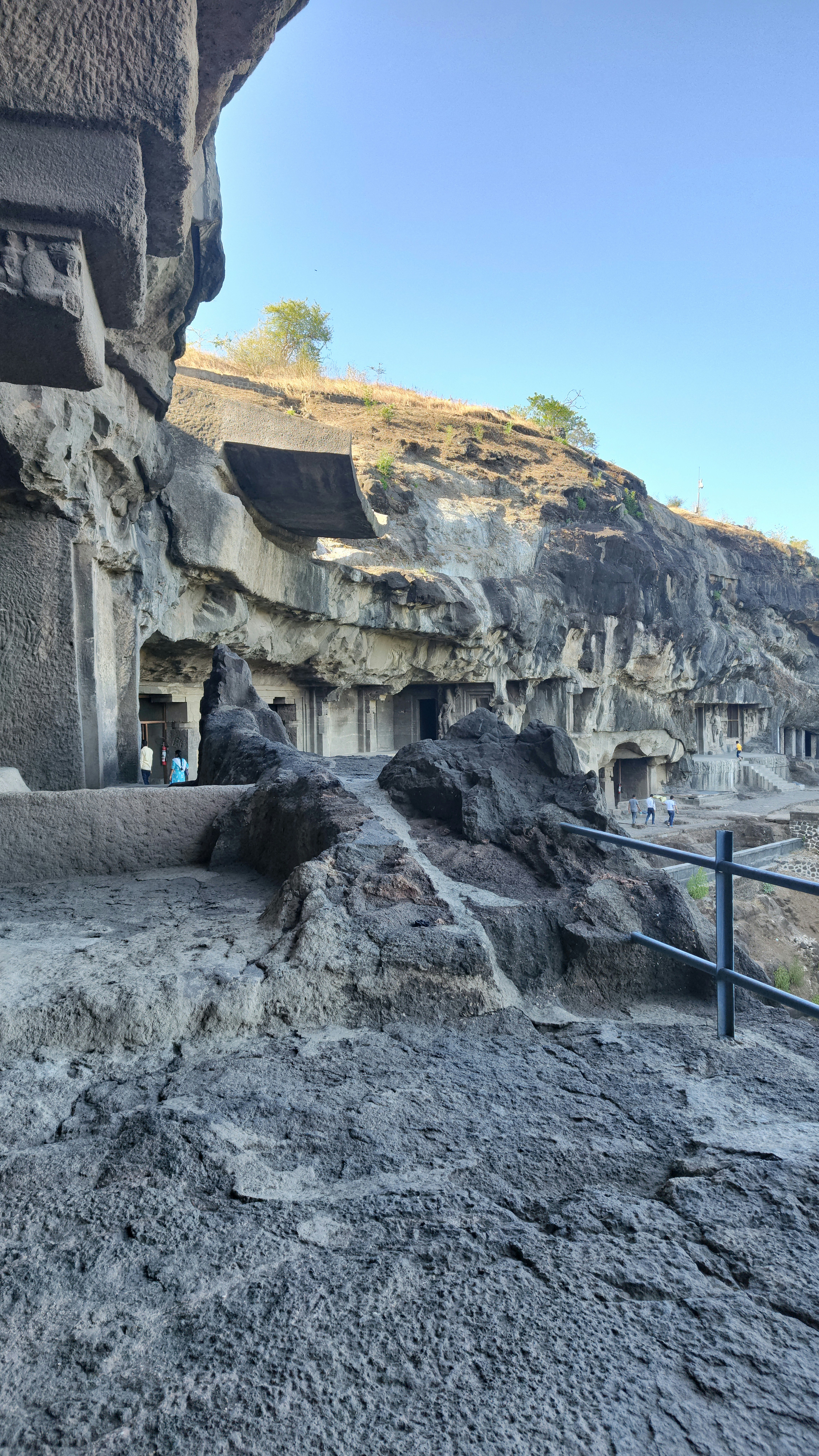
Introduction to Ajanta-Ellora Caves
The Ajanta and Ellora Caves, located in Maharashtra, India, represent a monumental achievement in ancient architecture and artistry. These caves, carved into the western Deccan plateau, date back to between the 2nd century BCE and the 6th century CE, showcasing a variety of cultural influences and religious practices, primarily Buddhism, Hinduism, and Jainism. The exquisite craftsmanship exhibited in these caves reflects the socio-religious milieu of ancient India, marking them as significant historical landmarks.
The Ajanta Caves encompass around 30 rock-cut caves, renowned for their intricate frescoes and sculptures that vividly narrate the life of Buddha and the teachings of Buddhism. Among these, Cave 1 and Cave 2 stand out for their stunning murals, which serve not only as artistic expressions but also as visual narratives that educate devotees on moral and philosophical themes. The use of vibrant colors and detailed storytelling in these paintings offers unique insight into the cultural practices and everyday life of that era.
Conversely, the Ellora Caves, a collection of 34 caves, illustrate a harmonious blend of architectural styles. Notably, Cave 16, housing the impressive Kailasa temple, showcases the artistry of monolithic rock-cut architecture. This temple, dedicated to Lord Shiva, reveals the advanced engineering skills of the artisans, with elaborate carvings depicting Hindu mythology. Both the Ajanta and Ellora Caves have been designated as UNESCO World Heritage Sites, underscoring their significance in the global cultural landscape.
These caves are not merely sites of artistic merit; they embody the diverse religious heritage of India. Their architectural and artistic features continue to inspire scholars, historians, and visitors alike, preserving the essence of ancient Indian civilization for future generations.
The Evolution of Virtual Reality Technology
Virtual reality (VR) technology has undergone significant transformations since its inception, transitioning from rudimentary forms of simulation to highly immersive experiences. The origins of VR can be traced back to the 1960s when computer scientist Ivan Sutherland created the first head-mounted display system, known as the “Sword of Damocles.” Although primitive by today’s standards, this invention laid the groundwork for future developments.
The 1980s saw notable advancements with the introduction of the term “virtual reality” by Jaron Lanier, who pioneered the concept of using immersive 3D environments. This decade marked the beginning of a gradual shift away from 2D simulations, paving the way for technology that offered users a more engaging and lifelike experience. The technology remained largely confined to specialized fields such as military training and research laboratories.
In the 1990s, VR began to enter the consumer market, albeit at a high cost with limited accessibility. Noteworthy milestones during this period included the release of VR gaming systems which, despite being commercially unsuccessful, sparked interest and innovation within the gaming industry. It was not until the 2010s that VR technology truly began to flourish for public use, primarily due to advances in graphics processing, computer hardware, and the development of affordable headsets such as the Oculus Rift.
Today, with the advent of 2026 Diffusion 3DGS technology, the fidelity and realism of VR applications have reached unprecedented levels. These advancements have not only enhanced gaming experiences but have also found applications across diverse fields, including education, where interactive learning experiences can be simulated, and heritage preservation, allowing visitors to explore historical sites like the Ajanta-Ellora caves virtually. These developments suggest that the future of virtual reality is bright, promising new avenues for exploration and engagement.
Exploring 2026 Diffusion 3DGS Technology
The advent of 2026 Diffusion 3DGS technology marks a significant leap in the realm of virtual reality and immersive experiences. This cutting-edge technology employs advanced algorithms that enable the rendering of photorealistic visuals in real-time, thereby creating an unparalleled viewing experience. Unlike earlier technologies that relied predominantly on static images, 2026 Diffusion 3DGS integrates dynamic elements that respond to user interactions, making the VR narrative not only visually compelling but also deeply engaging.
One of the hallmark features of this technology is its ability to seamlessly blend 3D geometric data with high-definition textures, resulting in a rich, tactile environment. Users can explore the nuances of cave art in the Ajanta-Ellora Caves, for instance, with the fine details of brush strokes and anatomical figures coming to life like never before. This level of detail is crucial for both educational and promotional purposes, as it enhances understanding and appreciation of cultural heritage.
Furthermore, the 2026 Diffusion 3DGS technology emphasizes accessibility and adaptability across various sectors. Beyond cultural heritage and tourism, potential applications extend to fields like architecture, gaming, and virtual training. By providing a flexible framework for immersive storytelling, it empowers educators to illustrate complex subjects and caters to industries looking to create memorable customer experiences. The technology’s inherent scalability also means that it can be tailored to suit specific needs, from small educational projects to large-scale public exhibitions.
In conclusion, 2026 Diffusion 3DGS technology is more than just a tool for entertainment; it is a paradigm shift that can redefine our interaction with historical and cultural spaces. This innovative approach not only enhances user experience but opens new avenues for creativity and education.
Creating a Digital Replica of Ajanta-Ellora Caves
The process of creating a digital replica of the Ajanta-Ellora caves using the 2026 Diffusion 3DGS technology involves several intricate steps that ensure the final product is a faithful representation of these UNESCO World Heritage Sites. Initially, extensive research is conducted to gather historical data, archaeological records, and existing literature that provide context and details about the caves’ artistic and structural attributes. This foundational knowledge is crucial for establishing a baseline for the digitization process, ensuring that the unique characteristics of both the Ajanta and Ellora caves are accurately captured.
The next stage involves the use of advanced scanning technology, such as LiDAR (Light Detection and Ranging) and photogrammetry, to create high-resolution 3D models of the caves. These scanning techniques allow developers to collect vast amounts of data on the dimensions, textures, and contours of the intricately carved rock formations. One of the primary challenges faced during this phase is ensuring that environmental conditions, including lighting and surface reflections, do not distort the data collected. To mitigate this, developers often conduct multiple scans at different times and from various angles.
In parallel to the scanning process, efforts are made to curate a library of textures and patterns found within the caves. This includes not only the relief sculptures and paintings but also the natural rock surfaces that contribute to the overall aesthetic. The integration of these textures into the digital models requires meticulous attention to detail, where artists must balance fidelity to the originals with the limitations of current technology. The final step involves optimizing the digital models for VR compatibility, ensuring that users can navigate through these historical spaces in a seamless and engaging manner. Thus, the process of digital recreation stands as a testament to a confluence of technology, art, and historical preservation.
Immersive Experience: What Users Can Expect
Engaging with the virtual reality (VR) recreation of the Ajanta-Ellora caves offers users a rich and immersive experience that transcends traditional forms of exploration. The innovative 2026 Diffusion 3DGS Technology enhances this experience by enveloping users in a multisensory environment that closely mimics the original caves. Upon entering the VR setting, users are greeted with stunning visual representations of the intricate frescoes and sculptures that define this UNESCO World Heritage site.
The sensory experiences provided include not only visual elements but also auditory ones. Users will hear ambient sounds reminiscent of the original caves, such as echoes and the soft murmurs of visitors, which contribute to a deeper level of immersion. As users navigate through the various chambers and corridors, they can interact with different aspects of the exhibits. For example, they may click on specific artworks to unearth detailed historical context, or they might follow guided tours that explain the significance of the intricate carvings.
Additionally, the VR platform supports educational opportunities tailored to various user preferences and knowledge levels. For school groups and students, interactive quizzes and challenges could be integrated to make learning engaging and fun. Adult users might appreciate the availability of deeper analytical content which explores the cultural and historical narratives represented in the artworks. Overall, the experience is designed to enhance visitor engagement, providing a comprehensive understanding of the cultural heritage portrayed in the caves.
This VR journey not only delivers awe-inspiring visuals but also imbues a sense of connection to the rich history of the Ajanta-Ellora caves. By merging education and interaction, this advanced technology stands to revolutionize the way we appreciate and learn about these magnificent architectural marvels.
Preservation of Cultural Heritage Through VR
Virtual reality (VR) has emerged as an innovative tool for preserving cultural heritage sites, such as the renowned Ajanta-Ellora caves. These ancient rock-cut masterpieces, famous for their intricate carvings and paintings, face numerous challenges due to environmental factors, human intervention, and the passage of time. Utilizing VR technologies offers a unique opportunity to create immersive experiences that can transport users back to these historical sites, while simultaneously aiding in their preservation.
The application of VR in historical documentation and conservation activities enhances our understanding of these cultural treasures. By digitally capturing the caves using cutting-edge techniques like the 2026 Diffusion 3DGS technology, we create high-resolution, 3D models that preserve their current state in detail. This technology not only aids in the accurate recording of the artifacts found within the caves but also allows researchers to study their condition over time, helping in the development of more effective conservation strategies.
Moreover, VR significantly enhances accessibility. By providing remote access to these culturally significant locations, individuals who may never have the opportunity to visit in person can experience the grandeur of the Ajanta-Ellora caves. Educational institutions and cultural organizations can integrate these virtual experiences into their programs, promoting a global appreciation for diverse histories and traditions. This democratization of cultural heritage ensures that everyone has the chance to explore and learn, bridging gaps across geographical barriers.
In conclusion, the role of VR in preserving cultural heritage is pivotal. It not only safeguards the legacy of historical sites but also fosters a deeper connection between contemporary audiences and ancient civilizations. As technology continues to evolve, the integration of immersive VR experiences represents a promising future for cultural preservation and educational outreach.
Future Prospects of VR in Cultural Documentation
The advent of virtual reality (VR) technology has opened unprecedented avenues for cultural documentation, enabling immersive experiences that transcend the limitations of traditional methods. As we look toward the future, the integration of cutting-edge VR tools, such as the 2026 Diffusion 3DGS technology, presents exciting prospects for preserving and sharing our global heritage. This innovation promises to offer even more realistic and interactive representations of historical sites, enhancing access for scholars and the general public alike.
One significant trend is the increasing use of VR not just for recreation but as a critical tool in education and tourism. Educational institutions are beginning to embrace these technologies to teach students about various cultures through virtual field trips that allow them to experience historical sites in an engaging manner. Furthermore, tourism sectors are likely to incorporate VR experiences into their offerings, enabling potential visitors to explore destinations such as the Ajanta-Ellora Caves from the comfort of their homes, stimulating interest in actual visits.
Moreover, the ability to continuously update VR representations as new archaeological discoveries are made can keep the content fresh and relevant. This ongoing development may foster deeper global appreciation for diverse cultures and historical sites. Additionally, with growing accessibility to VR equipment, including mobile VR options, a larger audience can engage with these rich resources. Innovations such as augmented reality (AR) could further complement VR experiences, offering layered information and context to users, enriching their understanding of the historical and cultural significance of various sites.
In conclusion, the future of VR in cultural documentation holds immense promise. By merging technology with cultural heritage, we can enhance global awareness and appreciation for the historical sites that shape our shared human experience.
Case Studies: Other VR Projects in Cultural Heritage
In recent years, several notable virtual reality (VR) projects have emerged that focus on cultural heritage, each demonstrating the potential of advanced technology to preserve and promote historical narratives. One of the most prominent examples is the “Virtual Reality Heritage Project” in Palmyra, Syria. Following the destruction of numerous ancient sites, this project utilized VR to reconstruct the Temple of Bel and other significant structures. Using 3D modeling and immersive environments, visitors can experience these sites almost as they appeared centuries ago. This project not only serves an educational purpose but also acts as a powerful tool for raising awareness about the potential loss of global heritage.
Another compelling case is the “Amsterdam Museum’s VR Experience.” This initiative allows users to step into the world of the Dutch Golden Age, facilitating a journey through time to interact with historical figures and events. By integrating storytelling with historical accuracy, the museum succeeded in engaging a diverse audience, particularly younger generations. The meticulous attention to detail in recreation and availability of multilingual options showcases the effectiveness of VR in making cultural heritage accessible.
Comparatively, the Ajanta-Ellora project harnesses the 2026 Diffusion 3DGS technology to provide an immersive experience reflecting India’s rich heritage. While projects like Palmyra and the Amsterdam Museum emphasize reconstruction and storytelling, the Ajanta-Ellora experience focuses on presenting the intricacies of ancient Indian art and architecture. Each initiative reveals vital lessons learned, such as the importance of engaging stakeholders and communities in the development process and ensuring that technological barriers do not hinder accessibility.
Ultimately, these examples illustrate the profound impact that virtual reality can have on cultural heritage preservation, highlighting how technology can bridge the gap between past and present. The ongoing evolution of VR offers promising possibilities for future projects aimed at safeguarding our collective history and ensuring that emerging generations can connect with their cultural roots.
Conclusion: A New Era for Heritage Tourism
The advent of immersive technologies, particularly Virtual Reality (VR), marks a significant turning point in the realm of heritage tourism. As outlined throughout this blog post, the application of 2026 Diffusion 3DGS Technology in the exploration of the Ajanta and Ellora Caves offers a promising glimpse into how the past can be presented in a completely transformed format, captivating both present and future audiences. By using VR, historical sites can be recreated with remarkable detail, allowing users to experience the intricate art and architecture of these UNESCO World Heritage sites from any location.
Moreover, the integration of immersive technology not only enhances the visitor’s experience but also serves a vital role in cultural preservation. As global interest in heritage sites fluctuates due to various factors such as climate change or geopolitical tensions, innovative technology acts as a safeguard against the potential loss of cultural identity. By providing an immersive platform for education and engagement, VR paves the way for deeper connections with history. It encourages individuals to appreciate and protect cultural treasures while making them accessible to a broader audience.
As we venture further into the digital age, it is clear that innovation will be crucial in preserving our collective history. The success of immersive experiences in sites like the Ajanta and Ellora Caves illustrates a paradigm shift in how we interact with our cultural heritage. Ultimately, embracing new technologies can foster a renewed interest in heritage tourism, inviting people from around the world to explore, learn, and connect with their historical roots. This new era in heritage tourism not only honors the past but also inspires future generations to cherish and uphold the stories that define our shared humanity.