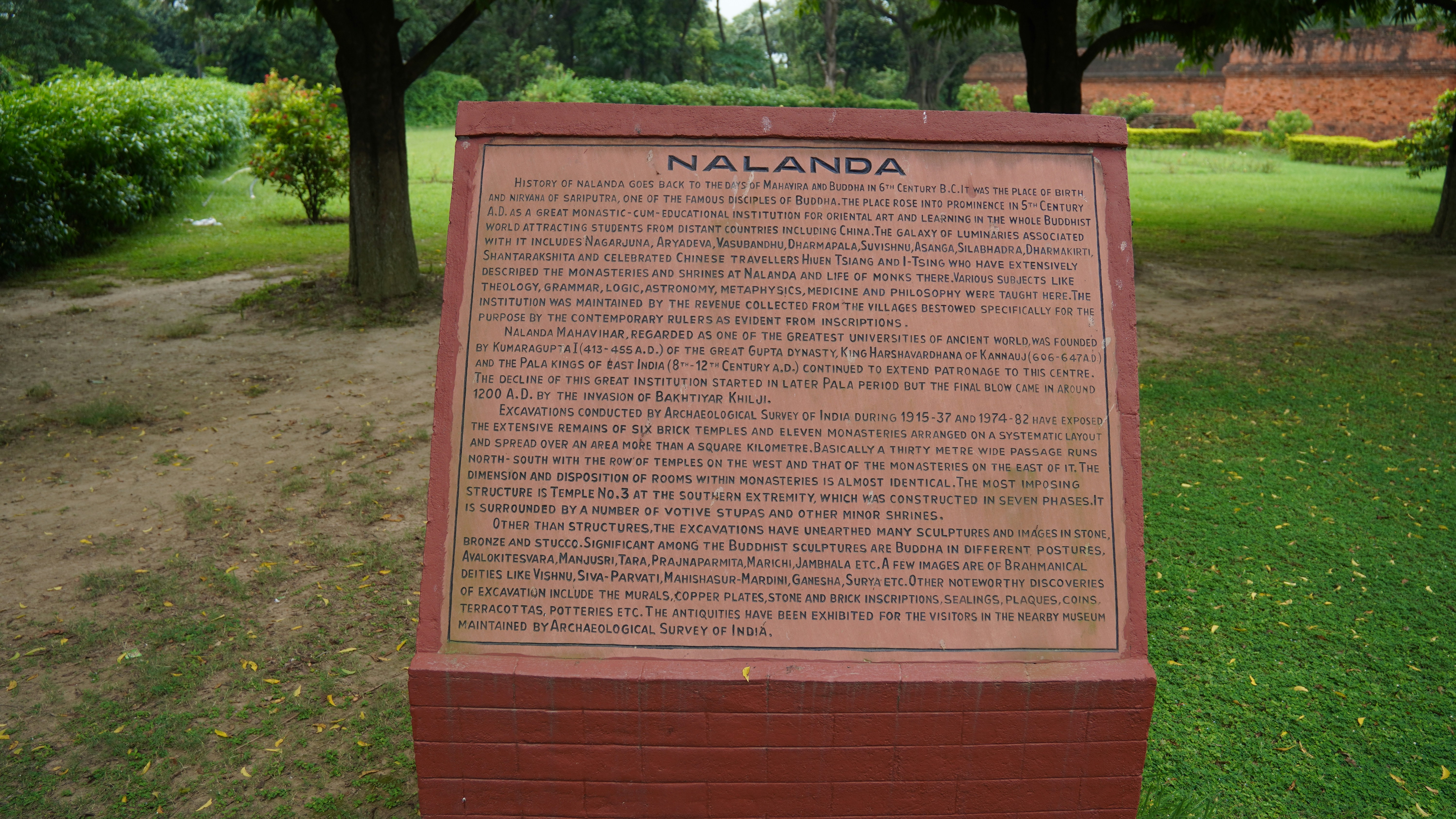
Introduction to Ancient Bihar and Nalanda University
Ancient Bihar, located in the eastern part of India, is a region rich in history and culture. It has been a significant site for intellectual development and the spread of scholarly knowledge since ancient times. The state’s contributions to philosophy, religion, and the arts have been profound, greatly influencing not only India but also other parts of Asia.
Among the hallmarks of ancient Bihar’s illustrious history is Nalanda University, which was established in the 5th century CE. Recognized as one of the first residential universities in the world, Nalanda became a pivotal institution for higher learning and attracted students from various parts of Asia, including China, Korea, Japan, Tibet, Mongolia, and Sri Lanka. The university specialized in numerous fields of study, including philosophy, mathematics, astronomy, medicine, and linguistics, highlighting its diverse curriculum.
Nalanda was not merely an educational institution; it was a vibrant hub for intellectual exchange. Scholars and students participated in rigorous debates and discussions that propelled the boundaries of knowledge and wisdom. The university’s libraries were home to countless manuscripts and texts, some of which are still being studied and revered in contemporary academia.
The significance of Nalanda cannot be overstated. It served as a beacon of learning that emphasized the importance of inquiry and exploration, fostering an environment where questioning existing paradigms was encouraged. This dedication to knowledge made Nalanda a valuable contributor to fields such as medicine, where it facilitated the development of early healthcare practices.
In the context of today’s advancements in artificial intelligence (AI), there is a renewed interest in the teachings of Nalanda. By leveraging technology, contemporary scholars and researchers are working to revive and disseminate this ancient knowledge, a testament to the enduring legacy established in ancient Bihar.
The Legacy of Nalanda: A Treasure Trove of Knowledge
The ancient university of Nalanda, located in what is now Bihar, India, stands as a beacon of intellectual achievement that flourished from the 5th to the 12th centuries. Renowned worldwide, Nalanda was not just a center for Buddhist studies; it encompassed a plethora of disciplines, including rhetoric, logic, grammar, metaphysics, medicine, and mathematics. The extensive curriculum offered students a comprehensive education that fostered critical thinking and innovation.
At Nalanda, scholars from various regions were drawn, leading to a melting pot of ideas. Renowned figures such as Nagarjuna and Aryabhata contributed significantly to the philosophical and mathematical landscapes. Their works laid the groundwork for modern thought, particularly in subjects like zero and the decimal system. Furthermore, the university attracted students from far-off places such as China, Korea, Tibet, and Mongolia, which illustrates its global significance in developing ancient knowledge.
Moreover, the legacy of Nalanda extends beyond its physical manifestations; the texts and manuscripts produced within its walls serve as invaluable resources today. Many ancient texts have been preserved, providing insights into the academic rigor and cultural richness of the time. These documents not only serve as historical records but also continue to inform contemporary educational practices and philosophical discourses. The restoration of Nalanda’s teachings and infrastructure is paramount, as it can foster a revival of ancient wisdom and its relevance in today’s educational ecosystem.
In essence, the legacy of Nalanda University endures through its profound impact on education, philosophy, and culture. As efforts continue to revitalize this ancient treasure, there is an opportunity to integrate its wisdom into modern contexts, enhancing our understanding of knowledge across centuries.
The Role of Artificial Intelligence in Knowledge Preservation
Artificial Intelligence (AI) is transforming the landscape of knowledge preservation, particularly in the context of ancient sites such as Nalanda in Bihar. This transformation is driven by AI technologies that possess the capability to digitize vast collections of historical texts and artifacts that are critical to understanding ancient civilizations. Through the use of machine learning and image recognition, AI can not only catalog these resources but also make them extensively available to scholars and the general public.
One of the primary mechanisms utilized by AI in knowledge preservation is the digitization process. By converting physical texts and manuscripts into digital formats, AI ensures that these valuable resources are less susceptible to degradation over time. This digitization process can involve scanning physical texts and employing Optical Character Recognition (OCR) technology to convert images of text into machine-encoded text. Once digitized, these texts can be organized and categorized, allowing researchers to access specific documents with ease and efficiency.
Moreover, AI excels in analyzing historical texts and datasets. Natural language processing (NLP) algorithms allow for the examination of linguistic patterns, contextual meanings, and even the uncovering of hidden relationships within texts. This analytical capability not only enriches the understanding of ancient writings but also aids in the preservation of cultural heritage by documenting idioms, expressions, and philosophical concepts that may fade from collective memory.
Furthermore, AI-powered tools can enhance public outreach and education by creating interactive experiences based on ancient knowledge. Virtual reality (VR) and augmented reality (AR) applications allow users to explore ancient sites and texts in an immersive manner. Such approaches democratize access to historically significant knowledge, encouraging broader engagement and appreciation for the wisdom of the past.
In conclusion, the role of Artificial Intelligence in preserving ancient knowledge cannot be understated. It offers innovative solutions for digitization, thorough analysis, and enhanced accessibility. As AI continues to evolve, it holds great promise for the revival and sustenance of the rich intellectual heritage found in places like Nalanda and beyond.
Reviving Ancient Texts: AI and Natural Language Processing
Artificial Intelligence (AI) has been revolutionizing various fields, and its impact on natural language processing (NLP) is particularly noteworthy, especially in the context of understanding ancient texts. This branch of AI focuses on the interaction between computers and human language, enabling machines to process and interpret text in a manner that is meaningful. By utilizing NLP, scholars are able to translate and contextualize ancient writings that originate from historic educational centers like Nalanda in Bihar, enhancing our comprehension of their significance and wisdom.
The application of AI in NLP can transform the way we access and interpret ancient manuscripts. Traditionally, the translation of ancient texts required extensive linguistic knowledge and cultural insights, often proving to be time-consuming and labor-intensive. With advancements in AI-powered tools, such as machine learning algorithms and deep learning models, it is now feasible to automate the translation process, making ancient literature more accessible. For instance, these tools can analyze patterns in the text, understand grammatical structures, and apply context-based semantics, thus rendering a more accurate translation.
Furthermore, NLP extends beyond mere translation; it also aids researchers in understanding contextual meanings and cultural implications inherent in ancient texts. By processing large volumes of historical data, AI can identify connections between different texts, reveal thematic trends, and provide insights into the socio-political contexts of the time. This comprehensive approach to analysis allows modern scholars to engage with these manuscripts on a much deeper level, facilitating a revival of interest in ancient knowledge.
As AI continues to evolve, its potential to revive ancient texts through NLP offers an unprecedented opportunity for academia and enthusiasts alike. The fusion of contemporary technology with ancient wisdom not only preserves cultural heritage but also enriches modern discourse, allowing us to glean insights that have stood the test of time.
Case Studies: Successful AI Implementations in Historical Research
The advent of artificial intelligence (AI) has marked a significant turn in the field of historical research, particularly in access to and understanding of ancient knowledge. Within the context of ancient Bihar and the renowned Nalanda University, various initiatives stand out as exemplary cases of AI driving the revival and preservation of historical wisdom.
One notable case involves a collaborative project between historians and computer scientists aimed at recovering lost texts attributed to the scholars of Nalanda. Utilizing machine learning algorithms, researchers processed vast amounts of existing literature and archaeological findings. By training models on identified patterns of textual styles and thematic elements, they managed to reconstruct fragments of texts that were long thought to be lost. This endeavor not only showcased the potential of AI in textual recovery but also offered fresh insights into the philosophical depth of Nalanda’s ancient scholars.
Another significant project focused on the geographical and cultural mapping of ancient Bihar using AI-driven data analysis. By integrating historical texts with modern geographical information systems (GIS), researchers have developed models that visualize historical trade routes and knowledge exchange networks in ancient India. This helped illuminate the interconnectedness of civilizations during the peak period of Nalanda, bridging a crucial gap in historical understanding.
Furthermore, sentiment analysis techniques have been applied to historical narratives and accounts from ancient Bihar, allowing historians to measure shifts in societal attitudes and values over time. The findings have provided deeper context to the historical evolution of ideas and philosophies practiced in Nalanda.
These case studies illustrate the transformative impact of AI in the revival of historical knowledge. By effectively harnessing advanced technologies, scholars are not only rediscovering lost wisdom but also crafting a richer narrative of ancient civilizational achievements, ensuring that the legacy of Nalanda continues to inspire future generations.
Challenges in AI and Historical Knowledge Revival
The integration of Artificial Intelligence (AI) in the revival of ancient knowledge, particularly that of Nalanda and other significant sites in ancient Bihar, encounters a multitude of challenges. One pressing issue is the quality of the data utilized in AI systems. Historical texts and artifacts are often incomplete, fragmented, or exist in varied languages and scripts, which complicates data collection and processing. The reliability of AI-driven conclusions is heavily dependent on the robustness and accuracy of the input data. Low-quality or misinterpreted data can lead to erroneous representations of historical facts, thereby undermining the integrity of the research and revival efforts.
Furthermore, the complexities associated with historical context present another significant hurdle. Ancient knowledge is deeply enmeshed in cultural narratives, philosophical perspectives, and societal frameworks that may not be readily accessible or comprehensible through modern paradigms. AI, while proficient in data analysis, struggles to grasp the nuanced meanings and implications of ancient texts unless explicitly trained to understand these complexities. This limitation necessitates a careful and thoughtful application of AI tools, wherein technologists must work alongside historians who can provide insights into the historical context, ensuring that interpretations and reconstructions are not only accurate but also respectful of the source material.
Effective collaboration between technologists and historians is crucial in addressing these challenges. Such partnerships can foster a more integrated approach to ancient knowledge revival—one where advanced computational techniques are enriched by deep historical insight. By working together, these professionals can enhance the capabilities of AI, tailoring its applications to better fit the needs of historical research. The success of reviving ancient wisdom through AI hinges significantly on recognizing and addressing these challenges, creating a balanced interface between modern technology and historical scholarship.
Future Prospects: The Next Phase of AI and Ancient Knowledge
The integration of artificial intelligence (AI) into the realms of history and archaeology presents unprecedented opportunities for research and exploration. As we move forward, the potential for AI to unpack the complexities of ancient civilizations, including the renowned institutions such as Nalanda in Bihar, becomes increasingly clear. Current trends indicate a growing emphasis on machine learning and data analytics to analyze large datasets, which can significantly amplify our understanding of historical narratives.
One promising area is the use of AI-based tools to process and interpret archaeological findings at an accelerated pace. Through advanced image recognition algorithms, excavation data including artifacts, inscriptions, and even architectural styles can be cataloged and analyzed in real-time. These tools not only enhance the efficiency of data processing but also allow researchers to draw connections that may have remained obscured through traditional methods. For instance, an AI model could assist in identifying similarities in craftsmanship across different sites, potentially hinting at trade routes or cultural exchanges that were previously undocumented.
Moreover, ongoing research endeavors are increasingly focusing on the semantic analysis of ancient texts. AI technologies can assist in deciphering languages and contextualizing historical documents, enriching our comprehension of the philosophies and knowledge systems that once flourished in ancient institutions like Nalanda. The collaboration between historians and AI developers is vital in crafting algorithms that respect the nuances of historical context and linguistic diversity.
As these advancements continue, the field anticipates not only a revival of interest in ancient knowledge but also a re-evaluation of its significance in contemporary society. Ultimately, the marriage of AI and historical scholarship holds the promise of a more dynamic and insightful engagement with the wisdom of our predecessors, particularly regarding the educational frameworks established in ancient Bihar. The future scope of applying AI in understanding and interpreting our shared past is expansive and largely untapped, heralding a new era in historical exploration.
Benefits of Reviving Ancient Knowledge through AI
The integration of artificial intelligence (AI) in the revival of ancient knowledge holds immense potential for numerous benefits, particularly in the fields of education, cultural preservation, and the extraction of contemporary insights from historical teachings. One of the primary advantages of this endeavor is the enhancement of educational methods. By employing AI techniques, educators can create customized learning experiences that adapt to the diverse learning styles of students. The revival of ancient wisdom can enrich modern curricula, providing learners with a broader perspective on history, philosophy, and the sciences. This approach fosters critical thinking and a deeper appreciation of the wisdom of previous civilizations.
Additionally, AI plays a crucial role in preserving cultural heritage. Ancient texts, manuscripts, and artifacts from institutions such as Nalanda in Bihar are at risk of deterioration. AI-driven digitization projects not only safeguard these invaluable resources but also make them accessible to a global audience. By utilizing advanced algorithms for archiving and cataloging, scholars and researchers can gain new insights and maintain the integrity of cultural heritage for future generations.
Moreover, the fusion of ancient wisdom with modern technology generates valuable contemporary insights. AI can analyze historical data, discern patterns, and draw parallels between ancient philosophies and modern societal challenges. This synthesis can lead to innovative solutions for contemporary issues, such as ethical dilemmas in technology or social dynamics influenced by historical events. Through these processes, AI not only aids in the revival of knowledge but also facilitates a dialogue between past and present, fostering a deeper connection to one’s heritage.
Conclusion: Bridging the Past and the Future through Technology
As we navigate the ever-evolving landscape of modern technology, the revival of ancient knowledge through artificial intelligence represents a unique opportunity to bridge historical wisdom and contemporary innovation. The significance of Nalanda University and ancient Bihar cannot be overstated; this illustrious academic institution not only fostered profound philosophical and scientific thought in its time but also established a legacy of knowledge that transcends eras. By leveraging AI technologies, we can catalyze a renaissance of this ancient wisdom, making it accessible to diverse audiences around the globe.
The integration of AI in the dissemination of knowledge allows for the preservation and replication of invaluable insights that ancient scholars offered. AI’s capability to analyze vast amounts of historical texts, interpret them, and present them in an engaging format enriches educational approaches today. This technology serves not merely as a tool, but as a conduit for cultural understanding and intellectual engagement, ensuring that the ideas housed within the annals of history are not lost but instead revitalized and reinterpreted for contemporary learners.
Moreover, the impact of reviving the ancient knowledge from institutions like Nalanda extends beyond educational boundaries. It encourages a reflective discourse on the philosophies and methodologies that guided ancient scholars, which can inform and inspire modern thought. This synthesis of the past with present capabilities embodies a holistic approach to learning and understanding, establishing connections between different cultures and eras.
In conclusion, the collaboration of artificial intelligence with the wisdom found in the teachings of Nalanda and ancient Bihar opens up pathways for new paradigms in education, cultural appreciation, and personal development. As we continue to explore this synergy, it is crucial to recognize and honor the intellectual heritage that shapes our future, ensuring that ancient insights resonate with future generations in meaningful ways.