Introduction to AI in Agriculture
Artificial Intelligence (AI) is increasingly revolutionizing various sectors, and agriculture is no exception. With the global population projected to reach 9.7 billion by 2050, the demand for food is anticipated to escalate dramatically. This situation presents numerous challenges for farmers, including the need to increase crop yields, manage resources efficiently, and combat climate change effects. In response to these pressures, AI has emerged as a crucial technology, offering innovative solutions that enhance farming practices and overall productivity.
The agriculture industry faces a variety of obstacles, such as unpredictable weather patterns, pest invasions, and resource limitations. Traditional farming methods often struggle to address these issues effectively. However, AI technologies, including machine learning, computer vision, and data analytics, provide new avenues to improve decision-making and operational efficiency in farming. For instance, precision agriculture employs AI algorithms to analyze vast amounts of data from various sources, including satellite imagery and sensors, allowing farmers to optimize planting schedules, water usage, and nutrient applications.
Moreover, AI-powered systems can facilitate real-time monitoring of crops and livestock, enabling proactive management of potential problems through predictive analytics. This level of insight not only boosts yield but also minimizes waste and enhances sustainability by reducing the environmental impact of agricultural practices. As farmers embrace these advanced technologies, the integration of AI into agriculture continues to gain traction, symbolizing a significant shift towards smarter, more resilient farming methodologies.
In light of these advancements, it is evident that AI possesses the potential to address critical challenges in agriculture. As further innovations emerge, the role of AI in modern farming will likely expand, shaping the future of food production and sustainability.
Precision Agriculture: Enhancing Crop Management
Precision agriculture represents a pivotal advancement in agricultural practices, leveraging artificial intelligence (AI) to optimize crop management. At its core, precision agriculture involves the meticulous analysis of data, enabling farmers to make informed decisions that can significantly enhance yield and sustainability. Central to this modern farming approach are advanced tools such as drones, sensors, and satellite imaging.
Drones equipped with high-resolution cameras facilitate aerial imagery of farms, providing real-time data on crop health and soil conditions. This technology allows farmers to monitor their fields more efficiently than traditional methods. For example, drone imagery can reveal variances in plant vigor, water stress, and nutrient deficiencies across large areas, which might otherwise go unnoticed. Additionally, sensor technologies provide continuous monitoring of soil moisture, temperature, and nutrient levels, delivering precise information crucial for effective crop management.
Complementing these devices is the application of satellite imaging, which offers a broader perspective of agricultural landscapes. By utilizing satellite data, farmers can track environmental changes and assess crop development over time. This capability is essential not only for immediate decision-making but also for long-term planning, enabling farmers to improve crop rotations and optimize input usage.
AI algorithms play a critical role in processing and interpreting the vast amounts of data gathered from these various sources. By employing machine learning techniques, AI can identify patterns and trends that assist farmers in diagnosing issues before they escalate. Furthermore, predictive analytics driven by AI can forecast future conditions, such as pest invasions or drought risks, empowering farmers to take preemptive actions.
Ultimately, precision agriculture embodies the integration of technology and farming practices, thereby revolutionizing crop management and fostering sustainable agricultural solutions. The ability to leverage data-driven insights is proving indispensable in an era where the demand for food production continues to escalate while environmental concerns grow increasingly urgent.
AI-Powered Robotics in Farming
The integration of AI-powered robotics in modern farming is transforming the agricultural landscape. These advanced technologies are designed to automate various farming tasks, significantly enhancing the efficiency of operations while simultaneously reducing labor costs. As agriculture faces the challenges of an increasing global population and the accompanying demand for food production, the adoption of robotics has never been more crucial.
One of the primary applications of robotics in farming involves planting. AI-driven robots can analyze soil conditions, determine the optimal planting patterns, and execute precise seeding operations. This not only maximizes crop yields but also minimizes seed wastage, which contributes to more sustainable farming practices. Additionally, these robots can operate with a level of precision that is often unattainable by human laborers, ensuring that each seed is planted at the ideal depth and spacing.
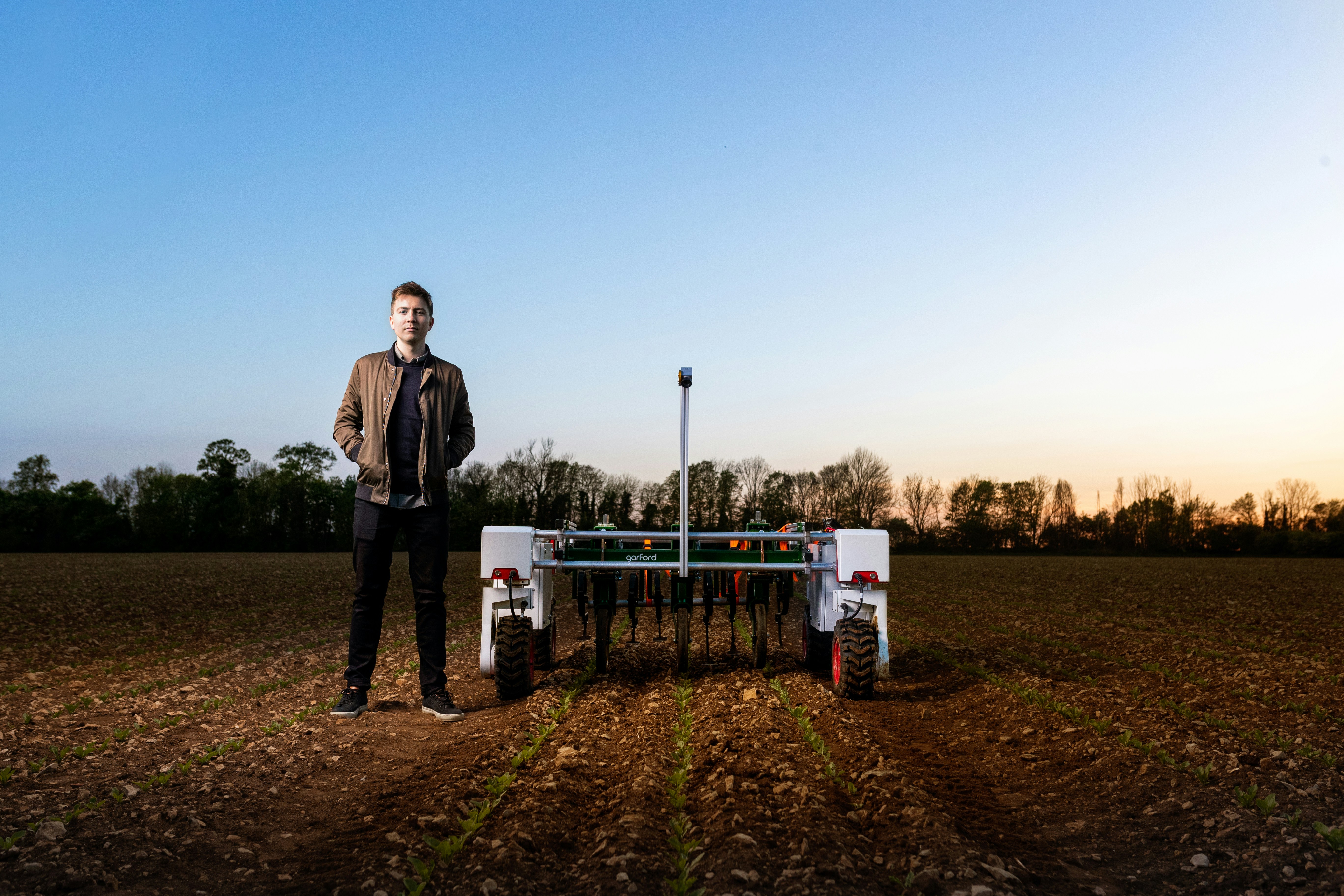
In the realm of weeding, AI-powered robotics demonstrate significant advantages over traditional methods. Equipped with advanced sensors and machine learning capabilities, these robots can distinguish between crops and weeds. By selectively targeting invasive plants, they can reduce the need for chemical herbicides, promoting a healthier ecosystem. This automated weeding approach diminishes the physical strain on farmers and allows for more focused attention on crop health.
Harvesting is another critical area where AI-driven robotics excel. Harvesting robots, which utilize AI algorithms, can operate in various environmental conditions, identifying the ripeness of fruits and vegetables efficiently. By streamlining the harvest process, these robots not only increase productivity but also reduce post-harvest losses. Ultimately, the integration of AI-powered robotics across these farming tasks supports sustainable practices while addressing labor shortages in the agricultural sector.
Predictive Analytics for Crop Yield and Weather Forecasting
In the evolving landscape of agriculture, the integration of artificial intelligence (AI) into predictive analytics has become pivotal for enhancing crop yield and refining weather forecasting methods. By leveraging machine learning algorithms, agricultural stakeholders can analyze extensive historical data, enabling them to foresee future trends and outcomes that were previously elusive. This analytical capability not only provides insights into the anticipated yield of crops but also enhances the accuracy of weather predictions, which are crucial for farming operations.
Machine learning models sifting through vast datasets can recognize patterns that humans might overlook, such as correlations between weather conditions and crop performance. By assessing variables like temperature, precipitation, soil conditions, and previous yield data, these models generate forecasts that help farmers make informed decisions. For instance, if predictions indicate an anomalously wet season, farmers can adjust their planting schedules and crop varieties to mitigate potential losses.
Moreover, the role of AI in predictive analytics extends to climate change implications. With the increasing unpredictability of weather patterns, traditional farming practices often fall short in adapting to new challenges. AI-driven insights provide a proactive approach, enabling farmers to optimize their operations to not only enhance productivity but also to mitigate risks associated with adverse weather scenarios. This adaptive capacity fosters resilience within the agricultural sector.
Furthermore, the accessibility of these advanced analytics via mobile applications and online platforms allows farmers of all sizes to make data-driven decisions. By integrating predictive analytics into their planning strategies, farmers can increase efficiency, reduce waste, and ultimately achieve greater sustainability in their practices.
Farm Management Systems and AI Integration
Farm management systems (FMS) have become essential tools in contemporary agriculture, driving significant enhancements in efficiency and productivity. These platforms integrate essential functions such as inventory management, financial forecasting, and operational oversight, thereby providing a comprehensive solution for farmers. The infusion of artificial intelligence (AI) into FMS marks a transformative shift, offering farmers real-time insights and data-driven decision-making capabilities.
One of the primary functionalities of an integrated FMS is inventory management. AI algorithms analyze consumption patterns, predict demand for crops, and optimize supply logistics. This enhanced level of sophistication aids farmers in maintaining optimal stock levels, thereby reducing waste and ensuring timely delivery of produce to markets. By utilizing predictive analytics, FMS can also help in foreseeing potential challenges such as pest infestations or crop diseases, enabling farmers to take preemptive actions that can safeguard yields.
Additionally, financial forecasting within these systems is notably improved through AI. By aggregating historical data and identifying trends, AI tools can provide farmers with precise financial models. This financial insight is crucial for budgeting, securing funding, and making informed investment decisions that can significantly impact farm sustainability. This level of financial transparency is not just beneficial for individual farmers but also contributes to wider economic stability within the agricultural sector.
Moreover, the operational efficiency facilitated by AI integration is profound. Centralized data collection ensures that farmers have access to real-time insights across various operational facets, allowing for timely intervention and adaptation to changing conditions. The synergy between FMS and AI culminates in a streamlined approach to farm management, empowering farmers with the tools necessary to navigate the complexities of modern agriculture effectively.
Sustainable Farming Practices with AI
Artificial Intelligence (AI) is transforming the landscape of agriculture by promoting sustainable farming practices that conserve resources, minimize chemical inputs, and enhance biodiversity. The integration of AI technologies in agriculture enables farmers to optimize resource use efficiently. For example, precision agriculture employs AI-driven sensors and analytics to monitor soil moisture levels and crop health in real-time, leading to targeted irrigation practices that significantly reduce water usage. In turn, this targeted approach helps conserve precious water resources, making farming operations more sustainable.
Moreover, AI applications can reduce the reliance on chemical inputs, which is crucial for environmental sustainability. Through machine learning algorithms, farmers can predict pest outbreaks and diseases more accurately, allowing them to use pesticides and fertilizers only when necessary rather than on a widespread basis. This approach not only minimizes chemical usage but also lowers operational costs while safeguarding the health of ecosystems. As demonstrated by a study conducted in California’s vineyards, AI systems that monitor vine health can suggest optimal timing for treatments, thereby leading to a 30% reduction in chemical inputs without compromising yield.
Furthermore, AI enhances biodiversity by enabling practices such as crop rotation and intercropping. By analyzing data on plant growth patterns, weather conditions, and soil health, AI tools guide farmers in selecting crops that can coexist harmoniously and improve soil quality through natural nutrient replenishment. This kind of informed decision-making fosters a diverse agricultural ecosystem, which is vital for maintaining resilience against pests and climate variability. One notable example includes the use of drone technology, where AI analyzes diverse plant species’ performance, enabling farmers to cultivate a more varied and sustainable farming environment.
Overall, the contribution of AI to sustainable agriculture cannot be overstated. Through resource optimization, reduction of chemical inputs, and enhancement of biodiversity, AI is paving the way for a farming future that is not only productive but also ecologically responsible.
Challenges and Limitations of AI in Agriculture
The integration of artificial intelligence (AI) in agriculture presents numerous opportunities to enhance productivity and efficiency. However, the adoption of these transformative technologies is not without its challenges and limitations. One of the most significant barriers to implementing AI solutions in farming is the high cost associated with AI systems. Investments in advanced algorithms, sensors, and data management tools can be prohibitively expensive for many small-scale farmers, potentially leading to unequal access in agricultural innovation.
Furthermore, the digital divide in rural areas exacerbates these issues. Not all farms have the necessary infrastructure to support sophisticated AI tools, particularly in remote locations where internet connectivity may be limited. This lack of access can hinder the entire farming community’s ability to benefit from AI advancements, creating a gap between technologically advanced and less advanced farming practices.
Data privacy concerns are also paramount, as agriculture increasingly relies on data collection and analysis. Farmers may be hesitant to adopt AI technologies due to fears surrounding the misuse of their data or concerns over data ownership. Ensuring the protection of sensitive information while fostering an environment of trust is essential to facilitate widespread AI adoption in agriculture.
Additionally, the successful integration of AI requires a knowledgeable workforce. This necessitates a commitment to farmer education and training programs that teach the effective use of sophisticated tools. Without proper education, farmers may struggle to embrace AI technologies, resulting in underutilization or ineffective application of these solutions. Therefore, addressing these challenges is crucial for the successful implementation of AI in modern farming.
Future Trends of AI in Agriculture
The future of agriculture is poised for transformation, largely driven by the proliferation of artificial intelligence (AI). Emerging trends indicate that technologies such as autonomous vehicles, AI-powered biotechnology, and innovative livestock management systems will redefine farming practices. Autonomous vehicles, including drones and robotic tractors, are expected to revolutionize crop monitoring and field operations. These machines will enhance efficiency by performing tasks such as planting, harvesting, and applying fertilizers with precision, thereby minimizing wastage and reducing labor dependency.
Moreover, AI-driven biotechnology is anticipated to play a crucial role in enhancing crop yields and resilience. Through advanced data analysis and machine learning algorithms, farmers can now develop genetically modified organisms (GMOs) that are tailored to withstand climate stressors, pests, and diseases. This application not only promises to increase productivity but also aims to promote sustainability in agricultural practices.
In the realm of livestock management, AI technologies are expected to optimize breeding and health monitoring. Sensors and AI algorithms can track animal behavior and health indicators in real-time, allowing for timely interventions that can improve overall livestock welfare. This integration of AI not only optimizes production rates but also fosters ethical farming practices by ensuring that the animals live in healthier conditions.
Furthermore, the synergy between AI and big data analytics will enable farmers to make better-informed decisions. Statistics derived from predictive analytics can help in anticipating market demands, thereby allowing farmers to adjust their cultivation strategies accordingly. Overall, the convergence of these technologies heralds a new era in agriculture, making it more efficient, productive, and sustainable.
Conclusion: The Future of Farming with AI
The rapid integration of artificial intelligence (AI) within agricultural practices signals a pivotal transformation in the landscape of modern farming. Throughout this discourse, we have observed how AI technologies enhance productivity, optimize resource usage, and promote sustainable practices. Farmers who adopt AI-powered solutions are likely to experience increased yields and reduced costs, translating to better profitability and efficiency in operations.
AI tools such as precision agriculture, predictive analytics, and automated systems are redefining traditional farming methods. These innovations not only support farmers in making data-driven decisions but also foster an environment where practices are continually improved upon through ongoing learning and adaptation. As stakeholders in the agriculture sector consider adopting these advanced technologies, the benefits of improved crop monitoring, soil management, and pest control become increasingly evident.
However, it is crucial for the agriculture industry to find a harmonious balance between embracing technology and respecting traditional farming practices. While AI can offer substantial assistance, the insights gained from generations of farmers remain invaluable. Acknowledging the wisdom of experienced practitioners alongside embracing innovative technologies will pave the way for a future where both AI and traditional methods coexist and thrive.
Encouragingly, the ongoing advancements in AI and its applications in agriculture are only expected to grow. As we look ahead, it is important for all stakeholders to remain engaged in this evolving landscape, be open to new ideas, and actively participate in a collective effort to leverage AI for the greater good. The future of farming is bright with AI, and by working together, we can ensure that it becomes an integrated component of agriculture that benefits everyone involved.