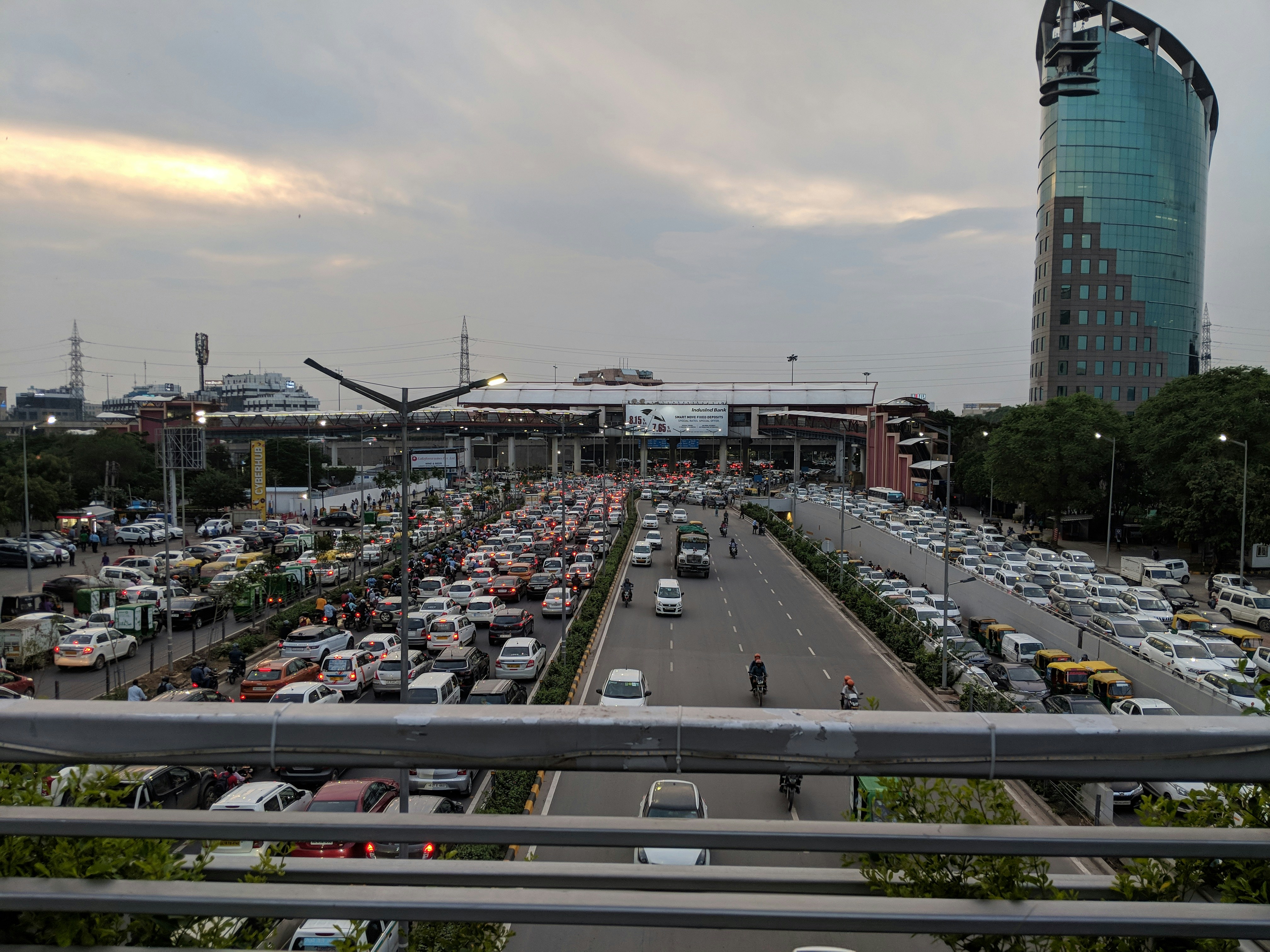
Introduction to Traffic Management Challenges in Mumbai
Mumbai, one of the most populous cities in the world, faces significant challenges in traffic management due to its high population density and rapid urbanization. The city is home to over 20 million people, resulting in a diverse range of vehicles on the road, from private cars to public transport systems. This mix leads to congestion during peak hours, with the traffic flow frequently reaching a standstill in several areas. The incessant rise in the number of vehicles, combined with the city’s intricate road networks, has exacerbated the situation.
Furthermore, Mumbai’s infrastructure has not kept pace with the growing demands of its population. Many roads are outdated and poorly maintained, contributing to inefficient traffic flow and increased travel times. The existing traffic signals and management systems are often unable to adapt to real-time conditions, which further aggravates the delay experienced by commuters. The lack of sufficient parking spaces also leads to vehicles occupying roadways during peak hours, compounding the already dire traffic situation.
Another challenge lies in the enforcement of traffic regulations. Poor compliance with traffic rules, coupled with the lack of effective penalties, results in chaotic driving conditions. Stretched law enforcement resources and the absence of an integrated traffic management system contribute to the continuous struggle of maintaining order on the roads.
Given these complex challenges, there is a pressing need for innovative solutions to transform Mumbai’s traffic management. This transformation is not only crucial for enhancing the daily commute of its residents but also for reducing pollution and improving overall urban mobility. Leveraging advanced technologies, such as artificial intelligence and machine learning, presents a viable pathway to innovating traffic systems to better meet the city’s needs.
Understanding World Models in AI
World models are a significant innovation in the domain of Artificial Intelligence (AI), particularly in simulating and predicting real-world scenarios. These models essentially encapsulate an agent’s understanding of its environment, relying on large datasets and algorithms to create a representation of the world as seen through the agent’s perspective. By modeling the surroundings, world models can effectively forecast future states and outcomes, allowing AI systems to make informed decisions.
The functioning of world models is deeply rooted in their ability to reconstruct the relevant aspects of the environment dynamically. They present a structured approach where the AI agent can learn from experiences and continuously update its model based on new data inputs. This transition from static mapping to adaptive learning is particularly essential in complex domains like traffic management, where conditions are often unpredictable and influenced by numerous variables including human behavior, weather conditions, and infrastructure changes.
World models enable AI systems to operate in environments where real-time processing and response are imperative, such as urban traffic networks. They employ algorithms that estimate various scenarios, allowing for optimal decision-making tailored to dynamic situations. For instance, models like Genie 3 and V-JEPA 2 leverage various types of information, including historical traffic data and real-time sensor feedback, to simulate potential arbitrations for traffic flow and congestion alleviation.
In essence, the role of world models extends beyond mere simulation. They augment the capability of AI to predict, analyze, and ultimately enhance the effectiveness of responses within the frenetic pace of urban environments. With advancements in AI technologies and methods, the integration of world models marks a pivotal shift in how intelligent systems can manage intricate and evolving tasks such as traffic optimization in cities like Mumbai.
Overview of Genie 3 and V-JEPA 2 Models
Genie 3 and V-JEPA 2 are two state-of-the-art AI models designed to address complex traffic management challenges, incorporating advanced architecture and functionality. Both models leverage the concept of world models, representing environments in which they operate, facilitating better decision making and predictive capabilities.
Genie 3 operates by integrating multiple sensory inputs to construct a rich representation of its environment. It utilizes deep reinforcement learning techniques to enhance its learning capability, adapting to dynamic traffic conditions in real time. One of its significant strengths is its ability to predict traffic flow patterns by recognizing historical data trends, enabling timely interventions in traffic management. Genie 3’s architecture is structured to minimize latency in decision-making, ensuring that traffic signals and routing systems respond quickly to changing conditions.
On the other hand, V-JEPA 2 employs a different approach through its focus on variational inference and joint embedding predictive architecture. This model emphasizes the relationship between various traffic factors, such as vehicle density and road conditions, working synergistically to forecast congestion levels effectively. V-JEPA 2’s architecture allows it to optimize resource allocation effectively, distributing traffic control signals and interventions where they are needed most. Its ability to integrate visual and spatial data enhances its proficiency in understanding and predicting traffic scenarios.
In summary, while both Genie 3 and V-JEPA 2 significantly contribute to revolutionizing traffic management in urban environments like Mumbai, their underlying architectures and functionalities highlight distinct strengths. Genie 3 excels in real-time responsiveness, whereas V-JEPA 2 provides deep insights into traffic dynamics, suggesting that a combination of both models could yield a more comprehensive traffic management solution.
Integrating AI Models for Traffic Management in Mumbai
The integration of advanced AI models, specifically Genie 3 and V-JEPA 2, holds remarkable potential for transforming traffic management in Mumbai. As one of the world’s most congested cities, Mumbai faces persistent challenges such as traffic jams, inefficient route management, and pollution. By implementing cutting-edge AI systems, it is possible to streamline traffic flow, optimize resource allocation, and enhance system responsiveness.
Genie 3 operates by utilizing a comprehensive set of parameters to predict traffic patterns and streamline the decision-making process in real-time. This model can analyze vast datasets, including historical traffic data and current vehicular flows, allowing for the anticipation of congestion hotspots. On the other hand, V-JEPA 2, with its focus on situational awareness, enables traffic authorities to adapt to changes in real-time swiftly, ensuring better coordination among various traffic signals and systems.
To effectively incorporate these AI models into Mumbai’s existing traffic management infrastructure, substantial upgrades will be necessary. Implementation will require a robust technological backbone, including high-resolution cameras, sensors, and reliable telecommunications with low latency to facilitate continuous data exchange. Moreover, collaboration with local government and existing traffic management stakeholders will be crucial for a successful transition.
Training data is also a vital element; therefore, the city will need to invest in comprehensive datasets that can feed these AI models accurately. This training will bolster the models’ prediction capabilities over time, offering even more effective management solutions as they learn from their operational environment.
In conclusion, the integration of Genie 3 and V-JEPA 2 offers immense potential to revolutionize traffic management in Mumbai, addressing current inefficiencies and paving the way for a more sustainable urban transportation framework.
Benefits of AI-driven Traffic Management Solutions
As urban environments expand, the implementation of advanced technologies, particularly artificial intelligence (AI), in traffic management systems becomes increasingly vital. AI-driven traffic management solutions, employing sophisticated world models like Genie 3 and V-JEPA 2, offer numerous advantages that could significantly transform Mumbai’s road traffic dynamics.
One of the primary benefits is the ability to reduce congestion. By utilizing real-time data collection and predictive analytics, AI can optimize traffic signals, manage toll booths, and adjust lane usage efficiently. Such dynamic adjustments reduce vehicle wait times at intersections, decreasing bottlenecks while ensuring smoother flows of traffic throughout the city.
Improving travel times is another significant advantage of AI-driven systems. By analyzing traffic patterns and predicting congestion points, these solutions can provide commuters with alternate routes and timely updates, significantly enhancing their travel experience. Ultimately, quicker travel times not only increase individual productivity but also reduce the cumulative emissions from standing vehicles, contributing to a cleaner environment.
Moreover, enhancing road safety is a crucial benefit of integrating AI technologies into traffic management systems. AI can identify high-risk areas for accidents by monitoring various factors such as pedestrian movements, vehicle speed, and weather conditions. With this information, authorities can implement targeted measures, such as adjusting traffic signal timing and increasing police presence in problematic zones, reducing the likelihood of accidents.
Lastly, AI-driven traffic solutions facilitate better urban planning. By providing detailed analyses of traffic flow and patterns, policymakers can make informed decisions regarding infrastructure development, public transportation enhancements, and zoning regulations. This data-driven approach allows for the creation of more sustainable and livable urban spaces.
Case Studies: Successful AI Implementations in Other Cities
Artificial Intelligence has been increasingly integrated into urban traffic management systems across various cities worldwide, yielding remarkable results in enhancing traffic flow and reducing congestion. For instance, Barcelona, Spain, has adopted AI-driven models to manage its intricate network of streets. The city employs machine learning algorithms that analyze real-time traffic patterns to optimize signal timings. This implementation resulted in a reported 20% reduction in travel times across key thoroughfares, showcasing the potential benefits similar to those that AI models like Genie 3 and V-JEPA 2 could bring to Mumbai.
Another successful case study can be found in Los Angeles, USA, where the city has harnessed AI technology to predict traffic conditions and adjust its traffic signal system accordingly. The AI system employs historical data and real-time inputs to forecast traffic jams up to 30 minutes in advance, allowing for timely adjustments. This innovation led to a significant decrease in vehicle idling and emissions, further emphasizing the positive impact of AI on urban environments. The insights drawn from Los Angeles can offer valuable lessons for Mumbai, particularly in adapting AI technologies to local contexts.
Additionally, Singapore has implemented an advanced AI-infused traffic management system that utilizes extensive sensor data to optimize vehicle flow. Singapore’s system is notable for its proactive approach, using predictive algorithms to deal with foreseeable congestion. By analyzing patterns and traffic behavior, the city has improved overall commuting experience and reduced the occurrence of gridlock. These case studies—Barcelona, Los Angeles, and Singapore—demonstrate the transformative potential of AI in traffic management, highlighting strategies that could be effectively tailored to suit the unique challenges faced by Mumbai.
Challenges and Limitations of Implementing AI in Mumbai
The integration of artificial intelligence (AI) in Mumbai’s traffic management systems presents numerous challenges and limitations that must be addressed to ensure successful implementation. One of the primary technical barriers is the reliability of data collection methods. In a city characterized by its complex traffic patterns, obtaining accurate and real-time data is essential for AI systems to function effectively. Inadequate infrastructure to support advanced technologies can hinder the quality of data, thus reducing the performance of AI models such as Genie 3 and V-JEPA 2.
Additionally, the existing road infrastructure may not be equipped to handle the sophisticated demands of AI-driven traffic management solutions. Many of Mumbai’s road networks require modernization to support new technologies, including smart traffic signals and vehicle-to-everything (V2X) communications. The financial investment needed for such upgrades can be substantial, posing a significant challenge for local authorities amid competing budgetary priorities.
Social barriers are another critical area of concern when considering the deployment of AI in traffic management. Public acceptance of AI technologies can be low, often rooted in fears of job displacement and concerns about privacy and data security. The perception that AI systems might exacerbate inequalities in urban mobility may impede their adoption. Engaging with communities to build awareness and trust in these innovative solutions is essential for overcoming skepticism.
Moreover, the collaborative landscape of traffic management in Mumbai, which involves multiple stakeholders such as local governments, transportation authorities, and private enterprises, can complicate the integration process. Establishing a cohesive strategy that aligns the interests of diverse groups while navigating bureaucratic hurdles poses another layer of difficulty.
These technical, infrastructural, and social challenges must be systematically addressed to unlock the full potential of AI in revolutionizing Mumbai’s traffic management. Ensuring a thoughtful approach to implementation will ultimately facilitate smoother transitions toward smarter urban mobility solutions.
Future Prospects of AI in Urban Traffic Solutions
The integration of Artificial Intelligence (AI) in urban traffic management presents a transformative potential for cities like Mumbai. As urbanization continues to accelerate, the complexity of traffic patterns escalates, necessitating advanced solutions that can adapt in real-time. Future AI applications, such as those modeled on system architectures like Genie 3 and V-JEPA 2, are poised to offer dynamic traffic management strategies. These models leverage machine learning and deep reinforcement learning to predict traffic flow and optimize signal timing.
One of the pioneering goals for AI in traffic management is the development of systems that can learn from historical traffic data and respond to environmental changes. This adaptability could revolutionize not just traffic flow but also reduce congestion, ensure smoother commutes, and minimize environmental impacts by optimizing routes and reducing idle times. Additionally, the implementation of AI-based solutions can facilitate improved incident response times and enhance the overall safety of road users.
The collaboration between government entities and technology firms will be crucial to the successful deployment of these AI technologies. By pooling expertise and resources, tailored solutions can be designed to meet Mumbai’s unique challenges. Government initiatives may include regulations and incentives that encourage tech firms to innovate and provide scalable solutions. Furthermore, public-private partnerships can promote data-sharing initiatives, which are essential for building more responsive traffic management systems. Such collaborations can leverage local insights and tech capabilities, fostering an ecosystem conducive to innovation.
Looking ahead, the role of AI in traffic management is not just about improving efficiency; it is also about enhancing the quality of urban life. As AI continues to develop, we can expect a more coordinated and intelligent approach to managing traffic flow, which will ultimately lead to a more sustainable urban environment. In conclusion, the promising prospects of AI in urban traffic solutions signal a vital shift towards smarter cities that can effectively navigate the challenges of congestion and urban mobility.
Conclusion and Call to Action
The implementation of artificial intelligence (AI) in traffic management in Mumbai presents a pivotal opportunity to transform the current transportation landscape. We have explored how advanced AI concepts, such as World Models including Genie 3 and V-JEPA 2, can provide significant enhancements to traffic prediction, congestion mitigation, and overall system efficiency. By leveraging these innovative technologies, stakeholders can proactively address the multitude of challenges posed by traffic congestion and improve the quality of urban mobility.
A pressing need exists for the adoption of AI solutions that can analyze real-time data, optimize traffic flow, and ultimately contribute to sustainable urban development. The potential impact of these tools on reducing travel times, minimizing emissions, and enhancing the safety of road users cannot be overstated. As Mumbai continues to grow, the pressures on its transport infrastructure will intensify, making it imperative to act quickly and decisively.
It is essential for city officials, urban planners, and technology developers to recognize the urgency of implementing these AI-driven systems. Collaborations between government bodies and private enterprises can pave the way for pilot programs and integrated solutions that test and refine these advanced methodologies. Strengthening the technological backbone of Mumbai’s traffic management will not only improve daily commutes but also set a precedent for other urban centers grappling with similar issues.
In light of these considerations, we urge stakeholders to take a proactive stance and consider the integration of AI technologies in addressing Mumbai’s traffic challenges. The future of urban transport is not just about managing vehicles, but about creating a cohesive, efficient, and sustainable transport network that benefits all citizens.