Introduction to Sim-to-Real Transfer
Sim-to-real transfer refers to the process of adapting and translating the capabilities of robotic systems from a controlled simulation environment to unpredictable real-world settings. In the context of manufacturing, particularly in regions like Bihar, this concept is pivotal in enhancing the effective deployment of factory robots. The significance of sim-to-real transfer lies in its ability to address the discrepancies that often arise between simulated scenarios and actual operational conditions.
Simulation environments allow engineers to design, test, and optimize robotic functionalities in a risk-free, virtual space. Here, robots can be programmed to interact with various tasks, manipulate objects, and navigate environments without the hazards associated with live operations. However, limitations exist in the accuracy of simulations, especially when factoring in real-world scenarios that involve dynamic variables such as variable lighting, surface imperfections, and unexpected human interactions.
For factories in Bihar, the transition from simulated success to real-world execution can be particularly challenging. Factors such as infrastructure, workforce capabilities, and local environmental conditions play a significant role in the effectiveness of robotic systems once deployed. The path from simulation to reality requires a nuanced understanding of local manufacturing processes and conditions to ensure robots perform optimally. Techniques such as domain adaptation—modifying the robot’s learning algorithms based on feedback from real-world performance—can enhance this process. By integrating insights gained from both simulated tests and actual applications, factories can bridge the gap, improving not only productivity but also the reliability and adaptability of robotic systems.
Current Landscape of Robotics in Bihar
The adoption of robotics in Bihar’s factories has evolved significantly over recent years, reflecting a growing recognition of the role of automation in enhancing productivity and efficiency. Currently, several factories in Bihar are beginning to integrate various types of robots, each serving distinct functions tailored to their specific manufacturing needs.
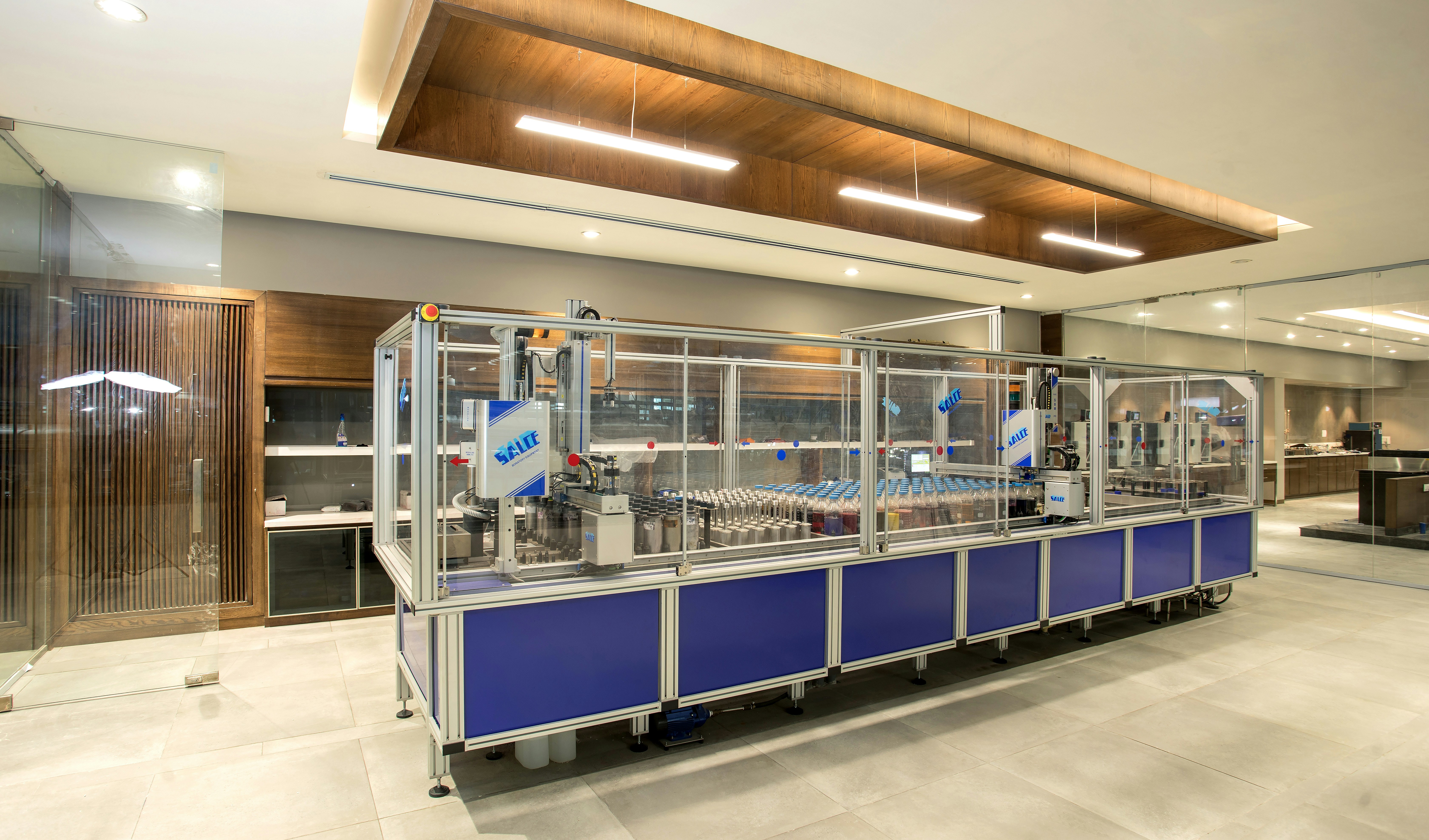
The most common types of robots in use include robotic arms, automated guided vehicles (AGVs), and collaborative robots, or cobots. Robotic arms are often employed for tasks such as welding, painting, and assembly, which require precision and repeatability. In addition, AGVs facilitate material handling within factories, enabling better logistics and reducing human error. Cobots, designed to work alongside human workers, help augment labor in tasks such as packing and quality control, ensuring that operations maintain a high standard without compromising safety.
Robots in Bihar are being utilized across various sectors, including textiles, food processing, and electronics, reflecting the diverse industrial landscape of the region. For example, in textile production, robots are increasingly used for sewing and fabric cutting, leading to improved turnaround times and quality. In food processing, robotic systems automate repetitive tasks, thus minimizing manual labor and reducing the risk of contamination.
The integration of these robotic technologies not only streamlines manufacturing processes but also provides opportunities for upskilling the workforce. Manufacturers are compelled to invest in workforce training programs to ensure that employees can effectively collaborate with robotic systems, bridging the gap between traditional methods and modern techniques.
Overall, while robotics in Bihar is still in a nascent stage compared to more industrialized regions, the ongoing advancements signal a positive shift towards embracing automation and innovation in the manufacturing sector. The future capabilities of robotics will likely reshape the operational landscape, fostering greater competitiveness in the market.
Understanding Sim-to-Real Challenges
The transition from robotic simulations to real-world applications presents a myriad of challenges, significantly affecting the efficiency of factory robots in Bihar. Sim-to-real challenges are largely attributed to the discrepancies between virtual environments, where robots are trained, and the complex, variable conditions they encounter in actual operational settings. These disparities may stem from divergent physical properties, nuanced environmental factors, and the unpredictability of interactions between robots and their surroundings.
One primary challenge involves the accuracy of models used in simulations. The algorithms and physics engines that underpin these virtual environments often simplify real-world phenomena, leading to a lack of alignment when robots operate in real factories. For instance, simulations may not correctly replicate factors like friction, surface irregularities, or unforeseen obstacles, which can cause robots to underperform or malfunction when deployed.
Moreover, sensory inputs present additional hurdles. Robots rely on sensors to navigate and manipulate their environment. In simulations, sensory data can be idealized, failing to account for noise, interference, or variability that occurs in practical settings. This can result in robots misjudging distances or objects, adversely impacting their efficiency in carrying out tasks.
Furthermore, the learning process in simulation often doesn’t fully encapsulate the complexity of real-world scenarios. Robots may exhibit overfitting behavior, wherein they excel in simulated tasks but falter in unpredictable conditions. The dynamic nature of a factory floor, including variations in human behavior, equipment, and materials, creates an environment that is inherently more intricate than those stipulated in training models.
In conclusion, understanding these sim-to-real challenges is imperative for improving the operational reliability of factory robots in Bihar. Addressing these issues involves refining simulation parameters, enhancing sensory technology, and adopting hybrid learning approaches that bridge the gap between virtual training and real-world implementation.
Technical Limitations of Robotics
The deployment of robotics in the manufacturing sector of Bihar faces several significant technical limitations that hinder effective sim-to-real transfer. These limitations primarily revolve around three critical aspects: sensor accuracy, motion control, and hardware robustness. Each of these factors plays a pivotal role in determining the overall efficiency and reliability of robotic systems.
Firstly, sensor accuracy is paramount in ensuring that robots can accurately perceive their environment. In many manufacturing scenarios, the precision required for tasks such as object detection and manipulation significantly impacts the operational effectiveness of these robots. Limitations in sensor technology can lead to incorrect data interpretation, potentially resulting in errors during production processes and degrading the quality of the final product.
In addition to sensor challenges, motion control is another area where technical limitations manifest. Robotics in Bihar’s factories often require intricate movements and precise coordination to function effectively. However, current motion control algorithms may not adequately replicate the precise maneuvers observed in real-world manufacturing settings. Any discrepancies in motion can lead to inefficiencies and increased wear on robotic components, consequently affecting productivity.
Moreover, the robustness of hardware cannot be overlooked. In the context of Bihar’s manufacturing landscape, equipment must endure various environmental factors and operational demands. However, many robotic systems are not designed to withstand such conditions, making them more susceptible to breakdowns and malfunctions. This fragility undermines the potential benefits of automation in improving production efficiency.
In summary, the technical limitations of robotics, including challenges with sensor accuracy, motion control, and hardware robustness, present significant obstacles to achieving effective sim-to-real transfer in Bihar’s manufacturing sector. Addressing these challenges will be crucial for enhancing the integration of robotic systems in local industries.
Environmental Variability Factors
The deployment of robots in factories presents distinct challenges, particularly when they transition from simulation training to real-world environments. In the context of Bihar’s factories, environmental variability significantly influences the performance of these robotic systems. Factors such as temperature, humidity, and workspace conditions create a complex landscape for robots designed to operate under idealized parameters.
Firstly, temperature fluctuations represent a critical challenge. In many cases, robots are trained in controlled settings where temperatures are stable and predictable. However, the factories in Bihar experience a wide range of temperatures throughout the year, which can affect the mechanical and electronic components of robots. For instance, extreme heat may lead to overheating, while lower temperatures could hinder the functionality of certain sensors and actuators. Ensuring that robots can adaptively respond to these thermal variances is essential for maintaining operational efficiency.
Moreover, humidity plays a pivotal role in the longevity and reliability of robotic systems. High humidity levels can cause moisture to accumulate in critical electronic components, impacting their performance and leading to potential failures. Robotics in Bihar must be equipped with protective measures to mitigate these risks, such as moisture-resistant materials and designs that allow for proper ventilation.
Additionally, workspace conditions in Bihar’s factories are often dynamic, with variable layouts, product types, and interaction with human workers. Robots trained in simulations may not be prepared for the unpredictability of real-life scenarios, leading to challenges in navigation and task execution. Therefore, incorporating adaptable algorithms that allow robots to learn and adjust to their environments is crucial. This adaptability can help mitigate the impacts of environmental variability and ensure that robots function optimally despite real-world challenges.
Training Data and Machine Learning Issues
The quality and scope of training data are pivotal in the development and performance of machine learning models, particularly when applied to factory robots in Bihar. These machines rely on data to learn how to perform tasks accurately within their working environments. However, several challenges arise that can severely impede their operational efficacy.
Firstly, the availability of diverse and comprehensive training datasets is a critical concern. For robots to function optimally, they must be trained on data that accurately reflect the variety of scenarios they will encounter. This includes variations in object shapes, sizes, weights, and handling conditions. In many cases, the datasets may be limited to specific conditions, which can lead to poor generalization in real-world applications. Robots that are only exposed to narrowly defined circumstances during training may struggle to adapt when confronted with new, unanticipated challenges.
Moreover, the quality of the annotations within the training data greatly impacts the learning outcomes. Mislabelled or poorly described data can confuse machine learning algorithms, leading to inaccuracies in recognition and response. This is particularly troubling in production environments, where precision is essential, as small errors can result in production delays or quality issues.
Additionally, data biases must be addressed to avoid skewed performance. If the training data predominantly reflects certain operational conditions but overlooks others, the resulting models will likely demonstrate biases in their performance. Such biases can affect not only efficiency but also the safety in operations, leading to potential risks in factories.
In conclusion, investing in high-quality and diverse training data is crucial for the successful deployment of factory robots in Bihar. Addressing the challenges related to training data quality and scope will ultimately enhance operational performance and ensure that these machines function effectively in real-world scenarios.
Economic Constraints and Their Impact
The industrial landscape in Bihar faces significant economic constraints that hinder the widespread adoption of advanced robotics technology in factory settings. Budget limitations are one of the principal barriers that many factories encounter. The limited financial resources allocated to technology upgrades and innovations create a situation where investment in cutting-edge robotics is often deemed impractical or unfeasible. In an environment where operational costs must be meticulously managed, factory owners may prioritize immediate needs over potential long-term benefits offered by automation.
Moreover, resource allocation can significantly impact the ability of factories to embrace robotic systems. A lack of skilled personnel trained in robotics further exacerbates the issue, as existing workers may require extensive retraining to effectively operate and maintain automated machinery. This demand for specialized training necessitates additional investment, diverting funds from other critical areas such as production or employee wages. As a result, many businesses in Bihar may choose to maintain traditional manufacturing processes that do not require such specialized skills.
Additionally, external economic factors, such as fluctuating market demands and supply chain disruptions, can place further strain on factory budgets. When faced with unpredictable economic landscapes, decision-makers often adopt a conservative approach, opting to delay investments in advanced technologies like robotics until they perceive a more stable economic environment. This reluctance can lead to a significant lag in the adoption of efficient production methods, ultimately hindering the competitive capabilities of Bihar’s manufacturing sector.
In light of these economic constraints, it is essential for stakeholders in Bihar’s industrial ecosystem to explore innovative funding solutions and collaboration opportunities. Identifying potential partnerships with technology providers and engaging in government initiatives focused on technology adoption can help alleviate some of the financial pressures faced by factories. By addressing these economic challenges, the pathway to integrating robotics into Bihar’s manufacturing industry may become more attainable.
Future Prospects and Solutions
The integration of robotic technology into manufacturing processes presents both opportunities and challenges, particularly in regions like Bihar. As we look towards the future, innovative solutions and advancements can play a pivotal role in addressing the sim-to-real challenges faced by factory robots. One promising approach involves the development of more sophisticated simulation tools that accurately replicate real-world conditions. These tools can enhance the training of robots, ensuring that they can adapt to the complexities of the manufacturing environment with greater efficacy.
Furthermore, the adoption of machine learning algorithms can significantly enhance the adaptability of robots. By utilizing vast datasets from real-world operations, these algorithms enable robots to learn from their environments continuously. This capacity for learning allows robots to refine their processes over time, ultimately increasing their efficiency and productivity in factory settings. Additionally, employing hybrid approaches that combine both simulation and real-world training can provide a more robust framework for preparing robots for operational challenges.
Investment in infrastructure will also be critical for the success of robotic integration in Bihar’s manufacturing sector. Enhancing internet connectivity, access to high-quality power supply, and development of advanced robotics facilities are essential steps in supporting these technologies. Collaboration between government, industry stakeholders, and educational institutions can further bolster this ecosystem. Engaging in initiatives that promote STEM education can help build a workforce equipped to innovate and manage these advanced technologies in manufacturing.
As technology continues to evolve, the potential for robots in factories will only expand. By embracing these advancements and addressing the challenges head-on, the manufacturing sector in Bihar can not only improve efficiency but also become a model for successful integration of robotics in emerging markets.
Conclusion: Bridging the Gap
As the manufacturing industry in Bihar continues to evolve, the integration of robotics plays a crucial role in enhancing operational efficiency and productivity. However, the sim-to-real challenges faced by robots in this region underline significant issues that must be addressed to fully leverage their potential. The complexity of replicating real-world conditions within simulated environments means that robots often struggle to perform at optimal levels once deployed in actual factory settings. This disparity can lead to inefficiencies and increased costs, undermining the benefits that automation promises.
To effectively bridge this gap, it is essential to invest in advances in AI and machine learning that improve the adaptability of robots. Developing sophisticated training models that factor in real-world variables can enhance robots’ performance, enabling them to navigate the intricate dynamics of Bihar’s manufacturing landscape. Moreover, fostering close collaboration between local manufacturers and technology developers will facilitate the exchange of knowledge, ensuring that the robotic systems are designed with the specific challenges of the region in mind.
Additionally, continuous testing and iterative learning processes should be embedded within robotic deployment strategies. By prioritizing on-site performance evaluations and adapting systems based on actionable insights, manufacturers can significantly mitigate the risks associated with sim-to-real discrepancies. Efforts should also be directed towards creating a robust feedback loop that allows for ongoing adjustments, ensuring that the robots remain effective over time.
Ultimately, addressing sim-to-real challenges is paramount for the advancement of robotic systems in Bihar’s manufacturing sector. By implementing a concerted effort to understand and resolve these issues, stakeholders can unlock the full capabilities of robotics, resulting in enhanced efficiencies, reduced costs, and ultimately, a stronger manufacturing industry in the region.