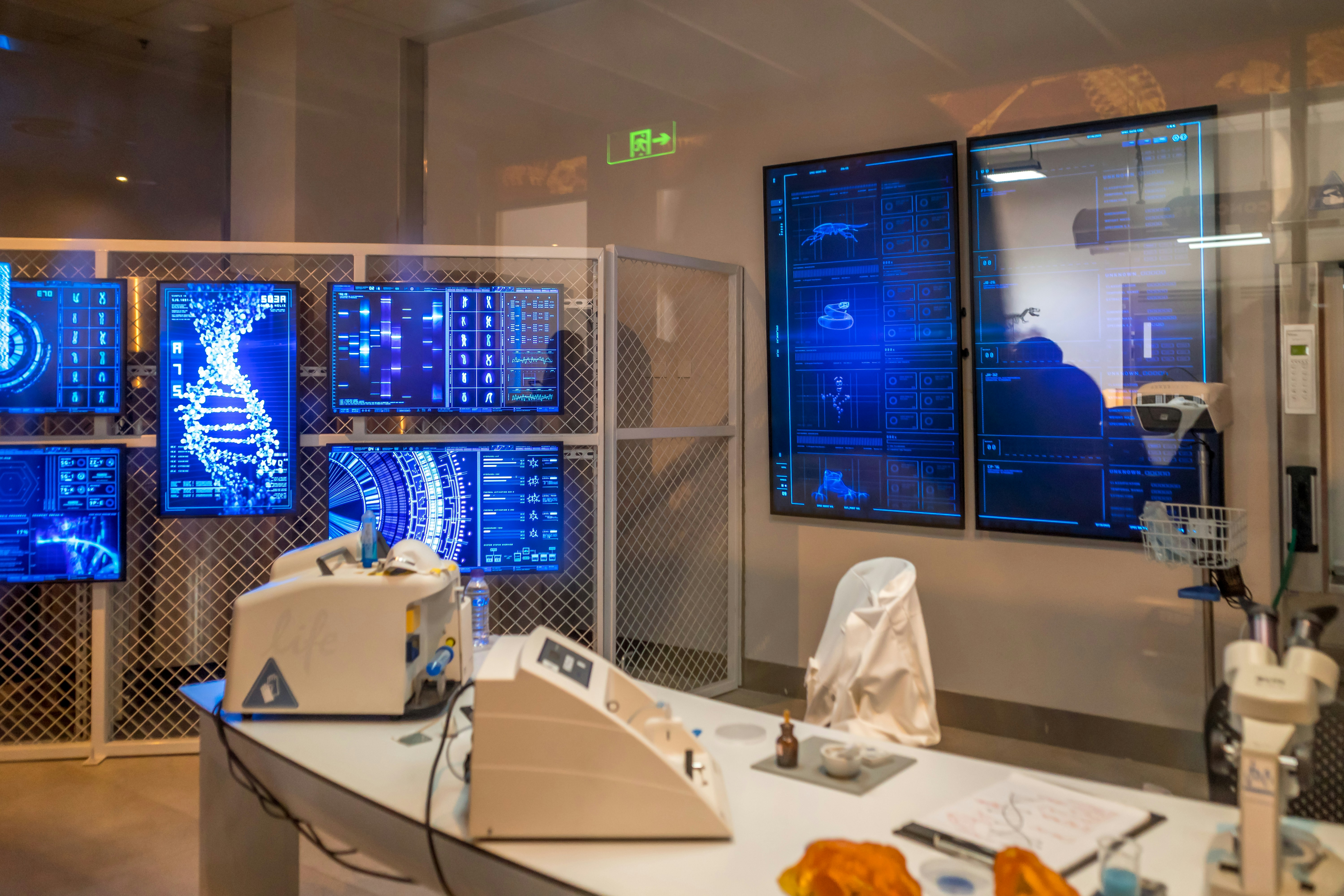
Introduction to High-Throughput Screening
High-throughput screening (HTS) represents a revolutionary approach in the field of drug discovery and various related scientific disciplines. This methodology enables researchers to evaluate large libraries of chemical compounds swiftly, assessing their potential biological activities against specific targets. Traditionally, drug discovery has been a labor-intensive process, deeply reliant on manual techniques and lengthy trial-and-error. Lab technicians played a crucial role in this conventional landscape, as they undertook meticulous measurements and assays, often leading to time-consuming bottlenecks in the research pipeline.
In contrast, high-throughput screening leverages advanced technologies, automation, and robotics to drastically enhance the pace of testing. The ability to simultaneously screen thousands, or even millions, of samples allows scientists to identify promising candidates much more efficiently. HTS not only accelerates the identification of active compounds but also optimizes the drug development process, reducing both time and costs associated with bringing new therapies to market.
This innovative technique has vast applications beyond pharmacology, extending into fields such as genomics, proteomics, and environmental sciences. By integrating HTS into their workflows, laboratories can address intricate research questions that would otherwise require significant resources and extended timelines. However, despite its transformative capacity, the importance of skilled lab technicians remains undeniable. These professionals are critical in overseeing the operational aspects of HTS, including the design of screening assays, the interpretation of results, and the integration of findings into broader scientific contexts.
In summary, high-throughput screening has dramatically reshaped the scientific landscape, facilitating rapid compound evaluation and enabling discoveries that may have previously been inaccessible. As technology continues to advance, the interplay between automation and human expertise will be pivotal in shaping the future of this essential field.
The Rise of AI in Laboratory Settings
In recent years, the integration of artificial intelligence (AI) within laboratory environments has markedly transformed the way scientists conduct research. This shift toward automation is driven by advancements in AI technologies, which have facilitated the execution of complex tasks with unprecedented speed and accuracy. By leveraging machine learning algorithms and advanced data analytics, laboratories can streamline processes, thereby enhancing productivity and reliability in experimental outcomes.
One notable application of AI in laboratory settings is in the area of high-throughput screening (HTS), where large volumes of samples are analyzed to identify potential drug candidates. Traditional methods of HTS can be time-consuming and labor-intensive, often requiring numerous lab technicians to manually process, analyze, and validate data. However, with AI-driven systems, these tasks can be automated, resulting in faster analysis times and reduced human error. A key case study highlighting this transformation involved a pharmaceutical company that implemented AI to optimize its screening process. The AI system not only accelerated the identification of lead compounds but also provided insights that guided further drug development, significantly shortening the timeline from discovery to clinical trials.
Moreover, AI technologies have demonstrated their capabilities in predictive modeling, where they evaluate vast datasets to foresee experimental outcomes. This is particularly useful in materials science, where AI can predict properties of new compounds before they are synthesized. By integrating AI with robotics, laboratories can further enhance their operational efficiency; robotic systems powered by AI can tirelessly perform repetitive tasks, leaving human technicians free to focus on more complex decision-making and analytical duties.
In conclusion, the rise of AI in laboratory settings is reshaping the future of research. As these technologies continue to evolve and integrate deeper into laboratory workflows, the potential for increased efficiency, reduced costs, and improved research outcomes becomes palpable. The collaboration between AI and human expertise is likely to mark the next chapter in the advancements of scientific exploration.
Functions of Lab Technicians in High-Throughput Screening
Lab technicians play a crucial role in high-throughput screening (HTS), engaging in a variety of tasks that are vital for the success of this complex process. One of their primary responsibilities is sample preparation, which involves careful handling and processing of biological specimens. This task requires both precision and attention, as the quality of the prepared samples directly impacts the accuracy of the screening results. Well-trained technicians ensure that samples are properly labeled, handled under appropriate conditions, and standardized to maintain consistency across experiments.
Data analysis is another key function performed by lab technicians in HTS. After the screening process, technicians analyze the vast amounts of data generated to identify potential leads for further development. This phase often requires familiarity with statistical software and data management tools, enabling them to interpret complex results accurately. Technicians apply their expertise to validate findings and flag any anomalies in the data that might require further investigation.
Quality control is an essential aspect of the HTS workflow, which technicians manage meticulously. They monitor and maintain equipment functionality, ensuring that the screening assays remain reliable and reproducible. This oversight includes routine calibration of machines, checking reagents for expiration, and troubleshooting technical issues as they arise. The necessity for human oversight in these functions is underscored by the intricacies involved in biological systems, where unpredictable variations can occur. Additionally, while AI and automation can enhance efficiency, the nuanced judgment of experienced lab technicians remains invaluable in supervising the screening process effectively.
AI Agents: Capabilities and Limitations
Artificial Intelligence (AI) agents are increasingly recognized for their potential in high-throughput screening (HTS), a technique crucial in drug discovery and other fields. One of the most significant capabilities of AI agents is their ability to process vast datasets efficiently. These agents can analyze complex datasets at a pace far exceeding human capabilities, identifying trends and correlations that may be challenging for a human analyst to discern. This data processing ability facilitates predictive modeling, wherein AI agents can forecast outcomes based on historical data, thereby refining the decision-making process.
Furthermore, AI agents are beginning to demonstrate autonomous experimental capabilities. By leveraging machine learning algorithms, these agents can design and conduct experiments without human intervention. This autonomy not only accelerates the research process but also allows for a higher throughput of experiments, yielding more data in a shorter time frame. The integration of AI in HTS can lead to significant cost savings and enhanced efficiency in the research environment.
Despite these promising capabilities, AI agents face notable limitations as well. One of the primary challenges is their lack of creativity and adaptability—qualities that human technicians naturally possess. While AI can analyze data and make predictions, it struggles with experimental designs that require innovative thinking or problem-solving skills in unpredicted scenarios. Additionally, many experiments involve a level of complexity that AI agents may not yet be equipped to handle efficiently, as these experiments often demand nuanced understanding and adjustments that go beyond mere algorithmic processing.
Overall, while AI agents bring substantial advantages to high-throughput screening, their limitations in creativity and adaptability serve as reminders that human expertise remains invaluable in navigating the complexities of laboratory research.
Comparative Analysis: AI vs. Human Lab Technicians
As the landscape of high-throughput screening evolves, a critical question arises: can artificial intelligence (AI) agents truly replace human lab technicians? This analysis addresses key factors such as efficiency, accuracy, decision-making, and problem-solving capabilities, focusing on where each excels.
Efficiency is a significant advantage for AI systems. High-throughput screening involves the processing of vast datasets, a task that remains time-consuming for human technicians. AI algorithms can automate repetitive tasks, minimizing labor and time investment, hence accelerating the pace of research. They can rapidly analyze data, identifying patterns and anomalies that a human might miss. Nevertheless, this efficiency comes at the cost of potential oversight, as AI lacks the nuanced understanding often exercised by experienced technicians.
When it comes to accuracy, AI’s performance can be exceptional, particularly in standardized tasks where algorithms are trained extensively. However, human technicians bring context and expertise that allow for interpretation of complex results. For instance, if an experiment yields unexpected outcomes, human intuition and experience become invaluable. A seasoned technician may recognize anomalies linked to experimental variables that an AI might categorize incorrectly.
Decision-making presents another interesting contrast. AI algorithms typically operate on predetermined parameters and historical data. In contrast, human technicians can rely on their training, previous experiences, and situational awareness to navigate unpredictable scenarios. This flexibility becomes essential when facing unique challenges that do not conform to historical data or standard protocols.
Problem-solving is a domain where human technicians can shine, particularly in collaborative environments. Human creativity and the ability to think outside the box can lead to innovative solutions to complex problems, while AI may struggle in unfamiliar territory. While AI’s capabilities are rapidly advancing and can support technicians in decision-making, the intuitive problem-solving skills of human experts continue to hold significant value in laboratory settings.
Case Studies: AI Implementations in HTS
In recent years, artificial intelligence (AI) has been making significant inroads into the realm of high-throughput screening (HTS), demonstrating its potential to revolutionize workflows within laboratories. A number of case studies illustrate how AI has not only improved efficiency but also yielded substantial gains in experimental outcomes in various domains.
One notable example is the collaboration between a leading pharmaceutical company and an AI start-up focused on drug discovery. By integrating machine learning algorithms into the HTS process, researchers were able to analyze vast datasets and identify promising compounds at an unprecedented rate. This partnership resulted in a 30% reduction in the time required to screen for potential drug candidates. As a result, lab technicians can now devote their time to more complex analysis and troubleshooting, thus enhancing their roles rather than replacing them.
Additionally, another pertinent case involves the application of AI in cancer research. A research institute employed AI-driven predictive modeling to streamline the identification of biomarkers associated with cancer treatment efficacy. This approach not only increased the throughput of valid data but also improved precision in the selection of promising therapies. The intervention led to a significant boost in the team’s productivity, demonstrating how AI can augment the capabilities of lab technicians rather than supplant them.
Finally, the use of robotic automation coupled with AI in HTS has also garnered attention. Labs utilizing this combined technology can achieve higher accuracy and reproducibility in their experiments. These advancements showcase how AI has facilitated the handling of routine tasks, allowing technicians to focus on more innovative aspects of their work. Overall, these case studies reveal that AI is a valuable tool that enhances operational efficiency in HTS while reshaping the role of lab technicians in a beneficial manner.
The Future Workforce: Coexistence of AI and Humans
As the landscape of laboratory work continues to evolve, it becomes increasingly apparent that artificial intelligence (AI) and human lab technicians have the potential to coexist rather than compete. The integration of AI into high-throughput screening processes is not about replacing skilled personnel but enhancing the capabilities that technicians bring to the table. The future workforce is likely to be defined by a collaborative partnership between technologically advanced AI systems and the nuanced expertise of human professionals.
AI agents can perform data processing at a speed and accuracy level unattainable by human workers. This technology can handle vast datasets, identifying patterns and anomalies that may elude even the most experienced technicians. However, AI lacks the critical thinking, ethical reasoning, and creative problem-solving skills that are inherent to human workers. Lab technicians excel in interpreting results, making decisions based on context and experience, and providing the human touch that is often necessary in complex laboratory environments. Thus, the future of laboratory work will likely feature workflows designed around this collaboration.
One promising approach is the establishment of hybrid workflows where AI systems manage repetitive tasks such as data sorting and initial analyses. This allows lab technicians to focus on more complex tasks that require human insight, such as experimental design and troubleshooting. Consequently, technicians will transition from mere data handlers to strategic thinkers who leverage AI as a robust tool for innovation.
Furthermore, this collaborative model will necessitate an evolution in training programs for lab technicians. Educational institutions and laboratories may need to incorporate technology-focused curricula to prepare technicians for a future where they work alongside AI systems. By fostering a mindset of synergy rather than competition, we can enhance the potential for groundbreaking advancements in laboratory research and thereby improve overall productivity and outcomes.
The integration of artificial intelligence (AI) into high-throughput screening (HTS) processes raises significant ethical questions, particularly regarding job displacement. As AI systems become increasingly capable of performing tasks traditionally managed by lab technicians, concerns about the future roles of these professionals are prevalent. Many fear that the adoption of AI could lead to widespread job losses, particularly in manufacturing and research environments, where repetitive tasks may be automated. This potential for displacement poses serious ethical dilemmas for organizations and society as a whole.
However, it is crucial to recognize the value of human input in the workplace. While AI can process vast quantities of data at remarkable speeds, the nuanced understanding and creativity of human technicians remain irreplaceable assets in scientific research. Humans possess the ability to interpret results in context, design experiments, and make critical decisions based on ethical considerations and social implications—capabilities that AI currently cannot replicate. As organizations integrate AI into HTS, they must carefully balance efficiency gains with the essential human touch that is often necessary for scientific discovery.
Therefore, organizations have a responsibility to address the ethical implications of AI in the workplace. This involves not only evaluating the potential for job displacement but also considering how to support affected employees. Responsible transition strategies, such as retraining programs and upskilling initiatives, are necessary to equip existing staff with the tools they need to thrive in an AI-enhanced environment. Furthermore, companies should foster a culture of collaboration between human technicians and AI agents, ensuring that both can work together effectively, thereby augmenting the capabilities of researchers rather than replacing them.
Conclusion: The Path Forward for HTS and AI
The debate surrounding the potential replacement of lab technicians by AI agents in high-throughput screening (HTS) is multifaceted, involving both technological capabilities and the intricacies of human expertise in scientific discovery. As artificial intelligence continues to evolve and penetrate various sectors, its incorporation into HTS processes presents both opportunities and challenges.
AI technologies, with their ability to analyze large datasets more efficiently than humans, have enhanced the screening process, thus accelerating drug discovery and development. Algorithms can quickly identify patterns in compounds and predict their interactions, leading to more targeted and optimized results. This advancement can significantly reduce the time and costs associated with laboratory research.
However, it is crucial to recognize the indispensable role that human technicians play in the scientific process. While AI can provide enhanced analytical capabilities, the experience and intuition of skilled lab technicians are vital for interpreting complex biological data and making nuanced decisions that machines may not fully comprehend. The creative and critical thinking aspects of scientific research often require a human touch, particularly in hypothesis formulation and experimental design.
Looking to the future, it seems more likely that AI agents will augment rather than completely replace the contributions of lab technicians. A collaborative approach, where AI systems assist technicians in their work, could lead to significant advancements in HTS. This synergy would allow for more efficient, precise, and innovative research processes while preserving the essential human elements necessary for scientific integrity and creativity.
In conclusion, the path forward for HTS will likely be one that harmonizes technological advancements with the irreplaceable value of human insight. By leveraging the strengths of both AI and human expertise, the industry can navigate the challenges ahead while pushing the boundaries of scientific discovery.