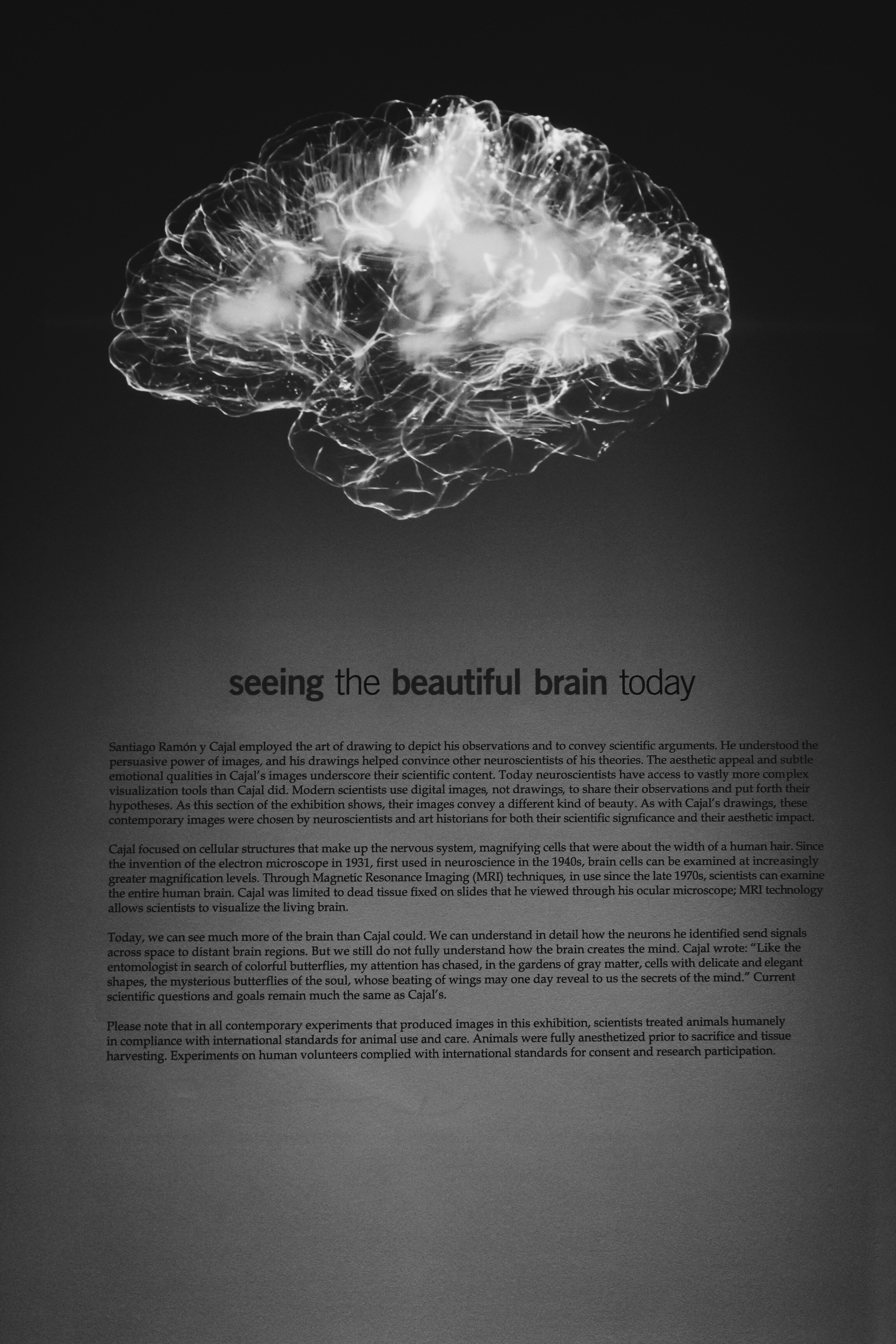
Introduction to Neural Networks
Neural networks are a subset of artificial intelligence (AI) and machine learning, designed to recognize patterns and make predictions based on input data. They are inspired by the human brain’s structure and functioning, consisting of interconnected nodes or “neurons” that communicate with one another to process information. By mimicking the intricate designs of neural connections in the human brain, these systems can learn from data and improve their predictive capabilities over time.
The origins of neural networks trace back to the 1950s, when researchers like Frank Rosenblatt introduced the Perceptron, an early model that laid the groundwork for today’s advanced neural architectures. Since then, developments in computational power and an increase in available datasets have propelled the evolution of these systems, leading to the emergence of more sophisticated models, such as deep learning networks. These advancements enable neural networks to process vast amounts of data, facilitating their application in a myriad of fields including image recognition, natural language processing, and even medical diagnosis.
The underlying concept of neural networks revolves around their ability to learn from experience. Each layer of neurons processes inputs and passes the results to the subsequent layer, with the ultimate goal of refining accuracy through a method known as backpropagation. This iterative learning process allows the network to adjust its internal parameters, enhancing its performance as it is exposed to more data. Consequently, the importance of neural networks in modern artificial intelligence cannot be overstated, as they serve as the backbone for many advanced technologies we encounter today.
Anatomy of a Neural Network
Neural networks are a key component of modern artificial intelligence and machine learning technologies. Understanding the anatomy of a neural network involves exploring its foundational elements, including neurons, layers, weights, and biases. Each of these components plays a crucial role in how the network processes information.
At the core of every neural network are neurons, which serve as the basic units of computation. Acting somewhat like biological neurons, these artificial counterparts receive input data, process it, and then pass it on to the subsequent layer. Each neuron applies a mathematical function known as an activation function to the input it receives, thereby determining the output signal sent to the next layer.
Neural networks are organized into layers, which can be broadly classified into input layers, hidden layers, and output layers. The input layer is where the network receives its data. Hidden layers, situated between the input and output, perform complex transformations and feature extraction. The depth and number of hidden layers can vary significantly, giving rise to different architectures such as deep neural networks, which contain many layers. The arrangement of these layers significantly influences the performance and accuracy of the network.
Weights and biases are critical to how these networks function. Weights are numerical values assigned to each connection between neurons; they adjust the strength of the input signals. During the training phase, these weights are fine-tuned to minimize errors in the output. Biases, on the other hand, allow the model to shift the activation function to better fit the training data. By understanding the interplay between neurons, layers, weights, and biases, one gains insight into the underlying mechanics that enable neural networks to learn and make predictions.
How Neural Networks Learn: The Training Process
Neural networks learn through a structured process commonly referred to as training. This fundamental phase is crucial for enabling models to make accurate predictions or classifications based on input data. There are three primary types of learning paradigms utilized during the training of neural networks: supervised learning, unsupervised learning, and reinforcement learning.
In supervised learning, neural networks are trained using labeled data: each input is paired with the expected output. This approach allows the model to learn the correlation between the input and the output effectively. The training process involves feeding the dataset into the neural network, where it undergoes multiple iterations. During these iterations, the network’s predictions are compared against the actual outcomes, facilitating the adjustment of weights through a method known as backpropagation. This algorithm calculates the gradient of the loss function and propagates it backward through the network, optimizing the weights to minimize the error in prediction.
Conversely, in unsupervised learning, the network is exposed to data without explicit labels. The model endeavors to identify patterns and structures within the data itself. Clustering and dimensionality reduction are common techniques in this category, helping the neural network to gain insights into the underlying data distribution. This type of learning is particularly valuable for exploring datasets where the output labels are unknown.
Reinforcement learning presents another paradigm, where an agent interacts with an environment and learns through trial and error. In this framework, the neural network receives feedback in the form of rewards or penalties based on its actions. Instead of relying on static training data, reinforcement learning emphasizes the sequence of decisions made over time, adjusting the model’s strategy to maximize cumulative rewards.
The overall training process is significantly influenced by the choice of loss function, which quantifies the difference between the predicted output and the actual result. A well-defined loss function is essential for guiding the neural network’s learning, ensuring that adjustments to weights lead towards achieving better performance in tasks.
Activation Functions and Their Role
Activation functions are a crucial component in the architecture of neural networks, primarily because they define the output generated by a neuron based on its input. In broader terms, these functions effectively determine whether a neuron should be activated or not, playing a significant role in modeling complex patterns through non-linearity.
There are several types of activation functions commonly utilized in neural networks, each possessing unique characteristics and advantages. One of the most straightforward activation functions is the sigmoid function, which outputs values in the range between 0 and 1. This makes it particularly useful for binary classification problems where the probability of class membership is required. However, sigmoid may lead to issues with vanishing gradients, especially in deep networks, impairing their learning capabilities.
Another popular activation function is the tanh function, or hyperbolic tangent function, which outputs values between -1 and 1. This symmetric nature makes it a preferred choice over the sigmoid function in many cases as it tends to yield better convergence during training. However, similar to the sigmoid, it can also suffer from the vanishing gradient problem.
The ReLU (Rectified Linear Unit) function has gained prominence due to its simplicity and effectiveness. It allows the network to learn faster and perform better, particularly in deep networks. Mathematically, it outputs zero for any negative input while allowing positive values to pass through unchanged. This results in sparse activation, which can lead to improved efficiency during training. The main downside of ReLU lies in its potential for creating dead neurons: if a neuron gets stuck with a negative input, it will not activate, resulting in a loss of learning.
In conclusion, the selection of the appropriate activation function is crucial for the efficient functioning of neural networks. The choice affects convergence rate, learning capacity, and overall performance, making it essential to understand the distinctive traits of each type before integration into the network. By carefully choosing between sigmoid, tanh, and ReLU, practitioners can effectively introduce non-linearity, thus enhancing the network’s capability in learning complex relationships within the data.
Types of Neural Networks
Neural networks come in several configurations, each optimized for specific tasks and applications. An essential type is the feedforward neural network, which processes information in a linear sequence. It consists of an input layer, one or more hidden layers, and an output layer. The data moves in a single direction, without any cycles, making it suitable for basic predictive modeling tasks.
Another prominent type is the convolutional neural network (CNN), particularly well-suited for image processing tasks. CNNs utilize convolutional layers that apply various filters to input data, enabling them to detect patterns such as edges and shapes. The hierarchical structure of CNNs allows them to learn increasingly abstract features, making them vital in fields such as computer vision and image recognition.
Recurrent neural networks (RNNs) are noteworthy for their capability to handle sequential data. They maintain a memory of previous inputs, making them particularly effective in tasks such as natural language processing and time series analysis. RNNs can process inputs of varying lengths and have been instrumental in applications like speech recognition and text generation.
In addition to these, there are specialized architectures like long short-term memory (LSTM) networks, a refined version of RNNs that mitigates the vanishing gradient problem, allowing them to learn from longer sequences. Furthermore, generative adversarial networks (GANs) enable the generation of new data samples that resemble a training dataset, creating possibilities for innovative applications in art and design.
Understanding the various types of neural networks and their unique strengths is fundamental for selecting the appropriate architecture for specific tasks within the growing field of artificial intelligence.
Challenges in Neural Network Training
Training neural networks can present several prominent challenges that may hinder the effectiveness and efficiency of the learning process. Among these, overfitting, underfitting, and vanishing gradients are significant issues that practitioners must address to ensure optimal performance of their models.
Overfitting occurs when a neural network learns not only the underlying patterns present in the training data but also the noise and outliers. This leads to a model that performs exceptionally well on the training set but fails to generalize when exposed to new, unseen data. Techniques such as regularization can be implemented to minimize overfitting. Regularization methods, including L1 and L2 penalties, help constrain the model’s complexity by discouraging weight values from becoming excessively large or unmanageable.
In contrast, underfitting happens when the model is too simplistic, resulting in poor performance both on training and unseen data. This situation arises when a network is not sufficiently complex to capture the underlying data trends or is inadequately trained. Addressing underfitting may involve optimizing the architecture, such as increasing the number of layers or neurons within the network, to enhance its capacity for learning.
Another common problem is the vanishing gradients phenomenon, which typically occurs in deep networks during backpropagation. Here, gradients become exceedingly small, halting the weight updates necessary for learning. This issue can be alleviated by utilizing activation functions such as ReLU (Rectified Linear Unit) or adopting architectures specifically designed to counteract this challenge, such as Long Short-Term Memory (LSTM) networks.
In addition to these strategies, the implementation of dropout layers during training can also be beneficial. By randomly deactivating a portion of the neurons in a layer during each training iteration, dropout helps promote robust learning and mitigate overfitting by ensuring that the model does not become overly dependent on any single feature.
Real-World Applications of Neural Networks
Neural networks, a cornerstone of artificial intelligence, have found diverse applications across various industries, showcasing their adaptability and effectiveness in solving complex problems. One of the most prominent uses of neural networks is in the field of image recognition. Companies like Google and Facebook utilize convolutional neural networks (CNNs) to automatically identify and categorize images, making it easier for users to search and share visual content. This technology is also employed in facial recognition systems, enhancing security measures in devices and public spaces.
Natural language processing (NLP) is another critical area where neural networks excel. Tools such as chatbots and digital assistants, powered by recurrent neural networks (RNN) and transformers, help in understanding and generating human language. Businesses leverage these applications to improve customer service experiences, allowing for more efficient queries and feedback retrieval, ultimately contributing to enhanced customer satisfaction.
In the healthcare sector, neural networks are revolutionizing diagnostic processes. Advanced algorithms analyze medical images to detect diseases such as cancer at earlier stages than traditional methods. Moreover, neural networks aid in the development of personalized treatment plans by analyzing patient data, thereby promoting a more tailored approach to healthcare.
The finance industry also benefits significantly from neural networks. Applications such as fraud detection systems analyze transaction patterns to identify anomalies, significantly reducing financial crime risks. Furthermore, algorithmic trading employs deep learning strategies to predict market trends, allowing investors to make informed decisions.
Lastly, neural networks are integral to the development of autonomous vehicles, where they process vast amounts of sensor data to recognize objects, navigate environments, and make real-time decisions. This application demonstrates the potential of neural networks to transform transportation, making it safer and more efficient.
Future Trends in Neural Networks
The realm of neural networks continues to evolve at an unprecedented pace, driven by ongoing research and technological advancements. One of the most significant trends in this area is the progression of deep learning techniques, which have increasingly demonstrated their efficacy in various applications such as computer vision, natural language processing, and even in fields like medicine and finance. Researchers are continually pushing the boundaries of deep learning architectures, leading to more sophisticated models capable of handling complex data patterns.
Another area garnering considerable interest is transfer learning, which allows neural networks to leverage pre-trained models for new tasks. This approach significantly reduces the time and computational resources needed to train models from scratch. For instance, models developed for image classification can be adapted for related tasks with minimal fine-tuning, enhancing the efficiency of machine learning workflows. The growing capability to transfer knowledge from one domain to another suggests a paradigm shift in the way neural networks could be deployed in practical scenarios.
Emerging techniques such as Generative Adversarial Networks (GANs) also signify a pivotal transformation in neural networks. GANs enable the creation of realistic synthetic data, which can be instrumental in areas ranging from enhanced training datasets to creative applications, such as generating artwork and simulating environments. As research in GANs proceeds, their potential uses are expanding, possibly reshaping industries reliant on data generation.
Overall, the trajectory of neural networks points toward more integrated, efficient, and versatile applications. These advancements promise to redefine the limits of artificial intelligence and machine learning, fostering innovation across numerous sectors. As we explore these future trends, it is essential to remain curious about how these technologies will further transform our daily lives and professional practices.
Conclusion and Final Thoughts
In this exploration of neural networks, we have delved into the fundamental principles that govern their operation and the critical role they play in machine learning and artificial intelligence. Neural networks, designed to simulate the intricate workings of the human brain, enable machines to learn from data and make decisions based on that learning. Throughout this guide, we have examined various aspects of neural networks, including their structure, types, and applications across diverse fields.
Understanding neural networks is not merely an academic exercise; it is a gateway to tapping into the vast potential of technology. As we have seen, these systems underpin important innovations in industries ranging from healthcare to finance, and their applications are growing exponentially. Being acquainted with how neural networks operate, as well as their limitations and ethical concerns, is crucial for anyone looking to engage with cutting-edge technology.
This rapidly evolving field offers immense opportunities for research and development. Continuous learning is vital, as advancements in algorithms, processing power, and data availability are reshaping the landscape of neural networks almost daily. Staying informed about these changes will empower individuals and organizations to leverage neural network technologies effectively and responsibly.
We encourage readers to immerse themselves in this fascinating domain. Whether through formal education, hands-on experimentation, or dedicated self-study, embracing the principles of neural networks will equip you to contribute meaningfully to future technological developments. Engaging with these systems not only enhances individual skills but also fosters innovation that can lead to societal advancements.