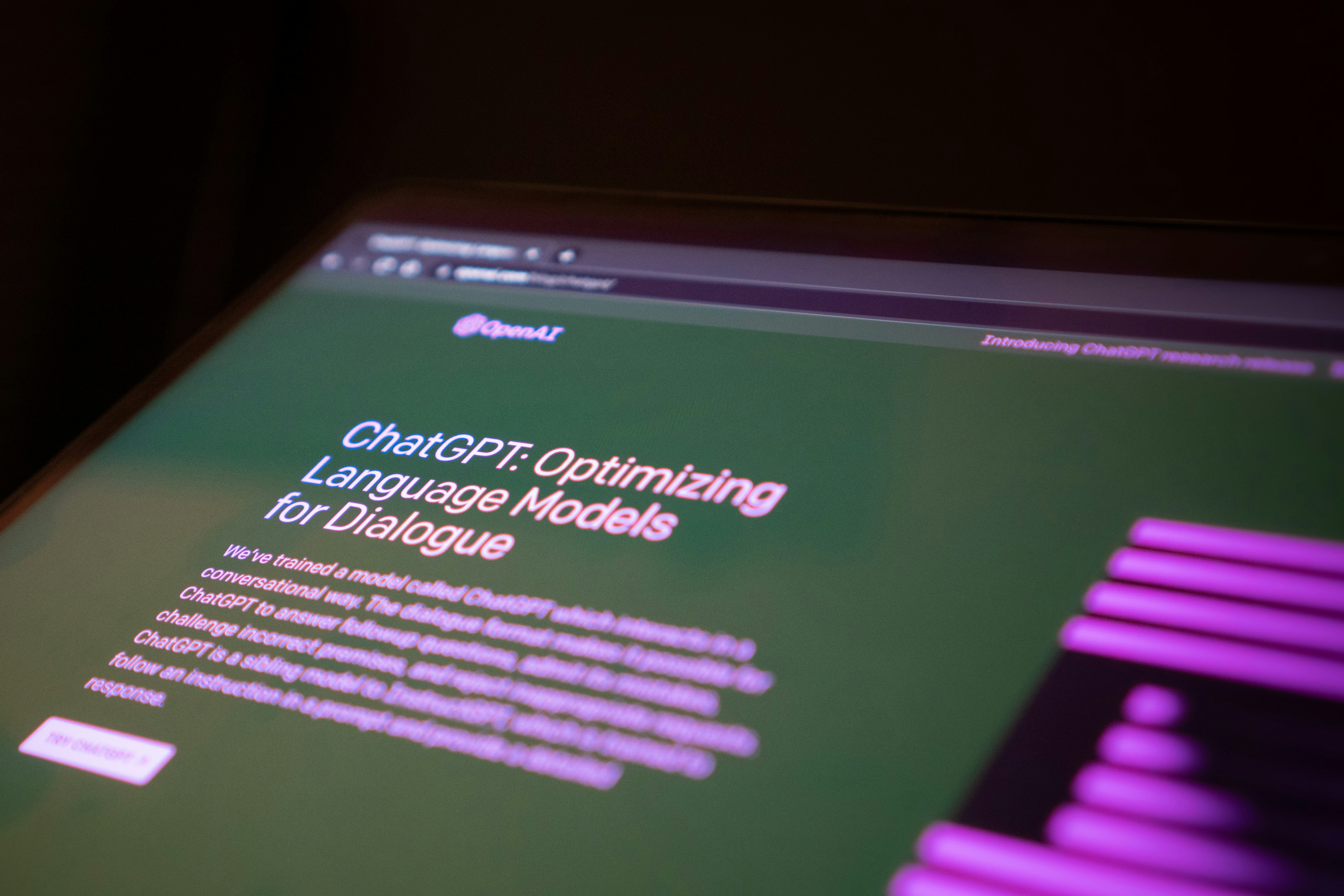
Introduction to Large Language Models
Large Language Models (LLMs) represent a significant advancement in the field of artificial intelligence, specifically in the realm of natural language processing (NLP). These models are designed to understand and generate human language in a manner that emulates human-like conversation and comprehension. Unlike traditional language models, which relied heavily on programmed rules and smaller datasets, LLMs leverage vast amounts of text data, making sense of patterns through sophisticated algorithms and deep learning techniques.
The evolution of language processing technologies has been substantial over the past few decades, moving from simple rule-based systems to complex neural networks that enhance contextual understanding and semantic relevance. With the growth of computational power and access to immense datasets, LLMs have emerged as a transformative tool in various applications. Their ability to handle tasks such as text generation, summarization, and translation has garnered attention across many sectors, including healthcare, education, and customer support.
One prominent example of LLMs in action is their usage in virtual assistants like Siri and Alexa, where they interpret and respond to user queries with a high degree of accuracy. Similarly, content generation tools powered by LLMs have revolutionized the way articles, reports, and stories are produced, enabling quick and creative outputs that can rival human writers. In the field of translation services, LLMs provide more fluent and context-aware translations compared to earlier systems, bridging language barriers effectively.
As LLM technology continues to advance, its impact is expected to deepen, reshaping the way we interact with machines and transforming numerous industries. Understanding the mechanics and capabilities of Large Language Models is essential for recognizing their potential and addressing the challenges they may pose.
The Architecture Behind LLMs
Large Language Models (LLMs), such as Generative Pre-trained Transformers (GPT), utilize sophisticated architectural designs that enable them to process and generate text with remarkable accuracy. At the core of these models lies the transformer architecture, which was introduced in the seminal paper “Attention is All You Need” by Vaswani et al. in 2017. Unlike traditional neural networks, which typically rely on recurrent layers to process data sequentially, transformers leverage self-attention mechanisms to evaluate the relationships between words in a given context without regard to their position in the input. This approach allows LLMs to capture long-range dependencies and nuanced meanings within text.
Transformers consist of an encoder-decoder structure, where the encoder processes input data and derives context, while the decoder generates output based on this learned context. In many implementations of LLMs, particularly those designed for text generation, only the decoder is utilized. Each layer of the decoder incorporates self-attention and feed-forward neural network components that contribute to the model’s ability to create coherent and contextually relevant text.
One of the key innovations in transformer architecture is the self-attention mechanism, which allows the model to weigh the importance of different words in relation to each other. This means that when the model generates text, it can effectively consider the relevance of every word in the input sequence, dynamically adjusting the focus based on context. As a result, LLMs can produce higher quality and more contextually accurate text compared to traditional models.
In addition to attention mechanisms, LLMs employ positional encodings to retain the sequence information inherent in language. This allows the model to maintain an understanding of word order, which is crucial for comprehending syntax and semantics. Overall, the combination of transformers, attention mechanisms, and positional encodings constitutes a powerful architecture that distinguishes large language models from their predecessors, enhancing their capacity to understand and generate complex text.
The training process of Large Language Models (LLMs) is a multifaceted undertaking that primarily involves data collection, preprocessing, and the application of either supervised or unsupervised learning methodologies. Commencing with data collection, LLMs require vast datasets sourced from diverse platforms, including books, web pages, and other textual resources in order to build a robust language understanding.
Once the data has been accumulated, the preprocessing phase takes place. During this stage, raw data undergoes a transformation to ensure its quality and relevance. This involves tasks such as tokenization, punctuation removal, and normalizing text, which are crucial steps to prepare the data for the subsequent training phase. Effective preprocessing enhances the model’s performance by reducing noise and focusing on substantial linguistic patterns.
Next, the core of the LLM training lies in the paradigm of supervised vs. unsupervised learning. Supervised learning relies on labeled datasets where the model learns to predict the outcome based on input data, which is beneficial for tasks such as text classification or translation. On the other hand, unsupervised learning does not require labeled outputs and allows the model to learn the underlying structure of the data itself, which is particularly advantageous for language modeling tasks.
The significance of large datasets cannot be overstated, as they provide the diverse examples needed for the model to generalize effectively to unseen data. LLMs are inherently complex and computationally demanding. Training these models requires substantial computational resources, often leveraging clusters of high-performance GPUs or TPUs. The extensive computational power enables the handling of the vast amounts of data and facilitates the intricate calculations required to optimize the model’s parameters.
In conclusion, comprehending the training process of Large Language Models reveals the intricate interplay between data collection, preprocessing, and learning methodologies that are foundational to the success of these advanced linguistic systems.
Understanding Tokenization and Context Windows
Tokenization is a crucial process employed by large language models (LLMs) to convert input text into smaller, more manageable units known as tokens. The purpose of tokenization is to facilitate the model’s ability to understand and generate human-like text. In essence, this process breaks down continuous text into tokens, which can vary from individual characters to whole words or phrases, depending on the chosen tokenization strategy. By transforming text into tokens, LLMs can effectively analyze and process language in a structured manner, enhancing their performance in tasks such as translation, summarization, and question answering.
There are several methods of tokenization, including word-based tokenization, character-based tokenization, and subword tokenization. Subword tokenization, such as Byte Pair Encoding (BPE), is particularly favored as it allows the model to handle out-of-vocabulary words by breaking them down into familiar subword units. This capability significantly boosts the flexibility and adaptability of LLMs, enabling them to generate coherent responses even for unfamiliar terms.
Another essential concept in understanding large language models is that of context windows. A context window defines the number of tokens the model considers when generating text. For instance, a model operating with a context window of 512 tokens will analyze the preceding 512 tokens to predict the next token in a sequence. This characteristic is crucial as it directly influences the information the model retains and the relevance of its outputs. The larger the context window, the greater the ability of the model to maintain coherence over longer passages of text. However, increasing the context window size often comes with heightened computational costs.
In summary, the processes of tokenization and context window configurations are foundational to the functioning of large language models. By understanding these components, one gains insight into how LLMs process and generate human language, which is essential for those looking to leverage advanced AI solutions effectively.
The Role of Fine-Tuning and Transfer Learning
Fine-tuning and transfer learning are pivotal processes in enhancing the applicability and functionality of large language models (LLMs). Fine-tuning involves taking a pre-trained model, which has already been trained on a broad dataset, and further training it on a smaller, task-specific dataset. This refinement enables the model to adapt to particular nuances and requirements of the specific task, thereby improving its overall performance.
Transfer learning, on the other hand, refers to the technique of leveraging knowledge gained while training one model and applying it to a different, yet related, task. In the context of LLMs, it allows for the efficient use of resources and time, as the model does not need to start from scratch. For instance, a language model trained on a vast corpus can be fine-tuned with a specialized dataset pertaining to legal documents, allowing the model to excel in legal text interpretation.
This combination of fine-tuning with transfer learning is particularly beneficial when working with small datasets, which can often be a challenge in specialized fields. By using a pre-existing knowledge base, practitioners can achieve higher performance levels without the extensive data requirements typical of training a model from the ground up. Overall, these techniques facilitate the adaptation of LLMs to a variety of functional domains, ensuring that they are not only versatile but also effective across diverse applications.
Ethical Considerations and Challenges
The deployment of Large Language Models (LLMs) presents numerous ethical considerations that are critical to address. One of the foremost concerns is the potential for biases within the training data. LLMs are trained on vast datasets sourced from the internet, which may contain prejudices and stereotypes. Consequently, these biases can manifest in the AI-generated text, leading to the propagation of misinformation and reinforcing societal inequalities. As such, it is imperative for developers to scrutinize the composition of training datasets and refine the models to mitigate biased outputs.
Additionally, the misuse of AI-generated text remains a significant issue. With the increasing capability of LLMs to produce human-like content, there are risks associated with disinformation campaigns, fake news generation, and malicious uses such as impersonations and fraudulent activities. The ease of creating convincing text without accountability raises concerns about the integrity of information shared in digital spaces. Thus, regulations and guidelines must be established to ensure responsible use of LLM technology.
Privacy concerns also warrant attention as users increasingly interact with LLMs. Data used in training could inadvertently include personally identifiable information, violating privacy rights. The challenge lies in balancing the advancement of AI technologies while respecting individual privacy. Striking this balance requires transparent practices and informed consent, allowing users to understand how their data may be utilized in developing AI systems.
To navigate these ethical challenges, stakeholders including researchers, developers, and policymakers must engage in ongoing dialogues. Creating frameworks for ethical AI deployment will be vital to responsible innovation. Addressing biases, misuse, and privacy will not only enhance the development of LLMs but also foster societal trust in AI technologies.
Applications of Large Language Models
Large Language Models (LLMs) have emerged as powerful tools across a variety of fields, contributing to advancements in natural language processing, content generation, customer service, and more. Their ability to understand and produce human-like text allows for a wide array of practical applications.
In the domain of natural language processing (NLP), LLMs are widely utilized for tasks such as sentiment analysis, language translation, and text summarization. For instance, businesses employ LLMs to analyze customer feedback on social media platforms, helping them gauge public sentiment regarding products or services. This information can significantly guide marketing strategies and product development.
Another remarkable application of LLMs is in content creation. Writers and marketers are leveraging these models to generate articles, blog posts, and marketing copy. For example, LLMs can assist in brainstorming ideas, drafting content outlines, or even generating entire pieces of text based on specific parameters or topics. This not only saves time but also enhances creativity by providing fresh perspectives and suggestions.
In the realm of customer service, companies are integrating chatbots powered by LLMs into their support operations. These intelligent chatbots can understand and respond to customer inquiries in real-time, offering accurate information and assistance. This not only improves response times but also allows human agents to focus on more complex issues, thereby increasing overall efficiency.
Moreover, LLMs are finding applications in education, where they can provide personalized tutoring or facilitate language learning by simulating real-life conversations. In the legal field, they assist in document analysis and contract drafting, reducing workloads and minimizing errors.
The versatility of Large Language Models is evident across these various domains, confirming their significant impact on contemporary business practices and societal functions.
The Future of Large Language Models
Large Language Models (LLMs) have transformed the landscape of artificial intelligence and natural language processing, and their future holds significant promise. As we look ahead, advancements in model efficiency are critical. Researchers are actively pursuing methods to reduce the computational resources required to train and deploy LLMs. This shift not only aims to make these models more accessible but also enhances their environmental sustainability. A focus on creating lighter, faster models ensures that organizations can harness the power of LLMs without incurring prohibitive costs or excessive carbon footprints.
Another essential aspect of the future of LLMs is the continuous effort to reduce biases inherent in these systems. As LLMs have been subject to scrutiny for perpetuating social biases found in training data, the development of techniques to mitigate this issue is paramount. Future models are likely to incorporate more robust algorithmic frameworks that emphasize fairness and representation across diverse datasets, ensuring that outputs reflect a more equitable understanding of language and context.
Furthermore, there is a growing vision of creating AI that not only performs tasks but aligns with human values. This involves embedding ethical considerations into the design and application of LLMs. Companies and researchers are expected to collaborate to establish guidelines and policies that govern the responsible use of AI technologies. By taking a proactive approach to address ethical dilemmas, the AI community can foster trust and promote the adoption of LLMs in socially beneficial ways.
In summary, the future of large language models is poised for advancement through improved efficiency, decreased biases, and a commitment to ethical AI practices. As the technology evolves, it will be crucial for stakeholders to navigate these developments with a lens focused on social responsibility and human-centered design.
Conclusion: The Implications of LLM Advancements
As we have explored throughout this discussion, large language models (LLMs) represent a significant leap in the field of artificial intelligence. These advanced systems are designed to understand and generate human-like text, which has opened up numerous possibilities across various sectors, including education, healthcare, and customer service. Their ability to process and interpret vast amounts of data positions LLMs as powerful tools for enhancing productivity and creativity.
However, the advancements in LLM technology also raise important ethical considerations. The potential for biases inherent in training data can lead to undesirable outcomes, necessitating a careful approach to the deployment of these models. Moreover, issues surrounding misinformation, privacy, and the implications of AI-generated content require attention to ensure responsible use. It is crucial for developers and users alike to grasp the nuances of how LLMs work; this understanding can foster the ethical utilization of these models, mitigating risks while maximizing benefits.
Furthermore, as LLMs continue to evolve, their integration into daily life will likely increase. Awareness of their strengths and limitations is essential not only for those in technical fields but for all users who interact with these technologies. Engaging with LLMs mindfully can lead to innovative applications, but it is imperative that society adopts a proactive stance in monitoring their impact. In conclusion, the journey with large language models is just beginning, and fostering a well-informed dialogue around their advancement will be crucial in shaping a future that leverages their capabilities while addressing the associated challenges.