Introduction to Scikit-learn
Scikit-learn is a Python library designed for machine learning that facilitates the implementation of various machine learning algorithms. It is built on top of other fundamental libraries such as NumPy, SciPy, and Matplotlib, providing a robust framework for data analysis and application. The primary purpose of Scikit-learn is to simplify the process of deploying machine learning models, making it accessible for data scientists, analysts, and even hobbyists who are eager to delve into data-driven insights.
The significance of Scikit-learn in the realm of machine learning cannot be overstated. It offers a user-friendly interface for applying machine learning techniques to practical problems across various domains including finance, healthcare, and marketing. With its comprehensive documentation and supportive community, users can quickly learn to implement algorithms ranging from linear regression to more complex ensemble methods. The clear structure and modular design of the library enable users to efficiently build and validate their models.
Scikit-learn was developed during the Google Summer of Code in 2007 and has since evolved into one of the most widely used libraries for machine learning in Python. Notably, the framework adheres to the principles of open-source software, allowing continuous contributions from a global community of developers. Key features of Scikit-learn include its powerful data preprocessing capabilities, model selection tools, and a variety of utilities for evaluating model performance. Additionally, the library’s emphasis on consistency and simplicity allows users to focus on the modeling process without getting bogged down by complex syntax.
In essence, Scikit-learn has established itself as an essential resource for anyone engaged in the field of data science and machine learning, bridging the gap between statistical theory and real-world application.
Key Features of Scikit-learn
Scikit-learn is a prominent library in Python widely used for machine learning, boasting a rich set of functionalities that enable users to tackle a variety of data-driven challenges. At its core, Scikit-learn excels in implementing both supervised and unsupervised learning algorithms. Supervised learning, which involves training a model on labeled data, includes regression techniques like linear regression and classification methods such as support vector machines. In contrast, unsupervised learning allows for the identification of patterns in unlabeled data, employing techniques like clustering with K-means and dimensionality reduction using Principal Component Analysis (PCA).
Model selection is another critical feature of Scikit-learn, empowering users to optimize their algorithms effectively. The library provides various tools, including cross-validation and grid search, which help determine the best hyperparameters for enhancing model performance. This capability is vital as it allows practitioners to fine-tune their models and ultimately achieve data-driven insights that are more reliable.
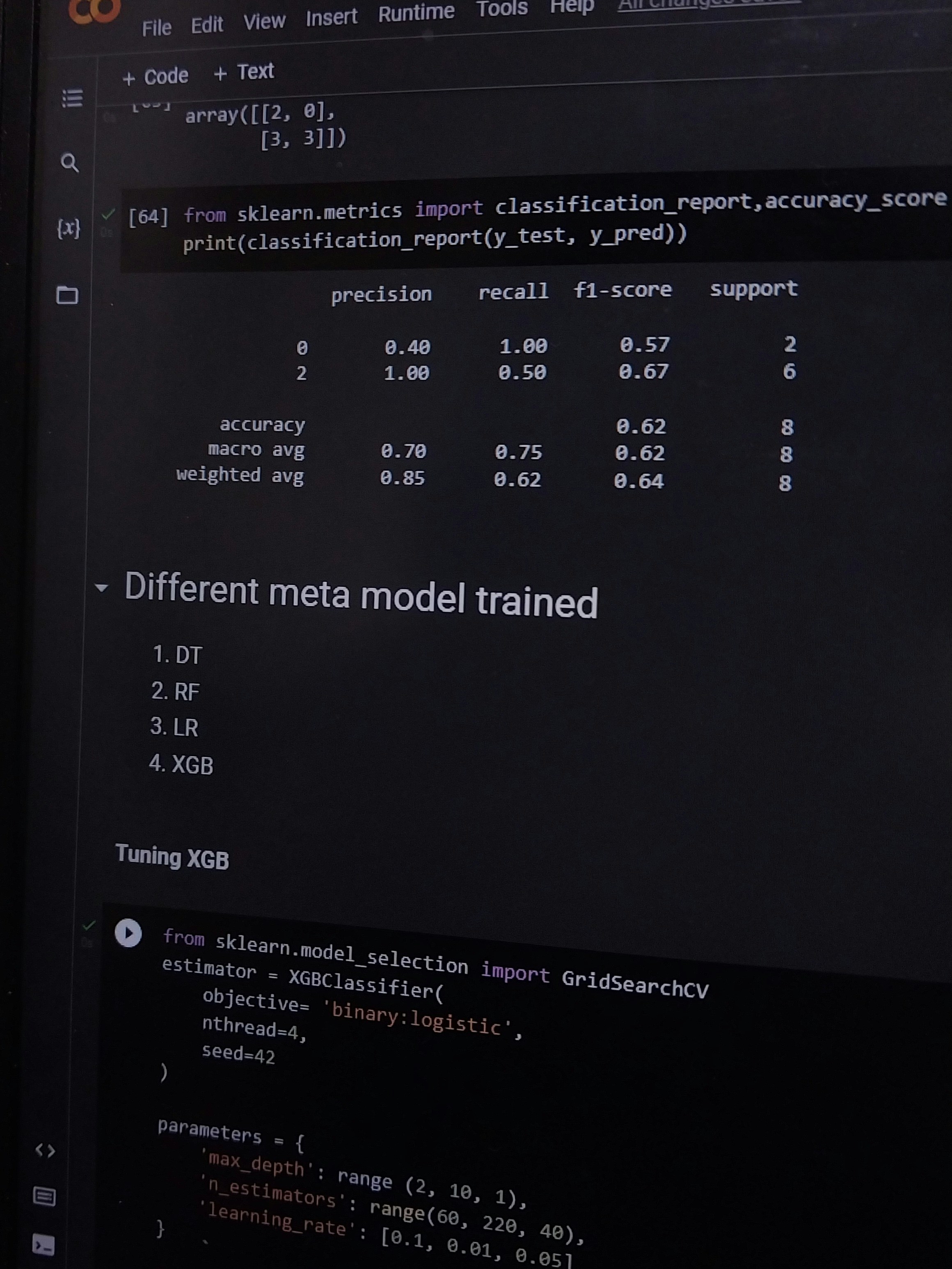
Furthermore, Scikit-learn incorporates a robust suite of evaluation metrics to assess the quality of models. Users can easily measure accuracy, precision, recall, and F1-score, among other statistical indicators. These metrics form the backbone of understanding how well a model generalizes to unseen data, which is crucial in practical applications.
Lastly, data preprocessing tools in Scikit-learn facilitate a streamlined workflow for preparing data for modeling. Techniques such as standardization, normalization, and encoding categorical variables significantly enhance the data quality before it is fed into algorithms. By leveraging these key features, users can efficiently harness the power of machine learning to derive actionable insights from their data.
Installation and Setup
To get started with Scikit-learn, it is essential to set up the appropriate development environment efficiently. Scikit-learn is compatible with Python 3.6 and later versions. One of the most popular methods for installation is through package managers like pip or conda. Below are the detailed steps for installation.
First, ensure that Python is installed on your system. You can verify this by executing the command python --version in your terminal or command prompt. If Python is not installed, download it from the official Python website and follow the installation instructions tailored for your operating system.
Once Python is ready, you can opt for installing Scikit-learn using pip, which is the recommended package management system for Python. To install Scikit-learn via pip, simply enter the command pip install scikit-learn in your terminal. This command will fetch the latest version of the library along with its dependencies.
If you are working in a data-heavy environment, consider using conda as an alternative. Conda is a powerful package manager that can manage environments and dependencies seamlessly. To install Scikit-learn using conda, execute conda install scikit-learn. This approach is particularly useful if you require a specific version of Scikit-learn or if you want to manage different environments for various projects.
After installation, it is critical to validate that Scikit-learn is correctly set up. You can perform this check by running the command python -c "import sklearn; print(sklearn.__version__)", which should output the installed version of Scikit-learn.
For developers using Integrated Development Environments (IDEs) such as PyCharm, Jupyter Notebook, or Visual Studio Code, make sure to configure your IDE to recognize the installed packages. This setup often involves creating a new Python interpreter that corresponds to the environment where Scikit-learn is installed, thus ensuring a smooth development experience.
Basic Concepts in Machine Learning
Machine learning is a branch of artificial intelligence that focuses on the development of algorithms that enable computers to learn from and make predictions based on data. To understand how Scikit-learn operates, it is essential to grasp several fundamental concepts that form the backbone of machine learning.
At the core of machine learning are datasets, which are collections of information used to train models. A dataset typically consists of features, which represent the input variables, and labels, which are the output values that the model attempts to predict. The organization and quality of these datasets directly impact the model’s performance.
Central to machine learning is the notion of models. A model is a mathematical representation of a real-world process that attempts to understand patterns and make predictions. Various algorithms can be employed to create models, each with its strengths and weaknesses depending on the problem at hand.
Training is the process where a machine learning model learns from the dataset. During this phase, the model adjusts its internal parameters to minimize error and improve prediction accuracy. It is crucial to have a separate testing dataset to evaluate the performance of the model after the training phase. Testing enables practitioners to ascertain how well the model generalizes to unseen data, a vital aspect of validating its efficacy.
However, a common challenge in model training is overfitting, where a model performs exceptionally well on the training data but fails to generalize to new, unseen data. Overfitting occurs when a model learns not only the underlying patterns but also the noise present in the training dataset. Techniques such as cross-validation and regularization are commonly employed to mitigate overfitting, ensuring models maintain robustness across various data inputs.
Exploring Scikit-learn Datasets
Scikit-learn is well-regarded for its robust collection of datasets, which are essential for practicing various machine learning techniques. These datasets serve an educational purpose, allowing users to familiarize themselves with data preprocessing, model training, and evaluation within the realm of Python programming.
One of the most iconic datasets included in Scikit-learn is the Iris dataset. This dataset features 150 samples of iris flowers, categorized into three species: Setosa, Versicolor, and Virginica. Each sample is characterized by four numerical features: sepal length, sepal width, petal length, and petal width. The Iris dataset is particularly celebrated for its straightforwardness, making it ideal for beginners who aim to learn classification algorithms such as decision trees or support vector machines.
Another notable dataset is the Boston housing dataset, which consists of information regarding housing prices in Boston suburbs. It contains 506 samples with 13 attributes, including crime rate, residential land zone, and average number of rooms per dwelling. This dataset is particularly useful for regression tasks, allowing learners to explore various algorithms aimed at predicting continuous values based on input features.
Moreover, Scikit-learn includes other well-structured datasets such as the digits dataset, which involves 8×8 pixel images of handwritten digits. It facilitates the understanding of image recognition and classification techniques. Each of these datasets is accompanied by a detailed explanation and is readily available through a simple API call in Scikit-learn, enabling users to focus on experimenting with machine learning models without the overhead of data collection and cleaning.
Through the availability of these diverse datasets, Scikit-learn empowers users to engage in meaningful machine learning practice, broadening their understanding of data analytics and predictive modeling.
Building a Simple Machine Learning Model with Scikit-learn
To construct a basic machine learning model using Scikit-learn, we will sequentially follow the stages of data preparation, model training, prediction, and performance evaluation. First, we need to prepare our dataset, which involves gathering and cleaning data to ensure it is suitable for modeling. This may include handling missing values, encoding categorical variables, and normalizing or standardizing numerical values for consistent input.
Once our dataset is ready, we can split it into training and testing subsets. This is a critical step in machine learning, as it allows us to develop our model on one portion of the data while assessing its prediction accuracy on a separate set. We typically use an 80-20 split, where 80% of the data is utilized for training and 20% for testing.
Next, we proceed to model training. Scikit-learn offers numerous algorithms such as linear regression, decision trees, and support vector machines. For this example, let us consider implementing a linear regression model, which is straightforward and effective for predicting continuous outcomes. We initiate this by importing the linear regression class, followed by fitting the model to our training data.
After training our model, the next phase involves making predictions. By applying the fitted model to our test data, we can generate predicted outcomes. These predictions allow us to compare the model’s outputs with the actual values in the test dataset.
Lastly, evaluating the performance of the machine learning model is essential. We can employ several metrics, such as Mean Absolute Error (MAE) and R-squared, to quantify how well our model predicts future values. By reviewing these metrics, we can determine the model’s accuracy and effectiveness, guiding us in making any necessary adjustments or enhancements.
Advanced Techniques and Customization
In the realm of machine learning, particularly when utilizing Scikit-learn with Python, advancing beyond basic algorithms is essential for achieving optimal model performance. One pivotal aspect of enhancing models involves hyperparameter tuning. Hyperparameters are parameters that are set before the training process begins, and their selection can dramatically influence the outcome of a machine learning model. Techniques such as Grid Search and Random Search are commonly employed in Scikit-learn to systematically explore various combinations of hyperparameter values, ultimately guiding practitioners towards the most effective settings.
Alongside hyperparameter tuning, cross-validation techniques play a crucial role in evaluating the robustness of models. By dividing the dataset into multiple subsets and applying different training-validation splits, techniques such as k-fold cross-validation help in minimizing overfitting and ensuring that a model generalizes well to unseen data. Scikit-learn simplifies the implementation of cross-validation through its inbuilt functions, allowing developers to gauge model performance more effectively and ensure the reliability of results.
Furthermore, Scikit-learn encourages the use of pipelines, which serve to streamline the workflow of machine learning processes. A pipeline allows for the seamless integration of data preprocessing steps, such as scaling and encoding, with the model training phase. This not only enhances code maintainability but also reduces the risk of data leakage, as transformation steps are applied appropriately within the context of model validation. By employing pipelines, data scientists can ensure a cohesive approach to their machine learning projects, further improving both efficiency and effectiveness.
Real-world Applications of Scikit-learn
Scikit-learn, a powerful library within the Python ecosystem, has become a pivotal tool in various industries. Its versatility enables organizations to address complex challenges through machine learning. Notably, the financial sector utilizes Scikit-learn for credit scoring, fraud detection, and algorithmic trading. By employing classification and regression models, financial analysts can better assess customer creditworthiness and identify atypical transactions that may indicate fraudulent activity. This reliance on predictive modeling significantly enhances risk management strategies.
In the healthcare industry, Scikit-learn plays a crucial role in predicting patient outcomes and diagnosing diseases. Machine learning algorithms often analyze patient data to identify patterns correlated with specific medical conditions. For example, models can be developed to predict diabetes onset based on lifestyle factors and genetic predisposition. This predictive capability not only aids healthcare providers in timely interventions but also empowers patients with personalized care recommendations.
Another significant application of Scikit-learn is in the marketing domain, where it aids businesses in consumer segmentation and targeted advertising. By leveraging clustering algorithms, marketers can categorize customers based on purchasing behavior and preferences. This information enables companies to create tailored campaigns that resonate with specific demographic segments, thereby increasing engagement and conversion rates. Moreover, through sentiment analysis, businesses can gauge consumer opinions on social media, leading to more informed decision-making.
In summary, Scikit-learn’s real-world applications span across diverse sectors, showcasing its adaptability and effectiveness. Whether in finance, healthcare, or marketing, organizations harness its capabilities to solve intricate problems, streamline operations, and enhance customer experiences. As machine learning continues to evolve, the role of Scikit-learn will undoubtedly expand, pushing the boundaries of what’s achievable in various fields.
Conclusion and Future Directions
In summation, this guide has navigated through the fundamental aspects of Scikit-learn, a pivotal tool in the realm of machine learning with Python. We have underscored the importance of its versatile functionalities ranging from data preprocessing and model evaluation to its extensive array of algorithms that handle classification, regression, clustering, and more. Its user-friendly interface, coupled with robust documentation, empowers both novice and seasoned data scientists to seamlessly integrate machine learning practices into their projects.
Scikit-learn’s significance cannot be overstated. It serves as a bridge for those stepping into data science and continues to be a cornerstone in the toolkit of experienced practitioners. The library promotes best practices in model implementation and enables users to focus on problem-solving rather than grappling with the intricacies of machine learning algorithms. Moreover, its compatibility with other scientific libraries enhances its utility, fostering a collaborative ecosystem for data manipulation and machine learning.
Looking ahead, the future of Scikit-learn appears promising. Continuous contributions from the community suggest an ongoing evolution of features and capabilities, potentially integrating advancements in artificial intelligence and deep learning. Anticipated improvements may include enhanced support for larger datasets, better integration with cloud computing platforms, and the incorporation of cutting-edge models that emerge from the fast-paced developments in the field. Such advancements will be instrumental in keeping Scikit-learn at the forefront of data science, ensuring it remains relevant as the demands of the industry evolve.
These developments will not only solidify Scikit-learn’s position within the machine learning landscape but will also contribute to the broader implications for data science as a discipline, empowering future generations of analysts and engineers to drive innovation and insight from data.