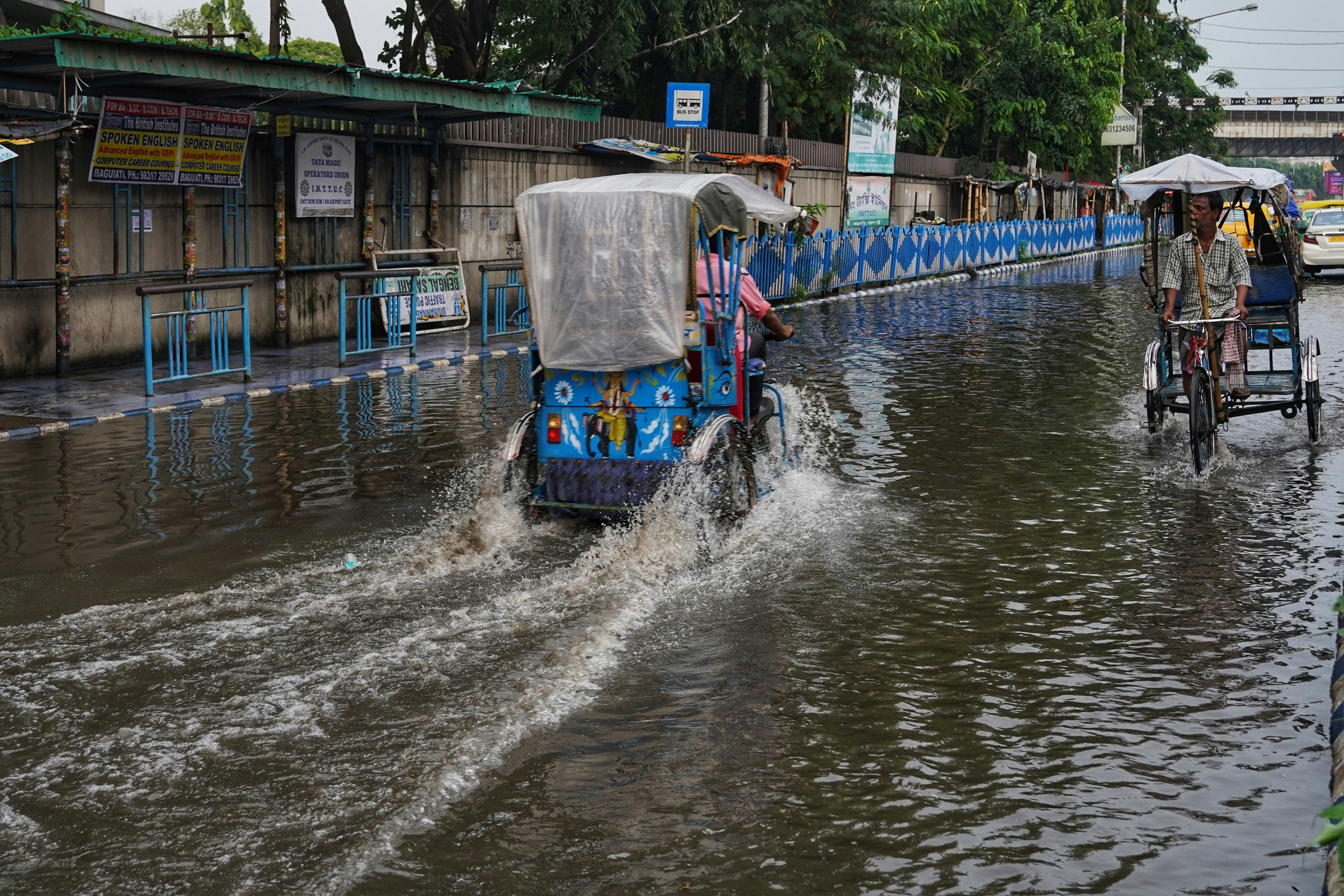
Introduction to Mumbai’s Flooding Challenges
Mumbai, the bustling metropolis of India, is often criticized for its vulnerability to flooding, a recurring challenge that has significant repercussions for its inhabitants and infrastructure. The geographical positioning of Mumbai is a primary factor contributing to its flooding issues; located on the western coast and characterized by a coastal topography, the city is prone to heavy rainfall, particularly during the monsoon season. The annual southwest monsoon, which typically lasts from June to September, often leads to extreme rainfall, resulting in severe inundation across the urban landscape.
Moreover, several climatic factors compound these challenges. Global climate change has introduced unpredictable weather patterns, leading to intensified rainfall events. Rising sea levels, exacerbated by melting ice caps and thermal expansion, pose an additional risk, as they increase the likelihood of storm surges and coastal flooding. This combination of natural and anthropogenic factors creates a perfect storm for flooding incidents within Mumbai.
Urbanization is another critical contributor to the city’s flooding challenges. Rapid, unplanned urban development has altered natural drainage systems, reducing the city’s ability to channel excess rainfall. The proliferation of concrete surfaces impedes water absorption, leading to an increased runoff that overwhelms drainage systems. Past incidents, such as the catastrophic floods of 2005, during which over 900 millimeters of rain fell in a single day, highlight the devastating impact of these issues. Such events garnered significant media attention and underscored the need for robust flood management strategies.
As Mumbai continues to grapple with these challenges, understanding the mechanisms of flooding through global models becomes crucial. Such models can provide invaluable insights into flood prediction, hazard assessment, and risk reduction strategies, which are essential for mitigating future flooding incidents in this vibrant yet vulnerable city.
Historical Context of Flooding in Mumbai
Mumbai, a bustling metropolis, has faced significant flooding events, notably in 2005 and 2017. These catastrophic incidents revealed vulnerabilities in the city’s infrastructure and response systems, prompting widespread analysis and discussion. The floods of 2005 stand out in particular, as they resulted from an unprecedented 944 millimeters of rainfall within a span of just 24 hours. This deluge overwhelmed the city’s drainage systems, leading to widespread waterlogging, loss of life, and substantial damage to property and infrastructure.
In response to the sheer magnitude of the 2005 flooding, various governmental measures were undertaken. The municipal authorities recognized the need for improved drainage systems and initiated projects aimed at upgrading existing infrastructures, including the construction of new drainage channels and the desilting of existing ones. Additionally, the event underscored the importance of disaster preparedness and led to the establishment of more robust emergency response protocols.
The floods of 2017, although less severe than those of 2005, raised similar concerns regarding urban planning and emergency management. Triggered by heavy monsoon rains, these floods disrupted daily life, affecting thousands and further highlighting the critical issues surrounding the city’s ability to manage excessive rainfall. The response from the government included enhanced monitoring systems and updated disaster management plans, aiming to mitigate the impact of future flood events.
Socio-economically, both flooding incidents have had profound repercussions. Communities residing in low-lying areas were disproportionately affected, revealing significant inequalities in urban infrastructure and emergency response. The aftermath saw not only the displacement of families but also long-term economic impacts, including job losses, as many small businesses were forced to shut down due to water damage. As Mumbai continues to evolve, understanding its historical flooding events is vital in developing strategies for future resilience against climate-related challenges.
Understanding World Models for Flood Prediction
Flood prediction is a critical component of disaster management, particularly in urban areas prone to flooding, such as Mumbai. Globally, various predictive models have been developed to enhance the accuracy and effectiveness of flood forecasting. These models can generally be categorized into three main types: hydrological models, meteorological models, and integrated frameworks.
Hydrological models focus on simulating the behavior of water within a watershed. They take into account factors such as rainfall, evaporation, soil moisture, and watershed characteristics to predict surface runoff and river flows. One of the strengths of hydrological models is their ability to provide detailed insight into catchment responses to different rainfall scenarios. However, their limitations arise from the need for extensive data, which can be challenging to obtain in urban settings.
Meteorological models predict weather conditions that influence flood occurrences. These models utilize atmospheric data, including temperature, humidity, and wind patterns, to forecast precipitation events. Their strength lies in the ability to predict heavy rain events with reasonable lead times, which is essential for issuing timely warnings. Nevertheless, meteorological predictions can sometimes be influenced by uncertainties in atmospheric processes, which may lead to inaccuracies.
Integrated frameworks combine both hydrological and meteorological models, allowing for a more holistic approach to flood forecasting. By considering both the atmospheric factors and the terrestrial responses, these frameworks can enhance prediction accuracy and provide a comprehensive view of flood risk. Nevertheless, they can be complex in terms of computational demands and data requirements.
In summary, while various global models exist for flood prediction, understanding their features, strengths, and limitations is essential, especially for urban areas like Mumbai that face unique challenges related to flooding. Accurate flood predictions can help mitigate risks and improve response strategies in the face of climate change and increasing urbanization.
Application of Global Models to Mumbai’s Context
Global flood prediction models serve as essential tools in understanding flood risks in various regions, including Mumbai. However, the unique characteristics of Mumbai’s urban landscape present distinct challenges when applying these models. The city’s extensive urbanization, dense population, and varied topography significantly influence natural drainage patterns and flood behavior. This necessitates a careful adaptation of existing global models to ensure accurate predictions of flooding events.
One of the primary challenges is the availability of high-quality data. Global models often rely on generalized datasets that may not capture the microclimate and hydrological dynamics specific to Mumbai. To address this issue, it is crucial to integrate local observational data, such as rainfall intensity, runoff patterns, and socio-economic factors, into these models. By doing so, researchers can enhance model calibration and increase prediction accuracy, taking into account the unique hydrological responses of the region.
Another aspect that impacts the efficacy of flood models is Mumbai’s urban topography. The city’s geographical features, including coastal proximity and elevation variations, affect how water flows during heavy rainfall events. Incorporating detailed topographic information into global models allows for a more nuanced understanding of flood behavior in urban areas. Additionally, local climate nuances, such as monsoon patterns and temperature variations, further complicate the modeling process. Hence, adjustment of global models is essential to reflect these local climatic conditions, enhancing their relevance to Mumbai.
In summary, while global flood prediction models provide a foundational understanding of flooding risks, their application to Mumbai requires significant adaptation. This includes improving data availability, considering unique urban topography, and accounting for local climate variations. By addressing these challenges, more accurate flood predictions can be achieved, ultimately aiding in better flood management and mitigation strategies for the city.
Case Studies: Successful Predictions and Failures
Global models have played a pivotal role in predicting floods across the world, including in urban environments like Mumbai. Analyzing specific instances can shed light on the efficacy of these predictive tools, as well as areas where they may fall short. Case studies reveal both successful applications and notable failures of flooding forecasts, offering crucial insights for future modeling efforts.
One notable success occurred during the monsoon season of 2017 when a global forecasting model accurately predicted severe rainfall in Mumbai, leading to timely warnings being issued to residents. This proactive approach allowed the city to implement emergency response measures, which significantly mitigated the potential damage. The model employed various meteorological parameters that contributed to its accuracy, including satellite data and historical precipitation patterns. The lessons learned from this success underscore the importance of integrating diverse data sources to enhance prediction reliability.
Conversely, there have also been instances where global models failed to provide adequate forecasts, most notably during the unprecedented flooding in 2005. In this case, the models underestimated the intensity and duration of rainfall, which resulted in catastrophic consequences for the city. The shortcomings were attributed to inadequate historical data and limited computational resources at the time, highlighting the necessity for continuous improvement and adaptation of modeling techniques to encompass evolving climate conditions.
Through these contrasting case studies, it becomes evident that while global models possess the potential for effective flood prediction, they must be continually refined and updated to address their limitations. Successful predictions offer valuable lessons for improving future forecasts, ensuring that predictive tools evolve in tandem with the challenges posed by climate change and urbanization. Thus, future modeling efforts must leverage these lessons to enhance accuracy and reliability.
Technological Advancements in Flood Management
In recent years, technology has played a pivotal role in enhancing flood management capabilities, particularly in urban areas prone to extreme weather events like the Mumbai floods. One significant advancement is the use of satellite imagery, which provides real-time observations of weather patterns, rainfall intensity, and storm tracking. By integrating this data into predictive models, authorities can forecast flooding events more accurately and prepare accordingly. The improved resolution of satellite images allows for detailed analysis of geographical areas, helping to identify vulnerable zones that require immediate attention.
Another essential component in flood management is the use of real-time data analytics. By utilizing data from various sensors installed in flood-prone regions, emergency response teams can monitor water levels continuously and assess the risk of flooding. This information can be analyzed quickly, offering insights into potential flooding scenarios that allow for timely action. Advanced algorithms and machine learning techniques are now employed to refine predictive accuracy and optimize response strategies, making flood predictions more reliable.
Community-based early warning systems have emerged as a critical tool for effective flood management, enabling local populations to receive alerts promptly. Such systems leverage mobile technology and social media platforms for data collection and dissemination. Residents can report unusual weather phenomena or rapidly rising water levels through mobile applications, which can be shared widely on social networks. This crowdsourced data enhances situational awareness for both local authorities and citizens, fostering a collaborative environment where communities can actively participate in flood preparedness efforts.
Through the integration of these technological advancements, the effectiveness of flood management strategies has improved significantly. By harnessing satellite imagery, real-time analytics, and community engagement tools, cities like Mumbai can bolster their resilience against potential flooding events, ultimately saving lives and reducing economic losses. Collectively, these innovations represent a forward-thinking approach to disaster preparedness in an increasingly climate-impacted world.
Government and Community Responses to Flooding
The frequent flooding in Mumbai has prompted extensive government and community responses aimed at mitigating its impact. The local government has put various policies into place to enhance the city’s infrastructure, focusing on the construction of better drainage systems and flood barriers. Moreover, the government has prioritized urban planning initiatives that consider the ecological impacts of development, thereby reducing flood vulnerability.
In addition to infrastructural improvements, the Mumbai government has partnered with non-governmental organizations (NGOs) and international bodies to develop comprehensive disaster management strategies. These collaborations aim to ensure that the city is better equipped to handle extreme weather events. For instance, initiatives in flood risk assessment have been implemented, which leverage advanced global models to predict flooding scenarios and improve response planning.
Community preparedness is a critical aspect of the response framework. Various NGOs in Mumbai have taken the lead in raising awareness about flooding risks through educational programs and drills. They engage local citizens, teaching them how to respond timely and effectively in case of severe flooding. These grassroots efforts are complemented by community-based disaster response teams that have been trained to operate in emergency situations, contributing to overall safety and resilience.
Furthermore, the role of local government in engaging communities cannot be underestimated. Regular meetings and forums are organized to gather public input on flood management strategies, ensuring that the voices of residents are heard. This participatory approach not only helps in creating tailored responses to flooding but also fosters a sense of ownership among community members. As climate change continues to escalate flooding risks, the cooperation between governmental agencies, NGOs, and local communities will be pivotal in formulating effective responses that protect lives and property in Mumbai.
Future Outlook: Enhancements in Flood Modeling
The advancement of flood prediction technologies is paramount in addressing the challenges posed by frequent flooding in cities such as Mumbai. Future developments will likely leverage machine learning and artificial intelligence (AI) to enhance flood modeling capabilities. These technologies can analyze vast datasets, identifying patterns and relationships that traditional methods might overlook. As a result, they can offer more accurate forecasts, enabling cities to implement timely interventions.
Research initiatives worldwide are integrating these innovative technologies for improved flood management. For instance, AI algorithms can process climate data, hydrological observations, and satellite imagery to predict flood events with increased precision. These integration methods facilitate a transition from reactive to proactive flood management strategies. Notably, some projects focus on developing real-time flood forecasting systems that update continuously based on incoming data, allowing for immediate responses to changing conditions.
Moreover, collaborative efforts between governmental agencies and tech companies are fostering exchanges of knowledge and skills critical for enhancing flood prediction models. This cooperation encourages the incorporation of local insights, ensuring that global models are adaptive to the unique geographical and societal dynamics of areas like Mumbai.
Furthermore, the growing availability of open-source data and cloud computing platforms enables researchers and practitioners to share findings and tools, enhancing the collective understanding of flood risks. As these enhancements in flood modeling continue, they hold promise not only for mitigating the effects of flooding in Mumbai but also for improving resilience in urban centers across the globe.
Conclusion: Towards Resilient Urban Planning
The analysis of the Mumbai floods, particularly through the lens of global models, highlights the pressing need for comprehensive urban planning that addresses the city’s vulnerability to flooding. As evidenced throughout the discussion, understanding the dynamics of climate change and its impact on weather patterns is crucial for effective flood management. By analyzing historical data and utilizing predictive modeling, urban planners can better anticipate flood risks and implement necessary measures to mitigate the potential damage.
A multidisciplinary approach is essential for enhancing Mumbai’s resilience against flooding. This involves collaboration among urban planners, climatologists, civil engineers, government officials, and local communities. Each stakeholder brings expertise that can contribute to a more robust urban infrastructure capable of withstanding extreme weather events. For instance, integrating local insights into global models can ensure that urban development initiatives are both contextually relevant and scientifically sound.
The role of community engagement cannot be overstated in the quest for sustainable urban development. Local communities must be informed and involved in decision-making processes related to disaster preparedness and response strategies. Initiatives aimed at educating residents about flood risks and encouraging proactive measures, such as the establishment of flood-action plans, are vital. Furthermore, investment in green infrastructure, such as rain gardens and permeable pavements, can significantly enhance urban drainage systems, thereby reducing flood risks.
In conclusion, the intersection of global modeling and local strategies presents a viable pathway toward resilient urban planning in Mumbai. By fostering collaboration across disciplines and engaging communities, the city can better navigate the challenges posed by climate change and ultimately protect its residents from the devastating impacts of future flooding events.