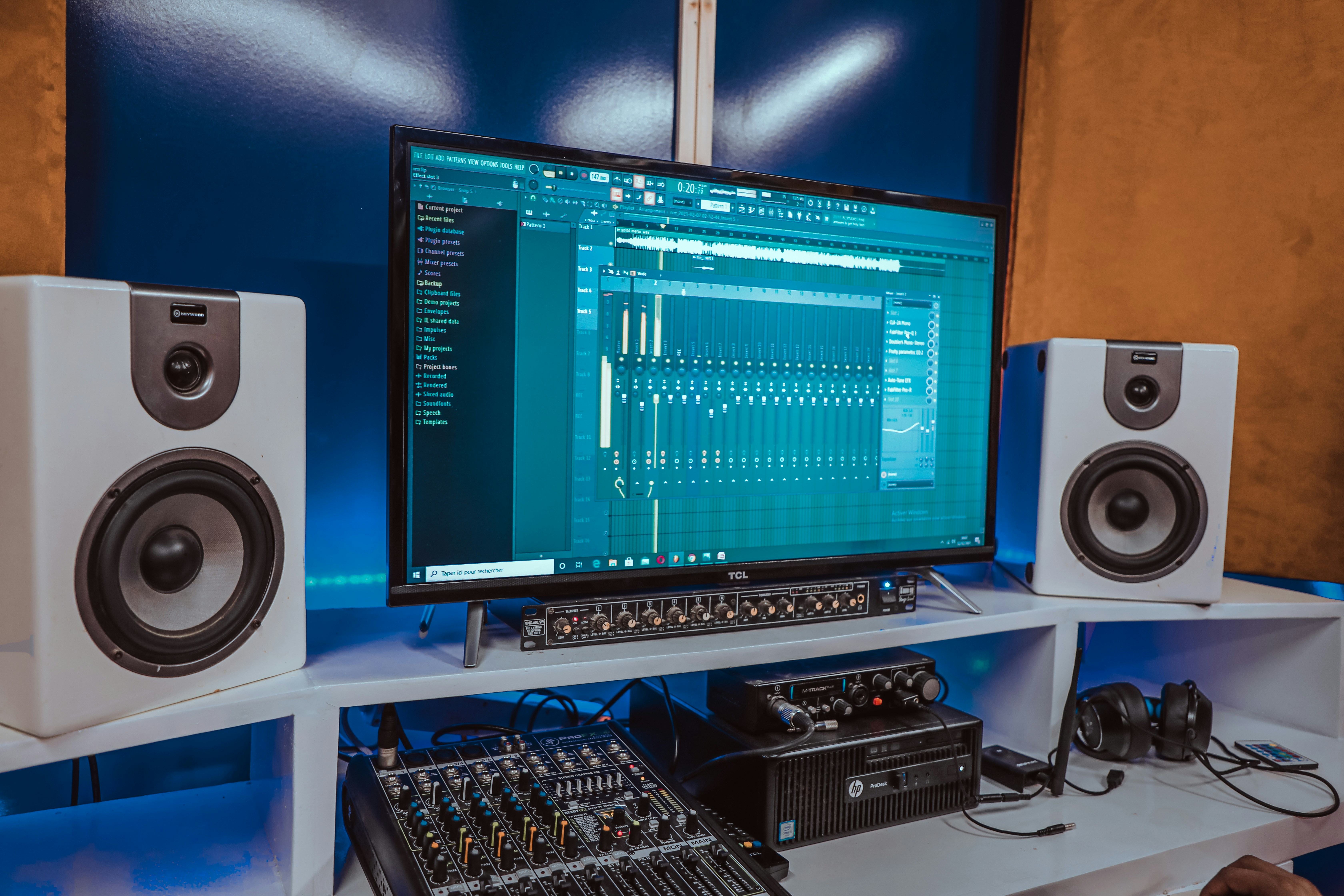
Introduction to Audio Diffusion Techniques
Audio diffusion is a critical technique employed in modern audio processing, encompassing various methods to manipulate and enhance sound. In essence, diffusion refers to the spreading of audio signals to create a cohesive and immersive listening experience. This process is particularly relevant in fields such as music production, sound design, and even in emerging areas like machine learning, where audio data needs to be transformed into usable formats.
In music production, audio diffusion techniques play an indispensable role in shaping the final output of a recording. For instance, sound engineers often use diffusion to blend different audio elements seamlessly, ensuring that instruments and vocals coexist harmoniously within a mix. By applying diffusion techniques, producers can control the spatial characteristics of sound, enhancing the three-dimensionality of the listening experience. This spatial manipulation is achieved through methods such as reverb, delay, and stereo imaging, which all contribute to a fuller and more engaging auditory experience.
Similarly, in sound design, diffusion techniques are utilized to create unique auditory textures and atmospheres. Designers harness the principles of diffusion to develop innovative soundscapes that can evoke specific emotions or contexts, increasing the effectiveness of multimedia projects such as films, video games, and virtual reality applications. Moreover, as machine learning continues to evolve, audio diffusion techniques are being integrated into algorithms that require audio classification and synthesis. By understanding how to process and diffuse audio data, machine learning models can achieve greater accuracy in tasks such as speech recognition and sound generation.
Overall, the significance of audio diffusion lies in its ability to enhance sound quality and emotional resonance across various applications, bridging the gap between creativity and technology. Its diverse methodologies, including waveform and spectrogram diffusion, underscore the importance of this technique in the realm of audio processing.
What is Waveform Diffusion?
Waveform diffusion is an audio processing technique that manipulates the audio signal in its unaltered form, or waveform, to achieve various effects or enhancements. Unlike spectrogram diffusion, which analyzes and alters audio through its frequency spectrum, waveform diffusion operates directly on the sound wave, allowing for a more intuitive manipulation of audio characteristics.
This method involves distributed transformations throughout the sound waveform, which can lead to distinct variations in tonal quality, richness, and texture. A significant advantage of waveform diffusion is its potential for higher fidelity in the final output, as it retains the original details present in the audio signal. This fidelity makes it particularly effective in straightforward tasks such as noise reduction, reverb deployment, and dynamic range compression, wherein preserving audio integrity is crucial.
However, waveform diffusion also comes with limitations. The complexity of manipulating audio at such a granular level can make real-time processing difficult, often requiring substantial computational resources. For example, when applying waveform diffusion to a lengthy audio file, the processing time may increase significantly compared to techniques that operate on frequency components. Furthermore, while it allows for detailed sound design, this method may not always be suitable for every musical genre or audio application.
Examples of applications where waveform diffusion proves to be most effective include film scoring, where dynamic and rich audio qualities are essential, and sound design for video games, which requires precise control over audio elements to enhance user experience. Understanding when to implement waveform diffusion as opposed to other techniques is critical for audio engineers and sound designers in achieving their desired outcomes.
What is Spectrogram Diffusion?
Spectrogram diffusion refers to a technique used in audio processing that operates within the frequency domain rather than working directly with raw audio waveforms. To understand how spectrogram diffusion functions, one first needs to grasp the concept of a spectrogram itself. A spectrogram is a visual representation of the spectrum of frequencies in a sound signal as it varies with time. It provides insight into the amplitude (or strength) of different frequencies present in the audio signal. This transformation from the time domain to the frequency domain enables a richer analysis of audio data.
The conversion of audio signals into spectrograms is achieved through a mathematical process known as the Short-Time Fourier Transform (STFT). This method divides the audio signal into short overlapping segments, applying the Fourier Transform to each segment to produce a two-dimensional representation of the audio signal. The x-axis of the resulting spectrogram represents time, while the y-axis represents frequency. The intensity of the color or brightness in the spectrogram indicates the amplitude of a particular frequency at a specific moment in time.
Once the audio signal has been converted into a spectrogram, diffusion processes can be applied. In this context, diffusion techniques allow for the manipulation of these frequency representations, enabling applications such as denoising, enhancement, and even synthesis of new audio content. One of the practical use cases for spectrogram diffusion includes improving the quality of recordings by removing unwanted noise or artifacts, thereby ensuring a cleaner audio output. Additionally, it is also employed in music processing and sound design, where altering frequencies can create new auditory experiences. Spectrogram diffusion, therefore, serves as a powerful tool in modern audio processing, distinguishing itself clearly from methods that operate solely in the waveform domain.
Key Technical Differences
Understanding the technical differences between waveform diffusion and spectrogram diffusion is crucial for audio processing. At its core, waveform diffusion operates directly on the raw audio waveform. This involves manipulating the continuous data stream that represents sound, enabling detailed transformations that preserve the intricate temporal characteristics of the original audio signal. Such an approach allows for fidelity to the original sound but can demand high computational resources due to the complexity of processing dense data in real-time.
In contrast, spectrogram diffusion focuses on the frequency-based representation of audio signals. A spectrogram transforms audio waveform data into a format that showcases how frequency components evolve over time, exhibiting both amplitude and frequency across a time axis. This shift to a frequency domain representation can significantly enhance computational efficiency, as many audio processing tasks can be articulated through simpler operations on these spectral features. The advantages come with the trade-off of potentially losing some temporal nuances present in the raw audio waveform.
Moreover, the nature of the data processed by these two methods contributes significantly to their differing implementations. Waveform diffusion relies on a more extensive dataset since it considers variations in amplitude and phase over time, whereas spectrogram diffusion simplifies this to the essential frequencies and their magnitudes. Consequently, processing techniques can diverge markedly; waveform diffusion often requires more advanced algorithms to manage its higher dimensionality, while spectrogram diffusion can take advantage of techniques that may be optimized for lower-dimensional data structures.
Ultimately, the choice between waveform and spectrogram diffusion hinges largely on the specific requirements of the audio processing task at hand. Each method, with its unique strengths and weaknesses, opens diverse pathways for manipulation and analysis of sound, underscoring the importance of understanding their technical distinctions.
Quality and Fidelity Considerations
The quality and fidelity of reconstructed audio are critical when selecting between waveform diffusion and spectrogram diffusion techniques. Each of these methods employs distinct approaches that can significantly impact the overall sound experience. Waveform diffusion processes audio data in its most direct form, reconstructing sound by manipulating the waveform itself. This technique often leads to audio of superior clarity and richness, as the original signal’s nuances are more effectively preserved. Moreover, with waveform diffusion, the potential for introducing artifacts tends to be lower. This advantage comes from the fidelity retained during the direct manipulation of the waveform, making it suitable for applications where sound quality is paramount.
Conversely, spectrogram diffusion translates audio into a visual representation, focusing on the frequency content over time. While this method can yield unique artistic effects and facilitate certain types of analysis, it may not adequately capture the intricate details present in the raw waveform. As a result, artists and sound designers might experience compromises in audio richness and clarity when opting for spectrogram diffusion. In scenarios where fidelity is of utmost importance, such as music production or high-fidelity audio playback, waveform diffusion often emerges as the preferred choice.
However, it is essential to consider potential disadvantages of both approaches. Waveform diffusion might occasionally struggle with complex sounds, leading to mixing challenges during reconstruction. Alternatively, while spectrogram diffusion excels in certain applications, it may inadvertently introduce a range of artifacts due to its reliance on slicing the audio signal into frequency bands. Therefore, making an informed choice between these two diffusion techniques involves weighing the specific audio application’s requirements against the potential impacts each method could have on sound quality and fidelity.
Applications in Machine Learning
The implications of waveform diffusion and spectrogram diffusion in the realm of machine learning are significant, particularly in training models that focus on audio synthesis and transformation. These two diffusion methods provide different methodologies for processing audio signals, thus catering to various applications depending on the specific needs of the task at hand.
Waveform diffusion primarily focuses on processing data in its raw audio form. This method is advantageous in scenarios requiring high fidelity and realism in audio synthesis, such as in music generation and voice synthesis applications. The direct manipulation of waveform data allows machine learning models to capture intricate details of sound waves, facilitating a more nuanced and realistic output. Algorithms like WaveGlow and Parallel WaveGAN harness waveform diffusion techniques, enabling high-quality audio generation by modeling the raw signals directly.
Conversely, spectrogram diffusion works by transforming audio signals into their frequency representations, which is particularly beneficial for tasks such as music genre classification or audio signal enhancement. Spectrograms provide a visual representation of the frequency spectrum over time, allowing machine learning models to leverage time-frequency representations to gain valuable insights into audio characteristics. Frameworks such as TensorFlow and PyTorch support various algorithms, including SSN (Spectrogram Synthesis Network) and VQ-VAE (Vector Quantized Variational Autoencoder), that apply spectrogram diffusion techniques. These frameworks enable effective training of models that operate over transformed audio data, allowing for innovative audio analysis and manipulation.
In conclusion, both waveform diffusion and spectrogram diffusion offer unique advantages in machine learning applications. The choice between the two methods should be guided by the specific requirements of the application, including factors such as fidelity, computational efficiency, and the desired outcomes of audio analysis and synthesis.
User Experience and Workflow Impact
Within the realm of audio processing, user experience and workflow are critical factors that can significantly influence the effectiveness and efficiency of audio production. When comparing waveform diffusion and spectrogram diffusion, these two methods present distinct practical implications that affect audio engineers and producers.
Waveform diffusion generally offers a more direct approach, aligning closely with traditional audio editing practices. This technique allows engineers to manipulate sound at the waveform level, giving them immediate visual feedback. As a result, users often find that the learning curve is less steep than with spectrogram diffusion, making this method accessible even for those with limited technical experience. The straightforward nature of waveform diffusion is especially beneficial in scenarios requiring quick iterations and rapid decision-making, which can enhance overall productivity in busy production environments.
On the other hand, spectrogram diffusion can be perceived as more complex due to its reliance on frequency-domain analysis. This method allows for a more detailed representation of audio, enabling nuanced modifications that may not be achievable with waveform techniques alone. However, because it often necessitates a deeper understanding of sound frequency and human hearing perception, its implementation can require more time and investment in training. For professionals adept in utilizing spectrograms, the benefits can be substantial, providing greater creativity and precision in sound design. However, the time spent learning and adjusting workflows may impact overall speed and efficiency during the production process, especially in fast-paced audio environments.
Ultimately, the choice between waveform diffusion and spectrogram diffusion will depend on the specific requirements of the project, as well as the preferences of the audio professionals involved. Their respective impacts on workflow and user experience should be carefully weighed to find the best fit for each unique production scenario.
Future Developments in Diffusion Techniques
As the field of audio processing continues to evolve, diffusion techniques are being enhanced to meet the demands of various applications. One significant trend on the horizon is the development of hybrid approaches that harness the strengths of both waveform diffusion and spectrogram diffusion. By combining these methodologies, researchers aim to create advanced audio processing systems that offer greater flexibility and efficiency.
Waveform diffusion has traditionally been favored for its ability to capture the full spectrum of audio signals in their raw form. However, it often struggles with complex audio characteristics found in real-world scenarios. On the other hand, spectrogram diffusion facilitates the transformation of audio signals into a visual representation, allowing for more detailed analysis and manipulation. By merging these two techniques, developers can potentially overcome the limitations of each method, leading to more robust audio processing capabilities.
Emerging research in machine learning and artificial intelligence also plays a pivotal role in shaping the future of diffusion techniques. Algorithms that can efficiently learn from existing audio datasets could lead to innovative solutions that further refine the diffusion process. These advancements may involve the integration of neural networks capable of optimizing both waveform and spectrogram diffusions, thereby enhancing the quality and fidelity of audio processing.
Moreover, as real-time audio processing becomes increasingly critical in various industries, the need for techniques that can operate with minimal latency is paramount. Future developments may focus on streamlining algorithms to provide immediate results without compromising sound quality. This acceleration in processing speed will be essential for live sound applications, gaming, and other interactive audio environments.
Conclusion and Recommendations
In the realm of audio processing, both waveform diffusion and spectrogram diffusion represent distinct methodologies, each with unique advantages and applications. Waveform diffusion directly manipulates the audio signal as it exists in its original form, providing high fidelity and capturing the nuances of sound in a way that is often perceptually accurate. This method is particularly beneficial for applications requiring precision, such as in music production or sound design, where the integrity of the audio is paramount.
Conversely, spectrogram diffusion operates in a transformed domain, analyzing the frequency content of audio signals over time. This approach allows for a more robust analysis of complex audio properties, making it advantageous for tasks like noise reduction and feature extraction. By focusing on spectral characteristics, spectrogram diffusion can achieve results that are less influenced by variations in the raw waveform, thus facilitating the management of intricate audio phenomena.
When deciding which method to employ, practitioners should consider the specific requirements of their projects. For high fidelity audio restoration, waveform diffusion may be the optimal choice. In contrast, when working with tasks that involve detailed frequency analysis or simplification of complex audio signals, spectrogram diffusion is likely to prove more effective.
In conclusion, both waveform and spectrogram diffusion are essential tools in the audio processing arsenal. An understanding of their differences enables professionals to select the most appropriate techniques for their specific needs. As advancements in audio diffusion technologies continue to evolve, further exploration can yield even more innovative applications, ensuring that audio processing remains at the forefront of technological progress. Enthusiasts and professionals alike are encouraged to delve deeper into these methods to unlock their full potential.