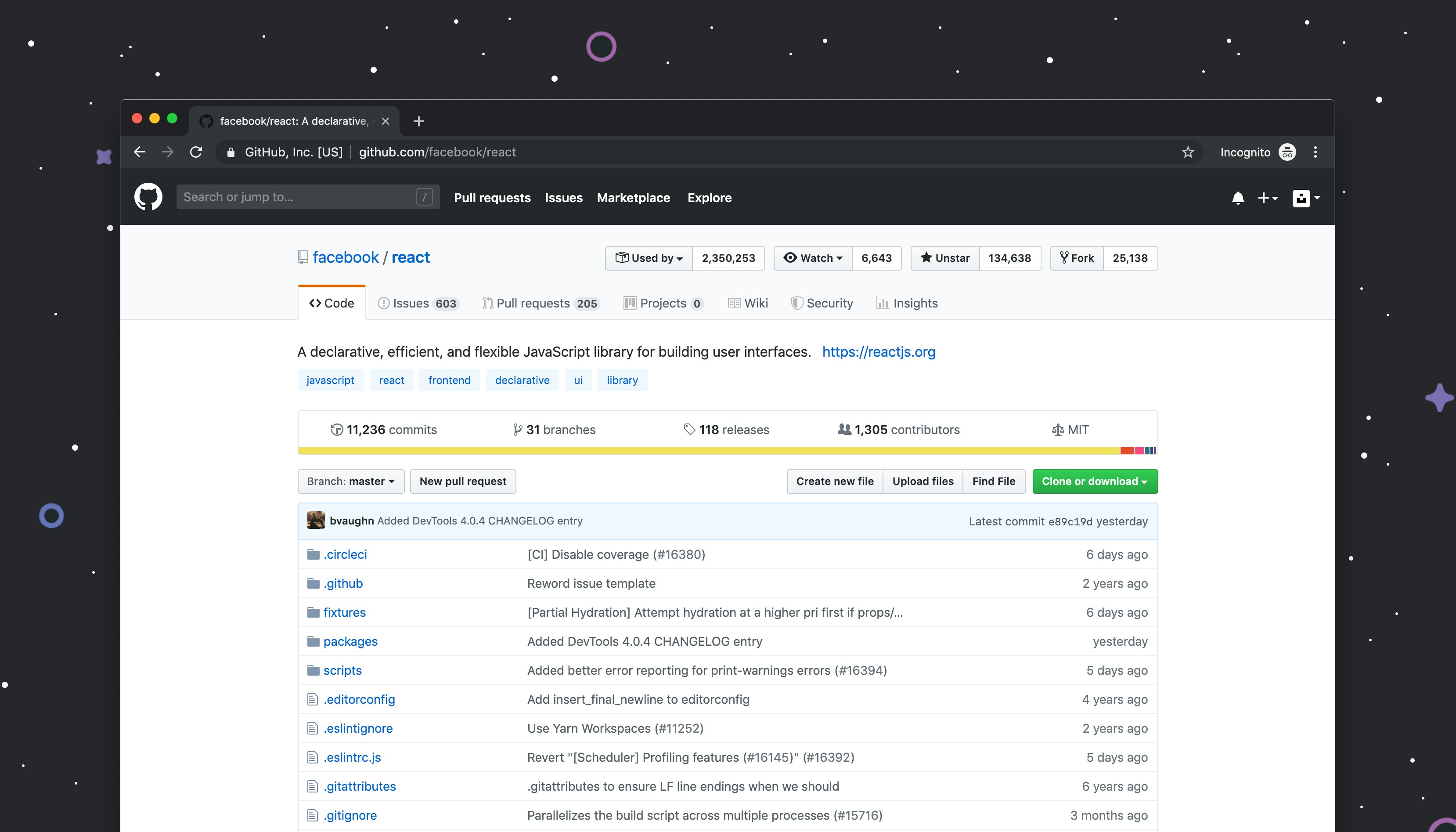
Introduction to React
React is a prominent JavaScript library primarily used for building user interfaces, especially suited for the development of single-page applications (SPAs). Developed by Facebook in 2011, React emerged as a solution to the increasing demand for dynamic and high-performing web applications. Its core purpose is to facilitate the creation of interactive and seamless user experiences while ensuring optimal performance.
The rationale behind the development of React stems from the limitations encountered with traditional web development methods. In the past, developers relied heavily on server-side rendering, resulting in slower user interfaces and a cumbersome experience during navigation between pages. This prompted the need for a more efficient solution that could handle complex user interactions without compromising on speed.
One of the key features of React is its component-based architecture. This allows developers to create encapsulated components that manage their own state. These components can then be composed to form complex user interfaces, enabling a more modular approach to web development. This component-driven methodology not only enhances reusability but also simplifies debugging, as each component can be developed and tested independently.
Moreover, React leverages a virtual DOM, which significantly improves the performance of updates and renders by efficiently diffing changes before applying them to the actual DOM. This minimizes the number of direct manipulations to the DOM, thereby enhancing the overall speed of the application.
In summation, React represents a modern approach to building user interfaces, emphasizing both performance and developer efficiency. By providing a robust framework that caters to the demands of modern web applications, React has established itself as an essential tool in the web development landscape.
History and Evolution of React
The React framework, designed for building user interfaces, was developed by Facebook in 2011. Its inception arose from the need to address challenges in web applications involving complex user interactions and dynamic content. The primary objective was to create a tool that could efficiently handle the rendering of large amounts of data. A notable aspect of React’s architecture is its component-based structure which promotes reuse and simplifies the development of interactive UIs.
Initially introduced as an internal project, React was open-sourced in May 2013, allowing the broader developer community to engage with and contribute to its evolution. This open-source strategy significantly contributed to the rapid growth of React in terms of both adoption and development. The first major milestone was the release of React 0.3.0, which included features such as the virtual DOM, an innovative approach that optimizes rendering performance by minimizing direct manipulation of the DOM.
Following its initial release, React underwent several updates that added features to enhance developer productivity and performance. The introduction of JSX (JavaScript XML) in 2014 allowed developers to write HTML-like syntax within their JavaScript code, making the process more intuitive. Additionally, the launch of React Router and Redux, third-party libraries, further solidified React’s position within the larger ecosystem of JavaScript frameworks.
By the end of the 2010s, React had established itself as one of the most popular frameworks worldwide, used by countless enterprises and individual developers alike. Its community-driven nature has led to continuous improvements and the emergence of tools and libraries designed to extend its functionality. Today, React is synonymous with modern web development, reflecting the dynamic landscape of technology and user expectations.
Core Features of React
React is a powerful JavaScript framework that has garnered widespread adoption due to its unique features which facilitate efficient web development. One of the most significant attributes of React is its component-based architecture. This concept allows developers to build encapsulated components that manage their own state. These components can then be composed to create complex user interfaces. This modular approach not only enhances reusability but also simplifies debugging, as each component can be examined separately.
Another core feature of React is the virtual DOM. Unlike traditional frameworks, which interact with the actual DOM directly, React builds a virtual representation of the DOM. When changes occur, React compares the new virtual DOM with the previous version to identify the changes. This process, known as reconciliation, minimizes direct manipulation of the DOM and significantly boosts performance. As a result, applications built with React often exhibit faster rendering times, leading to a more responsive user experience.
The framework’s unidirectional data flow is another aspect that sets it apart from other frameworks. This flow of data ensures that data has a single source of truth, which makes the application easier to understand and debug. When a data change occurs, it flows downwards through the component hierarchy, maintaining a clear and predictable data flow. This simplification allows developers to manage the state of their applications more effectively, leading to fewer unexpected behaviors and a more stable user interface.
These core features—component-based architecture, virtual DOM, and unidirectional data flow—collectively contribute to React’s reputation as a leading framework in modern web development. By leveraging these aspects, developers can create dynamic, efficient, and maintainable user interfaces that meet the needs of today’s applications.
Comparison with Other Frameworks
When assessing the functionalities of front-end frameworks, it is crucial to compare and contrast them to understand their unique attributes and potential limitations. React, Angular, and Vue.js are three of the most widely used frameworks in the development community. Each has its distinct approach to building user interfaces and managing state.
React, developed by Facebook, adopts a component-based architecture, making it highly flexible and efficient for building interactive user interfaces. Its primary strength lies in its virtual DOM, which optimizes rendering performance by minimizing the number of updates on the actual DOM. This feature makes React particularly suitable for applications that require real-time data processing. Moreover, React offers a vast ecosystem of libraries and tools, including state management libraries like Redux and MobX, which allow developers to handle complex state management tasks seamlessly.
In contrast, Angular, created by Google, provides a more opinionated framework that encompasses a comprehensive set of features out-of-the-box, including routing, form handling, and dependency injection. This can make Angular more suited for larger-scale applications where a standardized structure is advantageous. However, this opinionation can also lead to a steeper learning curve for newcomers, as developers must navigate a variety of built-in functionalities.
Vue.js offers a blend of both React and Angular’s strengths, presenting a more approachable framework with a gentle learning curve for beginners. It also utilizes a component-based architecture and supports a virtual DOM similar to React. However, Vue’s flexibility allows developers to structure their projects however they see fit, albeit at the potential cost of consistency in larger teams.
Ultimately, the decision to choose React, Angular, or Vue.js should be guided by the specific needs of the project, the team’s familiarity with the framework, and the complexity of the application being developed. Each framework offers unique advantages and disadvantages that can impact the overall development experience and the resulting application performance.
Getting Started with React
React is a popular JavaScript framework used to build user interfaces, particularly for single-page applications. To effectively utilize React, it is vital to have a proper development environment. In this section, we will guide you through the steps necessary to set up that environment.
Firstly, to develop in React, you will need to have Node.js installed on your machine. Node.js is a JavaScript runtime built on Chrome’s V8 JavaScript engine, enabling you to execute JavaScript code server-side. You can download it from the official Node.js website. Alongside Node.js, you will also need npm (Node Package Manager), which usually gets installed automatically with Node.js. npm allows you to manage libraries and dependencies used in your projects, including those specifically for React.
Once the prerequisites are in place, creating a new React application can be achieved by utilizing the Create React App command-line tool. To do this, first open your terminal or command prompt and run the following command:
npx create-react-app my-appReplace my-app with your desired application name. After executing the command, npm will set up a new React application, complete with all necessary configurations.
To start the React application, navigate to the newly created directory:
cd my-appAnd then run:
npm startThis will start the application in development mode and open a browser window displaying your new React app. You should see the default React welcome page, confirming that your environment is correctly set up.
Through these steps, you will have successfully created a foundational environment suitable for working with the React framework, allowing you to explore further and develop dynamic web applications.
Building Components in React
React components serve as the fundamental building blocks of any application created using the React framework. Understanding how to effectively create and manage these components is essential for developers looking to build dynamic web applications. Components in React can be classified into two main types: functional components and class components.
A functional component is a JavaScript function that returns a React element, which is essentially a description of what should appear on the screen. These components are typically simpler and more concise, making them a preferred choice among many developers. They allow you to harness React hooks for managing state and lifecycle events, thereby elevating the component’s capabilities without the complexity of class components.
Class components, on the other hand, are ES6 classes that extend from React.Component. They are more complex and are used to manage more intricate states and lifecycle methods. In a class component, the render() method is required to return the JSX (JavaScript XML), which defines the component structure. Developers often employ class components when they require additional capabilities, like more comprehensive state management or advanced lifecycle methods.
State and props are crucial concepts in React that enable dynamic data management across components. State refers to the local data maintained within a component, allowing it to react to user inputs and changes. Props, short for properties, are read-only data passed down from parent components to child components, fostering a unidirectional data flow that is essential in React’s architecture.
Lifecycle methods, exclusive to class components, provide hooks into a component’s lifecycle: from its creation to its removal. These methods, such as componentDidMount and componentWillUnmount, enable developers to execute code at specific moments, enhancing the component’s behavior and performance.
State Management in React
State management is a vital aspect of building React applications, dictating how data flows and is maintained throughout the component hierarchy. React offers built-in state management capabilities through its hooks, such as useState and useReducer, which are instrumental in managing local state within functional components.
The useState hook allows developers to add state variables to function components, enabling them to track values that change over time. This hook initializes a state variable and provides a function to update it, facilitating responsive user interfaces. On the other hand, the useReducer hook is particularly useful for managing complex state logic. It provides a way to centralize state updates by employing the reducer pattern, making state transitions more predictable and easier to manage.
Despite these built-in capabilities, larger applications often require more robust state management solutions. In such cases, external libraries like Redux and the Context API become essential. Redux operates on a single source of truth, utilizing a centralized store to manage global state across the application. This approach helps maintain consistency and enables easy debugging and state tracking. The Context API, part of React’s core functionality, provides an alternative means of managing state by allowing data to be shared at different levels of the component tree without prop drilling.
Choosing between these methods depends primarily on the complexity and requirements of the application. For simpler projects, React’s built-in state management may suffice. However, as applications scale and involve deeper state interactions, integrating Redux or the Context API can enhance maintainability and clarity of the application state.
Advanced Concepts in React
As developers explore the React framework, they may find it beneficial to delve into advanced concepts that can enhance their applications’ functionality and performance. One such concept is higher-order components (HOCs). A higher-order component is a function that takes a component and returns a new component, allowing for the reuse of component logic across multiple places. This abstraction is particularly useful for scenarios like adding authentication checks or logging data without altering the original component directly.
Another important concept is render props. This technique involves passing a function as a prop to a component, enabling that component to dynamically determine what to render. Utilizing render props can help keep components highly reusable and maintain separation of concerns by allowing different components to share similar logic while still being distinct.
React’s built-in hooks provide a powerful way to manage component state and side effects, making them indispensable in modern React applications. For instance, the useEffect hook allows developers to perform side effects in functional components, such as data fetching or subscriptions, responding to changes in the component’s state or props. This enables a more controlled and efficient approach to managing lifecycle methods.
Similarly, the useContext hook simplifies the use of React’s Context API, allowing components to access global state easily without the need for prop drilling. This hook is particularly advantageous for applications with deep component trees, as it reduces the complexity associated with passing props through multiple layers of components.
Overall, these advanced concepts, namely higher-order components, render props, and hooks, serve a crucial role in optimizing React applications. By utilizing them effectively, developers can create more modular, scalable, and maintainable code, leading to a more efficient development process and a better user experience.
Conclusion and Future of React
React has emerged as a pivotal framework in the realm of modern web development, offering developers both efficiency and flexibility. Throughout this blog post, we have examined key features and advantages that position React as a leader in front-end development. Its component-based architecture, virtual DOM implementation, and strong community support undoubtedly contribute to its widespread adoption among developers and large-scale applications.
As we anticipate future developments in the React ecosystem, several trends appear promising. For instance, the continued enhancement of performance features is likely, particularly as web applications demand more interactivity and responsiveness. Furthermore, the integration of React with TypeScript is expected to gain traction, allowing developers to benefit from static type checking and improved code quality. This hybrid approach can potentially reduce debugging time and enhance maintainability, making it easier to scale applications as they grow.
Another significant trend is the rise of server-side rendering alongside the traditional client-side rendering. With the advent of frameworks like Next.js, which simplifies the implementation of server-side rendering and static site generation, React’s capabilities can be expanded further. This shift could lead to improved SEO outcomes and faster loading times for users, which are critical factors in the competitive digital landscape.
Moreover, the increasing adoption of microfrontend architectures suggests that React will continue to play an integral role in building modular, scalable applications across diverse teams. This methodology aligns perfectly with React’s component-oriented philosophy, providing a seamless way to divide work among multiple developers or teams.
In summary, the significance of React in modern web development cannot be overstated. It not only streamlines the development process but also equips developers with the tools needed to create dynamic, high-performance user interfaces. The future of React appears bright, with continuous enhancements and supportive community initiatives paving the way for even further innovations in web development.