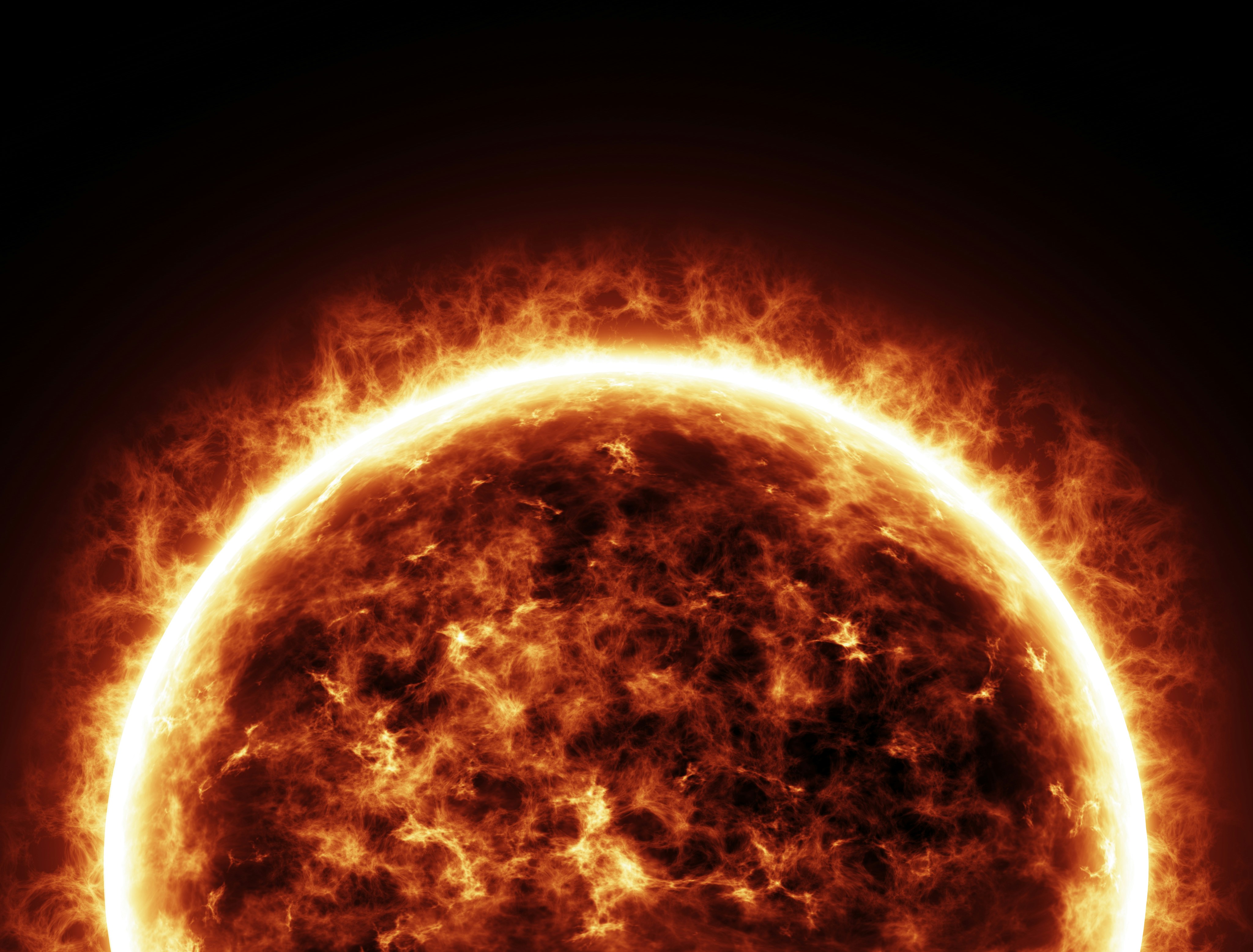
Understanding Solar Flares
Solar flares are intense bursts of radiation emanating from the sun’s surface that can have significant implications for space weather and Earth’s technological infrastructure. They occur when magnetic energy that has built up in the sun’s atmosphere is suddenly released. This is largely due to the complex interactions of solar magnetic fields, which are in a constant state of fluctuation and reconfiguration. The process often involves sunspots—temporary regions of reduced surface temperature caused by magnetic activity—and as these magnetic fields become highly stressed, they can collapse, leading to an eruption of energy.
Solar flares vary widely in their intensity and are classified into several categories based on the peak X-ray flux they emit. The most common classifications are A, B, C, M, and X, with ‘A’ representing the weakest flares and ‘X’ denoting the most powerful. For example, an ‘M’ class flare is moderate and can still cause significant effects in terms of communications outages or disruptions to satellite operations. Each classification scale describes the intensity of the flare, which helps predict potential impacts on Earth.
When a solar flare occurs, it releases electromagnetic radiation across the entire spectrum, which includes X-rays and ultraviolet rays. This radiation travels at the speed of light and can reach Earth within minutes. The resulting ionization in the Earth’s atmosphere can interfere with radio signals and GPS systems, potentially disrupting communications and navigation technologies. Thus, the study of solar flares is not only crucial for understanding solar dynamics but also for predicting and mitigating risks to satellite infrastructure, emphasizing the significance of monitoring these solar events.
The Importance of Predicting Solar Flares
Predicting solar flares is of paramount importance for the stability and security of our technological society. Solar flares are sudden eruptions of energy from the sun that can release vast amounts of radiation and energetic particles into space. These events pose significant risks to our advanced technological infrastructure, including GPS systems, satellites, and power grids. Accurate predictions can help mitigate these risks and protect essential services that rely on technology.
One major consequence of solar flares is their potential to disrupt GPS signals. When these flares occur, the high-energy radiation can interfere with the signal transmission, leading to inaccuracies that affect navigation and timing services. This disruption can have cascading effects across various industries, including transportation, telecommunications, and even financial markets that depend on precise timings for transactions.
Moreover, solar flares can cause damage to satellites in orbit. High levels of radiation can degrade satellite components, shorten operational lifespans, or even lead to complete failure, which can be costly and disruptive. The 1989 geomagnetic storm, for example, caused outages in Quebec and disrupted satellite services, underscoring the damaging potential of solar events.
Furthermore, the impact of solar flares on power systems cannot be understated. Geomagnetic storms generated by these flares can induce electric currents in power lines, potentially leading to power outages and infrastructure damage. Power companies have acknowledged past occurrences where predictable solar activity has resulted in widespread blackouts, stressing the need for improved prediction models.
In conclusion, the ability to accurately predict solar flares is vital for safeguarding our reliance on technology. This proactive approach can mitigate risks, ensuring the resilience of critical infrastructure while protecting society from the unpredictable nature of solar events.
Current Methods of Solar Flare Prediction
Solar flare prediction has evolved significantly over the years, employing increasingly sophisticated techniques. Traditionally, astronomers have relied on the observation of sunspots, which are dark areas on the sun’s surface indicative of magnetic activity. Studies suggest that the frequency and size of sunspots can correlate with the likelihood of solar flares, as active regions with numerous sunspots tend to produce more flares. However, this method is not foolproof, as not all sunspot groups generate flares, and the exact mechanism linking sunspots to flare activity remains complex.
Another crucial component of flare prediction involves monitoring the sun’s magnetic field. Observations using magnetographs allow scientists to analyze the magnetic structures present in solar active regions. Changes in the magnetic field, such as shear and twist, are considered precursors to flares. By employing these observations, researchers can gain insights into potential flare activity, though challenging conditions, such as the sun’s dynamic environment, can complicate predictions.
The use of historical data also plays an essential role in forecasting solar flares. By examining past solar activity and its relation to flare occurrences, astronomers can identify patterns that may aid in predicting future flares. Specifically, statistical models that analyze long-term solar activity records help to refine prediction accuracy. Nonetheless, these models face notable limitations, as solar behavior can be unpredictable and influenced by various external factors.
Despite advancements in flare prediction methodologies, challenges remain, such as the inherent variability of solar activity and the limitations of current observational instruments. The integration of new technologies, like satellite-based observatories, holds promise for enhancing the accuracy of predictions. As research in solar physics continues to progress, further improvements in both the understanding and forecasting of solar flares are anticipated.
Role of Artificial Intelligence in Predictive Modeling
The increasing frequency and intensity of solar flares necessitates the adoption of advanced technologies to enhance predictive modeling. Artificial Intelligence (AI), particularly machine learning algorithms, has emerged as a transformative force in this realm. By harnessing the vast amounts of solar data generated from satellites and ground-based observations, AI can significantly improve our capability to predict solar flares.
AI algorithms are designed to analyze complex patterns within large datasets, identifying relationships and anomalies that may be invisible to human analysts. This capability allows for quicker processing times and greater accuracy in detecting early indicators of solar activity. For instance, machine learning techniques can sift through historical solar data to establish baseline patterns and deviations. Once these parameters are established, the AI system can monitor real-time data, alerting scientists to potential solar flare activities that could impact Earth’s satellite infrastructure.
Moreover, AI systems can improve reliability by continuously learning from new data. This adaptive learning process enables predictive models to refine their accuracy over time, adjusting for shifts in solar behavior that may not have been accounted for in earlier models. Notable examples of AI applications in astronomy include the use of neural networks for classifying solar events and predicting their potential impacts based on previous occurrences.
Furthermore, collaborative efforts between astronomers and AI researchers have led to the development of sophisticated tools that can merge theoretical solar physics with computational analysis. These tools not only enhance prediction accuracy but also provide critical support for disaster preparedness initiatives related to solar flares. By implementing AI in predictive modeling, researchers are better equipped to safeguard vast satellite networks and mitigate the disruptive effects of solar flares on technology and communication systems.
Case Studies of AI in Solar Flare Prediction
Recent advancements in artificial intelligence have paved the way for more accurate forecasting of solar flares, which pose significant risks to Earth’s satellite infrastructure. Several notable case studies exemplify the integration of AI in this field.
One prominent study conducted by researchers at the National Oceanic and Atmospheric Administration (NOAA) employed machine learning algorithms to analyze decades of solar data. The project aimed to develop predictive models capable of identifying patterns of activity leading up to solar flares. By utilizing vast datasets from various solar observatories, the AI system recognized subtle correlations that traditional forecasting methods often overlooked. The outcome was a significantly improved prediction accuracy, allowing for timely alerts to satellite operators.
Another example comes from a collaborative effort between Stanford University and NASA, which investigated the effectiveness of deep learning techniques in solar flare predictions. The researchers trained convolutional neural networks on historical images of the sun taken from space. This approach enabled the AI to discern visual anomalies linked to imminent flare activity. The results indicated that the deep learning model outperformed previous prediction models, reducing false alarm rates and enhancing the reliability of forecasts. This case study highlighted the transformative potential of AI in solar observation and prediction.
Furthermore, the European Space Agency has initiated projects exploring AI to enhance the understanding of solar phenomena. By applying reinforcement learning techniques, their team seeks to develop dynamic models that adapt based on real-time solar activity. These innovative methodologies not only refine prediction accuracy but also facilitate proactive measures to mitigate the impact of solar flares on satellite systems.
In conclusion, the integration of artificial intelligence into solar flare prediction represents a significant leap forward in safeguarding Earth’s satellite infrastructure. These case studies underscore the transformative potential of AI methodologies in improving forecasting capabilities while minimizing risks associated with solar activity.
Challenges Facing AI Prediction Models
The integration of artificial intelligence (AI) in predicting solar flares presents several significant challenges that must be addressed to improve accuracy and reliability. One primary issue is the quality and availability of data. Accurate predictions rely on extensive historical data related to solar activity. However, the dataset is often incomplete, inconsistent, or lacks the necessary detail to train AI models effectively. This inconsistency compromises the model’s capacity to learn and make predictions, as AI thrives on robust and high-quality datasets.
Another significant challenge is the need for interdisciplinary collaboration among solar physicists, data scientists, and AI specialists. Each discipline has its unique methodologies and perspectives, which can lead to difficulties in synthesizing knowledge effectively. Developing predictive models requires an understanding of solar phenomena, alongside advanced data analysis techniques. Without cohesive teamwork across these fields, the predictive capacity of AI could be limited, hampering its effectiveness in forecasting solar flares.
Moreover, there is the potential issue of overfitting within the predictive models. Overfitting occurs when a model learns the noise in the training data rather than the underlying patterns, resulting in poor performance on new, unseen data. This scenario is particularly concerning in the context of solar flare prediction, where real-time forecasting is crucial for protecting satellite infrastructure. Properly balancing the complexity of AI models with the available data is essential to mitigate this issue.
Lastly, the ethical implications of AI predictions merit serious consideration. The reliance on AI in critical applications like solar flare forecasting raises questions about accountability, transparency, and the potential consequences of erroneous predictions. Ensuring that stakeholders understand the limitations and risks involved in AI predictions is vital for fostering trust and accountability in deployment.
Future Prospects of AI in Solar Flare Monitoring
The exploration of artificial intelligence (AI) in the monitoring of solar flares is an exhilarating field poised for significant advancements. As researchers continue to delve deeper into this intersection of solar physics and computational technology, the future promises a plethora of breakthroughs that could refine our understanding of solar activity. The increasing complexity and volume of solar data necessitate innovative approaches, positioning AI as a pivotal player in this domain.
Recent developments have already begun to showcase how machine learning algorithms can improve the accuracy of solar flare predictions. These models utilize vast datasets, allowing scientists to analyze patterns that were previously indiscernible to traditional observational methods. Going forward, the integration of AI will likely become more standard within the scientific community, with a growing focus on real-time data processing. This means that as solar activity evolves, predictive models may become increasingly precise, enabling better forecasting of solar events and their potential impacts on satellite infrastructure.
Furthermore, collaborative initiatives between space agencies and AI developers are expected to flourish, serving as a catalyst for innovation. Such partnerships can facilitate the exchange of ideas, sharing of data, and integration of diverse technologies, ultimately enhancing AI’s capability to monitor solar phenomena. With advancements expected in sensor technologies and data collection methods, the speed and efficacy of predictions could reach unprecedented heights.
In conclusion, the future of AI in solar flare monitoring is bright and full of promise. As research progresses, we may see transformative developments that enhance our predictive capabilities, bolster satellite safety, and streamline data analysis. This synergy between AI and solar physics holds the potential to safeguard our technological infrastructure from the unpredictable forces of solar events.
Preparing for Solar Flares: Mitigation Strategies
As the threat posed by solar flares becomes progressively clearer, the development of effective mitigation strategies is paramount to safeguard Earth’s vital satellite infrastructure. One of the most promising approaches is the establishment of early warning systems that leverage advancements in space weather forecasting. By utilizing data from various sources, including satellites positioned near the Sun, these systems can provide alerts hours to days in advance, offering critical time for the implementation of protective measures.
In addition to early warnings, technology adjustments in satellite design play a significant role in mitigating the adverse effects of solar flares. Modern satellites can be equipped with advanced shielding materials that absorb or deflect harmful radiation, thereby protecting sensitive electronics on board. Furthermore, employing redundancy in satellite systems ensures that if one component is damaged due to a solar event, there are backup systems available, which helps maintain communication and operational continuity.
Policy initiatives also emerge as a crucial component of mitigation strategies. International cooperation is essential for establishing standardized protocols that can be enacted during solar storms. Governments and private sectors must collaborate to share timely information regarding solar activity and to establish guidelines on how to respond effectively. Such cooperation could include mandatory downtime for satellites during heightened solar activity, allowing operators to power down non-essential systems and thus minimize potential damage.
Through a combination of early warning systems, innovative satellite design, and collaborative policy frameworks, it is possible to significantly reduce the impact of solar flares on Earth’s satellite infrastructure. These measures not only aim to protect our technological advancements but also ensure that critical communication and navigation functions remain uninterrupted in the face of solar events, thereby safeguarding modern society’s reliance on satellite technology.
Conclusion and Call to Action
As we have explored throughout this blog post, the ability of artificial intelligence (AI) to enhance the prediction of solar flares is a significant advancement in safeguarding Earth’s satellite infrastructure. The integration of advanced AI algorithms into solar physics has the potential to revolutionize our understanding of solar activities and their impact on space-based technologies. Solar flares pose a threat to satellites, communication systems, and even power grids on Earth. Therefore, improving prediction models is not merely an academic concern; it is imperative for the resilience of critical technological systems.
The importance of research into AI applications for solar flare prediction cannot be overstated. Not only does it open pathways for better forecasting of such events, but it also fosters interdisciplinary cooperation. By bringing together experts from various fields—such as astrophysics, computer science, and engineering—we are better positioned to tackle the complexities involved in space weather forecasting.
Moving forward, a concerted effort is needed to increase investment in research initiatives. Supporting academic institutions and collaboration between space agencies and technology companies is vital for fostering innovation. By pooling resources and expertise, we can enhance our predictive capabilities and ensure that Earth’s satellites are adequately protected against the unpredictable nature of solar flares.
Let us advocate for more significant funding for these promising research programs. Together, we can contribute to a future where our satellite infrastructure is resilient and prepared for the challenges posed by the sun’s fiery emissions. The time is now to harness the power of AI for predictive analytics in solar physics, forging a safer electronic environment for all.