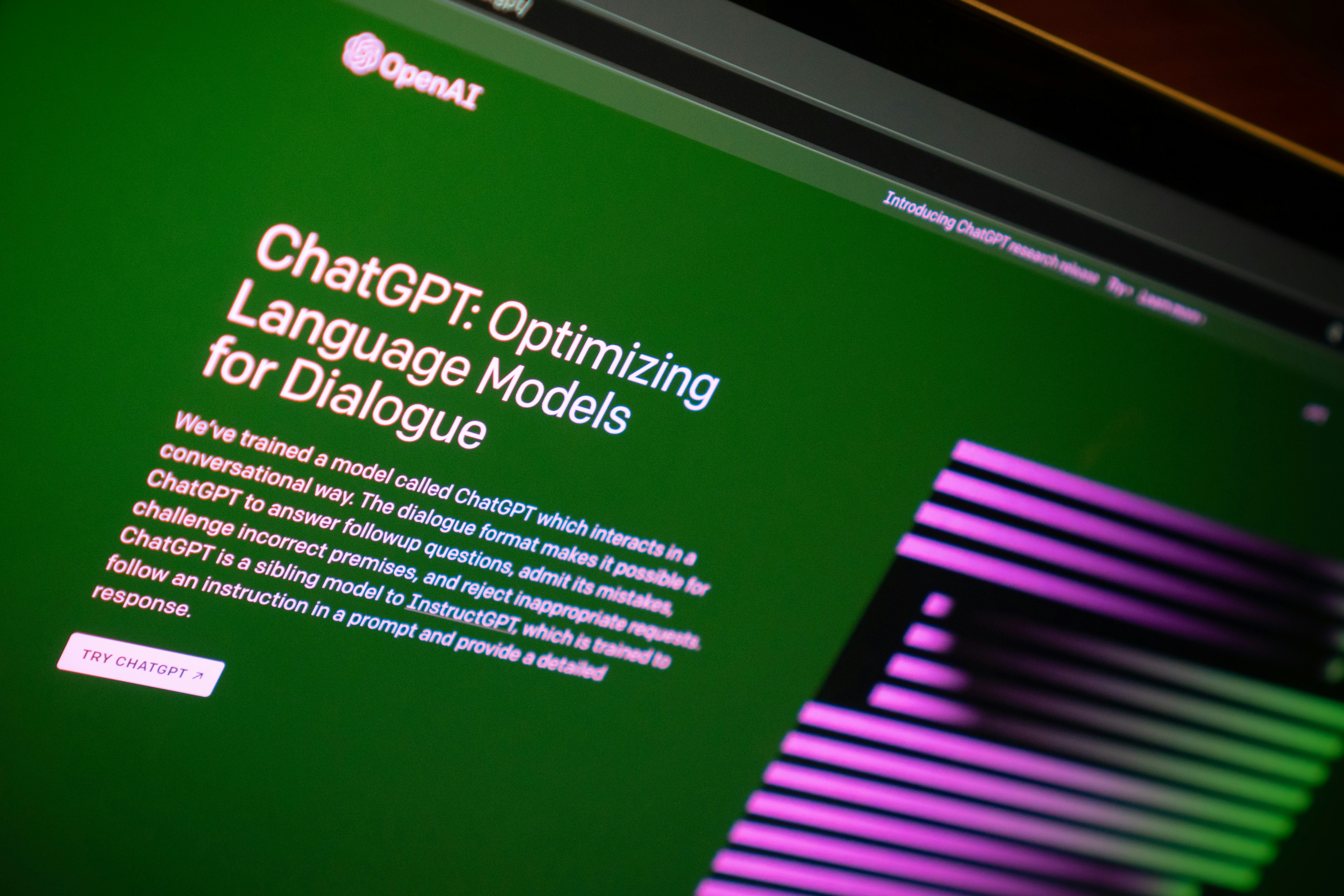
Introduction to Chatbots
Chatbots are artificial intelligence (AI) programs designed to simulate human conversation through text or voice interactions. Built on various technologies, these automated systems enable users to communicate with computers as if they were conversing with a real person. The primary purpose of chatbots is to provide instant responses, assisting users with inquiries and tasks across multiple domains.
The evolution of chatbot technology has seen significant advancements from the early days of simple rule-based systems to the complex AI-driven chatbots we encounter today. Initially, chatbots mimicked human conversation using preset responses based on specific keywords or phrases. However, the development of natural language processing (NLP) and machine learning algorithms has paved the way for chatbots like ChatGPT and Gemini. These advanced chatbots are capable of understanding context, generating human-like responses, and learning from interactions to improve over time.
Chatbots have found widespread applications in various fields, including customer service, personal assistance, and entertainment. In customer service, businesses employ chatbots to handle inquiries, provide product information, and resolve issues more efficiently, freeing up human agents to focus on more complex tasks. Personal assistants like Siri and Google Assistant utilize chatbot technology to help users manage schedules, set reminders, and even control smart home devices. Furthermore, chatbots have made their mark in entertainment, offering interactive experiences through gaming and storytelling by engaging users in dynamic dialogues.
As chatbots continue to evolve, their integration into daily life becomes increasingly prominent. By enabling quick access to information and enhancing user experiences, chatbots represent a significant advancement in human-computer interaction that holds promise for various industries.
Understanding Natural Language Processing (NLP)
Natural Language Processing (NLP) is a vital component enabling chatbots, such as ChatGPT and Gemini, to process and interact with human language effectively. At its core, NLP allows machines to comprehend, interpret, and generate language similar to human communication. This technology encompasses various key components, including tokenization, parsing, and semantic understanding, which are essential for interpreting user intent.
Tokenization is the initial step in NLP, breaking down input text into smaller units, known as tokens. These tokens can be words, phrases, or symbols that convey meaning. By segmenting the text, chatbots can analyze the structure and flow of conversation more effectively. This process allows the chatbot to manage input efficiently, facilitating a more accurate interpretation of user queries.
Following tokenization, parsing comes into play. This step involves analyzing the grammatical structure of the tokens to understand their relationships and functions within the text. By constructing parse trees, the chatbot can deduce the intended meaning behind user inputs, recognizing which subjects, verbs, and objects are involved. This is particularly critical for understanding complex queries that may involve multiple actions or requests.
Finally, semantic understanding involves grasping the meaning of the words and phrases in context. It permits chatbots to interpret the subtle nuances of language, such as idioms, sarcasm, and contextual clues. By leveraging vast datasets and machine learning algorithms, chatbots can improve their semantic understanding over time, enhancing their ability to provide relevant responses.
Overall, the combination of tokenization, parsing, and semantic understanding forms the foundation of Natural Language Processing, empowering chatbots to engage in more meaningful and contextually appropriate conversations with users. This sophisticated interaction is what makes chatbots like ChatGPT and Gemini effective communicators in various applications.
Machine Learning and AI Fundamentals
Machine learning is an essential component of artificial intelligence (AI) driving advancements in various applications, including chatbot technology. At its core, machine learning focuses on creating algorithms that enable computers to learn from and make predictions or decisions based on data. Within the realm of conversational agents like ChatGPT or Gemini, the application of machine learning can be categorized into three main types: supervised learning, unsupervised learning, and reinforcement learning.
Supervised learning involves training a model on a labeled dataset, where inputs are paired with correct outputs. For chatbots, this means providing them with extensive examples of human conversations, so the model learns to associate specific queries with appropriate responses. The feedback mechanism plays a crucial role here, as it enables the chatbot to refine its predictions and responses over time, leading to enhanced accuracy and relevance in its interactions with users.
In contrast, unsupervised learning deals with unlabeled data. This form allows chatbots to identify patterns or groupings within vast datasets without explicit guidance. By clustering similar phrases or topics, chatbots can discern contextual relationships between words, helping them generate more coherent and contextually appropriate responses. This form of learning is particularly beneficial when understanding user intent, as it facilitates adaptation to diverse conversation styles.
Lastly, reinforcement learning stands out as a dynamic approach where agents learn to make optimal decisions through trial and error. Here, a chatbot is rewarded for generating useful and contextually relevant replies, while unsuitable responses yield no rewards or negative feedback. This method encourages the system to develop more sophisticated language skills and sharpens its conversational abilities by continuously learning from past interactions.
By leveraging these foundational machine learning techniques, chatbots can significantly improve their performance, providing more human-like interactions and adapting to user preferences over time.
The Architecture of ChatGPT and Gemini
Chatbots like ChatGPT and Gemini are built on sophisticated architectures that leverage advanced algorithms for natural language processing. At the core of these systems lies the transformer model, a groundbreaking architecture that allows for better understanding of contextual relationships in data. Introduced in the paper “Attention is All You Need,” the transformer architecture has drastically improved the capabilities of machine learning models, especially in language tasks.
The key component of the transformer model is the attention mechanism, which enables the model to assess the importance of different words in a sentence relative to each other. This results in a more nuanced understanding of context, thereby improving the chatbot’s ability to generate relevant and coherent responses. For instance, when a user inputs a query, the chatbot does not merely rely on the immediate words but considers the entire context of the conversation.
Data flow within these chatbots is meticulously structured. When a user interacts with the system, their input is converted into a numerical representation known as an embedding. This process ensures that words and phrases are captured in a way that the model can comprehend. Alongside embedding, positional encoding helps maintain the order of words, which is crucial for understanding the sequence and nuance in language.
After processing the user input, the transformer’s decoder generates an appropriate output by predicting the sequence of words that should follow. This output is also transformed back into a human-readable format, completing the interchange. Visual diagrams can often illustrate these processes, showing the flow of data from user input to processed output.
As the usage of ChatGPT and Gemini becomes more prevalent, understanding their technical architecture helps highlight the significance of these advanced chatbots in modern digital communication.
Training and Fine-Tuning Chatbots
The development of effective chatbots like ChatGPT and Gemini hinges on rigorous training and fine-tuning processes. Initially, chatbots are trained on extensive datasets that encompass diverse text sources including books, websites, and articles. This large-scale training phase allows the model to learn language patterns, grammar, and context, establishing a foundation for understanding and generating human-like text. The data serves as the bedrock for the chatbot’s capabilities, equipping it with the ability to perform basic conversational tasks.
After the initial training, chatbots undergo a fine-tuning phase, which involves adjusting the model’s parameters to enhance its performance on specific tasks or within particular domains. This process may utilize smaller, more targeted datasets, focusing on specific industries or conversational styles that are relevant for their intended applications. Fine-tuning is essential, as it enables the chatbot to refine its responses, adhere to desired conversational norms, and meet user expectations more effectively.
Despite advancements in training techniques, developers encounter several challenges during the training process. One significant issue is the potential for bias in the training data, which can lead to skewed responses that reflect societal prejudices. Developers employ various strategies to mitigate these biases, such as carefully curating datasets, implementing bias detection algorithms, and actively involving diverse groups in the development process. Additionally, inaccuracies in the chatbot’s responses can stem from limitations in the training data itself. Continuous evaluation and iterative updates help to address these shortcomings, fostering improvements over time. Thus, the training and fine-tuning stages are pivotal to the evolution of chatbots, driving them toward greater accuracy and relevance in real-world applications.
User Interaction: How Chatbots Engage with Users
User interaction constitutes a fundamental aspect of how chatbots like ChatGPT and Gemini operate. When a user engages with a chatbot, their input is first captured through a text or voice interface. This initial input is then processed through a series of algorithms designed to understand the user’s intent and context. The analysis enables the chatbot to generate an appropriate and coherent response, thereby facilitating a seamless conversation.
Context plays a vital role in enhancing the interaction between users and chatbots. A sophisticated chatbot leverages previous exchanges in a conversation to provide contextually relevant replies, ensuring that it can follow the flow of discussion. For instance, if a user asks about the weather in one message and later follows up with a question about what to wear, the chatbot should ideally remember that the conversation revolves around the varying weather conditions. This ability to maintain an ongoing narrative greatly improves the user experience, making interactions feel more natural and engaging.
Moreover, memory is a key element in fostering personalized conversations. Advanced chatbots can retain information about users’ preferences and past interactions, which allows them to tailor responses more effectively. This personalization can significantly enhance user engagement, as it provides a sense of continuity and relevance. Users are likely to feel that their needs and preferences are being acknowledged and catered to, akin to human interaction.
In summary, the interaction mechanics of chatbots involve capturing user input, processing it with contextual awareness, and maintaining a memory of past exchanges. By striving for a human-like conversational experience, chatbots can engage users more effectively and provide meaningful interactions that encourage continued dialogue.
Limitations and Challenges of Current Chatbots
Despite impressive advancements in artificial intelligence, chatbots like ChatGPT and Gemini face several limitations and challenges that hinder their effectiveness. One primary issue is their struggle to grasp the nuances of human communication. Subtleties such as tone, sarcasm, and context often escape the understanding of these systems, leading to misinterpretations that can affect interaction quality.
Handling ambiguity also poses a significant challenge. Unlike humans, chatbots may find it difficult to deal with vague or incomplete information. When users present unclear queries, these AI systems may respond in a manner that does not address the user’s intent adequately. This limitation highlights the need for clear communication between users and chatbots to facilitate effective exchanges.
Another profound challenge is the maintenance of context over extended interactions. In many conversational settings, particularly those that are lengthy or involve multiple topics, the inability of chatbots to retain context leads to disjointed conversations. When the AI fails to remember prior exchanges or reference earlier parts of the conversation, it can disrupt the flow and frustrate users.
Furthermore, ethical considerations play a crucial role in the deployment of chatbots. Issues regarding user privacy, data security, and consent must be carefully managed. Chatbots handle vast amounts of user data, raising concerns about unauthorized access and data misuse. Balancing the need for effective data usage with ethical responsibility is an ongoing challenge for developers working on these technologies.
In summary, while chatbots like ChatGPT and Gemini have transformed communication through artificial intelligence, their limitations—ranging from nuanced understanding and ambiguity handling to context maintenance and ethical dilemmas—highlight the need for ongoing research and development in this rapidly evolving field.
The Future of Chatbot Technology
The evolution of chatbot technology is poised for remarkable advancements in the coming years. As artificial intelligence (AI) continues to progress, chatbots like ChatGPT and Gemini are expected to become significantly more sophisticated. Future developments will likely see these chatbots gaining enhanced abilities to process and understand natural language. Advanced machine learning algorithms will empower them to interpret context better, facilitating more meaningful conversations with users.
One of the most exciting aspects of future chatbot capabilities is the potential for them to understand human emotions and behaviors on a deeper level. By integrating emotional intelligence into their programming, chatbots could recognize cues in user interactions, tailoring their responses to enhance engagement. This emotional connection may lead to increased user satisfaction and trust, ultimately making chatbots more effective as virtual assistants.
Additionally, the proliferation of new applications for chatbots across various industries is anticipated. From healthcare to education, businesses will increasingly leverage chatbots to enhance customer service, streamline communication processes, and provide personalized experiences. Companies are expected to utilize chatbots not just as customer support tools but also as interactive platforms for learning and growth.
Emerging technologies, especially quantum computing, will also have a notable impact on the future of chatbots. Quantum computing could facilitate faster processing and data analysis, enabling chatbots to handle complex queries more efficiently. This advancement might lead to a new era of computational power, allowing chatbots to respond in real-time to intricate user inquiries while learning from vast datasets without any lag.
In summary, the future of chatbot technology promises profound transformation. As AI and related technologies advance, chatbots will become increasingly adept at navigating human interaction, shaping the way individuals and organizations engage with digital platforms.
Conclusion
In conclusion, chatbots like ChatGPT and Gemini represent a significant development in artificial intelligence, showcasing remarkable capabilities in understanding and generating human-like text. These technologies have evolved to become valuable tools in various sectors, including customer service, education, and healthcare. As highlighted in this blog post, the working mechanisms of these chatbots involve complex neural networks and vast datasets that allow them to learn and adapt from interactions. Their ability to engage in meaningful conversations while automating responses has fundamentally transformed communication methods.
The role of chatbots in today’s digital landscape cannot be overstated. They not only enhance user experiences by providing instant support but also relieve human operators from repetitive tasks, allowing for more focused attention on complex issues. Moreover, their continued development suggests a future where chatbots will become even more intelligent and integrated into daily life, learning from each interaction to better serve individual needs.
As we consider the potential evolution of these chatbot technologies, it is important for users to reflect on their own experiences with chatbots. Whether one has interacted with a virtual assistant for customer queries or engaged with educational tools powered by AI, these experiences shape our understanding of what chatbots can offer. Moving forward, the question arises: how will advancements in AI continue to enhance human interaction with technology? Engaging in this dialogue can help us envision a future where chatbots function as seamless allies in our personal and professional spheres.