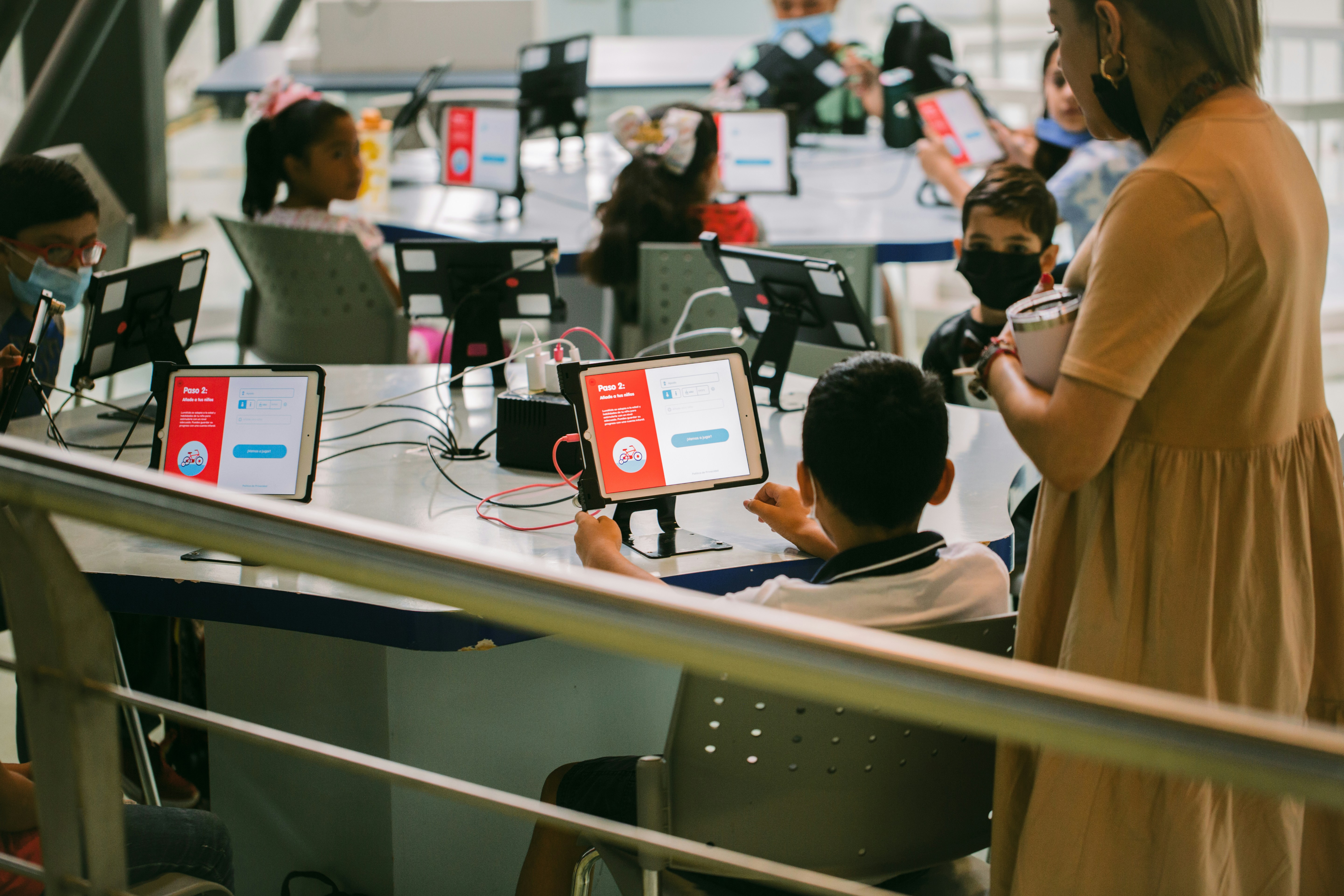
Introduction to AI in Education
Artificial Intelligence (AI) has emerged as a transformative force across various sectors, with education being one of the most promising arenas for its application. AI refers to the simulation of human intelligence processes by machines, particularly computer systems. These processes encompass learning, reasoning, and self-correction, allowing machines to perform tasks that typically require human intelligence. In recent years, the integration of AI in education has gained significant traction, particularly in customizing learning experiences to meet the diverse needs of students.
In the context of school education in Bihar, AI can play a crucial role in enhancing educational outcomes. By harnessing the capabilities of AI, educators can create tailored learning experiences that cater to individual student strengths and weaknesses. For instance, AI-driven platforms can analyze student performance data to identify areas where a learner may struggle and recommend personalized resources or instructional strategies to address these gaps. This adaptive learning approach has the potential to make the educational process more effective and inclusive, particularly in regions where resources may be limited.
Moreover, the incorporation of AI in educational settings facilitates real-time feedback, enabling students to understand their progress and adjust their learning strategies accordingly. This level of responsiveness not only enhances student engagement but also fosters a sense of ownership over their education. As Bihar continues to pursue educational reforms and improvements, the adoption of AI tools can significantly contribute to achieving these goals by making learning more interactive and personalized.
The growing significance of AI in the field of education should not be underestimated. As we explore this topic further, it becomes evident that AI has the potential to revolutionize the learning landscape in Bihar, offering students unique opportunities to succeed in an increasingly competitive world.
The education system in Bihar faces significant challenges that impede the effective delivery of quality learning experiences to its students. One of the primary obstacles is the large student-to-teacher ratio prevalent in many schools across the state. With a disproportionate number of students to educators, it becomes increasingly difficult for teachers to provide individualized attention and support to each student, ultimately affecting their learning outcomes.
Alongside this issue, there exists a wide variance in levels of student knowledge and comprehension within classrooms. Often, students come from diverse educational backgrounds, leading to disparities in their understanding of fundamental concepts. Teachers, constrained by time and resources, may struggle to address these differing needs adequately. Consequently, this leads to students falling behind, with some grasping the material while others remain confused and disengaged.
Resource limitations also significantly hinder the educational framework in Bihar. Many schools operate with outdated or insufficient teaching materials, and access to technology is limited or nonexistent. This lack of resources not only restricts the teaching methods available to educators but also discourages student engagement and motivation. Moreover, additional challenges such as inadequate infrastructure, unavailability of trained personnel, and a lack of proper financing further exacerbate these difficulties.
These existing challenges underscore the pressing need for innovative solutions in the education sector of Bihar. The introduction of AI tutors could potentially address these issues by providing personalized educational support. By leveraging technology, AI can offer tailored learning experiences, helping to bridge the gaps created by insufficient teaching resources and varied student abilities. It is crucial to explore how AI can effectively supplement traditional educational approaches, ultimately enhancing student learning and engagement within Bihar’s schools.
Understanding AI Tutors
AI tutors represent a significant innovation in the field of education, leveraging advanced technologies to provide personalized learning experiences. At their core, AI tutors are systems designed to assist learners through the integration of artificial intelligence, ensuring that each student receives tailored educational support that addresses their unique needs.
The primary technologies that enable AI tutors include machine learning, data analytics, and adaptive learning systems. Machine learning allows these tutors to analyze vast amounts of educational data, identifying patterns and preferences in individual student performance. This process enables the AI to recommend customized learning materials and approaches tailored to the student’s specific strengths and weaknesses.
Data analytics plays a crucial role in enhancing the effectiveness of AI tutors. Through continuous evaluation of a student’s progress, AI can adjust its teaching strategies in real-time. This responsiveness ensures that instructional methods align with the learner’s evolving understanding and abilities, fostering a more efficient learning process.
Another critical component is adaptive learning technology, which allows AI tutors to modify the difficulty of tasks based on the learner’s grasp of the content. This adaptability not only keeps students engaged but also ensures they are challenged appropriately, avoiding the frustration that can arise from overly difficult material or the boredom that follows from tasks that are too easy.
Various forms of AI tutors exist, from simple chatbots offering homework assistance to more sophisticated systems that provide comprehensive educational support across multiple subjects. Their applications range from enhancing classroom learning to providing extracurricular support, making them a versatile tool in the modern educational landscape. Overall, AI tutors aim to uplift the quality of learning through personalization, ensuring that every student can achieve their academic potential efficiently.
Benefits of AI Tutors for Students
The integration of AI tutors in classrooms across Bihar presents an array of benefits for students, enhancing their educational experiences significantly. One of the most notable advantages is the creation of personalized learning pathways. AI tutors are designed to assess the unique strengths and weaknesses of each student, enabling them to tailor educational content accordingly. For instance, a student struggling with mathematics can receive targeted practice modules that focus solely on their areas of difficulty, advancing at their pace, which is often difficult to achieve in traditional educational settings.
Furthermore, AI tutors provide instant feedback, a crucial aspect of the learning process. In conventional classrooms, students may have to wait longer for feedback from teachers, which can hinder their understanding and retention of information. With AI, students can receive immediate responses to their queries or assignments, allowing them to identify mistakes and make necessary corrections in real-time. This feedback loop not only facilitates a deeper understanding of concepts but also encourages a growth mindset, fostering resilience and perseverance in learning.
Another benefit of utilizing AI tutors is their ability to align with individual learning styles. Every student learns differently, and AI technology can adapt to these varying preferences. For example, visual learners can benefit from interactive simulations and videos, while auditory learners can engage with audio explanations and discussions. By addressing these distinct learning preferences, AI tutors can enhance student engagement and motivation, making the learning experience more meaningful and effective.
In practice, students in Bihar using AI tutors have reported increased enthusiasm for subjects that once felt daunting. The tailored approach fosters a sense of achievement as students progress through personalized lessons. Overall, the implementation of AI tutors in Bihar schools holds the promise of revolutionizing education by making learning more adaptive, responsive, and engaging for every student.
Impact on Teachers and Educators
The integration of AI tutors in the educational landscape of Bihar represents a significant evolution in the pedagogical framework. As AI systems take over repetitive administrative tasks, such as grading assignments and tracking student progress, teachers can reclaim valuable time. This shift allows educators to redirect their efforts toward more impactful activities like mentorship and fostering critical thinking skills among students.
Instead of spending hours on routine tasks, teachers can invest more time in developing individualized learning plans that cater to each student’s unique needs. AI tutors can analyze student performance data and highlight areas where learners struggle, equipping teachers with insights to tailor their instruction. Consequently, teachers are positioned not just as facilitators of information but as mentors who can guide students through deeper learning experiences and encourage their intellectual curiosity.
A further significant impact of AI tutors on educators lies in the enhancement of collaborative projects. Teachers can collaborate with AI systems to design creative learning activities that promote teamwork and problem-solving. This partnership allows educators to focus on cultivating social-emotional skills within students, which are increasingly recognized as critical for long-term success.
Moreover, the role of educators in the classroom evolves as they become technology-integrated mentors. They can guide discussions around the ethical implications of AI technology, preparing students to engage with future challenges posed by artificial intelligence. As the educational paradigm shifts, teachers play a vital role in navigating the intersection of human and AI collaboration.
In conclusion, the advent of AI tutors seeks not to replace teachers but to empower them. By alleviating mundane tasks, these technologies provide educators the opportunity to enhance their teaching practices, focus on personalized instruction, and foster a more engaging learning environment for students.
Tailoring Curriculum with AI
The integration of AI tutors into the educational landscape of Bihar represents a significant advancement in personalizing learning experiences. By leveraging artificial intelligence, educators can tailor the curriculum to address the individual needs of students, ultimately fostering an inclusive environment conducive to diverse learning preferences. AI-driven tools analyze vast amounts of data related to student performance, enabling instructors to identify areas where a learner might be struggling or excelling.
One of the vital aspects of employing AI in curriculum development is its capability to generate data-driven insights. These insights are crucial for understanding each student’s learning trajectory and tailoring lessons accordingly. For instance, if AI identifies that a student consistently performs poorly in mathematics, the curriculum can be adjusted to provide additional resources or personalized tutoring in that subject. This data-driven approach ensures that no student is left behind, as the curriculum becomes adaptive rather than static.
Moreover, AI tutors facilitate real-time adjustments to the curriculum based on ongoing assessments and feedback. This continuous loop of evaluation and modification allows for a dynamic educational experience that evolves with the learner’s journey. As instructional methods align more closely with individual strengths and weaknesses, students gain confidence and engage more deeply with the material. The personalized approach nurtured by AI not only enhances academic outcomes but also helps students develop a love for learning.
Incorporating AI tutors into Bihar’s educational framework is a transformative step toward addressing the unique challenges faced by diverse learners. By enabling tailored curriculum delivery driven by real-time data, we pave the way for an educational system that values individuality while promoting collective academic success. The future of education in Bihar may well rest upon the successful adoption of such personalized methods.
Case Studies: AI Integration in Education
The integration of Artificial Intelligence (AI) in educational systems worldwide has led to notable advancements in personalized learning experiences, thus enhancing student engagement and academic performance. Various case studies illustrate the successful implementation of AI tutors across different regions, demonstrating its effectiveness in addressing diverse learning needs.
One prominent example is the implementation of AI-based tutoring systems in the United States, particularly within the Philadelphia school district. Here, the introduction of AI tutors helped to individualize lesson plans, allowing teachers to cater to the unique learning pace and style of each student. Reports indicated that students who engaged with these AI systems showed a significant improvement in their mathematics and reading skills compared to their peers who received traditional instruction only.
In China, AI-powered platforms such as Squirrel AI Learning have been transforming the educational landscape by offering adaptive learning paths. Through continuous data analysis of student performance, these AI tutors identify knowledge gaps and modify content delivery in real time. This system has resulted in higher academic achievements and levels of student satisfaction, showcasing the potential for AI to scale personalized education effectively.
Moreover, in the United Kingdom, the deployment of AI chatbots in universities has provided students with 24/7 access to academic support. These chatbots assist students with inquiries ranging from course material to administrative processes, enhancing the overall learning experience. The outcome demonstrated how AI can complement traditional teaching methods, improving access to resources and support systems.
These case studies reveal that the strategic incorporation of AI tutors can lead to improved educational outcomes. For Bihar, learning from these successes could provide valuable insights into designing a tailored AI integration strategy that meets the specific requirements of its educational environment.
Future Prospects of AI in Bihar Education
The potential advancements in artificial intelligence (AI) present a transformative opportunity for the education sector in Bihar. As AI technologies continue to develop, their integration into educational frameworks promises to enhance learning outcomes and streamline teaching methodologies. In the next decade, AI could be pivotal in personalizing educational experiences, allowing for tailored learning paths that address the unique needs of each student in Bihar.
One of the most significant advancements expected is the integration of AI-driven analytics in educational institutions. This technology can analyze the learning patterns of students, identifying strengths and weaknesses, thereby enabling educators to adapt their teaching strategies effectively. With AI, teachers in Bihar could gain insights into individual student performance, ensuring that support is provided where it is most needed.
Moreover, AI tutors could become commonplace, assisting students with homework and providing instant feedback. These intelligent systems would not only help students grasp complex subjects but also serve as an on-demand resource for assistance outside of regular classroom hours. This aspect is particularly beneficial in Bihar’s remote areas, where access to educational support can be limited.
The use of AI could also facilitate better administrative processes within educational institutions. Automating tasks such as grading, scheduling, and student assessments means that educators can focus more on teaching rather than administrative burdens. As a result, the overall efficiency of the education system in Bihar may significantly improve.
Looking towards the future, the adoption of AI technologies in Bihar’s education sector could widen access to quality learning resources and foster a more inclusive and equitable educational landscape. By addressing barriers to education through innovative solutions, AI has the potential to revolutionize the academic experience for countless students across the state.
Conclusion and Call to Action
In summary, the integration of AI tutors within Bihar’s education system presents a transformative opportunity to enhance the learning experience for students. By leveraging artificial intelligence, educators can tailor instruction to meet the individual needs of learners, thereby addressing the diverse challenges faced in traditional educational settings. With the potential to provide personalized support and resources, AI tutors can help bridge the gap in educational access and quality across the region.
The discussions in this blog post have highlighted the necessity for collaboration among various stakeholders in Bihar’s education sector, including government officials, technology providers, and educators. It is crucial for these entities to work together to implement AI technology effectively. Government involvement is essential to create supportive policies that encourage the development and integration of AI tools in classrooms. Simultaneously, partnerships with technology providers can ensure that the AI tutors are designed and adapted specifically for the local context, considering the unique cultural and linguistic factors of Bihar.
Educators must also play a vital role in this process by participating in training and development programs that increase their competence in utilizing AI tools. By fostering an environment of continuous learning and adaptation, teachers can maximize the benefits of AI tutors to enhance student engagement and outcomes.
We encourage all stakeholders to explore the possibilities that AI tutors offer for personalized learning. It is time to unite efforts to create a sustainable and effective educational framework that ultimately leads to improved academic success for students in Bihar. By prioritizing collaboration, we can ensure that the integration of AI in education becomes a reality, laying the groundwork for a brighter future for learners across the region.