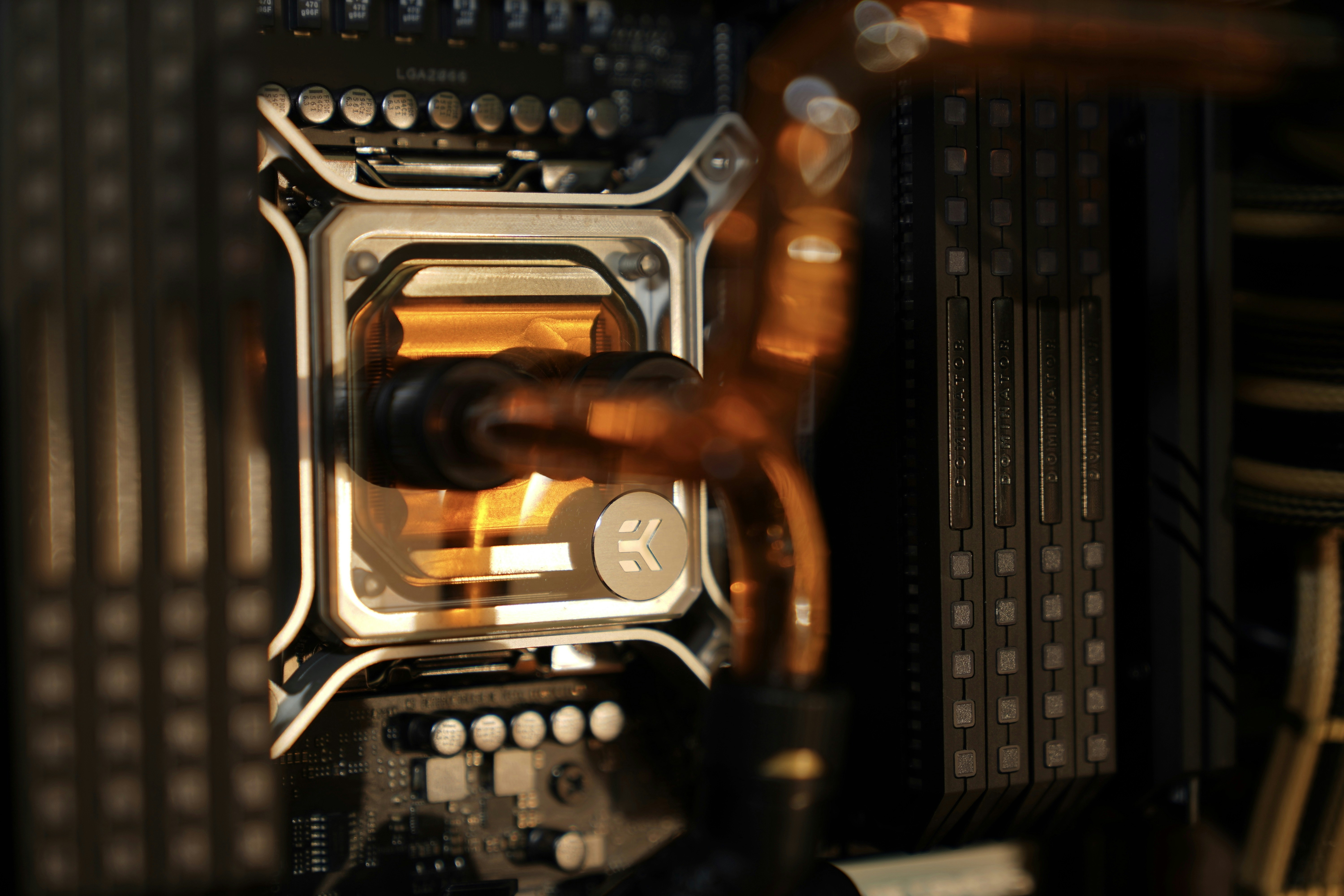
Introduction to Liquid Cooling in Data Centers
In recent years, liquid cooling has emerged as a vital solution in the design of modern data centers, particularly in the context of artificial intelligence (AI). Traditional cooling methods, which primarily rely on air as a coolant, have proven to be less effective in meeting the growing thermal demands of high-performance computing systems. Liquid cooling addresses these challenges by utilizing liquids, such as water or specialized coolants, to efficiently dissipate heat from hardware components.
The basic principle behind liquid cooling involves circulating a coolant through or around the components that generate heat, such as CPUs and GPUs. Unlike air, liquids have a higher thermal conductivity and specific heat capacity, allowing them to extract heat more effectively. This capability enables liquid cooling systems to maintain optimal operating temperatures, thereby enhancing performance and reliability while also extending the lifespan of critical equipment.
Liquid cooling technology can be categorized into two primary types: direct-to-chip and immersion cooling. In direct-to-chip cooling, liquid is routed directly to the components needing cooling, providing targeted thermal management. Conversely, immersion cooling involves submerging entire racks or servers in dielectric fluids, ensuring an even more efficient transfer of heat. Each method presents unique advantages, contributing to the increasing adoption of liquid cooling in data centers.
The adoption of liquid cooling is becoming increasingly critical in an industry where power costs and heat generation are significant concerns. According to a recent report, data centers are responsible for approximately 2% of global electricity consumption, highlighting the need for more efficient cooling solutions. As artificial intelligence applications require exponentially more processing power, the effectiveness of cooling solutions becomes paramount in maintaining system performance. Consequently, liquid cooling is gaining traction as a necessary innovation in the design of future data centers, especially those focused on AI workloads.
The Growing Demands of AI Workloads
As artificial intelligence (AI) technologies rapidly evolve, the corresponding workloads make significant demands on data center infrastructures. AI workloads differ markedly from traditional computing tasks, primarily in their need for extensive computational power and large-scale data processing capabilities. This distinctiveness has become increasingly pronounced as the AI field progresses, leading to heightened expectations for performance and efficiency from data centers.
The proliferation of deep learning, machine learning, and big data analytics has introduced new challenges regarding heat generation and energy consumption. Specifically, AI processes require more complex algorithms and larger datasets, which inherently exert increased pressure on the computational resources of data centers. As AI models become more sophisticated, their training and operation result in substantial heat production. Hence, data centers must adapt accordingly to maintain optimal performance levels while ensuring the reliability of their cooling systems.
Moreover, AI workloads often involve parallel processing across numerous computing units, further stressing cooling requirements. The correlation between computational power and cooling capacity is evident; as processing capabilities ramp up, so too must the efficiency and effectiveness of cooling solutions deployed within data centers. In an age where delays can greatly affect outcomes, the design of cooling systems has shifted to prioritize efficiency, seeking innovative methods to manage heat across operations.
This growing trend emphasizes the necessity for data centers to not only handle massive datasets but do so with a focus on sustainability and operational reliability. As the industry moves towards AI-centric initiatives, the integration of technologies such as liquid cooling presents a viable solution to these emerging challenges. Such advancements promise to create not only systems that are more robust and efficient but also data centers that can sustain the advancements in AI technologies well into the future.
Advantages of Liquid Cooling Over Traditional Methods
The shift from traditional air cooling to liquid cooling in AI data centers offers numerous benefits that significantly enhance operational efficiency. One of the most notable advantages is the energy efficiency of liquid cooling systems. These systems utilize water, which can absorb heat much more effectively than air. As a result, they require less energy to maintain optimal operating temperatures, contributing to lower energy costs while minimizing carbon footprints. This efficiency is especially critical as the demand for computing power escalates in AI applications.
Cost-effectiveness is another significant advantage of liquid cooling. Although the initial setup costs for liquid cooling systems may be higher than traditional methods, the long-term savings can be substantial. Because they operate at higher efficiency levels, organizations can save on power consumption and reduce the frequency of needed hardware upgrades. Additionally, liquid cooling systems generally have longer lifespans, which further enhances their cost-effectiveness over time.
Another area where liquid cooling excels is in saving physical space within data centers. Traditional air cooling methods often require substantial amounts of space for ducts, fans, and other related infrastructure. In contrast, liquid cooling systems, which can be integrated directly into server components, require significantly less space. This compact nature allows data centers to maximize their server density, accommodating more equipment in the same footprint.
Furthermore, liquid cooling systems provide improved performance stability. By maintaining uniform temperatures throughout the data center, these systems help in minimizing thermal fluctuations, which can adversely impact the performance of sensitive AI workloads. Real-world case studies have indicated that businesses employing liquid cooling have seen a marked improvement in their system reliability and a decrease in downtime, directly correlating with enhanced computational performance.
Design Considerations for Liquid-Cooled Data Centers
When designing a liquid-cooled data center, several fundamental considerations must be addressed to ensure efficient operation, performance, and safety. The first aspect revolves around infrastructure changes, which are necessary to accommodate the distinctive requirements of liquid cooling systems. Unlike traditional air-cooling methods, liquid cooling typically involves the installation of pipes, pumps, and cooling units, each requiring careful planning in terms of layout and integration with existing systems.
Additionally, layout planning is critical. Data center designs must account for the optimal positioning of liquid cooling equipment, such as cooling distribution units (CDUs) and heat exchangers. The physical arrangement of servers, racks, and cooling units should maximize heat dissipation while minimizing the risks of leaks and pooling water. A strategic approach in layout can greatly enhance the overall cooling efficiency and reduce energy consumption.
Material choices are another cornerstone of effective design. The materials used in constructing piping and connections need to be durable and compatible with the coolant fluid to prevent corrosion and leaks. Typically, materials like copper or specialized plastics are favored for their strength and longevity. Furthermore, the selection of these materials can have significant implications for maintenance protocols, influencing the ease of repairs and the long-term sustainability of the data center.
As with any system dealing with liquids, safety measures surrounding liquid handling cannot be underestimated. Incorporating redundant systems, leak detection technologies, and appropriate containment strategies is vital to mitigate risks associated with leaks and spills. Implementing these safety protocols not only safeguards the equipment but also protects personnel and ensures compliance with regulatory standards.
Technical Innovations in Liquid Cooling Technology
The realm of liquid cooling technology has witnessed substantial advancements, particularly within AI data centers, which are characterized by their requirement for efficient thermal management. One of the most prominent innovations is immersion cooling. This technique involves submerging server components directly in a special dielectric fluid, allowing for effective heat transfer directly from the hardware. As a result, immersion cooling not only operates at reduced temperatures but also minimizes the physical space needed for cooling infrastructure.
Another noteworthy advancement is direct-to-chip cooling. This method directs coolant directly to critical components such as CPUs and GPUs, thereby enhancing the efficiency of heat removal. Such precision cooling mechanisms benefit AI workloads, which often generate excessive heat due to high processing demands. By focusing on the components generating heat, direct-to-chip cooling systems improve overall system efficiency and performance while significantly reducing energy consumption.
The implementation of renewable cooling fluids also marks a shift towards more sustainable practices in liquid cooling technology. Many AI data centers are transitioning to eco-friendly fluids that have a lower environmental impact. These fluids ensure optimal thermal conductivity while being less harmful to the ecosystem than traditional refrigerants. The use of renewable cooling fluids aligns with broader sustainability goals, promoting a greener approach in technology and enabling data centers to meet regulatory standards more effectively.
In essence, these technical innovations in liquid cooling technology are not merely enhancements in cooling efficiency but essential components of a larger movement toward sustainable design in AI data centers. As these technologies evolve, they will play a pivotal role in addressing the ongoing challenges of energy consumption and environmental stewardship in the tech industry.
Challenges and Limitations of Liquid Cooling
As organizations increasingly explore the implementation of liquid cooling in AI data centers, it is crucial to address the potential challenges and limitations associated with this technology. One of the most significant considerations is the upfront cost involved in retrofitting existing data center infrastructure or constructing new facilities tailored to liquid cooling systems. This initial financial investment can be substantial, as it encompasses not only the cooling equipment itself but also the necessary modifications to the physical infrastructure, including plumbing and containment systems.
Furthermore, ongoing maintenance concerns present a challenge for organizations considering liquid cooling. The complexity of these systems demands specialized knowledge and training for the technical staff responsible for their upkeep. Liquid cooling systems may require routine inspections, monitoring of fluid levels, and maintenance of pumps and piping to ensure optimal operation and prevent system failures. This dependency on specialized maintenance could also translate into higher operational costs in comparison to traditional air cooling systems.
Another notable risk includes the potential for leaks, which can pose significant threats to both equipment and personnel. In the event of a leak, the presence of coolant can lead to equipment damage, potential downtime, and even safety hazards within the data center. Organizations must invest in leak detection systems and develop comprehensive backup and response plans to address such incidents, further adding to the complexity of managing liquid cooling environments.
Additionally, liquid cooling systems may be more vulnerable to specific environmental conditions, such as temperature fluctuations and humidity levels, which could require extensive monitoring and adjustments. Organizations must weigh these challenges against the benefits of liquid cooling, considering their operational requirements and risk tolerance as they navigate this advanced cooling solution.
Case Studies: Successful Implementations of Liquid Cooling
Liquid cooling systems have gained traction in the world of AI data centers, demonstrating significant advantages over traditional air cooling methods. Several organizations have successfully implemented these systems, showcasing the numerous benefits and lessons learned throughout the process.
One notable case is that of a major technology company that decided to upgrade its aging data center infrastructure. Faced with rising cooling costs and inefficiency, the organization turned to liquid cooling. The implementation process involved careful analysis of their existing layout and thermal requirements, allowing for a tailored solution. Subsequent assessments revealed a 40% reduction in energy consumption, along with improved performance of their AI workloads. Key challenges included ensuring compatibility with existing hardware and mitigating potential risks associated with liquid leaks, but these were effectively managed through thorough planning and execution.
Another example can be seen in an educational institution that opted to incorporate liquid cooling into its AI research facility. With a growing demand for computational power, the facility aimed to optimize its thermal management. Through a phased implementation that included pilot testing, the institution was able to validate the efficacy of liquid cooling solutions in real-time applications. The results demonstrated not only an increase in operational efficiency, but also provided a platform for exploring more advanced AI processing techniques. The institution reported a significant drop in overall operational costs and a heightened capacity for research and development initiatives.
Finally, a leading cloud service provider adopted liquid cooling in their state-of-the-art datacenter, addressing both scalability and sustainability challenges. By integrating liquid cooling technology, they enhanced their data center design while minimizing their environmental footprint. The key lesson learned from this implementation was the necessity of ongoing monitoring tools to assess system performance and to ensure optimal efficiency over time. These case studies exemplify the transformative potential of liquid cooling in AI data centers, offering valuable insights for organizations considering such a transition.
Future Trends in Cooling Technologies for AI Data Centers
The data center industry is undergoing a transformation driven by the rapid growth of artificial intelligence (AI) and the increasing demand for computational power. As these demands rise, traditional air cooling methods face significant challenges in managing the heat generated by modern equipment. This scenario sets the stage for the exploration of advanced cooling technologies, particularly liquid cooling, which is gaining traction as an efficient alternative.
Liquid cooling technologies are not only becoming mainstream but are also evolving to accommodate the unique requirements of AI data centers. Innovations in this area include immersion cooling, where servers are submerged in non-conductive liquids, enabling more effective heat absorption and dissipation. This method is particularly promising in environments where high computing density is necessary, as it allows for the placement of more servers in a compact physical footprint without the risks associated with overheating.
Another trend gaining momentum is the use of direct-to-chip cooling solutions. By targeting the cooling directly at the processors and GPUs, these solutions provide efficient heat management, minimizing energy consumption and maximizing operational efficiency. As processors become more powerful, the need for advanced cooling solutions like these will likely increase, prompting shifts in data center design and layout.
Furthermore, developments in heat recovery technologies are anticipated to emerge, allowing AI data centers to recycle waste heat for other applications, thus improving overall energy efficiency. Integrating sustainable practices into cooling systems will be imperative as environmental concerns become more pressing in the industry.
In summary, the future of cooling technologies in AI data centers points towards a more sophisticated approach, where reliance on traditional air cooling diminishes in favor of advanced liquid cooling methodologies and innovative heat management practices. This evolution is set to redefine data center design, shaping a more energy-efficient and sustainable future that meets the demands of increasingly complex AI applications.
Conclusion: The Future of AI Data Centers with Liquid Cooling
As we examine the evolution of AI data centers, the significance of effective cooling solutions cannot be overstated. Liquid cooling emerges as a transformative technology that addresses both efficiency and sustainability in the high-demand environment of artificial intelligence workloads. By implementing liquid cooling systems, data centers can significantly improve thermal management, allowing for higher processing power without the typical constraints imposed by conventional air cooling methods.
The potential of liquid cooling extends beyond mere performance enhancements. Its ability to reduce energy consumption aligns with the ongoing need for more sustainable operational practices in technology sectors. As organizations strive to minimize their carbon footprints, adopting liquid cooling can be a pivotal step towards achieving these goals. Furthermore, as AI technologies continue to advance, data centers must adapt to support increasingly complex computational tasks, further underscoring the need for innovative cooling solutions.
It is evident that as AI capabilities expand, so too must our approach to supporting infrastructure. Liquid cooling presents an effective means of maximizing the potential of AI technologies while ensuring that energy efficiency and sustainability remain paramount. Hence, the trajectory of AI data centers indicates a promising future where liquid cooling not only becomes standard practice but also acts as a catalyst for further innovations in technology deployment.
In conclusion, the integration of liquid cooling in AI data centers signifies a strategic advancement in the industry. As we look ahead, it is essential to encourage continuous exploration and adaptation of such transformative technologies to meet the demands of tomorrow’s digital landscape. By embracing these advancements, organizations can ensure they remain competitive in an ever-evolving technological ecosystem.