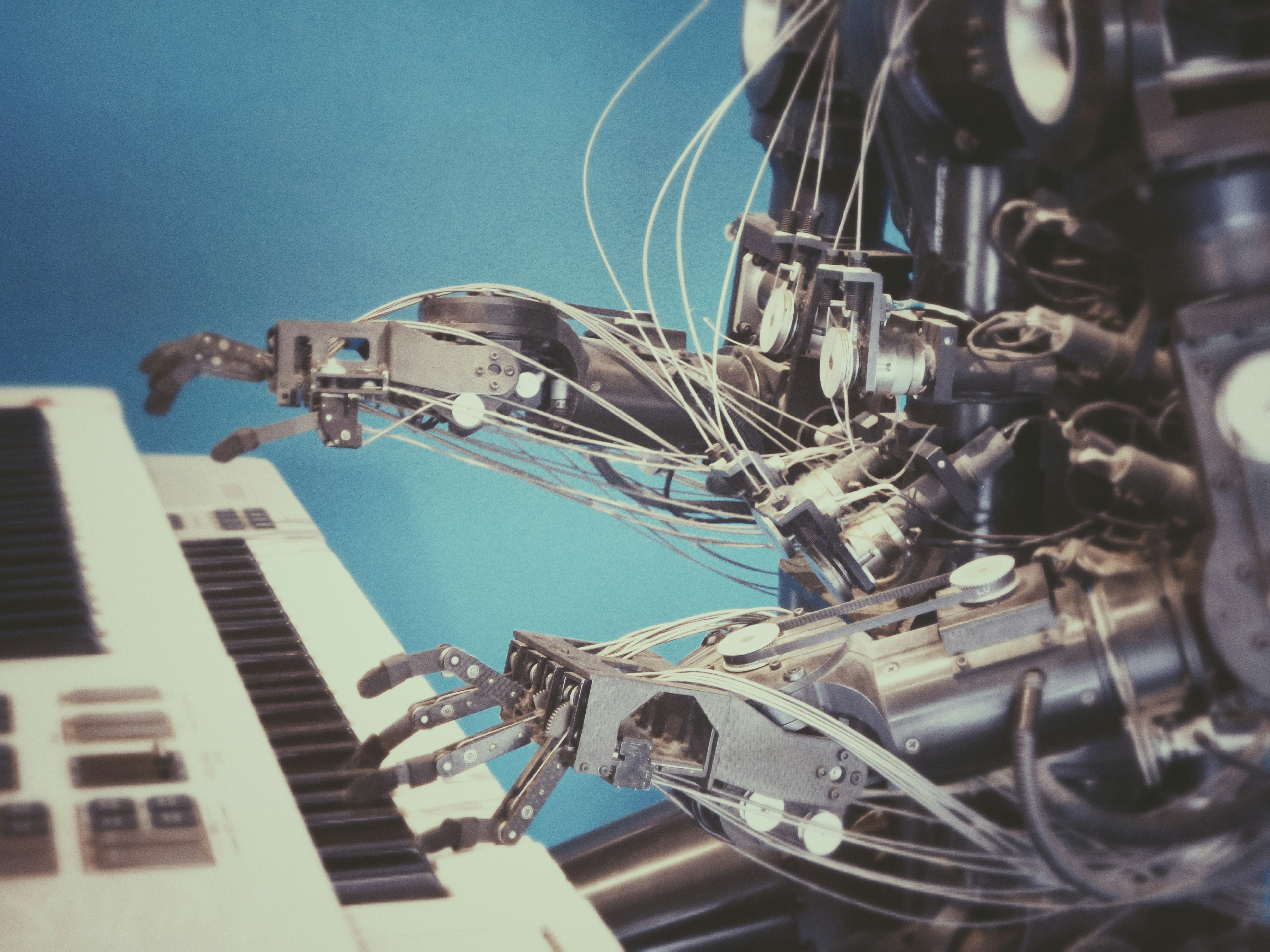
Introduction to Inverse Kinematics
Inverse kinematics (IK) is a crucial concept in the field of robotics, primarily concerned with calculating the necessary joint angles required to place a robot’s end effector, such as a hand or a tool, at a specified position and orientation in space. Unlike forward kinematics, which predicts the end effector’s position based on known joint angles, IK works in the opposite direction, making it an indispensable function for achieving desired movements in robotic systems.
The significance of inverse kinematics arises from its application in various robotic tasks, including manipulation and locomotion, where precise control over movement is paramount. By utilizing IK, robotics engineers can easily define target positions, allowing robots to perform complex tasks, such as reaching for objects, painting, or even navigating through challenging terrains.
One of the fundamental principles of inverse kinematics is the concept of joint space versus task space. Joint space refers to the configuration of all robot joints, while task space pertains to the physical workspace where the robot operates. The IK algorithms aim to translate the desired position in task space back into the appropriate angles of the joints within joint space. This task often involves solving mathematical equations, sometimes requiring iterative numerical methods, particularly for more complex robotic systems with multiple degrees of freedom.
Moreover, the difference between inverse kinematics and forward kinematics highlights the challenges robots face in performing real-world tasks. While forward kinematics provides a direct calculation, the solutions provided by IK can be non-unique, making the algorithm’s design a critical consideration. As a result, advancements in IK have led to more adaptive and efficient robotics, ensuring that machines can achieve a broad range of functionalities with accuracy and reliability.
Understanding Robotic Motion
Robotic motion forms the foundation of how robots interact with their environment. It encompasses various types of movements, primarily translational and rotational, which enable robots to navigate effectively and perform tasks. Translational motion refers to the linear movement of a robot from one point to another, while rotational motion involves the turning or pivoting of robot parts around a fixed axis. The combination of these movements allows robots to maneuver through complex spaces and engage with objects surrounding them.
A crucial aspect of robotic motion is joint configurations, which determine the posture of a robot. Each robotic joint plays a significant role in the overall kinematics of the system, as it can rotate or translate, contributing to the robot’s end-effector positioning. By adjusting these joint angles, a robot can achieve a desired configuration, whether it needs to stretch out, grasp an item, or navigate around obstacles.
To fully comprehend the dynamics of robotic motion, one should consider the mathematical models that define the relationships between movement types and joint angles. Kinematics, in particular, is pivotal in analyzing how these factors interrelate, facilitating the prediction and control of motion trajectories. Moreover, understanding the interplay between these elements contributes to the development of advanced algorithms that enhance robotic capabilities in real-time environments.
Robots utilize sensors and feedback mechanisms to adapt their motion in response to their surroundings, ensuring effective interaction with objects and conditions. As technology progresses, the exploration of robotic motion continues to expand, paving the way for more sophisticated robotic applications in industries from manufacturing to healthcare.
Mathematics Behind Inverse Kinematics
Inverse kinematics (IK) is underpinned by a robust mathematical framework that plays a pivotal role in robotic motion. Central to this framework are geometric transformations, which provide a method for translating and rotating points in space. In the context of IK, these transformations allow the robotic system to adjust its end effector position based on predefined parameters, necessitating accurate calculations of joint angles.
At the heart of these calculations lies trigonometry. By employing trigonometric functions, such as sine, cosine, and tangent, engineers can derive the relationships between the angles and lengths of a robot’s limbs or joints. For instance, a common application involves determining the angles of various joints that enable the robot’s end effector to reach a specific coordinate in its workspace. The manipulation of basic trigonometric identities thus becomes essential in establishing these connections.
Furthermore, systems of equations often emerge as a critical component of the IK process. When multiple joints are involved, the challenge extends beyond singular angle calculation into solving simultaneous equations. This is typically achieved through numerical methods or optimization techniques, allowing for the resolution of the joint angles that yield the desired position of the end effector without exceeding mechanical limits or causing singularities.
In summary, the mathematics of inverse kinematics encompasses a blend of geometric transformations, trigonometric principles, and systems of equations, all of which interplay to provide solutions for robotic motion. This mathematical foundation ensures that robots can effectively translate desired end effector positions into the necessary joint configurations, thereby facilitating seamless and precise movements.
Applications of Inverse Kinematics in Robotics
Inverse kinematics (IK) plays a crucial role in various robotics applications, significantly enhancing the capabilities and efficiency of robotic systems. One prominent area where IK is utilized is in industrial automation. For instance, robotic arms in assembly lines must accurately position their end-effectors to perform tasks such as welding, painting, or picking objects. By employing inverse kinematics algorithms, these robots can calculate the required joint angles needed to reach a specific target point, ensuring precision and optimizing workflow.
Another significant application is found in the realm of gaming and animation. Inverse kinematics is essential for creating lifelike movements in character animations. For example, game developers utilize IK to enable characters to interact naturally with their environment, such as reaching for objects or walking up stairs. This technology allows animators to create smoother transitions and more believable motion, enhancing the overall gaming experience.
Medical robotics also benefits greatly from the application of inverse kinematics. Surgical robots often require precise movements to perform complex procedures. For example, the da Vinci Surgical System utilizes IK to transform a surgeon’s hand movements into precise, scaled movements of tiny surgical instruments. This application ensures greater accuracy and allows for minimally invasive surgeries, ultimately improving patient outcomes.
Furthermore, robotic exoskeletons designed for rehabilitation leverage inverse kinematics to provide patients with assistance tailored to their specific movements. By analyzing the user’s intended motion, these devices can adjust accordingly, facilitating recovery and enhancing mobility.
In summary, the applications of inverse kinematics in robotics span across various fields, from industrial automation and gaming to medical robotics. These implementations highlight the integral role IK plays in improving the functionality and effectiveness of robotic systems, thereby advancing technology across multiple sectors.
Challenges in Inverse Kinematics
Inverse kinematics (IK) is a crucial component in the control of robotic systems, enabling them to achieve desired positions and orientations. However, this process is not without its challenges and limitations. One of the most prominent issues is the presence of multiple solutions. In many configurations, a given end-effector position can be achieved by various joint angle combinations. This multiplicity complicates the decision-making process regarding which solution to choose, potentially leading to undesirable robotic behavior or suboptimal pathways.
Another significant challenge in inverse kinematics is the occurrence of singularities. A singularity refers to a configuration where the mathematical model used to derive joint angles ceases to be valid due to a loss of degrees of freedom. At these points, small changes in the end-effector position can result in large variations in joint angles, making it extremely difficult to control the robot’s movements. As a result, navigating around singularity points becomes a critical consideration in the design and implementation of IK algorithms.
The complexity of computational algorithms also presents a notable challenge in inverse kinematics. While several mathematical solutions exist, many involve intricate calculations that can be computationally expensive and time-consuming. This aspect particularly affects real-time robotic applications, where rapid response to dynamic environments is essential. Furthermore, the need for precise and efficient algorithms often leads to trade-offs in performance versus computational load, creating additional constraints on robotic systems.
These challenges—multiple solutions, singularities, and the complexity of computational algorithms—collectively impact the performance of robotic systems. Addressing these limitations is vital for the advancement of effective and reliable robotic solutions, thereby enhancing the overall versatility and functionality of modern robotics.
Algorithms Used in Inverse Kinematics
Inverse kinematics (IK) involves complex calculations to determine the joint configurations required for a robot to achieve a desired end-effector position. Several algorithms are commonly employed to solve these IK problems, with each offering unique advantages and limitations.
One of the primary methods used is the analytic solution, which derives a closed-form expression for joint angles directly from the robot’s geometry. This approach is particularly efficient for robots with a small number of degrees of freedom (DOF) and is useful in scenarios where precise calculations are critical. The analytic method excels in computational efficiency, enabling real-time applications that require immediate responses, such as robotic arms in assembly lines. However, its application may be limited in scenarios with high DOF due to the complexity of deriving solutions.
In contrast, numerical methods provide an alternative for more complex configurations. Techniques such as the Newton-Raphson method or iterative solvers are employed to approximate solutions when analytic forms are impractical. These numerical approaches can handle multiple solutions or no solution at all, making them versatile for various robotic applications. However, they can be computationally intensive and may require careful tuning to converge to a valid solution effectively.
Optimization techniques further extend the capabilities of IK algorithms. By formulating the inverse kinematics problem as an optimization problem, robots can not only achieve the desired position but also optimize other criteria such as energy consumption or joint limits. Evolutionary algorithms and gradient descent methods are common in this context, providing a way to balance multiple objectives. Nonetheless, they can exhibit slower convergence for certain initial configurations, potentially impacting performance.
In conclusion, understanding the various algorithms used in inverse kinematics is essential for designing efficient robotic systems. Each method plays a crucial role based on the complexity and requirements of the task, offering diverse approaches to achieve precise motion control in robotics.
Recent Advances in Inverse Kinematics
Inverse kinematics has experienced significant advancements in recent years, particularly driven by the rapid evolution of artificial intelligence and machine learning techniques. These innovations have transformed traditional methods of robotic motion planning, making inverse kinematics not only more efficient but also more accurate in real-time applications.
One of the most notable trends in recent research is the incorporation of machine learning algorithms into the inverse kinematics process. This approach allows robots to learn from previous experiences and adapt their movements accordingly. By using large datasets to train models, researchers have been able to develop solutions that anticipate and adapt to various environments and obstacles, ultimately enhancing the robot’s ability to perform complex tasks with precision. Furthermore, reinforcement learning, a subset of machine learning, enables robots to improve their motion strategies through trial and error, continuously refining their techniques for solving inverse kinematics problems.
Another area of progress involves the development of real-time solutions for inverse kinematics calculations. Contemporary algorithms have been optimized to operate efficiently under the constraints of real-time performance requirements. By employing techniques such as optimization and multi-threading, researchers have achieved significant reductions in computation time, enabling robotic systems to respond swiftly to changes in their surroundings. As a result, robots equipped with these real-time capabilities can better handle dynamic environments and perform tasks that require immediate adjustments, such as interactive or collaborative robotics.
These advancements are not only improving the efficiency of robotic motion planning but are also paving the way for new applications in various fields such as healthcare, manufacturing, and entertainment. As research continues and further innovations emerge, we can expect inverse kinematics to play an even more crucial role in the future of robotic technology.
Future Trends of Inverse Kinematics in Robotics
As technology continues to advance, the field of robotics is poised to benefit significantly from developments in inverse kinematics (IK). Future trends indicate that algorithms will become increasingly sophisticated, promoting more responsive and adaptable robotic systems. Enhanced computational power and machine learning techniques are expected to play a crucial role in this evolution, enabling robots to perform complex tasks with greater precision and efficiency.
One promising avenue of research is the integration of artificial intelligence (AI) with inverse kinematics. This synergy could lead to robots capable of learning from experience and modifying their motions based on situational feedback. For example, robots in warehouses could adapt their sorting and moving strategies based on past interactions with the environment, improving their overall effectiveness. Such advancements would not only streamline operations but also reduce the need for extensive programming by human operators.
The miniaturization of technology is another factor influencing the future of inverse kinematics. As sensors and processing units become smaller, more powerful, and more affordable, they will increasingly find their application in various robotic platforms, including drones and consumer-grade robots. This trend is likely to democratize access to advanced robotic capabilities, allowing smaller companies and even hobbyists to experiment with inverse kinematics.
Moreover, the growing interest in collaborative robotics, where robots work alongside humans, necessitates more advanced IK solutions. Future robots will need to be aware of human presence and actions, adjusting their movements accordingly to ensure safety and efficiency. Enhanced predictive modeling and real-time adjustment will be essential in achieving seamless human-robot interaction.
In conclusion, the future of inverse kinematics in robotics is set to transform industries by facilitating smarter, more adaptive robots. As AI, miniaturization, and collaborative necessities converge, we can expect innovative solutions that not only enhance robotic capabilities but also expand their usability across various domains.
Conclusion
Inverse kinematics plays a pivotal role in the field of robotic motion, serving as a fundamental mathematical tool that allows robots to achieve desired positions and orientations in a controlled manner. By determining the necessary joint configurations to reach a specific end-effector location, inverse kinematics enables greater flexibility and functionality in robotic systems. This capability is essential for a variety of applications, from industrial automation to interactive robotic companions.
The significance of inverse kinematics extends beyond mere positional calculations; it is integral in simulations for training and operational purposes. By allowing robots to perform complex movements with precision, it enhances efficiency and effectiveness in numerous tasks. As robots become increasingly prevalent in diverse domains, including healthcare, manufacturing, and service industries, the need for advanced kinematic models becomes even more critical.
However, while substantial progress has been made in the understanding and implementation of inverse kinematics in robotic systems, the field continues to face challenges. Researchers are actively exploring new algorithms and techniques to improve calculation efficiency, reduce computational overhead, and resolve the limitations associated with non-unique solutions. The ongoing pursuit of innovations in inverse kinematics not only aims to enhance robotic capabilities but also to facilitate their integration into operations that require a high level of adaptability and responsiveness.
In conclusion, the future of robotics is undeniably linked to advancements in inverse kinematics. Continued research and development in this area will not only refine robotic motion but also broaden the horizons of what robots can accomplish in a rapidly evolving technological landscape.