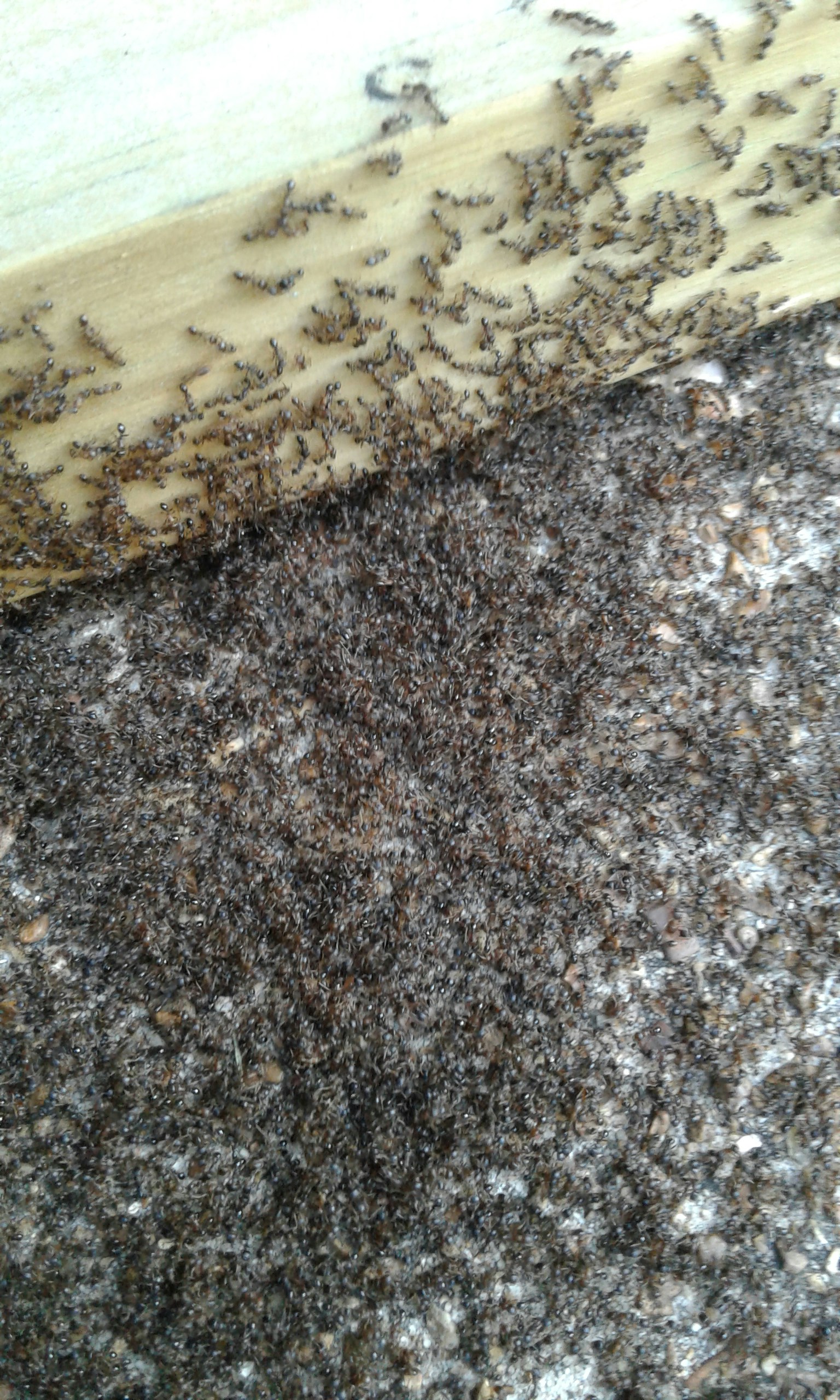
Introduction to Swarm Intelligence
Swarm intelligence is an interdisciplinary field that studies the collective behavior of decentralized, self-organized systems. Often observed in nature, swarm intelligence illustrates how individual agents can work together to achieve complex tasks without centralized control. This concept is primarily inspired by the behaviors of various animal groups, including insects like ants and bees, as well as schools of fish. These natural entities exemplify how simple rules governing individual behavior can lead to intricate group dynamics and efficient problem-solving strategies.
The fundamental principles of swarm intelligence involve collaboration, adaptation, and emergent behavior. For instance, when bees search for food, they communicate through a series of dances that convey direction and distance, enabling the colony to find optimal foraging grounds. Similarly, ants utilize pheromone trails to guide others toward resources, collectively optimizing their foraging efficiency. In each case, the group can make decisions and solve tasks more effectively than any single entity could manage alone.
Researchers have sought to replicate these principles in artificial systems to develop swarm-based algorithms. The result has been the emergence of robotic swarms and multi-agent systems that mimic natural behaviors to tackle complex challenges across various domains. These systems not only enhance efficiency and problem-solving capabilities but also offer a robust framework for addressing global issues such as resource management, disaster response, and environmental sustainability.
Overall, swarm intelligence offers significant insights into how a large number of simple agents can coordinate and collaborate to solve problems that are beyond the capabilities of isolated individuals. By leveraging the principles that guide natural swarms, scientists and technologists are increasingly exploring the potential of these specialized agents in addressing pressing global challenges.
The Role of Specialized Agents in Problem-Solving
Specialized agents represent an innovative approach to addressing complex global challenges through collaboration. These agents are designed to possess distinct skill sets that allow them to perform specific tasks efficiently. When deployed in collaborative environments, they can function like a swarm, each contributing their expertise towards a common objective. This model of teamwork is fundamentally inspired by the behavior of social animals, such as bees and ants, which work collectively to achieve greater outcomes than individuals could attain alone.
The effectiveness of specialized agents in problem-solving scenarios is enhanced through their tailored capabilities. Each agent is engineered for a particular challenge, making them adept at navigating the nuances of specific tasks. This specialization can take various forms, from data analysis to environmental monitoring, depending on the needs of the project at hand. As these agents interact in a swarm, they can share information, coordinate actions, and adapt strategies on the fly, leading to faster and more innovative solutions.
Moreover, the adaptability of these agents allows for greater resilience in the face of unforeseen obstacles. When one agent encounters a problem outside its specialized training, the swarm can quickly redirect resources, deploying other agents better suited to address the new challenge. This dynamic flexibility is crucial in our rapidly changing global landscape, where problems are often multifaceted and require immediate, tailored solutions.
In summary, the role of specialized agents in problem-solving is pivotal in enhancing collaboration and efficiency. Their ability to work together in swarms not only maximizes their individual strengths but also creates a robust framework for tackling complex issues. By fostering cooperation among diverse agents, we can unlock innovative approaches to the pressing challenges faced worldwide.
Case Studies: Successful Implementations of Swarm Technology
Swarm intelligence has emerged as a transformative approach in various fields, harnessing the collective behavior of decentralized systems to tackle significant global issues. Notable case studies illustrate the effectiveness of swarm technology across environmental monitoring, disaster response, and logistical planning.
One prominent example of swarm technology in action is in environmental monitoring. Researchers employed autonomous drones as a swarm to monitor deforestation in the Amazon rainforest. These drones, equipped with sophisticated sensors, work collaboratively to gather data on tree density and health. By analyzing this information, environmentalists can assess the impact of logging activities, leading to timely interventions and the implementation of conservation strategies. This application of swarm intelligence has proven valuable in addressing ecological challenges, enabling more accurate and efficient data collection.
In the realm of disaster response, another compelling case is the deployment of robotic swarms during emergency situations such as earthquakes. For instance, in a simulated disaster scenario, teams utilized a swarm of ground and aerial robots to conduct search and rescue missions. The swarms communicated in real time to navigate through debris, locate survivors, and deliver essential supplies. This application demonstrated the potential of swarm technology to enhance situational awareness and response times, ultimately saving lives in critical moments.
Furthermore, in the field of logistical planning, swarm algorithms have been successfully applied to optimize delivery routes in urban scenarios. Companies have adopted swarm intelligence to coordinate a fleet of delivery vehicles, allowing them to adapt to real-time traffic conditions. This adaptive routing not only reduces delivery times but also minimizes fuel consumption, contributing to a more sustainable logistics framework.
These case studies exemplify how specialized agent swarms can effectively address complex global challenges. By leveraging collaboration and autonomous decision-making, swarm technology continues to shine as a promising solution in various domains, providing innovative answers to the pressing problems of our time.
Challenges in Developing Swarm Models
Swarms of specialized agents present a compelling approach to solving complex global problems by mimicking the collective behavior observed in nature, such as that of bird flocks or fish schools. However, the development and deployment of swarm models face several significant challenges that must be addressed to ensure their effective application in real-world scenarios.
One of the foremost challenges in swarm intelligence is coordination among agents. Each agent needs to operate autonomously yet remain responsive to the actions of others in the swarm. This balance is crucial for achieving the desired collective outcome. Developing algorithms that facilitate effective communication and cooperation among agents without central coordination is a complex undertaking and requires meticulous design. A lack of synchronization may lead to inefficient problem-solving or erratic behavior within the swarm.
Scalability is another pivotal concern. As the number of agents increases, the complexity of their interactions can escalate dramatically. Ensuring that swarm models can retain their efficiency and effectiveness with varying numbers of agents is essential for their practical deployment. Designing scalable algorithms that can adapt to different swarm sizes and still maintain optimal performance presents a significant research and engineering hurdle.
The unpredictability of agent behavior also poses a challenge in swarm model development. Agents, especially those based on stochastic processes, can exhibit highly variable and sometimes chaotic behavior. This variability can make predicting the overall behavior of the swarm difficult and can lead to unforeseen outcomes. Understanding and modeling this agent behavior to ensure reliability and consistency is crucial for the successful implementation of swarm systems in various domains.
Addressing these challenges is critical for realizing the potential of swarm intelligence. Researchers and practitioners must collaborate to develop advanced strategies and algorithms that effectively harness the capabilities of swarms while mitigating associated risks.
Comparative Analysis: Swarm Intelligence vs. Traditional Problem-Solving Approaches
Swarm intelligence represents a paradigm shift in problem-solving methodologies, contrasting sharply with traditional approaches that rely heavily on structured techniques and top-down directives. Traditional methods often involve defined procedures and hierarchical structures that can limit responsiveness and adaptability in dynamic environments. Conversely, swarm intelligence thrives on decentralized decision-making, allowing for a collective emergence of solutions through the interactions of specialized agents.
One of the primary advantages of swarm intelligence is its ability to function effectively in uncertain and rapidly changing scenarios. For instance, in situations characterized by complexity and unpredictability, such as environmental monitoring or emergency response, swarm systems can adapt more quickly than traditional methods. Their decentralized nature facilitates real-time modification of behaviors in response to new stimuli, enabling agents to work collaboratively toward optimal solutions.
Furthermore, swarm intelligence can often outperform conventional approaches in terms of scalability. As the number of agents in a swarm increases, the ability to cover larger areas or process more information expands exponentially. Traditional problem-solving models, however, can become cumbersome when scaling teams or resources, leading to increased coordination costs and delays. In domains like traffic management or data analysis, swarm approaches can harness extensive decentralized inputs to derive insights and strategies that would be unfeasible for centralized systems.
Additionally, the resilience offered by swarm intelligence is significant. Traditional problem-solving strategies typically falter under failure conditions due to their reliance on specific roles or structural hierarchies. In contrast, swarm systems are inherently robust; if one agent fails, others can adapt to continue the task, thereby maintaining operational effectiveness.
In summary, while traditional problem-solving approaches have their merits in structured settings, swarm intelligence excels in dynamic and complex environments, providing advantages in adaptability, scalability, and resilience that are crucial for addressing global challenges.
Ethical Implications of Using Swarm Intelligence
Swarm intelligence, characterized by the collective behavior of decentralized systems, raises several ethical considerations that must be thoroughly examined. One fundamental aspect is the role of autonomous agents in decision-making processes. With the increasing reliance on these agents to solve complex global challenges, it becomes crucial to address the implications of allowing them to operate independent of direct human intervention. This shift towards automation not only raises questions about accountability but also challenges existing ethical frameworks that prioritize human oversight.
Another significant concern involves potential biases in the design of algorithms that govern these swarm intelligence systems. If the data used to train these systems contains inherent biases, this can lead to skewed outcomes that adversely affect certain populations or produce discriminatory results. The development of algorithms must not only be transparent but also subjected to rigorous scrutiny to prevent harmful biases from influencing the behaviors of swarm agents. This ensures fairness and promotes equity in outcomes derived from their use.
Moreover, the importance of ongoing human oversight cannot be overstated. As these swarm systems advance, it is essential to maintain a degree of human involvement to guide ethical considerations and intervene when necessary. Human oversight acts as a safeguard against potential mishaps that might arise from autonomous decision-making, ensuring that the values and priorities of society are preserved. Establishing governance frameworks that facilitate ethical compliance will be vital in fostering trust in swarm intelligence applications.
Given the transformative potential of swarm intelligence in addressing global issues, it is imperative to engage in comprehensive ethical dialogues. This ensures that technological advancements align with societal values and ethical standards, thereby facilitating a responsible integration of swarm systems into critical decision-making processes across various sectors.
Future Prospects: Expanding the Use of Swarm Intelligence
The concept of swarm intelligence has garnered significant attention over recent years, showcasing its capabilities in various fields. Looking ahead, the potential to expand the use of swarm intelligence into new domains appears promising. As societal challenges become increasingly complex, the versatility of swarm intelligence can be leveraged to develop innovative solutions. Potential areas for application include environmental monitoring, urban planning, and disaster response.
In environmental monitoring, specialized agents operating collectively could efficiently assess changes in ecosystems, enabling timely responses to biodiversity loss or climate change impacts. By deploying a swarm of sensors or drones, real-time data can be collected with enhanced accuracy, ultimately aiding conservation efforts. Similarly, in urban planning, swarm intelligence could facilitate intelligent traffic management systems, where agents adaptively optimize flows based on real-time inputs, thus addressing congestion and improving safety.
Moreover, advancements in artificial intelligence (AI) will play a pivotal role in enhancing the capabilities of swarm agents. With the integration of more sophisticated algorithms, these agents can achieve higher degrees of autonomy, enabling them to learn and adapt within dynamic environments. Machine learning techniques, for example, could allow swarm agents to analyze historical data, predict outcomes, and make informed decisions on their own. This evolution could revolutionize fields such as logistics, where swarm intelligence might optimize supply chains or warehouse operations more efficiently than traditional methods.
Furthermore, the synergy between swarm intelligence and AI could lead to unprecedented opportunities in healthcare, where coordinated agents might assist in patient management and the allocation of resources during medical emergencies. As we anticipate these developments, it is essential to consider ethical implications and ensure that the deployment of swarm intelligence aligns with societal values and goals.
Collaboration Between Humans and Swarm Agents
The interaction between humans and swarm agents represents an evolving frontier in the quest to address global challenges. As technological advancements enable the development of sophisticated swarm behaviors, an increasing focus is placed on the integration of these agents into human decision-making frameworks. The dynamics of this collaboration necessitate a careful examination of how swarm agents can enhance human capabilities, particularly in complex problem-solving scenarios.
Swarm agents, characterized by their decentralized and autonomous nature, can process vast amounts of data and execute tasks that are often beyond human capacity. By leveraging the collective intelligence of swarm agents, humans can benefit from expanded analytical capabilities, better predictive models, and improved efficiency in task execution. This potential enhances decision-making processes across various sectors, including disaster response, environmental management, and urban planning, where quick, informed decisions are critical.
The incorporation of swarm agents into human workflows, however, is not without challenges. It is essential to establish symbiotic relationships that foster mutual benefit and trust between humans and these specialized agents. Training human operatives to understand and collaborate with swarm technology is crucial. Moreover, developing intuitive interfaces that allow for seamless interaction can significantly enhance the effectiveness of these collaborations. Feedback mechanisms between humans and swarm agents must be designed thoughtfully to ensure that the agents respond to human needs while also iterating on their own learned behaviors.
Ultimately, fostering collaborations between humans and swarm agents can lead to innovative approaches to tackling pressing global issues. By embracing the unique strengths of swarm intelligence and aligning them with human intuition and creativity, solutions may emerge that leverage the best of both worlds, thus revolutionizing the way we approach and solve complex problems.
Conclusion: The Path Towards Global Solutions
As we conclude our exploration into the potential of swarm intelligence and specialized agents, it becomes evident that these innovative concepts hold promise for tackling some of the most pressing global challenges we face today. The discussed capabilities of swarms, including their collective problem-solving, adaptability, and efficiency, position them as a uniquely valuable resource in various sectors, from environmental management to healthcare.
Through the integration of swarm intelligence, we can harness the power of numerous specialized agents that collaborate seamlessly. Emerging technologies such as artificial intelligence, the Internet of Things, and robotics enhance the functionality of these agents, allowing them to analyze complex systems dynamically and effectively respond to changing conditions. This persistent adaptability is particularly essential in scenarios such as disaster response, resource management, and urban planning, where traditional methods may not suffice.
Furthermore, the iterative nature of swarm-based approaches encourages continuous learning and improvement. This trait enables specialized agents to refine their strategies in real-time based on feedback and previous outcomes, ensuring their solutions remain relevant and effective over time. Such characteristics are fundamental as we strive towards creating a more sustainable and equitable future.
To fully realize the potential of swarm intelligence, continued research and interdisciplinary collaboration will be crucial. By fostering connections between experts in fields such as computer science, biology, and environmental science, we can develop innovative frameworks and systems that leverage the strengths of these specialized agents. As we embark on this journey, it is imperative that we explore the ethical implications and ensure these technologies are applied responsibly. Thus, swarms of specialized agents may represent not only a cutting-edge solution but also the beginning of a new paradigm in addressing global problems.